REVIEW · RIO DE JANEIRO
Rio de Janeiro: Guided Bike Tours in Small Groups
Book on GetYourGuide →Operated by Rio by Bike · Bookable on GetYourGuide
Rio by bike is a smart way to feel Rio fast. You get local street time plus small-group guidance as you pedal between big sights and everyday blocks. The routes come in three lengths, so you can match your energy level and still leave with a clearer sense of the city.
What I like most is how the guides turn each stop into a quick story you can actually remember—think Sugarloaf views, the Selarón steps, and the calm green edges of Lagoa Rodrigo de Freitas. I also like the way the ride stays practical: a helmet, a manageable group size (up to 10), and a pace that helps beginners stay confident. One thing to consider: the longest option asks for real riding stamina, and if you do not ride often, you may want to start with the shorter tours.
In This Review
- Key highlights to look for
- Why Rio looks different (and better) from a bicycle
- Getting oriented at the meeting point and finding your rhythm
- Choosing the right ride: 3 hours, 4 hours, or the 7-hour day
- The 3-hour Urban Tour (southern Rio highlights)
- The 4-hour Panoramic Tour (views + Old Rio + nightlife zone)
- The 7-hour Ultimate Tour (the big day + included lunch)
- What you’ll actually see: stop-by-stop value (not just photos)
- Copacabana: your starting line and Rio’s social stage
- Sugarloaf Mountain: the view that helps you map Rio
- Vermelha Beach: the calmer contrast
- Botafogo and back lanes: how Cariocas live between postcards
- Rodrigo de Freitas Lagoon: water, hills, and the Rio contrast
- Bay of Guanabara and Flamengo coastline: a big-scope view
- São João Batista cemetery: history you can walk away with
- Cinelândia and Lapa: city life meets art in public
- Riding comfort, safety, and the pacing that keeps you smiling
- Weather, heat, and planning your day in Rio
- Who this tour suits best (and who should pick a shorter option)
- Value for money: why $36 can still feel like a deal
- FAQ
- How long are the bike tours?
- What’s included in the price?
- Is lunch included on the 3-hour or 4-hour tours?
- Where do we meet the guide?
- Do I need hotel pickup?
- What language are the tours in?
- What should I wear and bring?
- Is the tour safe for beginners?
- Are there age limits for children?
- What happens if it rains?
- Should you book this Rio small-group bike tour?
Key highlights to look for
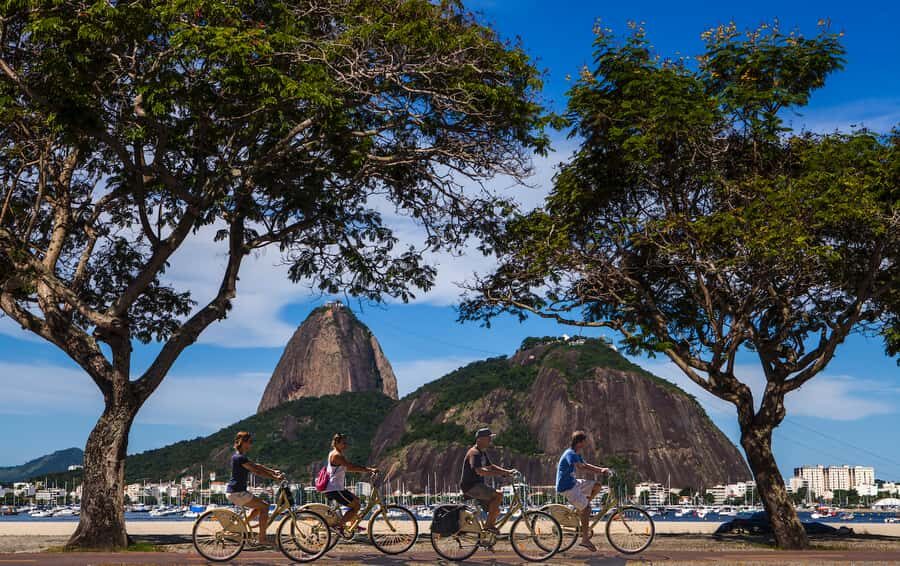
- Small-group feel (max 10 riders) with an English-speaking guide
- Three ride lengths so you can tailor the day: 3 hours, 4 hours, or 7 hours
- Beaches plus neighborhoods, not just photo stops
- Landmarks with context, from Sugarloaf Mountain to Lapa’s Selarón steps
- Lunch included on the 7-hour option at a local restaurant
- Safety and comfort focus, including careful street crossings and regular breaks
Why Rio looks different (and better) from a bicycle

Rio de Janeiro can overwhelm you in a good way: coastlines, steep hills, loud streets, and those postcard mountains that seem to be everywhere. A bike tour gives you a rhythm. You move at human speed, you can look around, and you’re not stuck waiting for trains or taxis between viewpoints.
This one is designed for exactly that. You rent a bike on site, you get a helmet, and you roll out with a guide who keeps the group together and manages the trickier crossings. In multiple guide styles, there’s a clear theme from past rides: people often feel comfortable even when they are newer to cycling, as long as they follow the guide’s instructions and keep a steady effort.
The other big win is the mix of places. You get the famous Rio moments—Copacabana, Sugarloaf, Lapa—then you also ride through areas that show how Cariocas move when they’re not posing for photos. That balance is what turns a list of sights into a real orientation of the city.
You can also read our reviews of more cycling tours in Rio De Janeiro



Getting oriented at the meeting point and finding your rhythm
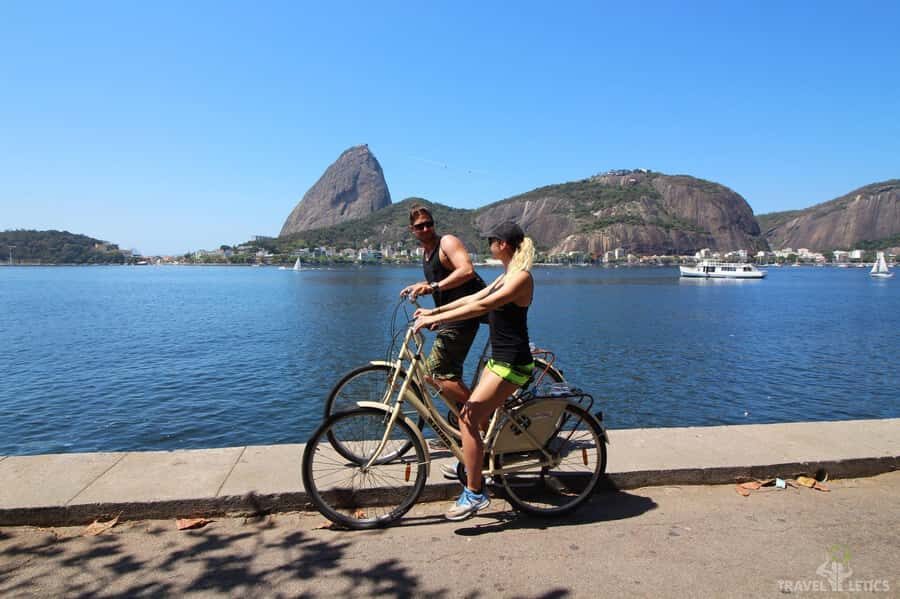
You’ll meet the group in front of Galeria Felisberto de Menezes, right next to a bus stop. Plan to arrive about 15 minutes early. That buffer matters more than you think, because you’ll want a few minutes for bike fitting, helmet checks, and asking quick questions before you roll into traffic.
A few practical tips that help from minute one:
- Wear light, comfortable clothes and closed-toe shoes if you have them.
- Bring sunblock and a hat, and keep water with you. Rio sun can be intense, and the tours often run in warm conditions.
- If weather looks uncertain, keep an eye on last-minute messages. If it rains, the tour can be canceled with advance notice.
Once you’re moving, the best mindset is simple: keep your speed consistent, leave space, and listen when the guide calls out changes. Past riders have praised guides like Sean, Duco, Marco, Thiago, and Milo for being attentive and careful about safety—especially when crossing streets—so your job is mostly to ride smooth and trust the plan.
Choosing the right ride: 3 hours, 4 hours, or the 7-hour day
The tour’s structure is smart because it lets you pick your Rio mood.
The 3-hour Urban Tour (southern Rio highlights)
This shorter option is a strong first day choice, especially if you want famous scenery without committing to a long ride. You start around Copacabana beach, then move toward Sugarloaf Mountain for an up-close look and a classic viewpoint moment.
From there, the ride shifts to something quieter: a stop at Vermelha Beach, described as a tiny oasis of calm compared with the louder shoreline stretches. After that, you head into Botafogo and ride through back lanes—great for seeing the “real city” side that most people miss when they only stick to the coast.
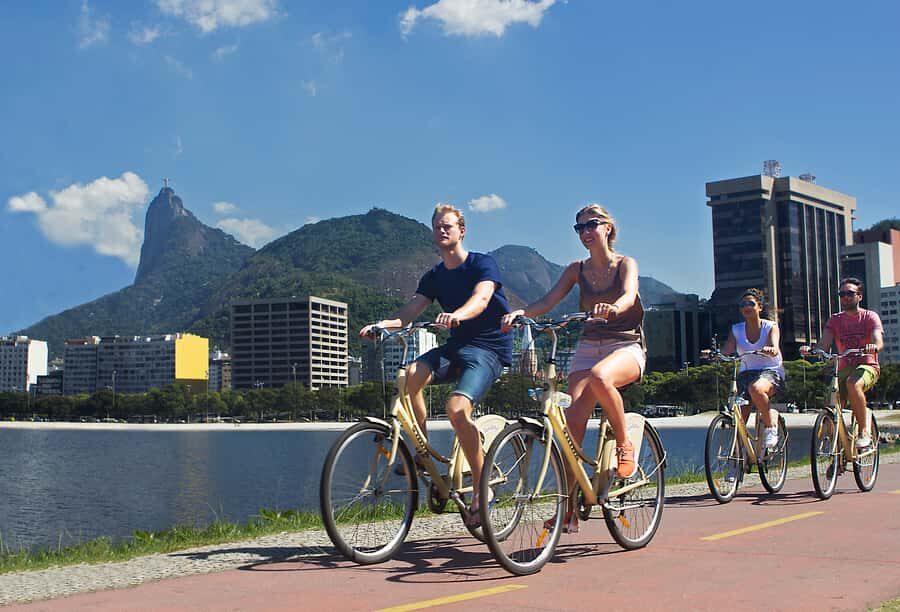
You finish at Rodrigo de Freitas Lagoon, where the water and the surrounding green hills give you a different Rio feel: less glare, more atmosphere, and a look at both lush nature and the fancier edges nearby.
Best for:
- First-timers who want a quick orientation
- People who prefer a lighter effort day
- You if you want a beach-and-neighborhood mix without a full marathon
Possible drawback:
- Because it is shorter, you will move through a lot of areas, but you won’t linger as long at each place as you would on the 7-hour option.
The 4-hour Panoramic Tour (views + Old Rio + nightlife zone)
This version adds more city structure and more famous “Rio moments.” You still start with Copacabana area streets and then head toward the Bay of Guanabara along the Flamengo coastline.
Along the way, you get a mix of sightseeing and context:
- You pass the São João Batista cemetery, known for resting place of several notable Brazilians, including writers, singers, actors, and even presidents, plus architect Oscar Niemeyer.
- You continue into the historical center area with stops at Cinelândia and Lapa.
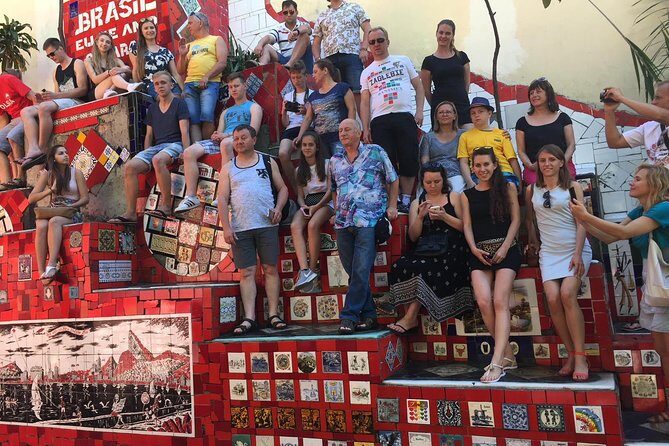
- In Lapa, you’ll see the Selarón steps, covered in thousands of colorful tiles.
On the return stretch, you pass along Flamengo Park and cycle back near Copacabana.
Best for:
- People who want both views and city storytelling
- Anyone who wants a stronger Old Rio vibe in one sitting
- You if you like mixing daytime sights with the edge of Rio nightlife
Possible drawback:
- With more stops and more central-area cycling, you’ll want to be more alert and steady on the bike than on the 3-hour version.
You can also read our reviews of more guided tours in Rio De Janeiro






The 7-hour Ultimate Tour (the big day + included lunch)
If you want the full Rio sampler, this is the option. It combines the southern zone and panoramic city highlights, and then adds extra neighborhoods plus a sit-down lunch.
You’ll cover iconic Copacabana and Ipanema beach areas, then pedal through areas that feel less written-about but equally interesting, including Botafogo and Urca. After that, the ride heads into Lapa and Cinelândia, then you visit Jorge Selarón’s staircase again as a centerpiece stop.
A typical Brazilian lunch is included on this longer day, which is a real value add because it saves you from hunting for food after hours of cycling. You finish with Lagoa Rodrigo de Freitas, with the lake and hills framed by Atlantic rainforest.
Best for:
- Strong riders or cyclists with confidence in traffic
- You if you like spending a full day outside and packing it in
- People who want one guide-led day to cover the most iconic parts
Important consideration:
- Several past riders noted the 7-hour option is for people with a decent riding level and fitness. If you are unsure, the 3-hour or 4-hour routes are the safer bet.
What you’ll actually see: stop-by-stop value (not just photos)
A good bike tour should do two things: show you landmarks and also teach you how the neighborhoods connect. Here’s what those places do for your understanding of Rio.
Copacabana: your starting line and Rio’s social stage
Starting near Copacabana is a smart move. It’s iconic for a reason, but the real advantage is that it sets a tone: this is where many locals spend social time. When you begin here, you quickly understand what kind of energy Rio has at ground level—not just from a viewpoint.
On a bike, you get that long shoreline feeling without spending your day in crowded queues. And as you roll away from the beach, you’ll notice how quickly the city texture changes.
Sugarloaf Mountain: the view that helps you map Rio
Sugarloaf Mountain is one of those places that clicks in your brain. Even if you’ve seen it in pictures, seeing it from the street and close by makes it feel physical. The value here is not just the panorama; it is your mental map. After Sugarloaf, you start understanding how the bay and coastline relate to each other.
Vermelha Beach: the calmer contrast
Vermelha Beach works like a breather. When your day includes busy shorelines, that quiet stop gives your eyes a reset and your legs a chance to recover with a slower pace. It’s also a reminder that Rio isn’t only mega-famous spots—there are softer pockets right next to them.
Botafogo and back lanes: how Cariocas live between postcards
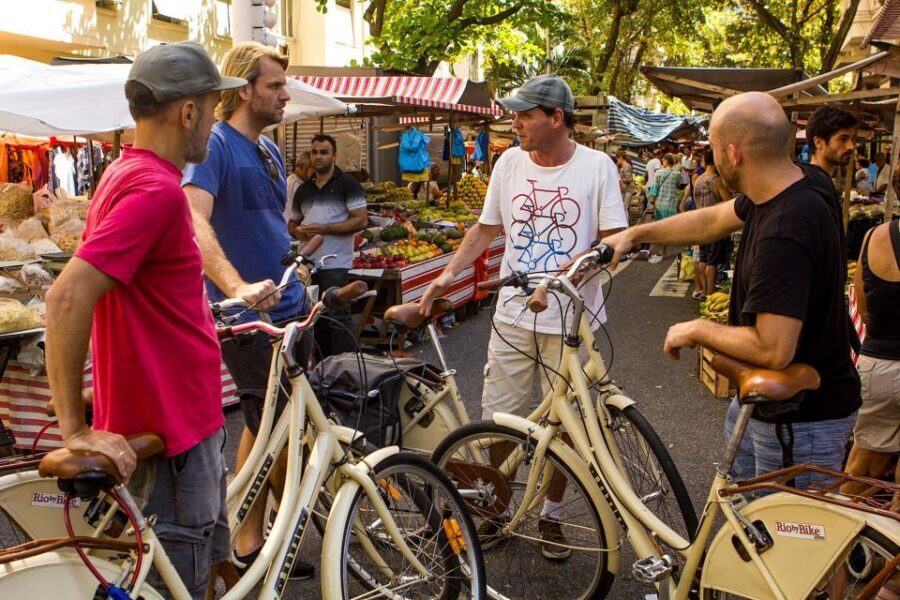
Botafogo is where you get closer to everyday movement. Riding through back lanes is where the city feels lived-in: small streets, local scale, and fewer tourist-style interruptions. It helps you see Rio as a real place with routine neighborhoods, not just a set of attractions.
Rodrigo de Freitas Lagoon: water, hills, and the Rio contrast
Lagoa Rodrigo de Freitas adds balance. You get green hills around the water, plus the mix of upscale surroundings and nature. It is also a good “end stop” because it gives you a slower visual payoff after more intense beach and downtown cycling.
Bay of Guanabara and Flamengo coastline: a big-scope view
When you ride the Flamengo beachfront route toward the Bay of Guanabara, the city suddenly feels larger. The bay framing matters. It also helps that you get context about the coastline as the site of the first European settlement after discovery—small bits of history like that give shape to what you’re seeing.
São João Batista cemetery: history you can walk away with
This stop is one of the most unexpected parts of the ride. It helps you realize Rio’s layers: presidents and major cultural figures are part of the city’s story, not just its beaches. Even if you are not a cemetery person, the fact that it also connects you to major names makes it memorable.
Cinelândia and Lapa: city life meets art in public
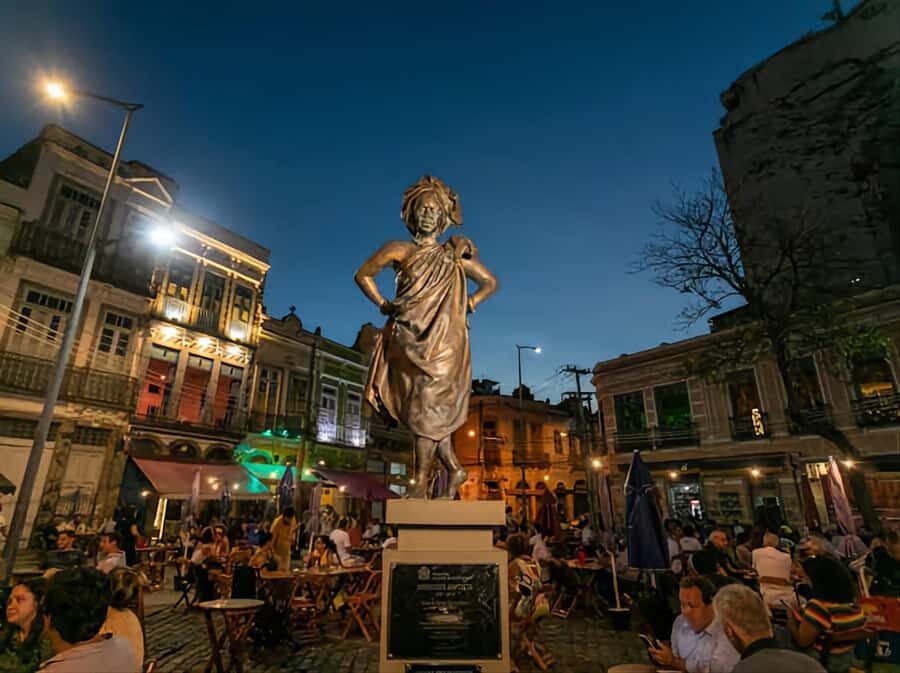
Cinelândia Square gives you an Old Rio anchor, while Lapa adds energy. You’re likely to feel the difference in atmosphere right away: Lapa is tied to nightlife, and it also has a creative street-art identity.
The Selarón steps are the standout visual. You’re not just looking at tiles; you’re seeing how public art turns a stairway into a destination. It’s one of those places that makes you understand why people love wandering.
Riding comfort, safety, and the pacing that keeps you smiling
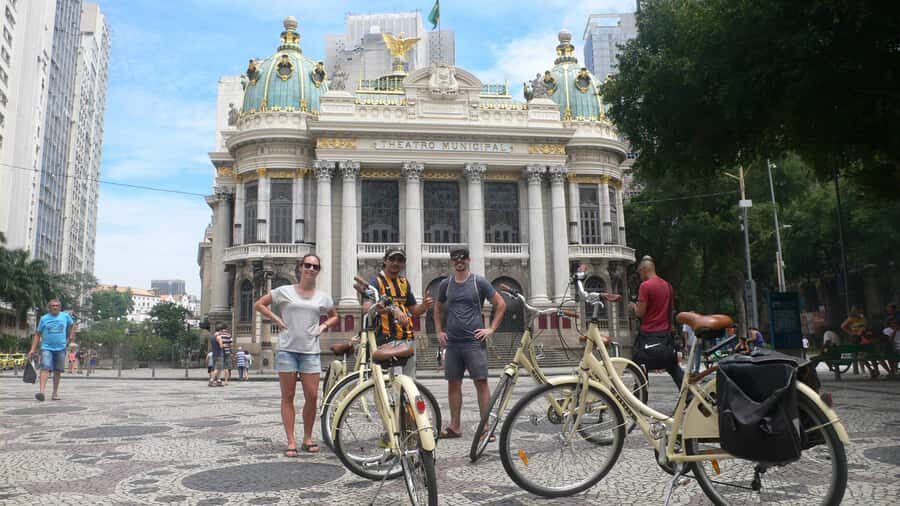
Cycling in Rio has its quirks. Even if you know how to ride a bike, city traffic, intersections, and uneven routes can make you feel tense. That’s why guide approach matters.
In past rides, people often highlighted that guides were careful with street crossings and helped keep everyone together. The group size—limited to 10—also makes instruction easier. You’re not swallowed by a huge pack, so you get room to breathe.
There are also small signals that show the tour is built for comfort:
- helmet included
- regular breaks and water stops noted by some riders
- routes designed to keep crossings manageable
One more practical point: bike quality can vary. At least one rider felt the bikes were not the best. If you’re picky about how a bike fits and feels, show up early so you can request adjustments and get comfortable before you start.
Weather, heat, and planning your day in Rio

This is an outdoor activity, so weather matters. If it rains, the tour can be canceled, and you should get a message at least 45 minutes before departure. Use that time to make a backup plan, then keep an eye on email and WhatsApp updates rather than relying on memory.
Heat is another real factor. Some rides have happened in very hot conditions, so plan like it’s summer. Wear light clothes, protect your head and skin, and sip water. If you feel overheated, speak up early so the guide can help you adjust your pace.
Who this tour suits best (and who should pick a shorter option)
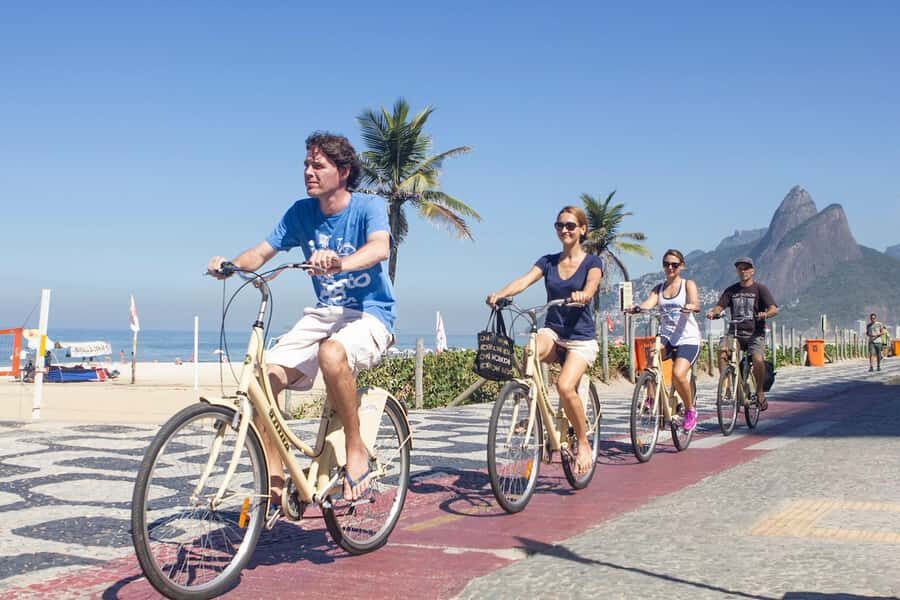
This tour is a good fit if you want:
- a guided orientation across multiple neighborhoods
- iconic Rio sights plus local-feeling streets
- a small-group experience that stays manageable
It’s also well suited if you’re comfortable riding a bike or want to build confidence. Several past riders said they felt safe and supported, even as beginners.
You should lean toward the shorter options if:
- you ride very infrequently
- you know you get tired quickly on longer routes
- you prefer more time at stops and less time on the saddle
If you choose the 7-hour day, commit to it. That option is best for riders with decent stamina and the confidence to keep a steady effort through the full loop.
Value for money: why $36 can still feel like a deal
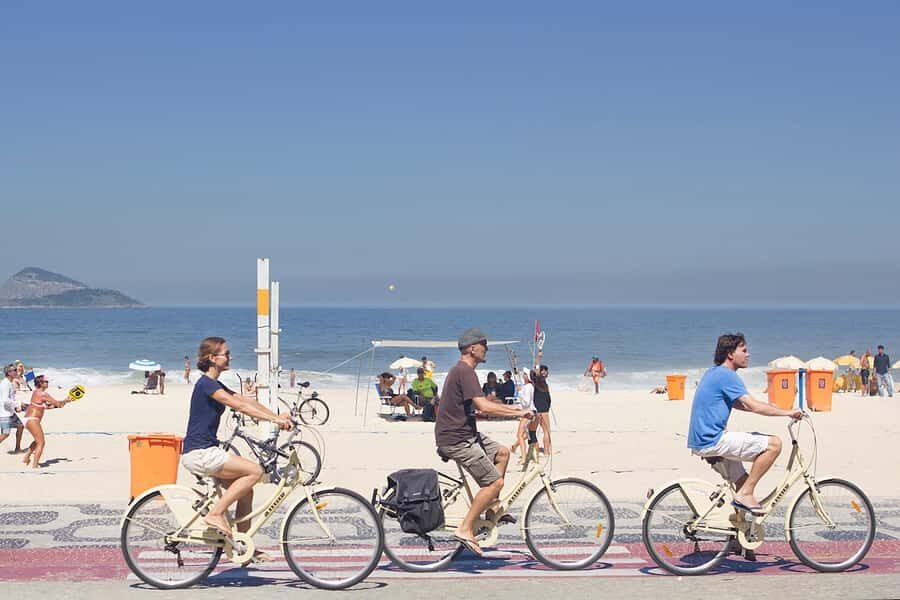
At $36 per person for a guided small-group ride, the value is in what you avoid:
- you avoid figuring out routes through traffic on your own
- you avoid spending time researching connections between sights
- you get a guided explanation that helps your photos mean something later
On top of that, the bike rental and helmet are included, and the 7-hour option includes lunch. If you’re planning to eat anyway, that added meal can push the value further.
A key reality check: the experience is not only about “how many landmarks.” It is about how efficiently you cover Rio with safer pacing and an actual sense of place. If that is what you want, you’ll likely feel the price matches the result.
FAQ

How long are the bike tours?
There are options in three lengths: 3 hours, 4 hours, or 7 hours. Starting times depend on availability.
What’s included in the price?
Bike rental, a tour guide, and a helmet are included. Lunch is included only if you choose the 7-hour option.
Is lunch included on the 3-hour or 4-hour tours?
No. Lunch is only included with the 7-hour version.
Where do we meet the guide?
Meet in front of Galeria Felisberto de Menezes, next to a bus stop.
Do I need hotel pickup?
No. Hotel pickup and drop-off are not included.
What language are the tours in?
The live tour guide speaks English.
What should I wear and bring?
Wear comfortable light clothes. Bring sunblock and a hat, and having a bottle of water can help.
Is the tour safe for beginners?
The tour is designed to feel comfortable for different riding levels, and guides focus on careful street crossings. If you’re new, consider the shorter options first.
Are there age limits for children?
Yes. Suitable for children from 12 years old, or children taller than 1.50 meters.
What happens if it rains?
The activity can be canceled due to weather. If rain leads to cancellation, you’ll be contacted at least 45 minutes before the start time, and rescheduling may be possible.
Should you book this Rio small-group bike tour?
Yes—if you want an efficient, street-level way to understand Rio. Pick the 3-hour tour if you want a first hit of beaches and neighborhoods. Go for 4 hours when you want more of the central city and Lapa’s art energy. Choose the 7-hour day only if you ride regularly or you know you can handle a longer effort, since it is the one that asks the most stamina.
If your goal is orientation plus famous sights without spending your whole day on transport, this is a strong choice for value and a genuinely enjoyable pace.