REVIEW · RIO DE JANEIRO
Private Tour 7-Hours: Rio Best Sights with Airport, Port Pick-ups
Book on Viator →Operated by Gregtur Turismo · Bookable on Viator
Rio in one day sounds impossible. Until you do it this way.
I like that this is a private 7-hour route built around the big Rio icons, plus smooth airport or port pickups so you’re not stuck waiting on taxis. I also like the pacing: you get real time at the viewpoints (Corcovado and Sugarloaf), then quick hits across Rio’s center and the Olympic/Carnival landmarks. One thing to consider: most major entrances are not included, so you’ll want to plan tickets early for Christ the Redeemer and Sugarloaf Mountain.
The route also balances classic must-sees with street-level texture—Lapa’s Selarón Steps, world-record-scale graffiti by Eduardo Kobra, and an architecture story that links Mayan pyramids to the Metropolitan Cathedral. It’s a practical day for first-timers, cruise passengers, and people who want photos without a full day of planning. Still, with several stops kept intentionally short, this isn’t a day for slow museum wandering or deep neighborhood exploring.
In This Review
- Key things I’d circle on your Rio checklist
- A 7-hour Rio private tour built around your pickup time
- How the price makes sense (and when it doesn’t)
- Corcovado and Christ the Redeemer: the Swiss train + the top photo moment
- Tickets and lines: plan for the real-world bottleneck
- Lapa: Selarón Steps, the aqueduct arches, and a genuinely different Rio vibe
- What to do with your time here
- Centro and Porto Maravilha: quick architecture stops that actually connect
- Boulevard Olímpico and Museu do Amanhã exterior time
- Painel Etnias mural by Eduardo Kobra
- Metropolitan Cathedral: the Mayan pyramid influence story
- Sambódromo and Maracanã: Carnival and football as real city landmarks
- How these short stops feel in practice
- Sugarloaf Mountain: the two-cable-car ride and a second view of Rio
- Ticket strategy you can actually use
- Lunch option near the end
- Copacabana pass-by: the famous postcard you’ll still recognize
- What makes this day feel worth it: private guide moves + smart routing
- Price and value: $213 per person with tickets on top
- Who this is best for
- Should you book this private Rio highlights tour?
- FAQ
- How long is the private tour?
- Is this tour private or shared?
- Does it include airport, hotel, or port pickup and drop-off?
- Are entrance fees included for places like Christ the Redeemer and Sugarloaf?
- Which attractions are included on the route?
- Is Museu do Amanhã included?
- Do you get meals or drinks during the tour?
- What’s the price per person?
- Can I cancel for a full refund?
Key things I’d circle on your Rio checklist

- Corcovado by Swiss cogwheel train: direct mountain access, then a stairs-on-top photo moment at Christ the Redeemer
- Two different big-viewpoints: Corcovado first, then Sugarloaf later for a second angle of Guanabara Bay
- Lapa + Selarón Steps + aqueduct arches: color tiles and that postcard Rio feel, fast
- Fast culture stops in Centro and Porto Maravilha: cathedral architecture, Museu do Amanhã exterior, and Eduardo Kobra mural
- Carnival + football landmarks: Sambódromo and Maracanã for a quick reality check of Rio’s pop culture
A 7-hour Rio private tour built around your pickup time
This tour is priced at $213 per person and runs about 7 hours. It’s private, meaning it’s just your group, and it’s structured for people who want the headline sights without stitching together rides all day.
The biggest value is that the tour includes hotel, airport, or port pickup and drop-off within Rio, plus taxes and handling charges, parking during stops, and airport/port greet-and-meet service. That removes the two things that usually eat time in Rio: figuring out transportation and losing half a day to delays.
One more practical detail: the tour includes a professional licensed private guide and a fully equipped vehicle. If your group is larger than 4, you’ll get a private driver; if it’s 4 or fewer, the guide drives. Either way, you’re not taking on Rio traffic yourself.
You can also read our reviews of more private tours in Rio de Janeiro



How the price makes sense (and when it doesn’t)
At $213 per person, this is not a bargain-bucket group tour. But you are paying for a day of logistics: private guide + vehicle + transfers + stop-by-stop parking + the kind of routing that matters when you only have one shot at Corcovado and Sugarloaf.
It may feel pricey if you’re traveling solo and you’d rather spend that money on one great guided experience plus tickets on your own. It feels more reasonable if you have a small group (especially two couples) and you’re counting the cost of missed time, stress, and last-minute taxi chaos.
Corcovado and Christ the Redeemer: the Swiss train + the top photo moment

Stop one is Corcovado / Christ the Redeemer, and the approach is a big part of why people love this day. You head to the Cosme Velho district and take a Swiss cogwheel train up the mountain from near the base. Then you reach the iconic statue area by climbing stairs to the top viewpoint.
What you’re aiming for here is the scale: Tijuca National Forest spreading below, a ring of mountains closing the horizon, and Guanabara Bay in the background. It’s a view that makes your brain go quiet for a second, then switches into “okay, where do I stand for the best shot?”
You get about 40 minutes here, and admission is not included. That matters because timed entry or any kind of fast-track ticket option can change how much time you actually spend looking, rather than waiting.
Tickets and lines: plan for the real-world bottleneck
Entrance fees aren’t included for Christ the Redeemer, and you’ll likely want to secure tickets ahead of time. One strong tip from past experiences: don’t wait until the last minute to arrange access for Christ the Redeemer and Sugarloaf. Lines can be long, and “skip-the-line” type options often sell out.
If you end up with ticket access issues, a good guide can help you deal with on-site procedures. The point isn’t magic—it’s reducing wasted time so you still get your photos and your moments.
Lapa: Selarón Steps, the aqueduct arches, and a genuinely different Rio vibe
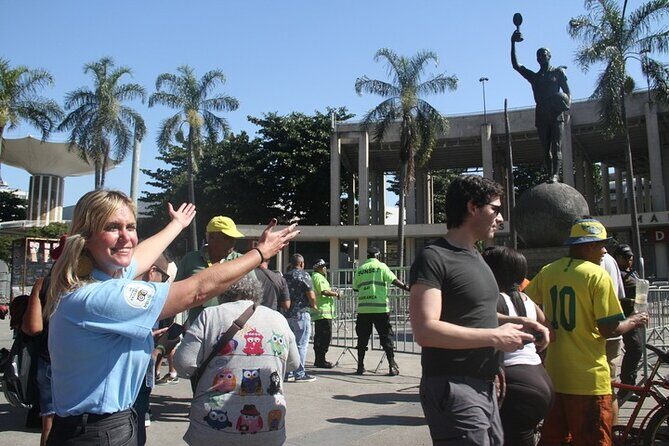
After Corcovado, you head to Lapa, home of the Selarón Steps—a stairway decorated with colorful tiles. It’s one of those places where you’ll instantly understand why it became a symbol. The steps aren’t just pretty; they feel personal, like the city is leaving you breadcrumbs to its creativity.
You’ll have about 30 minutes here. Lapa is known for its bohemian energy in both daytime and evening, and depending on timing you might see people out taking photos, eating, or just hanging around.
Then you get more of the Lapa postcard angle with the famous aqueduct arches—those large white arches that instantly tell you you’re in the right neighborhood.






What to do with your time here
In a short stop, focus on two things:
- Walk the steps long enough to see how the tile patterns change as you move
- Use the rest of the minutes to take a couple of photos from different heights (up close and a step-back wide shot)
If you’re visiting Rio during a festival season, Lapa can be extra lively. Either way, this stop is the best kind of contrast after the monumental viewpoints: human scale, color, and street art made by the city itself.
Centro and Porto Maravilha: quick architecture stops that actually connect
Next comes Centro, Rio’s downtown area, with a walk through key sights toward Mauá Square. You get about 20 minutes, so this is a “get your bearings fast” stop rather than a long museum day.
As you move through Centro, you’re looking at historic attractions and the mix of bars and restaurants around the square area where different groups gather. It’s a reminder that Rio isn’t only beaches and mountains—it’s also a working city with daily motion.
Boulevard Olímpico and Museu do Amanhã exterior time
From there, you go to Boulevard Olímpico in the Porto Maravilha area. This is where Rio’s post-Olympics renewal story shows up in the urban design around you. The stop is short—about 10 minutes—but it sets the tone for the next round of modern iconography.
Then you see Museu do Amanhã (Museum of Tomorrow). You’re not going inside here—admission is not included—but you can still appreciate the museum structure itself. It’s designed by architect Santiago Calatrava, and the building’s cutting-edge look is part of the experience.
Painel Etnias mural by Eduardo Kobra
Another quick stop is Painel Etnias, a mural painted by Eduardo Kobra, listed in the Guinness Book of Records as the largest graffiti in the world. You’ll spend about 10 minutes, and with street murals, that’s often enough if you aim for:
- A clear frontal photo
- A second angle that shows the scale against nearby buildings
This is the kind of stop where time matters. If you linger too long, you’ll miss the next set of icons. If you rush, you’ll feel like you blinked and it was gone.
Metropolitan Cathedral: the Mayan pyramid influence story
Your next architecture moment is the Metropolitan Cathedral of Saint Sebastian. It’s about 15 minutes, free to visit, and it’s described as unusual in both appearance and history.
The interesting part is the teaching angle: you’ll learn about the influence of Mayan pyramids on the cathedral. Even if you’re not an architecture nerd, it’s a satisfying connection—how a modern religious space can borrow geometry and idea language from much older design traditions.
Sambódromo and Maracanã: Carnival and football as real city landmarks
After Centro and Porto Maravilha, you shift from “look at it” to “understand Rio.” Two stops do that fast:
Sambodromo da Marques de Sapucaí
You get about 10 minutes at the Sambodrome, the parade venue for Rio Carnival. It’s a purpose-built concrete structure with bleachers on both sides and sectors. Even if you visit when there’s no parade happening, it helps you visualize how the city transforms itself for those few intense nights.
Maracana
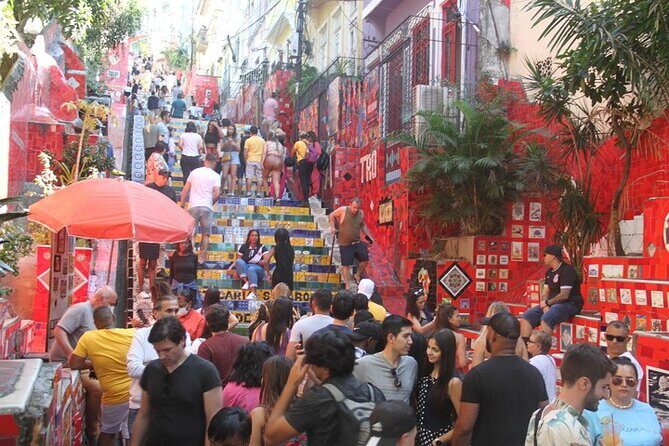
Then it’s Maracanã, one of Brazil’s most important football stadiums. You also get about 10 minutes, and you’ll hear facts about major matches, including the 1950 and 2014 World Cup finals, plus the 2014 Olympic final football match.
How these short stops feel in practice
These are “big enough to matter” places, but you won’t have time for a deep tour. The value is context: you’ll leave understanding why Rio treats Carnival and football like more than entertainment. It’s identity, ritual, and pride—played out in a physical location you can stand in front of.
Sugarloaf Mountain: the two-cable-car ride and a second view of Rio
The last major viewpoint is Sugarloaf Mountain, and it’s set up for photos in a different direction than Corcovado. You head up using two cable cars to reach the summit, which gives you that classic aerial feel as Rio drops away below.
Sugarloaf is about 1 hour, and again, admission is not included. The top view is described as breathtaking from a different vantage point—this is where you get another relationship between mountains, city, and Guanabara Bay.
Ticket strategy you can actually use
This is where I’d take the strongest practical advice from real-world experiences: plan fast-track options well ahead of arrival. Skip-the-line type access for both Sugarloaf and Christ the Redeemer tends to sell out, and lines can be brutal when you’re on a tight schedule.
If you’re on a cruise and your ship timing slips, prioritize this portion. A delay can cost you the best part of Sugarloaf—being at the top when light hits and queues aren’t swallowing your hour. One group had to adjust because docking ran late, and their guide’s familiarity with the mountain’s systems made it possible to recover time.
Lunch option near the end
After Sugarloaf, you may want lunch. There’s an all-you-can-eat buffet steakhouse option mentioned as available (not included). This can work nicely because your biggest walking and climbing has already happened—you’re transitioning into food and downtime.
Copacabana pass-by: the famous postcard you’ll still recognize

On the way through, you’ll pass by Copacabana Beach. It’s one of Brazil’s most famous postcards, tied to songs and poetry, and it’s also the stage for one of the world’s biggest New Year’s Eve celebrations.
This isn’t a long beach stop. It’s a “you’ll see it and get the context” moment, which is exactly what you want when you’re trying to cover multiple icons in a day.
What makes this day feel worth it: private guide moves + smart routing
A normal day in Rio can turn into a time-sink. Roads, waits, and ticket lines add up fast. This tour is designed to compress those problems into a manageable schedule.
The guide element is what makes the difference. You’re not only seeing locations; you’re learning what connects them and how to photograph them. In particular, good guides have helped with where to stand for the best pictures at key stops.
And if you’re flying in or out the same day, the included transfers (airport and port pickups and drop-offs) are a huge help. Even small delays become less stressful when you’re met, guided, and moved on schedule.
Price and value: $213 per person with tickets on top
Here’s the honest math. The tour price covers:
- Hotel, airport, and port pickup/drop-off within Rio
- Vehicle transport and stop-day logistics
- VAT, taxes, and parking during stops
- A professional licensed private guide
- Private driving setup (driver if group is bigger than 4, otherwise the guide drives)
But it does not cover:
- Entrance fees
- Meals and drinks
- Tips (optional)
So your total day cost depends mostly on how much you spend on entrances for Corcovado and Sugarloaf, plus whether you also pay for Museu do Amanhã if you choose to go in (that entrance is specifically noted as not included in this tour’s coverage).
Who this is best for
This tour is a strong fit for:
- First-time Rio visitors who want a tight “best-of” circuit
- Cruise passengers who need a port pickup and a confident return to the ship/airport
- People who value a guide to manage lines and explain the story behind the icons
- Couples and small groups who don’t want to rent a car or fight with traffic
It may not be your best match if you want long, slow museum time or you’d rather spend half a day in just one neighborhood.
Should you book this private Rio highlights tour?
If your priority is seeing the headline sights without wasting your time, I’d book it. The blend of Corcovado + Sugarloaf (two big viewpoints), Lapa (street-level color), and rapid cultural stops in Centro/Porto Maravilha hits the sweet spot for most first-timers. Add the airport and port transfers, and the day stops feeling like a puzzle.
Book it with two expectations: entrances are extra, and several stops are intentionally short. If that pacing works for you, this is a smart, high-efficiency way to experience Rio’s most iconic geography and city personality in a single afternoon-to-evening block.
FAQ
How long is the private tour?
It runs about 7 hours.
Is this tour private or shared?
It’s private, and only your group participates.
Does it include airport, hotel, or port pickup and drop-off?
Yes, it includes pickup and drop-off within Rio de Janeiro City for hotels, the airport, and the port.
Are entrance fees included for places like Christ the Redeemer and Sugarloaf?
No. Entrance fees are not included. The Corcovado/Christ and Sugarloaf stops specifically note admission tickets not included.
Which attractions are included on the route?
You’ll visit Corcovado (Christ the Redeemer), Lapa (Selarón Steps) and the aqueduct arches area, Centro (to Mauá Square), Boulevard Olímpico, Museu do Amanhã exterior time, Painel Etnias, the Metropolitan Cathedral of Saint Sebastian, Sambódromo da Marques de Sapucaí, Maracanã, and Sugarloaf Mountain. Copacabana is passed by.
Is Museu do Amanhã included?
The museum stop is included as a viewing stop, but admission is not included.
Do you get meals or drinks during the tour?
Meals and drinks are not included. Lunch at a nearby all-you-can-eat buffet steakhouse is mentioned as an option (not included).
What’s the price per person?
The price is $213.00 per person.
Can I cancel for a full refund?
Yes. Free cancellation is available if you cancel up to 24 hours in advance of the experience start time.