REVIEW · RIO DE JANEIRO
City Tour of Art, Architecture and Culture in Downtown Rio de Janeiro
Book on Viator →Operated by Guided Tour In Rio · Bookable on Viator
Rio has a talent for mixing eras.
This downtown tour strings together big Rio icons with church-and-architecture stops—in one afternoon—so you can get your bearings fast. You’ll see Maracanã and the Sambadrome (from the outside and inside areas where access is free), plus landmarks like Mosteiro de São Bento, the Metropolitan Cathedral, and the Escadaria Selarón staircase. One watch-out: with so many stops packed into about three hours, you’ll likely move on quickly if crowds or lines slow things down.
I like that the guide work feels practical and human, not just a facts lecture. On one run, the guide Luiciana (Lou) was both knowledgeable and relaxed, with enough time to take photos and enjoy the streets without feeling totally sprinted. Still, one drawback to keep in mind is pacing—sometimes pickup delays happen, and the schedule can compress.
In This Review
- Quick takeaways before you go
- Entering Downtown Rio’s Art and Architecture Loop
- Maracanã Stadium Photo Stop: Bellini and Brazil’s 1958 World Cup
- Sambadrome da Marques de Sapucaí: Where Carnival Takes Over
- Candelária Church: Baroque Facade, Mixed-Style Interior
- São Bento Monastery: Plain Outside, Gilded Inside
- Metropolitan Cathedral of Saint Sebastian: A Modern Cone and Great Acoustics
- Lapa Arches, the Aqueduct Area, and the Santa Teresa Connection
- Escadaria Selarón: A Staircase Built from Tiles and Stories
- Outeiro Church Details: Original Azulejo Tiles
- Beaches as Photo Stops: Botafogo’s Sugar Loaf View and Copacabana Start
- Price and Pacing: Does $51 for 3 Hours Make Sense?
- Who This Tour Fits Best
- Should You Book This Art, Architecture, and Culture Tour in Downtown Rio?
- FAQ
- Where is the tour meeting point and what time does it start?
- Is hotel pickup available?
- How long is the tour and what is the price?
- Is the tour guided in English?
- Do I need to pay admission at the stops?
- How large is the group?
- Can I cancel for a full refund?
Quick takeaways before you go
- A strong downtown hit list in 3 hours: Maracanã, Sambadrome, cathedrals, monasteries, and Selarón.
- Free-entry stops are built in: Sambadrome, Mosteiro de São Bento, Metropolitan Cathedral, and Escadaria Selarón are listed as free.
- Small group size: maximum 14 travelers, which helps when you’re hopping between areas.
- Good mix of styles: Baroque-to-neoclassical church details and modern cathedral design side by side.
- Real Rio street art energy: Selarón’s tiles are more than a photo stop—they’re a whole story in color.
Entering Downtown Rio’s Art and Architecture Loop
This is the kind of tour that helps you understand Rio’s “why” in a short time. Instead of only sightseeing beaches or only museum hours, you get architecture you can read with your eyes: old Catholic craftsmanship, modern religious design, and public art that turned a staircase into a global postcard.
The format is also built for travelers who want structure. You’re in an air-conditioned vehicle with a guide, you get pickup from selected areas (or you meet at Hilton Rio), and you end back at the same meeting point. The tour runs in the afternoon, starting at 1:30 pm, with pickups generally between 1 and 1:30 pm.
Group size matters here. With a maximum of 14 people, it’s easier to hear explanations and easier for the guide to manage photo breaks. And because the guide is multi-lingual with English and Spanish always available, you’re less likely to end up with a “quiet van” tour.
You can also read our reviews of more city tours in Rio de Janeiro



Maracanã Stadium Photo Stop: Bellini and Brazil’s 1958 World Cup
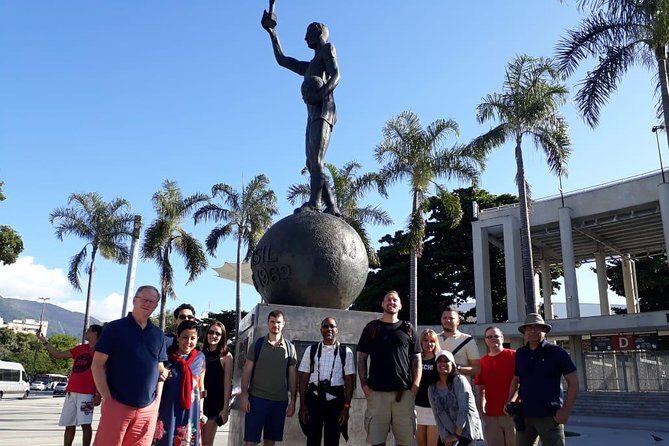
Your afternoon starts with a quick hit at Maracanã. You won’t go inside for the tour—this stop is outside only—but you still get a moment to locate one of Brazil’s most famous sports landmarks and take pictures.
The highlight is a brief photo stop at the Bellini statue. The captain statue is tied to Brazil’s World Cup win in 1958, which gives the stop a strong story anchor. Even if you’re not a die-hard soccer fan, it’s a neat way to connect the stadium to a person and a specific moment in history.
This portion is short—around 10 minutes—so plan your photos fast. If you’re hoping for a full stadium experience, this isn’t that. But for a downtown “art-and-culture” day that must cover multiple stops, it’s an efficient use of time.
Sambadrome da Marques de Sapucaí: Where Carnival Takes Over
Next comes the Sambadrome, where Rio’s biggest carnival parade happens. Again, the time is brief—about 10 minutes—but the payoff is seeing the space that frames the yearly spectacle.
The details list admission as free for this stop, which is a big value point. This is one of those places where your brain immediately switches gears: the day feels like “city tour,” then suddenly you’re imagining music, costumes, and crowds that usually take over.
Practical tip: wear comfortable shoes. Even with a short visit, you may be walking a bit and positioning for views of the arena area. If you’re the type who likes to photograph architecture and crowd venues, this is the stop where you’ll feel the most “Rio.”
Candelária Church: Baroque Facade, Mixed-Style Interior
After the parade venue, the tour turns toward sacred architecture, and Candelária Church is a strong early example. This is an important Roman Catholic landmark in central Rio, with construction and decoration carried out over a long stretch—from 1775 to the late 19th century.
What I like here is the style blending. The church has a Baroque façade, while the interior uses neoclassical and Neo-Renaissance elements. That mix helps you understand how Rio absorbed and adapted different European-era design ideas.
Time is not stated in the info you provided for this specific stop, so assume you’ll get a short guided look. Bring your phone camera with the expectation that you’ll be moving in real time, not lingering for a full self-guided circuit.
São Bento Monastery: Plain Outside, Gilded Inside
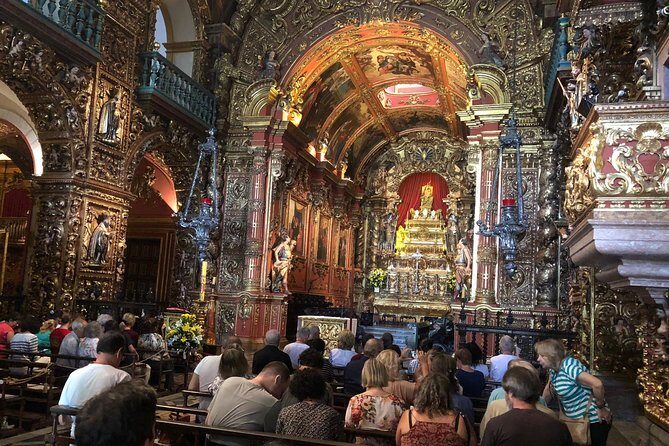
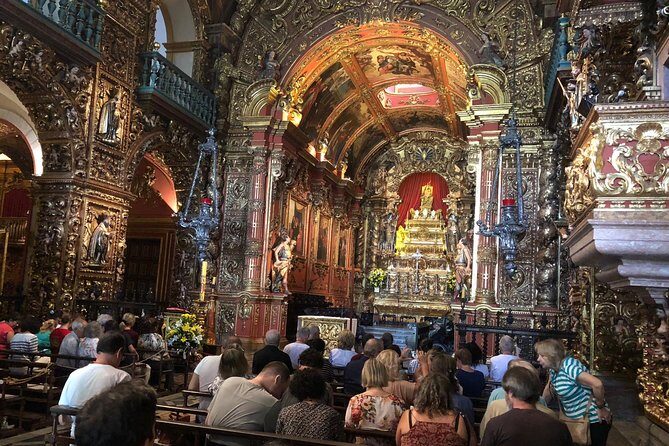
If you want one stop that feels like a “wait—what?” moment, make it São Bento Monastery. The outside is described as monastic simplicity, but the interior delivers contrast: gilded Baroque engravings with plant motifs.
This is also a place where you get a sense of theatrical craftsmanship without needing a museum ticket. The info notes you can see Rococo-style engraving on the high altar and get a view of the dome and the Chapel of the Santíssimo Sacramento. The stop lasts about 20 minutes, and it’s listed as free admission.
Here’s a practical way to enjoy it: look for the layering. Start with the exterior feel (purposeful simplicity), then switch to details inside—gilded engravings and the carved-style surfaces. If you like religious art, this is the kind of stop where small decorative elements reward slow looking.
If your schedule feels tight that day, this is still worth prioritizing. Even a quick look lets you spot the exterior-to-interior contrast.






Metropolitan Cathedral of Saint Sebastian: A Modern Cone and Great Acoustics
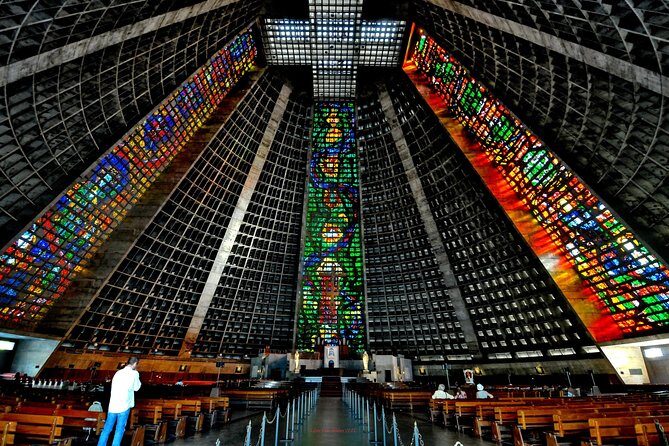
From São Bento, the tour heads to the Metropolitan Cathedral of Saint Sebastian, another landmark with a distinct design language. This one is the conical, cone-shaped cathedral that many people associate with Rio’s modern architectural identity.
The architecture is described as inspired by Mayan pyramids of Mexico, and the cone shape is believed to give a sense of closeness to God. Inside, you’ll notice four stained glass windows running floor to ceiling, forming a cross at the top. Even better: the information notes the acoustics are great in there.
This stop lasts around 20 minutes, and admission is listed as free. That makes it an unusually good “included value” for a cathedral with this level of design focus. If you enjoy architecture, go in ready to look up. The stained glass arrangement is one of those visual structures that feels more powerful once you’re inside.
Lapa Arches, the Aqueduct Area, and the Santa Teresa Connection
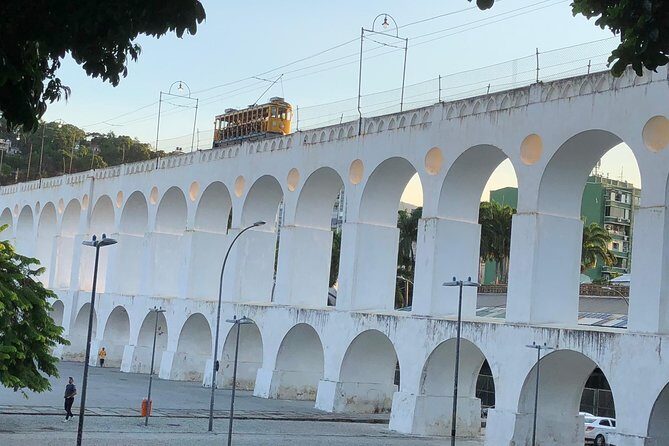
As you travel, you’ll see the Lapa Arches area (Carioca Aqueduct), plus streets like Lavradio and Avenida Chile. This is a moment where you get to view how Rio’s downtown connects to the hills.
The Carioca Aqueduct is frequently called Arcos da Lapa, and it links to the tram system that connects the city center with Santa Teresa uphill. If you like how infrastructure shapes neighborhoods, this is where it clicks: the arches aren’t just pretty—they’re part of how movement and history work together.
It also helps you frame the next colorful stop. Lapa is a visual bridge between “old Rio” and “artist-driven Rio,” and you’ll feel that contrast more once you reach the stairs later.
Escadaria Selarón: A Staircase Built from Tiles and Stories
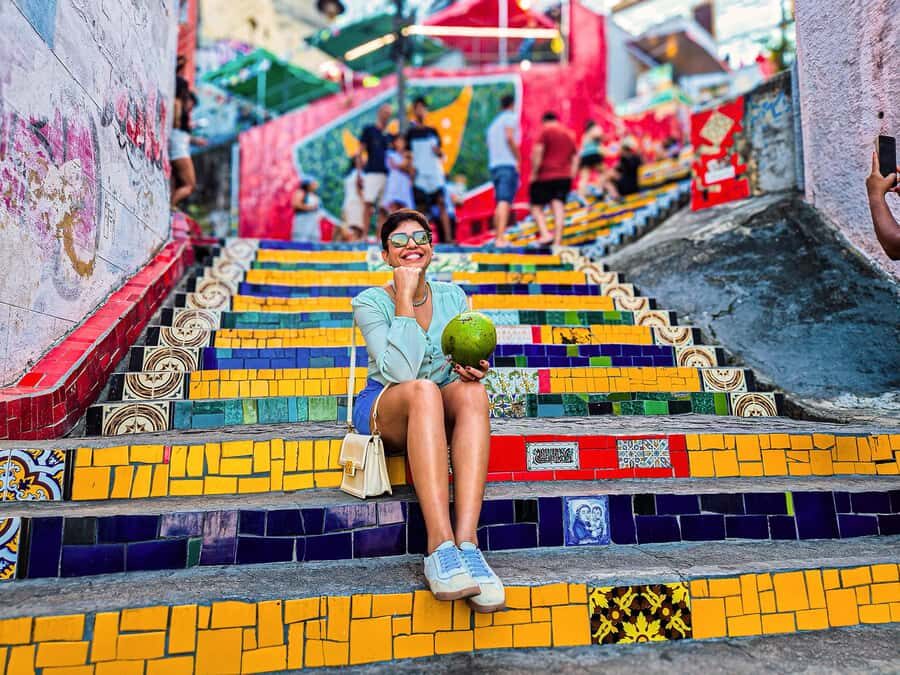
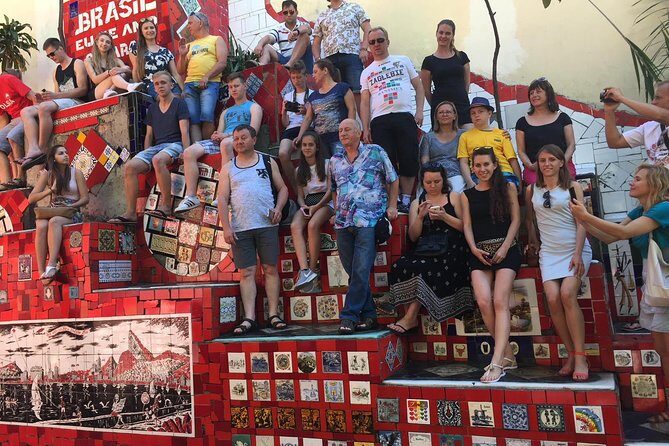
Then you get to one of Rio’s most recognizable photo moments: Escadaria Selarón. This tiled staircase is the work of self-taught Chilean artist Jorge Selarón, who moved to Rio in 1983 and covered the steps with tiles collected from around the city—and from donations by visitors worldwide.
Here’s what makes it special beyond the obvious colors. The staircase has 215 steps, and the process sounds almost obsessive in the best way: starting in 1990, Selarón laid over 2,000 tiles. The color choices—green, yellow, and blue—echo the Brazilian flag, and the design is described as a tribute to Brazilian people.
It’s also pop-culture famous, appearing in music videos including Beautiful by Snoop Dog and Pharrell Williams (2002). That helps explain why this spot draws people from everywhere.
The stop lasts about 25 minutes, and entry is listed as free. That’s long enough to take photos, walk up a bit, and read the vibe. Practical tip: expect people in your frame. This is a walking-and-photography stop, not a quiet viewpoint.
Outeiro Church Details: Original Azulejo Tiles
The tour also includes the Nossa Senhora da Glória do Outeiro church, described as an important colonial religious heritage monument. The standout detail is the 18th-century nature of the temple and nave, and the fact that the original azulejo decorated tiles remain.
These tiles aren’t just decorative backgrounds. The information says they depict biblical scenes from the Book of Tobit and the Song of Songs. That makes the stop more than architecture appreciation—it’s visual storytelling you can study if you’re willing to slow down for a moment.
Because time isn’t clearly stated for this church stop, treat it like a guided “look and learn” pause rather than a long visit. If you love religious art, this is an especially good place to focus on the tiles themselves.
Beaches as Photo Stops: Botafogo’s Sugar Loaf View and Copacabana Start
Even though this is an art-and-architecture tour, you’ll also catch beach scenery. The info includes Botafogo beach and mentions it as one of Rio’s classic postcard views, with Sugar Loaf ahead across Guanabara Bay.
Botafogo is described as more used by locals for sports, sunbathing, and recreation than as a swimming beach. It even notes that concerts happen occasionally. The point for you: this is a chance to see a Rio shoreline that feels more local than tourist-bubble.
Then the tour references Copacabana Beach in connection with the meeting point area. Copacabana is described as one of the most famous and beautiful beaches in the world, with a colorful, fun, lively atmosphere. The tour starts from Copacabana, so you get a visual anchor at the beginning.
These beach moments can be quick, so use them for framing shots rather than planning a full break.
Price and Pacing: Does $51 for 3 Hours Make Sense?
At $51 per person, this tour can be a strong value if you want a downtown overview without planning five separate trips. Here’s why: you’re paying for a professional guide, an air-conditioned vehicle, and hotel pickup/drop-off for selected hotels. The stops include several locations listed as free admission (Sambadrome, São Bento Monastery, Metropolitan Cathedral, and Selarón).
Food and drinks are not included, so don’t count on buying a meal during the tour. I’d plan on eating before pickup or bringing a simple snack you can handle on your own afterward.
Now, the pacing question—the only real downside theme you should plan around. With a schedule this packed, you’ll feel the clock. If there are long lines at major stops or if the day runs behind due to pickup traffic, you can end up moving faster than you hoped.
My advice: treat this as a “get your bearings” tour. If you fall in love with a particular stop—like the cathedral inside or the gilded details of São Bento—then plan a longer return trip on your own.
Who This Tour Fits Best
This tour fits best if you:
- want downtown Rio context without hopping between neighborhoods all day
- like mixing architecture and culture with classic Rio landmarks
- prefer a small group (14 max) and a guided plan
- are okay with short visits at many stops
If you’re the type who wants deep time in one museum or long guided explanations without stopping, you might find the pace limiting. But if you want the highlights in one afternoon, it does what it promises.
Also, if you’re traveling on a day with lower congestion, the experience can feel smoother. One guide-run felt extra comfortable on Sunday thanks to lighter crowding, so if your schedule gives you flexibility, consider that.
Should You Book This Art, Architecture, and Culture Tour in Downtown Rio?
I’d book it if your goal is to understand Rio’s downtown fast, with iconic architecture, churches, and public art in one organized loop. The price works especially well because multiple major stops are listed as free, and the guide + transport + pickup simplify a lot of logistics.
Skip it only if you want long entry times, a museum-style deep dive, or a full inside stadium experience. This tour is about breadth and getting the stories behind the main shapes of Rio—Maracanã, carnival venues, stone-and-tile sacred spaces, and Selarón’s staircase built by one artist’s long project.
If that sounds like your style, this is a smart afternoon use of your limited time.
FAQ
Where is the tour meeting point and what time does it start?
The meeting point is Hilton Rio de Janeiro Copacabana, Av. Atlântica, 1020, Copacabana. The tour start time is 1:30 pm.
Is hotel pickup available?
Yes. Pickup is offered from selected hotels. The details note pick up is available by the cost of Leblon, Ipanema, and Copacabana, and you should contact the local operator to confirm the best pickup location and pickup time.
How long is the tour and what is the price?
The tour is about 3 hours. The price is $51.00 per person.
Is the tour guided in English?
Yes. The tour is offered in English, and the guide is multi-lingual with English and Spanish always.
Do I need to pay admission at the stops?
Some stops are listed as free admission: Sambadrome da Marques de Sapucai, Mosteiro de São Bento, Metropolitan Cathedral of Saint Sebastian, and Escadaria Selarón. Maracanã is an outside-only visit, and admission ticket is not included. For other sites, the provided details don’t specify admission pricing.
How large is the group?
The tour has a maximum of 14 travelers.
Can I cancel for a full refund?
Yes. Free cancellation is available if you cancel at least 24 hours before the experience’s start time for a full refund.