REVIEW · RIO DE JANEIRO
Walking tour in Rio de Janeiro Historical Center.
Book on Viator →Bookable on Viator
Rio’s Centro hits fast and hard.
This walking tour strings together major landmarks with real context, so you’re not just photographing pretty buildings—you’re learning what they meant and why they’re still part of daily life. I like the mix of iconic sights and quieter corners, and I love that the pacing works at walking speed without feeling rushed. You’ll get clear stories from a licensed guide, often in English.
Two things I especially like: first, the schedule is tight (about 3 hours) but still gives you time at each stop, from Cinelandia to the view from Mosteiro de São Bento. Second, the guide approach is practical—Carlos and Augusto (when they’re on the team) are the type who keep the group together, answer questions in good English, and even help with photo angles. One drawback: not every church interior is included, and one key stop has an entrance fee not covered in the price.
If you can handle a few stair segments and standing in crowd-adjacent areas, this tour is a smart way to see a lot of Rio’s Centro without wasting a day planning routes.
In This Review
- Key highlights at a glance
- Where this walk starts and why it matters
- Price and what you actually get for about $29
- Stop 1: Cinelandia’s early-20th-century architecture ensemble
- Stop 2: Escadaria Selarón and the story behind the tiles
- Stop 3: Metropolitan Cathedral of Saint Sebastian—symbolism you can see
- Stop 4: Real Gabinete Portugues de Leitura—when a library becomes a spectacle
- Stop 5: Sao Francisco da Penitência Church—the gold interior payoff
- Stop 6: Praca Quinze de Novembro—where colonial, imperial, and republican meet
- Stop 7: Mosteiro de São Bento—hill views and a break from noise
- The guides: Carlos and Augusto set the tone
- How to make the most of the walk
- Who this tour suits best
- Should you book this Rio Historical Center walking tour?
- FAQ
- FAQ
- How long is the walking tour in Rio’s Historical Center?
- How much does the tour cost?
- Is the tour offered in English?
- What are the main stops on the route?
- Are entrance tickets included for every stop?
- Where do I meet the guide, and where does the tour end?
- Is this tour private or shared with strangers?
- What is the cancellation policy?
Key highlights at a glance
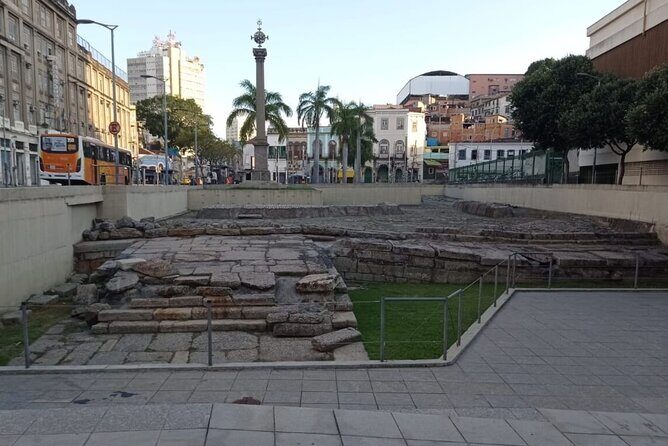
- A 3-hour Centro loop that strings together major religious and civic landmarks without long detours
- Escadaria Selarón (Selarón Steps) explained with local stories and curious details that make it more than a photo stop
- Great value for the price, with most admissions listed as free and only one notable interior costing extra
- Photo-and-safety minded guiding, with guides who help you navigate busy spots calmly
- Priority access when lines are forming, so you spend more time inside than waiting outside
- Ending at CCBB, a convenient place to continue your own exploration of Centro
Where this walk starts and why it matters

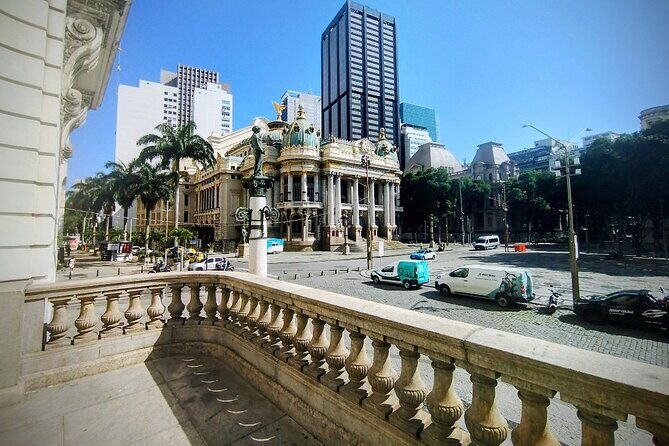
The tour begins at the Municipal Theater of Rio de Janeiro in Praça Floriano, in the Centro area. That’s a solid first move. From the theater, you’re already in the zone where early-20th-century Rio shows off its ambition—grand façades, formal street design, and buildings that look like they’re still trying to impress the skyline.
Your walk ends at Centro Cultural Banco do Brasil (CCBB) on R. Primeiro de Março. That matters because Centro is big. Finishing near CCBB gives you an easy “reset point” to grab local food, browse shops, or connect to other sights without feeling stranded at the far edge of the old center.
You’ll be walking with a licensed guide, and the tour is offered in English. It’s also private for your group, so you’re not stuck waiting behind a giant crowd pretending to be part of one big “experience.”
You can also read our reviews of more walking tours in Rio de Janeiro



Price and what you actually get for about $29
At $29.43 per person for about 3 hours, this feels like good value for a guided walk that covers seven major stops. Most listed admissions are free, including Cinelandia, the Selarón steps, the Metropolitan Cathedral, the Portuguese Reading Room, Praça Quinze de Novembro, and Mosteiro de São Bento. The one exception is Sao Francisco da Penitência Church, where the interior ticket is not included.
That free-entry mix is the big reason this works. If you tried to recreate this route on your own, you’d spend time figuring out what’s worth entering, what’s open, and how long each stop realistically takes. Here, you get the structure, the storytelling, and the time on site. Add in the fact that guides have a habit of managing busy moments efficiently, and you end up spending your time where it counts: at the monuments, not in wandering.
Stop 1: Cinelandia’s early-20th-century architecture ensemble

Your first stop is Cinelandia, where you get a glimpse of one of Rio’s most elegant architectural assemblies from the early 1900s. This is where the tour earns its start. Rio’s Centro can look chaotic if you’re just scanning streets. Cinelandia gives you a frame: symmetry, grand civic scale, and the kind of design choices that tell you Rio wanted to feel modern and important.
What I like about this stop in a guided format is that you don’t just see buildings—you learn what they were built to communicate. Your guide points out the major features and ties them to the cultural mood of the time. It’s not heavy theory. It’s just enough history to make the façade feel meaningful.
Time on site is about 15 minutes, with admission listed as free. That’s enough for bearings and perspective without turning it into a long architecture lecture.
Stop 2: Escadaria Selarón and the story behind the tiles
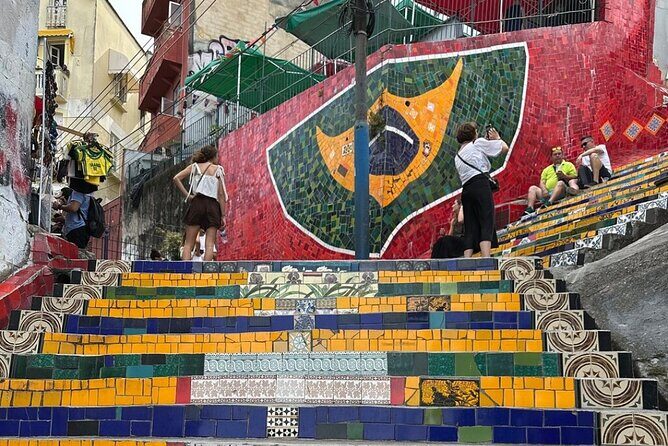
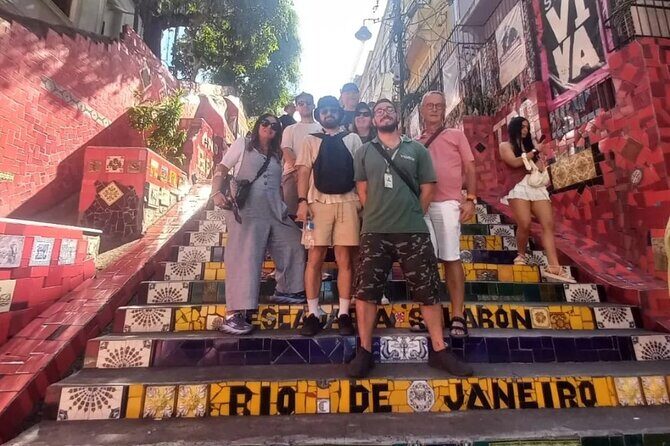
Next comes Escadaria Selarón, the famous colorful staircase. This is one of those Rio sights where the photo looks effortless, but the story behind it is what makes it stick in your memory.
Your guide leads you there and shares cultural information and curiosities. That matters because the stairs can turn into a grab-and-go tourist stop if you don’t know what you’re looking at. With the tour, you’re more likely to notice the details that don’t show up in a quick social-media shot—how the work became a symbol, how it fits into Centro, and why people treat it like more than just decoration.
The stop is about 25 minutes, and the admission is free. Drawback? It can be busy. Even with efficient timing, you’ll want to be ready to stand close to other visitors, especially at peak hours. The benefit is that your guide’s management helps keep the group moving without losing the moment.
Stop 3: Metropolitan Cathedral of Saint Sebastian—symbolism you can see
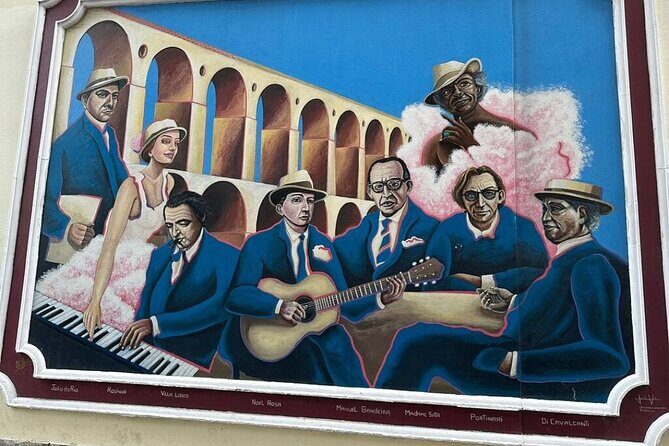
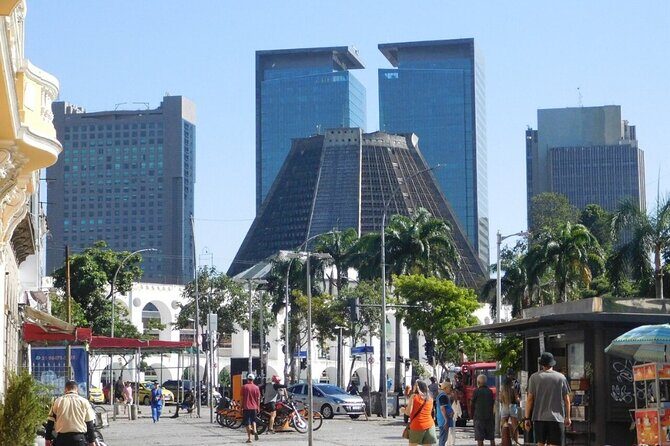
Then you reach The Metropolitan Cathedral of Saint Sebastian, one of Rio’s iconic churches. From outside, it’s recognizable. But the guided part is how you understand why people consider it more than a landmark building.
Your guide explains the cathedral’s story and focuses on its symbolism and importance for Rio. That’s useful because modern iconic churches can feel like they belong to a textbook. With a guide, it becomes a place with meaning inside the city’s identity—built to reflect faith, culture, and ideas about where religion fits into public life.
You’ll get about 15 minutes here. Admission is listed as free, so this is another stop that keeps the price feel fair.
You can also read our reviews of more historical tours in Rio de Janeiro






Stop 4: Real Gabinete Portugues de Leitura—when a library becomes a spectacle
Stop four is Real Gabinete Portugues de Leitura, described as one of the most beautiful libraries in the world. And yes, you’re guided inside. You’ll be seeing neomanueline style (the tour calls it that), with a lot of visual detail that makes the room feel theatrical—even if you’re not a “museum person.”
A guided visit is a big deal here because libraries can be quiet places, and it’s easy to miss what’s visually important if you’re wandering on your own. With a guide, you get context for what you’re looking at and why it’s designed that way. It also helps you keep respectful pace inside.
This stop runs about 15 minutes with admission listed as free.
One practical note: because it’s a library interior, keep your group voice low and your phone habits tidy. You’ll enjoy it more, and staff tend to be happier when the visit stays calm.
Stop 5: Sao Francisco da Penitência Church—the gold interior payoff
Now for the “pay attention” stop: Sao Francisco da Penitência Church. The tour focuses on the fully gold-coated interior and has you move through details with explanations, curiosities, and stories.
This is also where the tour has a small extra cost. The listing says the entrance ticket is not included. So if you’re budgeting, factor in that interior fee before you go. The good news is that this is one of the stops you’re most likely to remember. Gold interiors are impressive on photos, but they’re even better when you see the full scale and understand what each element is meant to communicate.
Time here is about 20 minutes. Admission timing can affect your pace, so it’s smart to arrive ready to enter quickly and listen for the guide’s cues.
Stop 6: Praca Quinze de Novembro—where colonial, imperial, and republican meet
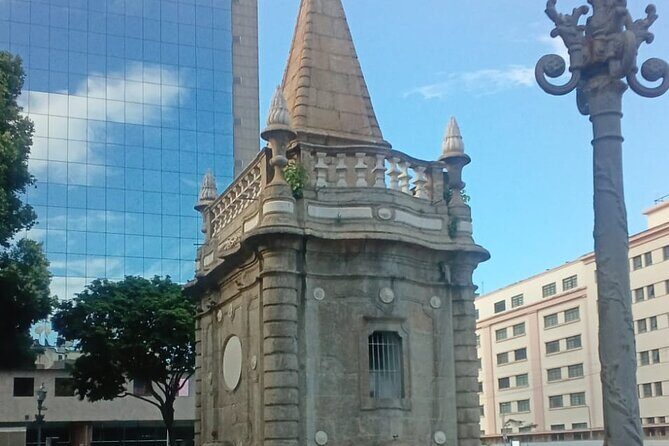
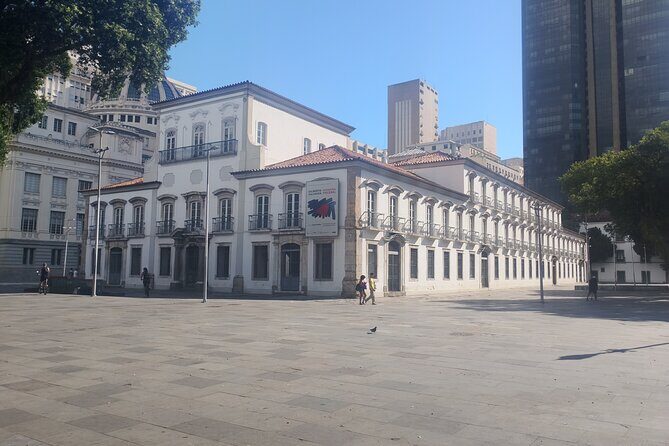
You’ll then walk to Praca Quinze de Novembro, a central point in Rio’s history. This stop is more about perspective than ornament. The guide helps you see how different time periods—colonial, imperial, and republican—fit into a small area.
This is one of those places where Centro’s layers can feel confusing if you only read it like a map. With a guide, you start recognizing how neighborhoods and monuments reflect politics and culture shifting over centuries. You begin seeing the city as a timeline you can walk through.
This stop lasts about 15 minutes, with admission listed as free.
If you’re the type who likes to understand where a city came from, this stop delivers. If you’re more into pure visuals, you’ll still get something, because the guide connects the monuments around the square to what was happening historically.
Stop 7: Mosteiro de São Bento—hill views and a break from noise
Final stop is Mosteiro de São Bento. The tour takes you up to the monastery on the hill. There’s an elevator option listed, which is useful if stairs are a stress for you.
This is where the walk slows emotionally. You get a view over Guanabara Bay, and you also get that contrast the tour promises: silence and tradition set against the surrounding modern city. It’s not just scenic—it’s a feeling shift. You stop being “in the crowd” and start being “in a place.”
Time is about 15 minutes, with admission listed as free.
This stop can be a great closer because the bay view gives you a mental snapshot of Rio’s geography. It also sets up an easy plan for what to do next, since you’ve got the sense of direction in your head.
The guides: Carlos and Augusto set the tone
A standout pattern from the experience is how the guide handles the group. English is handled well, and the pacing works. In smaller-group moments—like when guides had extra time due to the season—guides such as Carlos and Augusto have been known to add extra stops and share spots you might miss on your own.
Safety and well-being also come up in a very practical way. Even when crowds build, guides keep you oriented and moving without panic. That’s a big deal in a city center where sidewalks can be uneven and traffic is always nearby.
If you’re someone who likes asking questions, you’ll likely enjoy this format. If you’re someone who prefers mostly quiet looking and less talking, you’ll still be fine. The guide explains, but the structure keeps you from drifting.
How to make the most of the walk
Here are a few tactics that help you enjoy every stop, especially if you’re short on time in Rio:
- Wear walking shoes you trust. This is a Centro loop, and surfaces vary.
- Bring water, especially if the weather is warm. The walk is only about 3 hours, but Rio sun can be sneaky.
- Keep your phone ready for Selarón, but follow the guide’s timing. Lines and angles can shift quickly.
- Budget for the Sao Francisco interior ticket. It’s the only listed admission that isn’t included.
- Be ready for crowds, especially around the staircase and major cathedral areas. The guide’s ability to move you efficiently is part of the value.
Also, one of the best “unexpected” benefits is that the tour can feel tailored to your needs when the group is small. You might get extra context or add-on stops when conditions allow. Don’t assume it every time, but it’s a real possibility with this team.
Who this tour suits best
This is a great fit if you:
- Want a high-density Centro day without planning logistics.
- Like stories that connect architecture and streets to Rio’s changes over time.
- Appreciate a guide who manages pacing and keeps you safe while you’re walking.
It’s also a good choice if you’re in Rio for the first time. You’ll hit the big names, but you’ll also learn how they connect as part of one city center area.
If you hate walking, this won’t be your best match. The entire point is a walking route with multiple short stops. On the other hand, if your mobility needs extra thought, note the elevator option at Mosteiro de São Bento.
Should you book this Rio Historical Center walking tour?
Yes, I’d book it if you want a smart, guided way to see Centro’s headline landmarks in about half a day. The value is strong because most entries are free, and you’re paying for a licensed guide plus time-efficient access to the sites. The experience also has a safety-first feel, and the guide quality can make a big difference—especially if you’re guided by people like Carlos or Augusto.
I’d hesitate if you’re trying to squeeze in too many other activities right after, because you’ll end at CCBB and then you’ll still need to move on. Also, if you’re allergic to paying any extra interior fee, plan for the Sao Francisco da Penitência Church ticket.
If your goal is to get oriented quickly and leave with a real sense of Rio’s Centro layers, this is a very solid pick.
FAQ
FAQ
How long is the walking tour in Rio’s Historical Center?
It lasts about 3 hours.
How much does the tour cost?
The price is $29.43 per person.
Is the tour offered in English?
Yes, it’s offered in English.
What are the main stops on the route?
The tour covers Cinelandia, Escadaria Selarón, The Metropolitan Cathedral of Saint Sebastian, Real Gabinete Portugues de Leitura, Sao Francisco da Penitência Church, Praca Quinze de Novembro, and Mosteiro de São Bento.
Are entrance tickets included for every stop?
Most admissions are listed as free, but Sao Francisco da Penitência Church has an admission ticket that is not included.
Where do I meet the guide, and where does the tour end?
Meet at the Municipal Theater of Rio de Janeiro (Praça Floriano, S/N – Centro). The tour ends at Centro Cultural Banco do Brasil (CCBB), R. Primeiro de Março, 66 – Centro.
Is this tour private or shared with strangers?
It’s listed as a private tour/activity, meaning only your group participates.
What is the cancellation policy?
You can cancel for a full refund up to 24 hours before the start time.