REVIEW · RIO DE JANEIRO
Rio de Janeiro: Little Africa Heritage Walking Tour
Book on GetYourGuide →Operated by Sou Mais Carioca · Bookable on GetYourGuide
Little Africa in Rio feels personal fast. You start at Museu de Arte do Rio, then connect African heritage to what you see in the port area today, with rooftop views over Mauá Square and Guanabara Bay. It is history you can walk through, stop by stop, without needing a museum ticket.
I like that the tour doesn’t treat this as a side topic. You get a clear introduction to Brazil’s colonial period first, then the guide builds outward to the neighborhoods that became known as Little Africa after the slave trade became illegal in Brazil. For me, that storytelling structure makes the whole walk click.
One thing to plan for: this is an outdoor walk in rain or shine for about 2.5 hours. Bring comfortable shoes, water, and sunscreen, and accept that the pace is mostly walking, not sitting.
In This Review
- Key Highlights You Should Aim For
- Little Africa in Rio: What You’re Really Seeing
- Starting at Museu de Arte do Rio: The Fast Orientation You Need
- Morro da Conceição and the Rooftop View That Puts Everything in Context
- Largo da Prainha: African Influence in Brazilian Gastronomy
- Mercedes Baptista: Afro Dance History in Public Space
- Pedra do Sal: The Birthplace Story Behind Samba
- Jardim Suspenso do Valongo and the Cais do Valongo Waterfront
- Price and Value: Is $40 Worth a 2.5-Hour Walk?
- Pacing, Heat, and What to Bring for Real Comfort
- Guides That Make the Story Land (Names to Watch For)
- Who This Tour Is Best For
- Should You Book This Rio Little Africa Heritage Walking Tour?
- FAQ
- Where does the tour start?
- How long is the Little Africa Heritage Walking Tour?
- What is the price?
- Is hotel pickup included?
- What languages are available?
- Does the tour run rain or shine?
- What should I bring?
- When should I arrive at the meeting point?
- Will the guide wait for late arrivals?
- Is it suitable for young children?
Key Highlights You Should Aim For
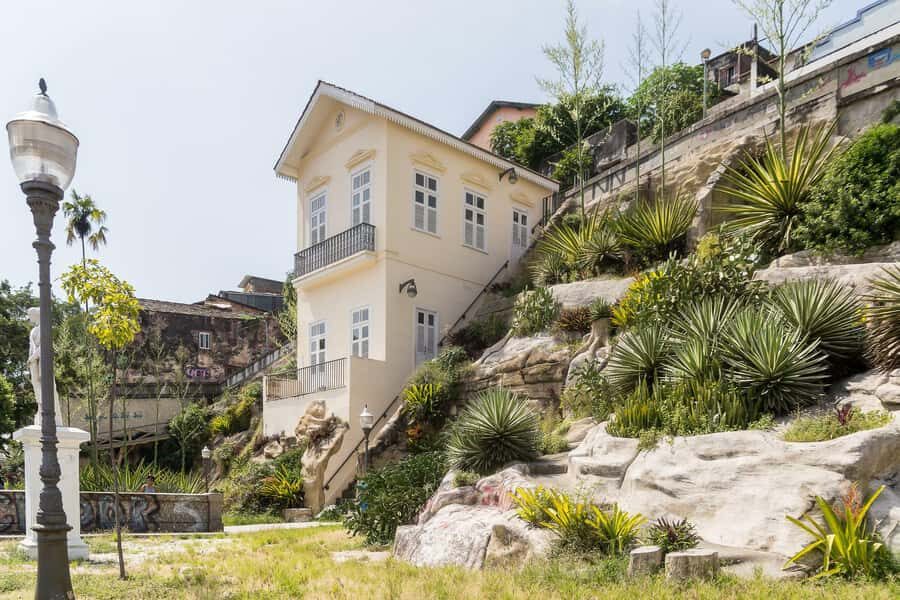
- Rooftop panorama from the Rio Art Museum area, with Mauá Square and Guanabara Bay in view
- Largo da Prainha for the African influence on Brazilian food traditions
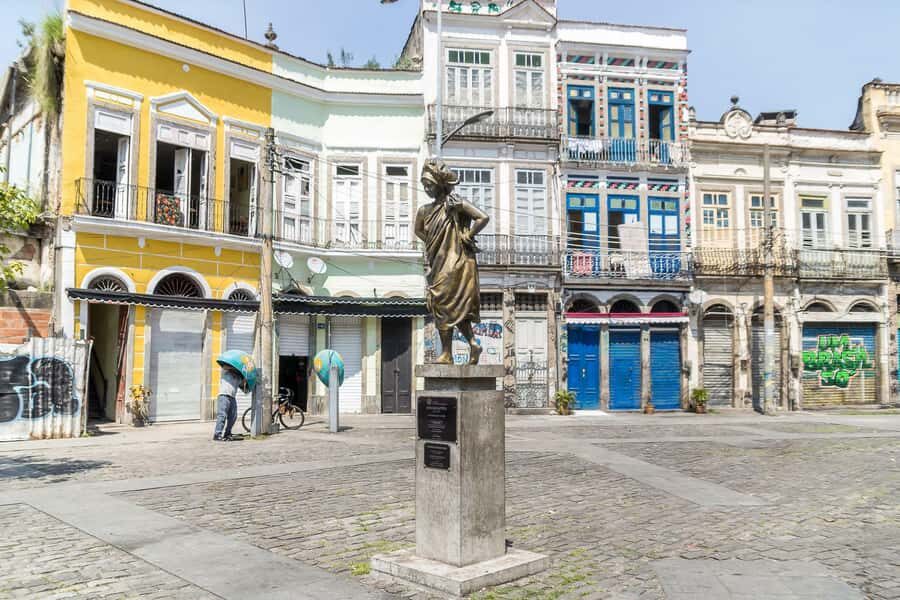
- Mercedes Baptista statue crediting Afro dance pioneers in Brazil
- Pedra do Sal as the celebrated place where samba was born
- Jardim Suspenso do Valongo and Cais do Valongo to close the loop at the waterfront
Little Africa in Rio: What You’re Really Seeing
Rio’s port district can look like plain city scenery if you only scan for beaches and iconic landmarks. This tour changes the lens. The area called Little Africa grew at the turn of the 20th century, when freed people stayed in the region to work and build community even after the slave trade became illegal in Brazil.
That history matters because it explains why you will see culture here that is not just decorative. Samba, Afro-Brazilian dance, and community identity did not appear out of nowhere. They developed in real places where people lived, labored, celebrated, and resisted.
The best part is that you’re not stuck with abstract explanations. You walk through places tied to that story: viewpoints, streetscapes, monuments, and the Valongo waterfront. You start to understand Rio’s culture as something rooted in specific neighborhoods, not just a vibe.
You can also read our reviews of more walking tours in Rio De Janeiro



Starting at Museu de Arte do Rio: The Fast Orientation You Need
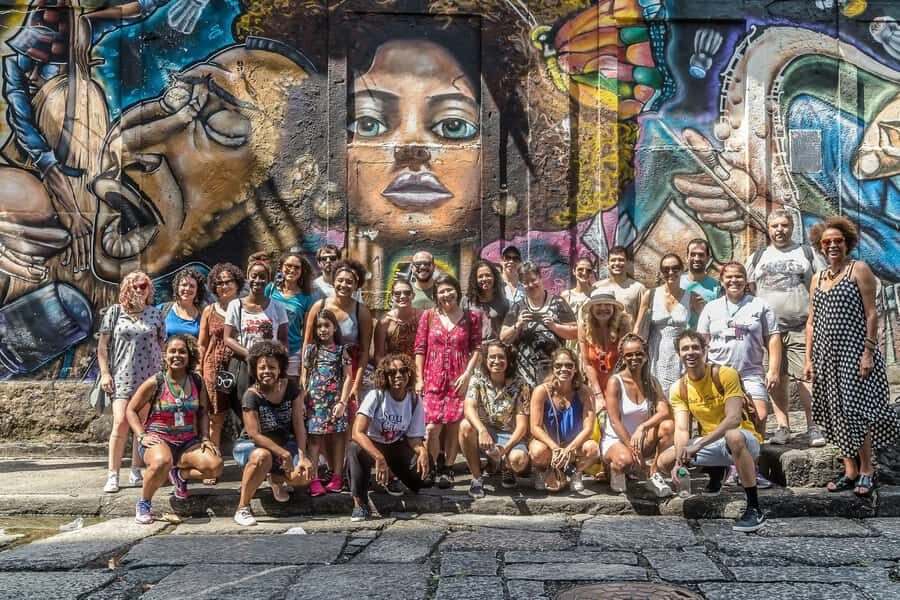
The tour begins in front of Museu de Arte do Rio. I’d show up about 5 minutes early so you can start right on time. If you are late, the guide can only wait 15 minutes, so treat this like a timed appointment, not a casual meetup.
Right away, you get an introduction focused on Brazil during the colonial period. This is useful even if you think you already know the broad outline. It gives the tour a backbone, so the later stops on slavery, Afro dance history, and samba land with the right weight.
There is also a built-in reset: a short break at the museum area. That matters on a 150-minute walking tour, especially in heat. You’ll be glad you have a moment to stand, regroup, and refill your water before the longer stretch.
Morro da Conceição and the Rooftop View That Puts Everything in Context
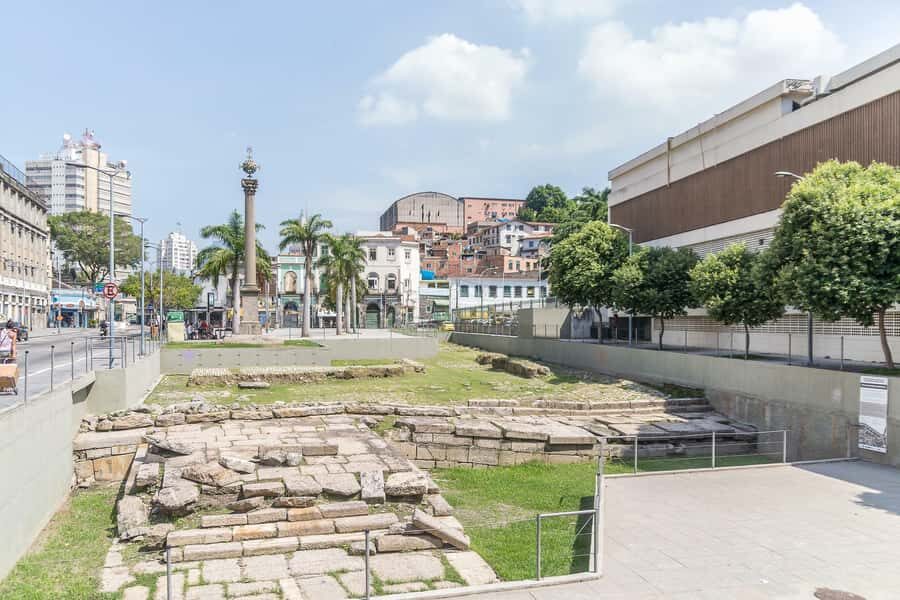
After the museum orientation, you move into the Morro da Conceição area on foot. You’re not walking for exercise. You’re walking for perspective—how this city connects hills, neighborhoods, and the port.
One of the most memorable moments comes with a rooftop pause linked to the Rio Art Museum area. From up there, you can admire Mauá Square and Guanabara Bay. Even if you do not memorize every fact, the view gives you a sense of why this waterfront mattered for movement of people and goods.
And here is the practical side: looking out over the bay helps you orient mentally. Later, when the tour returns toward Valongo, you’ll understand the geography instead of just following directions.
Largo da Prainha: African Influence in Brazilian Gastronomy
Next up is Largo de São Francisco da Prainha. This stop centers on African influence in Brazilian gastronomy. You’ll hear how food traditions traveled and transformed, then took root in everyday life.
This is one of those stops that can surprise you. Food history can sound soft compared to topics like slavery and racial injustice. But that is exactly why it is valuable. Culture survives through daily routines—what people cooked, shared, and passed down.
A good guide will connect the dots between big historical forces and small, lived experiences. In your case, you should look for those connections: when the tour talks about gastronomy, try to imagine what ingredients and techniques might have meant for community life in the port neighborhoods.
Mercedes Baptista: Afro Dance History in Public Space
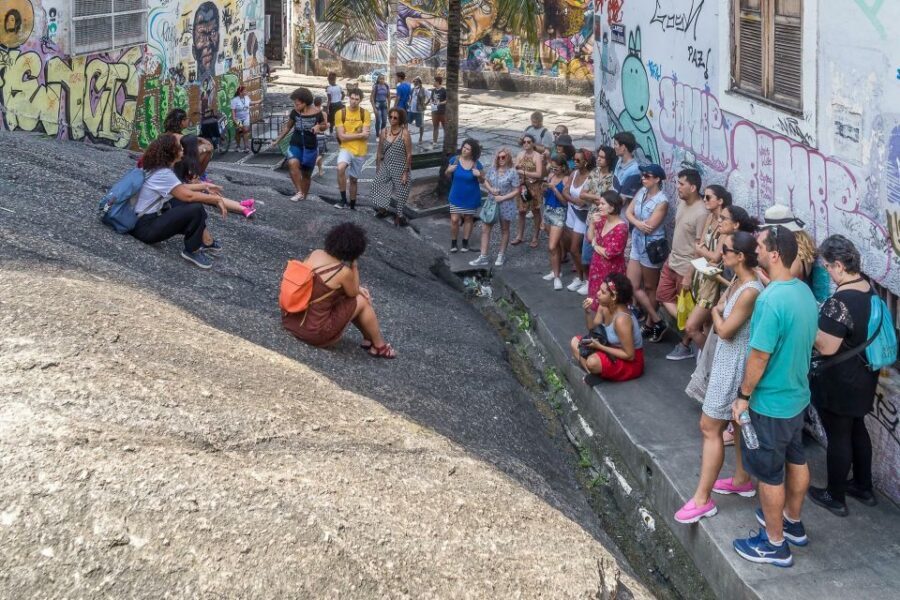
The tour includes a stop at a statue erected in honor of Mercedes Baptista, described here as the forerunner of Afro dance in Brazil and the first Black dancer at the Municipal Theater in Rio de Janeiro.
This part is about visibility. When you see a named figure in a public place, you get a clue that the story is not only in textbooks—it is part of the city’s cultural memory. It also helps you understand that Afro-Brazilian dance has institutional history, not just street-level tradition.
If you care about performance arts, pay attention to how the guide frames Mercedes Baptista’s significance. It is not just a biography. It is a marker of progress and a reminder of what had to change for that recognition to exist.
You can also read our reviews of more historical tours in Rio De Janeiro





Pedra do Sal: The Birthplace Story Behind Samba
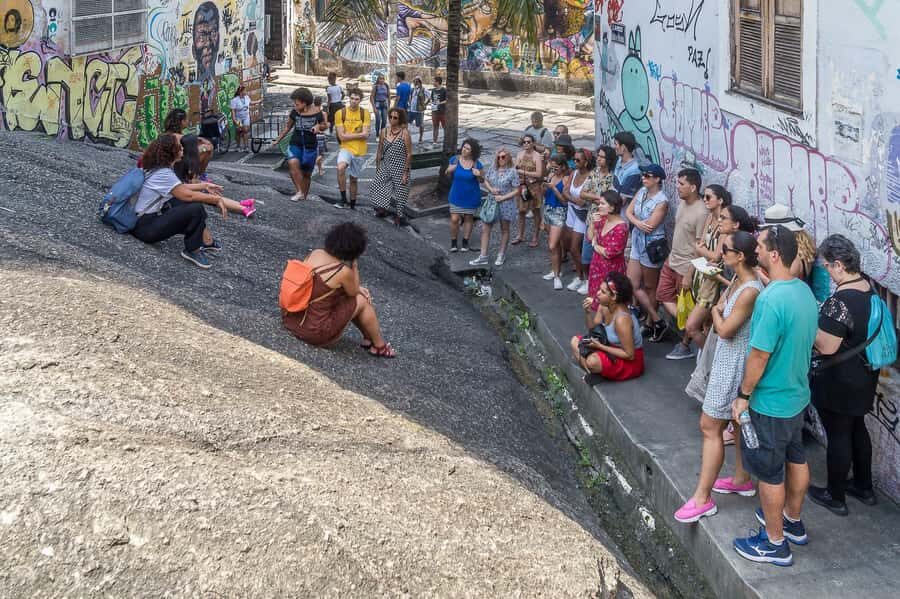
Pedra do Sal is one of the tour’s headline stops. It is presented as the place where samba was born, and the area is also considered the oldest continuously-inhabited Black neighborhood in Brazil.
This is where the walking tour turns into a cultural checkpoint. You are standing in the kind of place where music is more than entertainment. Samba here is tied to community gathering, identity, and historical continuity.
A drawback to keep in mind: because this stop carries strong cultural weight, your emotions might run high. That is normal. The benefit is that the tour’s earlier context about slavery and post-illegal trade conditions helps keep things grounded rather than just overwhelming.
If you want to get the most out of Pedra do Sal, slow down. Let the guide explain what makes this location special, then take a moment to look around like you are meeting the place for the first time.
Jardim Suspenso do Valongo and the Cais do Valongo Waterfront
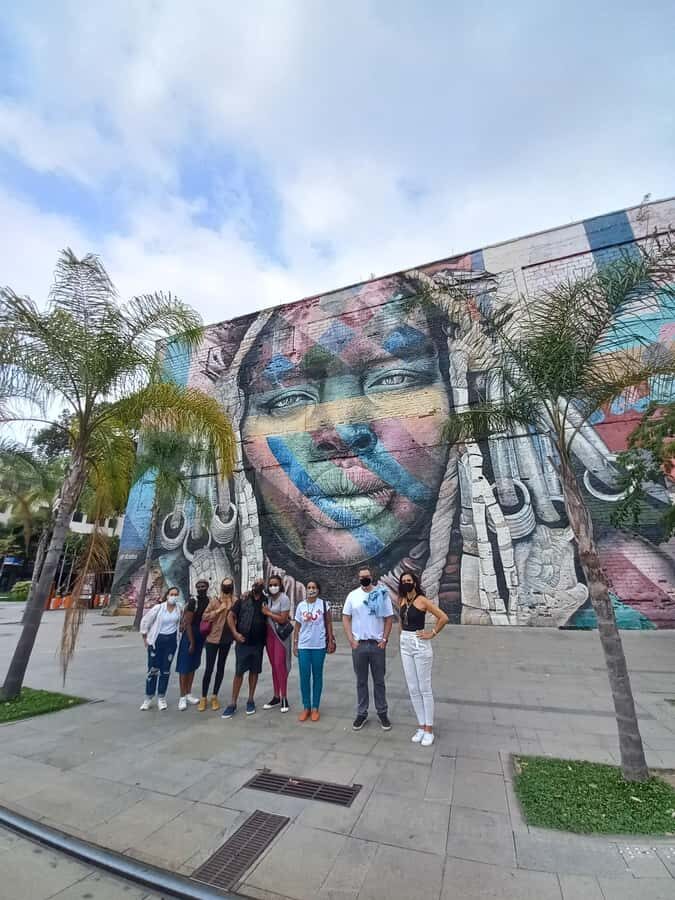
The final stretch focuses on Valongo, ending at the Valongo waterfront area called Cais do Valongo. You first visit Jardim Suspenso do Valongo, the Hanging Garden of Valongo.
This sequence matters. The Hanging Garden stop gives you a spatial and sensory shift—then the tour lands you back at the water with the Cais do Valongo connection. You start to feel how the port shaped lives, opportunities, and trauma.
If you are the type of person who likes to connect sites into a timeline, this ending is well-structured. The story comes full circle: from colonial context, to Little Africa neighborhoods, to samba origin and Afro dance recognition, and finally to Valongo.
Also, if you like doing photo stops, this is a good place to pause. You can capture the setting, but more importantly, you can absorb it. The area is not just pretty. It is loaded with meaning tied to human movement and survival.
Price and Value: Is $40 Worth a 2.5-Hour Walk?
At about $40 per person for roughly 150 minutes, this is not a budget snack tour. It is also not overpriced for what you get, because you are paying for more than sightseeing.
You are paying for:
- a guided narrative that connects colonial-era context to specific neighborhood sites
- an English-speaking guide (so you can actually track the story)
- a route that includes multiple meaningful stops rather than one or two big attractions
The “value” part comes down to your travel style. If you like Rio as more than postcard scenery, this tour earns its keep. If you want only iconic viewpoints and fast photos, you might feel the emotional weight of the history is more than you expected.
My practical take: if you’re in Rio for a short trip, doing this early helps you read the city correctly for the rest of your days.
Pacing, Heat, and What to Bring for Real Comfort
This is a walking tour outside, taking place in rain or shine. That means you need to dress for weather quickly and comfortably.
I’d bring:
- comfortable shoes with grip (you’ll be on urban paths, not museum floors)
- sunscreen and water (heat can sneak up on you)
- comfortable clothes you can move in
There is a short break during the tour, but it is not a full meal plan. You can use the tour’s end as a cue to eat nearby afterward. If your guide offers recommendations, take them—guides often point you toward good options right around Little Africa and nearby areas for post-walk recovery.
Guides That Make the Story Land (Names to Watch For)
One reason this tour performs so well is the human delivery. Many guides are described as enthusiastic, personable, and able to handle sensitive topics with care and humor when appropriate. That combination matters, because the material is serious.
Names that show up often in the guide lineup include Luana, Nathalia, Ryane, Eddie, Marina, Larissa, and Raquel. You should not expect one single guide style every time, but you can reasonably expect strong presentation and a focus on connecting the story to what you see around you.
A small plus that shows up in guidance style: some guides help with practical transitions at the end of the tour, like making sure you can get your ride smoothly.
Who This Tour Is Best For
This is a great fit if you:
- want African heritage to be part of your Rio trip, not an optional add-on
- enjoy guided storytelling tied to real locations
- want samba and Afro dance history explained in context
- like tours that include viewpoints and walking segments, not only indoor stops
You might skip it if you:
- dislike walking outdoors for about 2.5 hours, even in rain
- prefer light, purely celebratory sightseeing with minimal discussion of slavery and racial history
Should You Book This Rio Little Africa Heritage Walking Tour?
I think you should book it if you want your time in Rio to add up to more than photos. The route is built around meaningful places: the samba birthplace at Pedra do Sal, the Mercedes Baptista statue tied to Afro dance history, and the Valongo waterfront ending.
This tour also helps you understand why Little Africa is not just a label. It’s a neighborhood story about people staying, building culture, and shaping Brazil in ways you can still see in the city today.
If you do book, go prepared for an outdoor walk, bring water, and give the guide your full attention at each stop. The payoff is that Rio will start to make more sense everywhere you go afterward.
FAQ
Where does the tour start?
You meet in front of Museu de Arte do Rio (the Rio Art Museum).
How long is the Little Africa Heritage Walking Tour?
The tour lasts about 150 minutes.
What is the price?
The price is $40 per person.
Is hotel pickup included?
No. Hotel pickup and drop-off are not included.
What languages are available?
The tour is offered with a live guide in English.
Does the tour run rain or shine?
Yes. The tour takes place rain or shine.
What should I bring?
Bring comfortable shoes, sunscreen, water, and comfortable clothes.
When should I arrive at the meeting point?
Arrive about 5 minutes before the activity starts.
Will the guide wait for late arrivals?
The guide can wait for 15 minutes in case of delays.
Is it suitable for young children?
It is not suitable for children under 5 years old.