REVIEW · RIO DE JANEIRO
Discover Rio Little Africa: A Cultural and Historical Journey
Book on Viator →Operated by Florencios Tour · Bookable on Viator
A street walk with weight and rhythm. Rio’s Saúde neighborhood tells a side of Brazil you rarely see on a quick city tour, from the wharf where enslaved Africans arrived to today’s Afro-Brazilian culture. This Rio Little Africa experience also links music, faith, and art to the people who survived and shaped Brazil.
What I like most is how the tour moves from one site to the next with a clear story line. You’ll get small-group time and real guided explanations at places like Cais do Valongo and MUHCAB, not just photos and head nods. I also love that the route includes samba-related landmarks such as Pedra do Sal, so the day isn’t only about tragedy.
The one drawback to plan for: it’s still a walk, with some stairs and plenty of time outdoors. Wear comfortable shoes and bring water, especially if you’re doing this on a hot day or after rain.
In This Review
- Key highlights you should know before you go
- Entering Rio Little Africa through the Saúde neighborhood’s real streets
- Meeting at Museu de Arte do Rio (MAR) and using the air-conditioned vehicle smartly
- Igreja de São Francisco da Prainha: where a dancer’s name lives in stone
- Pedra do Sal: the steps carved by salt workers and the samba circles that followed
- Cais do Valongo: a World Heritage wharf that shows the arrival scale
- Boulevard Olímpico’s Ethnicities mural: a 3,000-square-meter reminder of global ancestry
- Instituto de Pesquisa e Memoria Pretos Novos (IPN): the New Blacks Cemetery site
- MUHCAB in Little Africa: from arrival history to present-day issues
- How long is it, really: walking pace, heat, and rain plans
- Price and value: what $86 buys in Rio
- Best for first-time Rio visitors who want meaning, not only sights
- Should you book Rio Little Africa?
- FAQ
- Where do I meet for this tour?
- Is there hotel pick-up?
- How long is the Rio Little Africa tour?
- How large is the group?
- Do I need to pay for museum tickets?
- Is the tour mostly walking?
- What’s included in the price?
- Are tips included?
- What happens if the weather is bad?
Key highlights you should know before you go
- Saúde’s “Little Africa” focus: the tour centers on how Afro-Brazilian identity grew from the Valongo slave-arrival area
- Valongo Wharf stop is World Heritage: you’ll learn about the scale and the layered archaeology of arrivals
- Samba origins at Pedra do Sal: the salt unloading story connects directly to music, gatherings, and carnival-era traditions
- Pretos Novos memorial site at IPN: you get a museum + archaeology context on the New Blacks Cemetery area
- MUHCAB museum ties past to present: it covers African arrival, black affirmation, Afro-Brazilian culture, and current issues
- Up to nine travelers in practice: highlights promise a guaranteed small group, keeping the pace and questions comfortable
Entering Rio Little Africa through the Saúde neighborhood’s real streets
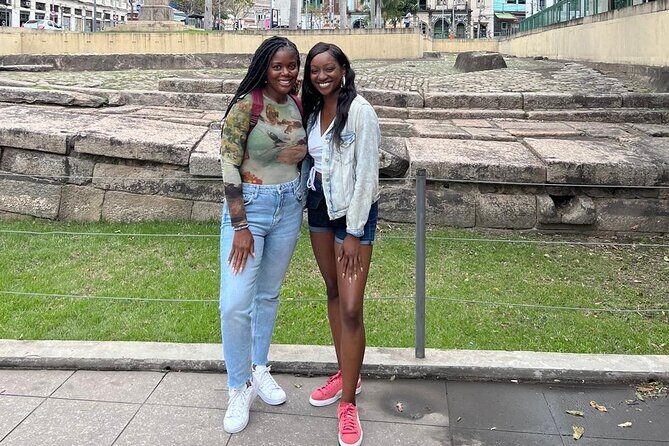
Rio is famous for postcard views, but it also has streets where history still sits in the ground. This tour takes you into the Saúde area with a guided walk that feels more like learning the city’s backstory than checking off monuments. You’ll cover colonial-era sites tied to African arrival and then connect the dots to Afro-Brazilian culture you can still feel today.
The best part is the way the day doesn’t treat slavery as a single chapter with a closing page. Instead, you see how the forced arrival of Africans became the foundation for music, religion, community organizing, and cultural expression across Brazil.
If you like your history with context—who lived where, what they did for work, and how culture formed around survival—this is your kind of tour.
You can also read our reviews of more historical tours in Rio de Janeiro


Meeting at Museu de Arte do Rio (MAR) and using the air-conditioned vehicle smartly
You start at the Museu de Arte do Rio (MAR) at Praça Mauá, 5 – Centro. Since it’s listed as no hotel pick-up, you’ll want to plan your ride in advance and arrive a bit early so you’re not rushing through the busy port area.
One practical detail: the experience includes an air-conditioned vehicle. You shouldn’t picture the whole day as nonstop walking. The guide typically uses vehicle legs to move you between concentrated areas, then returns you to the street for each key stop. That helps in the heat and keeps the tour from feeling like a long slog.
Also, the tone you’ll feel from the guides is consistent in the reviews: they make time for questions and they explain clearly. People mention guides like Scarlet, Larissa, Ana (including Ana Julia), Carolina, and Natalia, and the thread is the same—storytelling with specific local details.
Igreja de São Francisco da Prainha: where a dancer’s name lives in stone
The first stop is Igreja de São Francisco da Prainha, at Largo da Prainha. Here, you’ll see the Mercedes Baptista Statue. The details matter: Mercedes Baptista was the first African-Brazilian ballet dancer to enroll in the Municipal Theater of Rio de Janeiro’s ballet group in the late 1940s.
That’s not a small fact. It’s a marker of how Afro-Brazilian talent pushed into spaces that were not built for it. In a short time window, the guide sets an important mood shift: the day isn’t only about loss. It’s also about achievement, visibility, and cultural change.
This stop is listed as about 20 minutes, and admission is free. You’ll likely get a quick, focused orientation and then move on before the next block of heavy historical ground.
Pedra do Sal: the steps carved by salt workers and the samba circles that followed
Next up is Pedra do Sal, one of Rio’s best-known points for understanding how Afro-Brazilian culture took shape in the city. The story starts with Portuguese salt imports. Enslaved Africans were forced to unload the salt, and the site’s name comes from that work.
Here’s what makes this place more than a scenic corner: the enslaved laborers carved the steps in the area. Those steps and the gathering spaces they created helped lay groundwork for later traditions—ranchos carnival groups, afoxés processions, and sacred spaces forming in the late 1800s.
After labor, sambistas (samba musicians) and longshoremen would meet in the homes of Bahian aunts and form samba circles. A name you’ll hear here is Pixinguinha, who was said to attend these circles. It’s a strong reminder that music wasn’t an afterthought; it was a social system.
Today, Pedra do Sal remains a key hub for samba circles and cultural gatherings. The stop runs about 20 minutes and admission is free, so you’ll want to stand close and listen closely—this is one of those places where one good explanation makes the difference between seeing a street corner and understanding a cultural engine.
Cais do Valongo: a World Heritage wharf that shows the arrival scale
If you only remember one site from this tour, make it Cais do Valongo. This is an old stone wharf built in 1811 to land enslaved Africans. The site is a World Heritage site, and the numbers the guide shares are sobering: it’s estimated that around 900,000 Africans arrived in South America via Valongo.
You’ll also hear about the archaeology. The wharf has multiple archaeological layers, which is part of why it’s such a powerful physical record. This isn’t a plaque-and-photo stop. It’s a place where the ground itself carries evidence.
Expect around 20 minutes here, with admission included. The guide’s job at this stage is to slow you down and keep you oriented: what you’re seeing, what it represents, and how it connects to the next stops without making the story feel disconnected.






Boulevard Olímpico’s Ethnicities mural: a 3,000-square-meter reminder of global ancestry
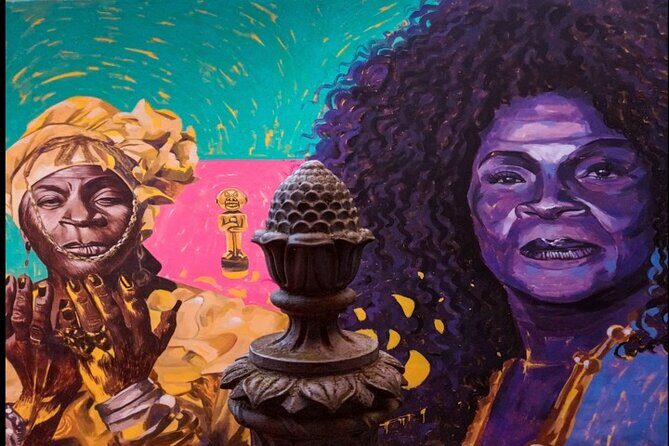
After Valongo, the tour shifts tone toward art and public representation with a stop at Boulevard Olímpico. You’ll see the Ethnicities mural, a painting covering about 3,000 square meters in Rio’s Zona Portuária (Saúde).
The mural was created for the 2016 Olympics and includes five representatives from different tribes, one intended to represent each continent: Huli, Mursi, Kayin, Supi, and Tapajós. The production details are impressive and oddly useful for understanding scale: it took two months, involved 12-hour shifts, and used over 3,000 spray cans plus hundreds of liters of paint—700 liters of colored paint and 1,800 liters for the white background.
This stop is about 20 minutes and admission is free. I like it because it gives your brain a break while still staying in the theme of identity. It’s not a substitute for the heavy sites, but it helps you notice how public art can shape what a city chooses to remember.
Instituto de Pesquisa e Memoria Pretos Novos (IPN): the New Blacks Cemetery site
Now you go from wharf archaeology to memorial archaeology with IPN – Instituto de Pesquisa e Memoria Pretos Novos. This is a museum and archaeological site dedicated to honoring Africans brought to Rio as slaves.
It’s also located on the site of the New Blacks Cemetery, which adds a deeper layer beyond general museum storytelling. The institution has been running cultural activities and workshops on African-descended history and culture since 2005. It’s been recognized as a Cultural Space since 2009.
Plan for about 1 hour here, with admission included. This is the kind of stop where you’ll benefit from a guide who can explain why the location matters. The cemetery setting changes the tone: you’ll feel the difference between learning facts and understanding how memory is protected.
MUHCAB in Little Africa: from arrival history to present-day issues
The tour’s final museum block is MUHCAB – Museu da História e da Cultura Afro-Brasileira. It’s based around the Valongo Wharf area, so the museum’s setting reinforces the day’s main idea: the story of arrival sits underneath daily life in this part of Rio.
MUHCAB focuses on several themes:
- the region’s largest arrival of enslaved Africans
- milestones of black affirmation in Brazil
- the development of Afro-Brazilian culture
- contemporary issues faced by black people in Brazil
That last point is important for your own take. A lot of tours cover the past and stop there. MUHCAB pushes you to connect history with the present, which is where the conversation becomes more meaningful.
This stop runs about 1 hour 10 minutes, and admission is included. By the time you leave, you’ll likely understand why Rio’s identity isn’t only made of beach scenes and carnival costumes. It’s also made of community memory and cultural survival.
How long is it, really: walking pace, heat, and rain plans
The tour is listed at about 3 hours 30 minutes. In practice, the time can stretch when you ask questions and stay engaged—one review specifically noted that the tour ran over time because there was so much to ask. That tells you something good: the guide isn’t rushing you through.
Still, this is not a zero-effort stroll. You’ll be on streets, and the route includes some stairs. On a hot day, that matters. I’d plan your comfort like this:
- wear comfortable shoes with grip
- bring water
- if you’re sensitive to heat, consider carrying a light layer
Rain can happen in Rio. One account mentioned the tour continuing even with steady rain. The lesson for you: bring a poncho or light rain gear if the forecast looks uncertain. The guide can adjust the rhythm, but the day stays outdoors between sites.
Price and value: what $86 buys in Rio
At $86 per person for about 3.5 hours, the price is fair when you look at what’s included. You get a guide and an air-conditioned vehicle, plus admission tickets included for Cais do Valongo, IPN, and MUHCAB. The other main street stops—Mercedes Baptista Statue area, Pedra do Sal, and the Ethnicities mural—are listed as free to enter.
That combination matters because museums and heritage sites in Rio can add up quickly. Also, this isn’t just “see places.” It’s guided interpretation at each stop: why that specific spot matters and how it connects to Afro-Brazilian culture across time.
If you’re the type who likes to understand what you’re looking at, the cost-to-value ratio usually feels strong. If you only want skyline views and quick photos, you may feel the day is heavier than your ideal plan.
Best for first-time Rio visitors who want meaning, not only sights
This tour fits you best if you’re asking one bigger question: Where does Rio’s culture come from? If you want to connect samba and Afro-Brazilian cultural identity to the historical arrival of Africans in the region, this is a strong match.
You’ll also enjoy it if you like small groups. The experience highlights a guaranteed small-group tour with no more than nine travelers, and the overall listing places a cap at 15. Either way, you’re unlikely to feel like you’re stuck in a crowd.
This tour is also ideal if you care about thoughtful context. Several reviews mention guides answering questions in a way that felt personal and patient—like the guide was building understanding step-by-step, not just reading a script.
Should you book Rio Little Africa?
Book it if you want Rio with a conscience and a pulse. The day’s structure connects Valongo arrival history to Afro-Brazilian culture, with key stops like Pedra do Sal, IPN Pretos Novos, and MUHCAB doing the heavy lifting. The guide-led storytelling, plus the included admissions, makes the value feel solid for the time.
Skip it only if you strongly prefer light, scenic sightseeing over historical context, or if walking and stairs would be a real problem for you. If you can handle a guided walking day in the Saúde heat, you’ll leave with a much clearer picture of how Rio became Rio.
FAQ
Where do I meet for this tour?
You meet at Museu de Arte do Rio (MAR) at Praça Mauá, 5 – Centro, Rio de Janeiro. The experience is listed as no hotel pick-up.
Is there hotel pick-up?
No. The tour uses a meeting place approach at MAR. It also includes an air-conditioned vehicle for parts of the experience.
How long is the Rio Little Africa tour?
It’s listed at about 3 hours 30 minutes.
How large is the group?
The highlights say a small group with no more than nine travelers. The broader listing also states a maximum of 15 travelers.
Do I need to pay for museum tickets?
Some sites are free (such as the statue area, Pedra do Sal, and the Ethnicities mural). Admission is included for Cais do Valongo, Instituto de Pesquisa e Memoria Pretos Novos (IPN), and MUHCAB.
Is the tour mostly walking?
Yes, it’s a walking-style route through the Saúde area, with time at multiple stops. Expect some stairs and plan for outdoor time.
What’s included in the price?
The price includes a guide and an air-conditioned vehicle. Admission fees are included for specific sites as noted above.
Are tips included?
No. The listing notes gorgetas are not included.
What happens if the weather is bad?
The experience requires good weather. If it’s canceled due to poor weather, you’ll be offered a different date or a full refund.