REVIEW · RIO DE JANEIRO
African Heritage and Docks Walking Tour
Book on Viator →Operated by RFWTour · Bookable on Viator
Rio’s docks tell a powerful African story. On the African Heritage and Docks Walking Tour, I like how the route ties major Rio landmarks to the arrival of enslaved Africans in the 1800s, especially at Cais do Valongo. I also like that it’s a private experience with a guide who brings the story to life, like Rômulo, who’s praised for his pride in Rio. A real consideration: transportation and any optional museum entry are not included, so you’ll need to plan how you’ll get to the start.
This is a 2.5-hour walk (about) that focuses on places many first-time visitors miss. You’ll hit five major stops, and the scheduled ones are free to enter. If you’re hoping for a long sit-down museum visit, this tour is more about walking, looking, and learning in the streets.
In This Review
- Key highlights at a glance
- Why Rio’s docks matter: the African story in plain sight
- Price and what you actually get for $49.05
- Meeting at Praça XV and walking to Cais do Valongo
- Boulevard Olímpico: the Olympic corridor on old port ground
- Mauá Square: right by the Port, with big-name institutions nearby
- Igreja de São Francisco da Prainha: a buried beach turned bar stronghold
- Pedra do Sal: where Carnaval and African religions spread
- Cais do Valongo: the 1800s docks and the last wharf of disembarkation
- A private tour with a guide like Rômulo
- Practical timing: how to fit the 2.5 hours into your Rio day
- Is this tour worth it for you? (Who it suits best)
- Should you book the African Heritage and Docks Walking Tour?
- FAQ
- How much does the African Heritage and Docks Walking Tour cost?
- How long is the tour?
- Where does the tour start and end?
- What language is the tour offered in?
- What’s included in the price?
- Is transportation included?
- Are tickets required for the stops?
- Is the tour private?
- Can I get a full refund if I cancel?
- Is Cais do Valongo open during the tour time window?
- Is it accessible for everyone, and can service animals attend?
Key highlights at a glance
- A dock-focused route that connects Rio’s port landscape to African heritage and Afro-Brazilian culture
- Cais do Valongo: the 1800s docks where African slaves arrived in Rio
- Free entry at every scheduled stop on the walk
- Prainha’s buried beach area turned into a stronghold of local bars
- Rômulo-style guiding: a guide with deep pride for Rio and the story behind it
- Private tour format: only your group joins, for a more personal pace
Why Rio’s docks matter: the African story in plain sight
Rio de Janeiro has a way of hiding its most important stories in the layout of the city. This tour leans into that. You move through the port area and nearby neighborhoods where layers of Rio history overlap: colonial commerce, Olympic-era rewrites of the waterfront, and the African roots that still shape culture today.
What I like about this approach is that it doesn’t treat heritage like a distant topic. It treats it like geography. When you stand at Cais do Valongo, you aren’t just checking off a famous name. You’re looking at the last wharf of disembarkation of enslaved people in Rio, and that context changes how you see everything around it.
You’ll also get a cultural thread, not just a historical one. The route points to places linked with the spread of African religions and the development of Carnaval rhythms—then it brings you to the bars and street life that grew around those spaces. The result is a walk that helps you understand modern Rio as part of an older, ongoing story.
You can also read our reviews of more walking tours in Rio de Janeiro



Price and what you actually get for $49.05
At $49.05 per person, this tour sits in the range where you should ask: what’s included besides a guide’s voice?
Here’s the practical answer: you’re paying for a guided walk plus context at five specific stops, and each scheduled stop lists free admission tickets. That matters, because a lot of tours quietly charge you later with add-on fees. This one keeps the core experience ticket-light.
You should still plan for two costs you might add on your own:
- Transportation to the meeting point (not included)
- The optional visit to Instituto dos Pretos Novos (not included)
The tour also runs about 2 hours 30 minutes, long enough to feel like more than a quick photo stop, but short enough to fit into a day of exploring the Centro and port area.
Booked about 36 days in advance on average, it’s not an all-day, last-minute kind of thing. If you want a specific day, earlier planning is smart.
Meeting at Praça XV and walking to Cais do Valongo
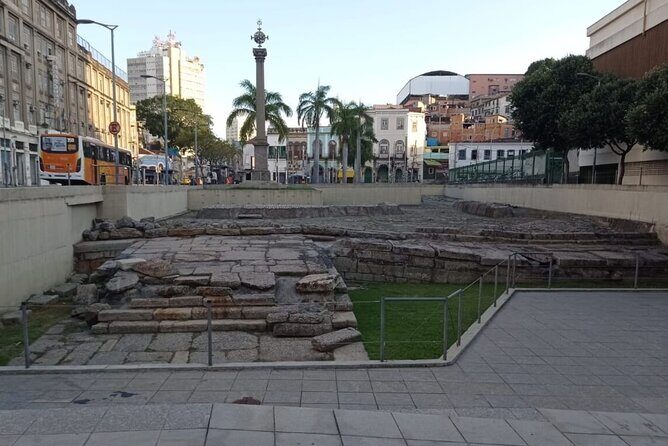
The start puts you at Praça Quinze de Novembro – Centro, in the city center. That’s useful because Centro is where you can usually connect to public transport. The tour end is at Cais do Valongo, on Av. Barão de Tefé, in the Saúde area.
This “start central, end at the docks” flow is more than convenience. It helps you avoid the common tourist problem: doing a port-area visit and then having to backtrack just to keep moving through the city. After the tour, you’re already near the waterfront story-line.
You’ll also want to know the timing reality at the final stop. Cais do Valongo lists opening hours from 9:30 AM to 1:30 PM, Monday to Saturday (for the stated season range). If your tour is set for later in the day, double-check that it aligns with the operating hours so you don’t run into a closed site at the end.
Boulevard Olímpico: the Olympic corridor on old port ground
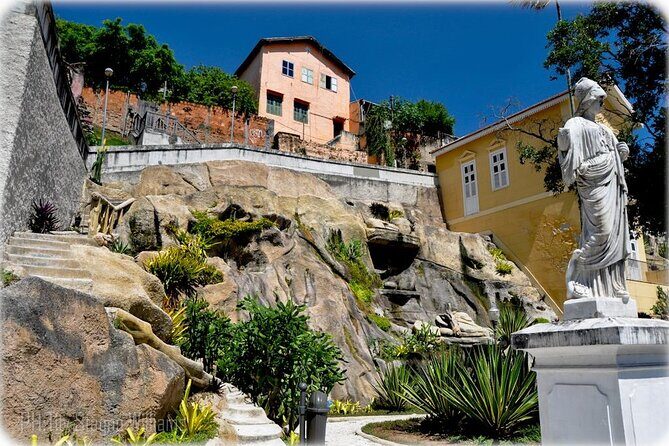
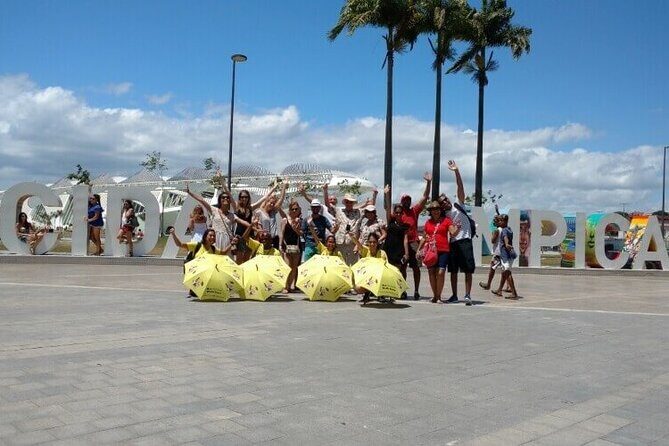
Stop one is at Boulevard Olímpico, a corridor built for the Olympics where the old port area was in colonial times. Even if you don’t love sports history, the location itself is the point.
Rio’s waterfront has been rebuilt and rebranded many times. Standing here, you get a visible reminder that cities change their faces—sometimes dramatically—and that the past keeps living under the surface. The tour’s framing helps you connect the modern promenade logic (built for crowds, events, views) to the older port logic (movement of people and goods, including the forced movement that African communities faced).
Because admission is free for this stop, you don’t need to “earn” the entry fee. You can just focus on observation: where you are, what kind of movement the space supports, and how a port shapes a city’s culture.
Practical tip for this stop: take a moment before you start walking again to look at the “shape” of the corridor. Port areas are all about routes, not just buildings.
Mauá Square: right by the Port, with big-name institutions nearby
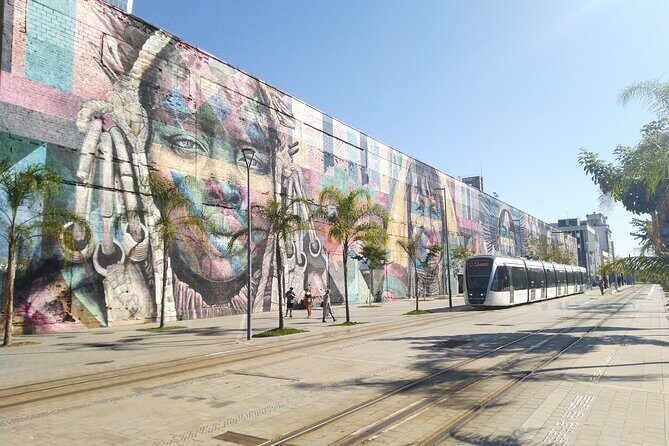
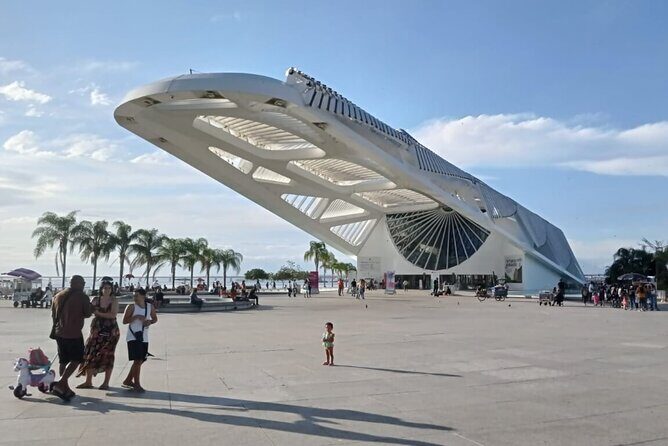
Next up is Mauá Square, next to the Port. This is one of those spots where the physical setting helps you understand why museums and cultural buildings cluster here: the area serves as a symbolic link between Rio’s working life and its modern identity.
From Mauá Square, you’re near two major institutions mentioned for the area:
- Museum of Tomorrow
- Rio Art Museum
The tour keeps the time reasonable—about 20 minutes—and again lists free admission for this scheduled stop. You’re not being asked to spend the entire day inside. Instead, you’re getting orientation and context before the walk turns more directly toward African heritage landmarks.
If you’re the kind of traveler who likes to connect culture to place, this stop is a good pivot. You go from the Olympics-era waterfront reframe to a square that sits beside major cultural anchors.
You can also read our reviews of more historical tours in Rio de Janeiro






Igreja de São Francisco da Prainha: a buried beach turned bar stronghold
Stop three is Igreja de São Francisco da Prainha. The description is the kind of detail that makes you stop and look twice. This area was a former beach that was buried, and it’s now a stronghold of local bars.
That mix—religious landmark, changing geography, and everyday nightlife—is exactly how Rio often tells its story. A place can shift from one function to another, yet still keep a recognizable soul. The tour’s timing here (around 20 minutes) lets you absorb that idea without turning the stop into a long detour.
A potential drawback: because this is tied to bars and social life, your experience can depend on the time of day and the energy on the street. If your goal is quiet contemplation, you might prefer to pick a calmer time slot. But if you want to see how cultural memory lives alongside everyday Rio, it’s a strong stop.
Practical tip: wear comfortable walking shoes here. This area is part of the city’s human rhythm, not just a monument zone.
Pedra do Sal: where Carnaval and African religions spread
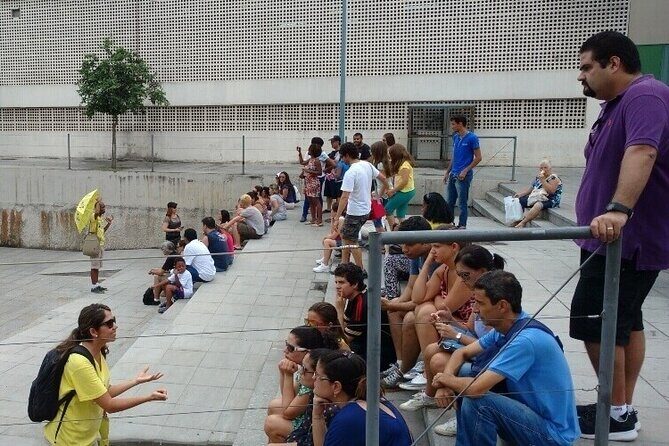
Then you reach Pedra do Sal, described as a historic site where Carnaval and some African religions started to spread. That’s a big claim—but the tour’s value is that it points you toward a tangible location tied to cultural change, not just a general idea.
This stop is about cultural transmission. Carnaval isn’t only costumes and parades. It’s also community memory, music, and belief systems moving through public space. The tour uses Pedra do Sal as a starting point for understanding how African religious traditions and cultural expression influenced what people celebrate and how they celebrate it.
Time-wise, this is brief (about 15 minutes). You’ll likely need to slow down on your own. Spend a few minutes looking at how the area feels—who hangs around, how people use the street—and then connect that feel to the story the guide shares.
One more thoughtful note: this is a stop where respect matters. You’re dealing with heritage tied to religion and community identity. Keep your pace human, your photos tasteful, and your listening level high.
Cais do Valongo: the 1800s docks and the last wharf of disembarkation
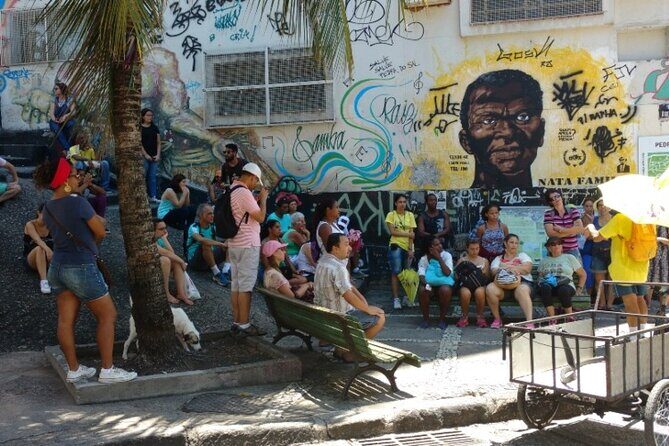
The tour’s ending focus is Cais do Valongo, the docks where African slaves arrived in the 1800s. The meeting-point details also call it the last wharf of disembarkation of slaves in Rio.
This is the most important stop on the route, and the one that tends to change how your whole walk feels. When you see it as a dock—the place where bodies arrived, where forced journeys ended—you understand why the surrounding city matters so much. Everything else on the tour becomes context: the port reshapes, the cultural spread, and the way communities carried their identities forward.
Duration is listed at about 20 minutes for this stop. That’s short enough to fit the walk schedule, but long enough for your guide to frame why it’s significant. If you want a deeper independent visit after the tour, make sure you can do it within the site’s opening hours.
Opening hours note (important): the provided schedule for Cais do Valongo lists Monday to Saturday, 9:30 AM–1:30 PM. If you like slow exploring, plan your day so you aren’t rushing to squeeze this in.
A private tour with a guide like Rômulo
A key reason this tour stands out is the guide experience. The tour is private, meaning only your group participates. That alone can change the vibe: you can ask questions, adjust the pace, and spend more time on what hits you.
The supplied review highlights Rômulo specifically, praising his role as an informant and his pride in Rio, which came through in how he presented the story. That kind of guiding matters on this topic because you’re dealing with heritage and difficult history. A guide who cares about the subject can help you avoid a checklist approach.
Also, the tour uses a mobile ticket, which is usually a quick win for logistics. You’re not juggling paper vouchers while trying to navigate the Centro/port streets.
If you’re someone who likes learning with context—why a place matters, how one neighborhood connects to another—this format is the sweet spot. If you prefer silent tours, you might find a guided narrative more than you want, but even then, you’re paying for it.
Practical timing: how to fit the 2.5 hours into your Rio day
This is listed as about 2 hours 30 minutes, and the stops are spaced in a way that keeps momentum. Expect short windows—roughly 15 to 30 minutes each—rather than long museum-style visits.
That means you’ll get value if you treat the tour like a foundation layer:
- Start with this walk to understand the port-area heritage connections
- Then use the rest of your day for flexible exploring at your own pace
Because transportation isn’t included, give yourself extra time getting to Praça Quinze de Novembro. And because Cais do Valongo has specific hours, try not to schedule other tight commitments that could make you late at the end.
Is this tour worth it for you? (Who it suits best)
You’ll likely enjoy this tour if you want:
- A culture-and-place experience, not only viewpoints
- A focus on African heritage and Afro-Brazilian cultural roots
- A route through the port area that goes beyond the usual tourist photo stops
It’s also a good fit for travelers who like learning from guides who bring pride and story context. If you’re traveling with a small group, the private format usually makes the experience feel less rushed.
Where it may not match your expectations:
- If you want a long indoor museum day, this tour’s structure is short-stop and walking focused.
- If you rely on transportation provided by tours, you’ll need to handle your own way to and from the start/end points.
- If you’re sensitive to heavy historical themes, know that this route centers on slave arrival history in the 1800s. It’s handled via a guided story, but the topic is direct.
Should you book the African Heritage and Docks Walking Tour?
I’d book it if you want a Rio experience that feels more like understanding the city than just touring it. For the money, you get a focused route with free entry at the scheduled stops and a private guide who can answer questions as you walk. The star of the route—Cais do Valongo—isn’t just a name. It’s the kind of place that gives the surrounding city meaning.
I’d think twice only if you dislike walking, hate guided narratives, or you’re planning a tight schedule that might conflict with the end-site hours at Cais do Valongo. If your timing is flexible and you want the Afro-Brazilian story anchored in actual locations, this tour is a strong value play.
FAQ
How much does the African Heritage and Docks Walking Tour cost?
The price is $49.05 per person.
How long is the tour?
It lasts about 2 hours 30 minutes.
Where does the tour start and end?
It starts at Praça Quinze de Novembro – Centro, Rio de Janeiro, and ends at Cais do Valongo on Av. Barão de Tefé – Saúde, Rio de Janeiro.
What language is the tour offered in?
The tour is offered in English.
What’s included in the price?
The tour includes a tour guide.
Is transportation included?
No. Transportation isn’t included, and food and drinks aren’t included either.
Are tickets required for the stops?
The scheduled stops list free admission tickets. An optional visit to Instituto dos Pretos Novos is not included.
Is the tour private?
Yes. It’s a private tour/activity, and only your group participates.
Can I get a full refund if I cancel?
Yes. Free cancellation is available if you cancel up to 24 hours in advance for a full refund.
Is Cais do Valongo open during the tour time window?
Cais do Valongo lists hours of 9:30 AM to 1:30 PM, Monday through Saturday, for the provided date range. The site is part of the tour’s end point.
Is it accessible for everyone, and can service animals attend?
Most travelers can participate, service animals are allowed, and it’s near public transportation.