REVIEW · RIO DE JANEIRO
Rio de Janeiro: Salgueiro Samba School Rehearsal Tour
Book on GetYourGuide →Operated by S2 Rio - Tours Rio de Janeiro · Bookable on GetYourGuide
A samba rehearsal feels like the whole city singing. This Rio de Janeiro night out takes you to Salgueiro, one of the most traditional samba schools (founded in 1953), where you’ll watch the real work of carnival build into rhythm and spectacle.
I especially like how the evening blends performance with the behind-the-scenes vibe of rehearsing, so you’re not just watching from afar. The main thing to think about is timing: pickup and schedules can run later than what you expect, so plan your night with some buffer.
In This Review
- Key Highlights You’ll Feel Fast
- Salgueiro Samba School Rehearsal: What Makes This Night Special
- The rehearsal format: why it feels more authentic
- Hotel Pickup and Real Timing: Plan Your Night Like a Local
- Pickup area matters
- When you should arrive mentally prepared
- What Happens Inside the 3-Hour Rehearsal Show
- The flag bearers are more important than they look
- You’ll probably shop and snack during the show time
- Bars, Drinks, and Souvenirs Without Killing the Vibe
- The Guide Experience: Helpful, But Not Always the Same
- How much you’ll learn
- Value Check: Tour vs. Going Direct
- Who This Rehearsal Tour Is Best For
- Who might want to be cautious
- My Booking Decision: Should You Pick This Tour?
- FAQ
- How long is the Rio de Janeiro Salgueiro Samba School rehearsal tour?
- Where does hotel pickup happen?
- What days does the rehearsal happen?
- What language is the tour guide?
- How many guests can the samba school hold?
- Does this experience include skipping the ticket line?
- What can I buy on site during the rehearsal?
Key Highlights You’ll Feel Fast
- Salgueiro’s heritage: founded in 1953 and described as one of the most traditional in carnival history
- A true rehearsal show: about 3 hours of samba dancing, flag bearers, and lively drumming
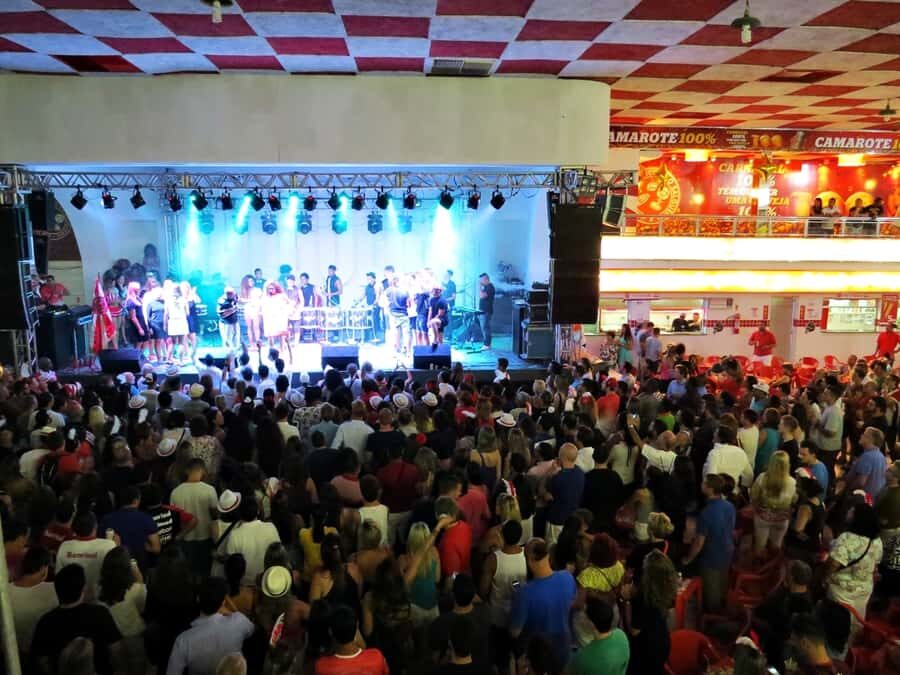
- A big venue: the school can hold up to 4,000 guests for the rehearsal
- Night-out extras: bars for drinks and a samba souvenir shop on site
- A guided setup: hotel pickup (within listed areas) plus an English/Spanish/Portuguese guide
- Real planning impact: transport can be late, which matters if you’re trying to fit other plans around it
Salgueiro Samba School Rehearsal: What Makes This Night Special
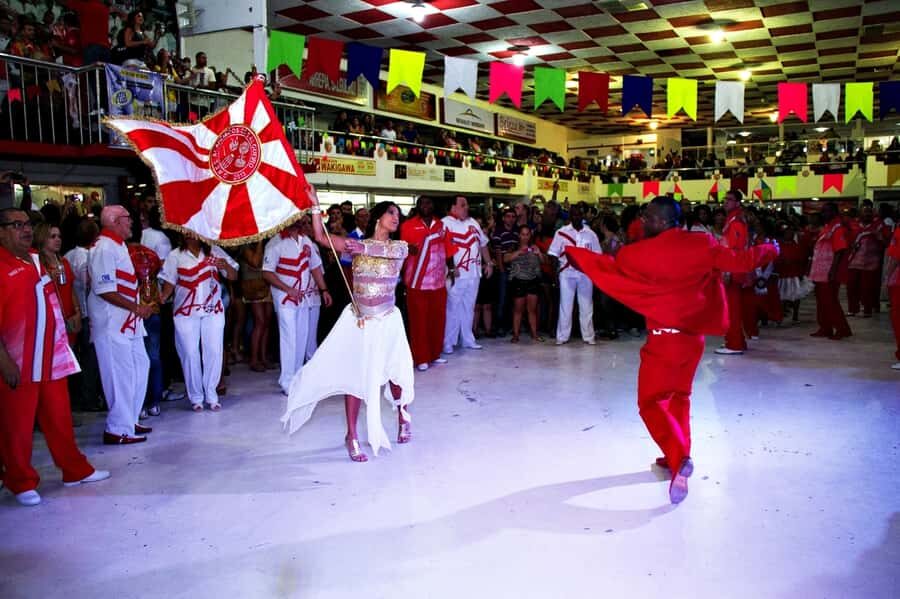
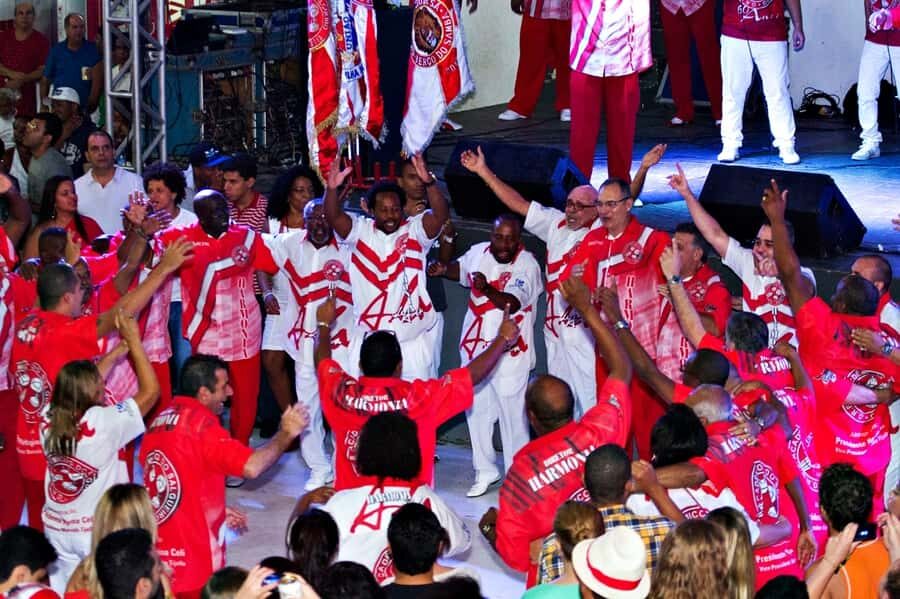
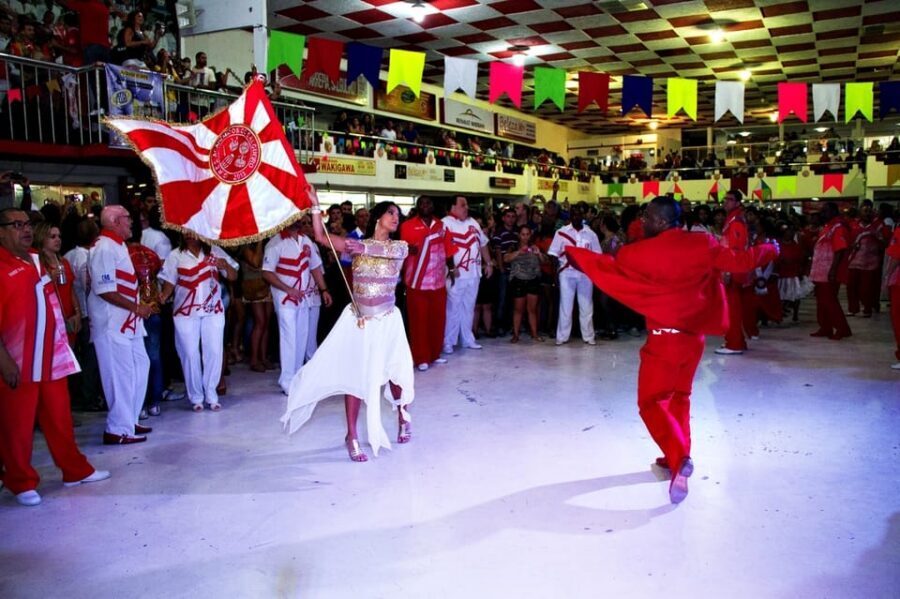
If you want Rio carnival vibes without waiting for parade day, this is one of the most direct ways to get there. A samba school rehearsal is not a polished, TV-perfect show. It’s more like the living engine of carnival—people getting in sync, rehearsing moves, and keeping the energy high with drumming that you can feel in your chest.
Salgueiro is a big part of why the experience works. The school you visit is rooted in long-standing carnival culture (it was founded in 1953), and that tradition shows in the way the evening runs: organized chaos, passionate music, and performers who look like they’re part of something much bigger than a single night.
What I like for you is that the show is built around the elements that define carnival at a human level—samba dancers, flag bearers, and constant drumming—so you can understand what makes the parade style so unmistakable. Even if you don’t know all the details yet, your brain starts mapping the patterns: rhythm, formation changes, and the way the school’s identity moves through the crowd.
You can also read our reviews of more tours and experiences in Rio De Janeiro.


The rehearsal format: why it feels more authentic
A carnival parade is one final product. A rehearsal is the process. That difference matters. You see more “how it’s made” energy—people responding to the beat, building momentum, and testing what lands. It’s also usually easier to feel connected to what’s happening, because the vibe is less about formality and more about participation.
And because you’re going to a real school environment (not just a staged show), the atmosphere carries a local feel. You’re not only there for entertainment; you’re there to witness a community preparing for one of the world’s most famous live spectacles.
Hotel Pickup and Real Timing: Plan Your Night Like a Local
This tour is designed for convenience. You’re picked up from your hotel and driven to the samba school, then dropped back after the show. That’s great if you don’t want to figure out transport at night.
But here’s the practical part you should treat as your main planning note: schedules and pickup times may not match what you expect. In some cases, transportation ran late enough to compress people’s plans for the evening. If you’re the type who hates rushing, build in cushion time. Don’t schedule a strict dinner reservation right before or right after.
Also remember that the tour duration is listed as 5 hours, while the performance itself is about 3 hours. That spread usually includes pickup, travel, and the time you spend waiting for entry and getting seated or settled. If your hotel is outside the pickup area, you may need to use a meeting point instead of being picked up directly, so confirm your exact plan ahead of time.
Pickup area matters
Hotel pickup is available only for hotels located inside the listed areas, with pickup starting at the reception area. If your hotel isn’t in that zone, you’ll need to get the closest meeting point from the local partner. It’s a small detail, but it’s the difference between a smooth start and a night where you’re coordinating taxis.
When you should arrive mentally prepared
Even with a perfectly timed pickup, carnival rehearsals can feel like a long party that builds. You might not want to plan anything highly structured around it. I recommend treating this as your main event for the night—then let the rest of your evening be flexible.





What Happens Inside the 3-Hour Rehearsal Show
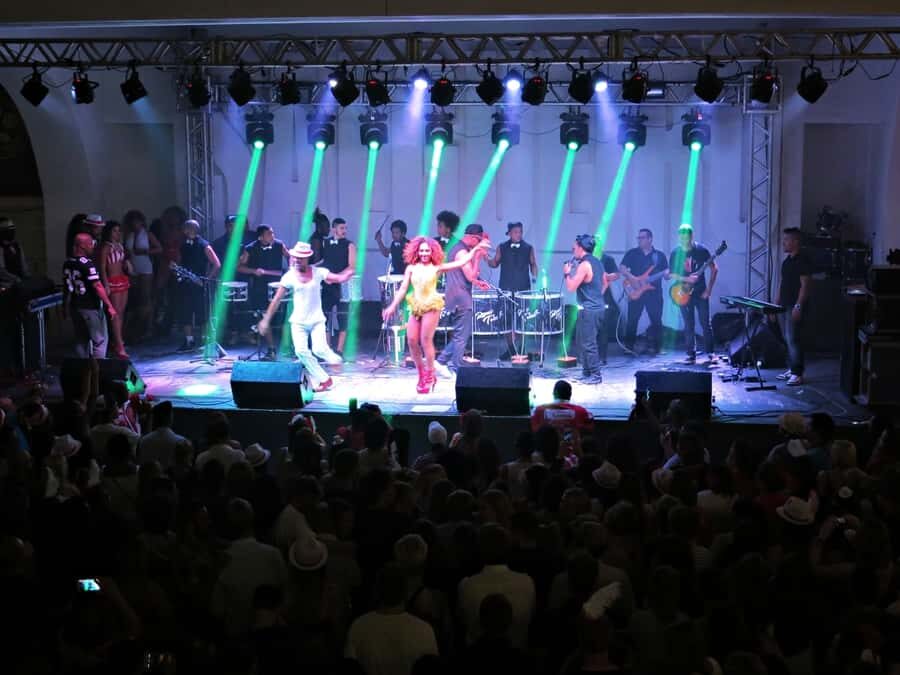
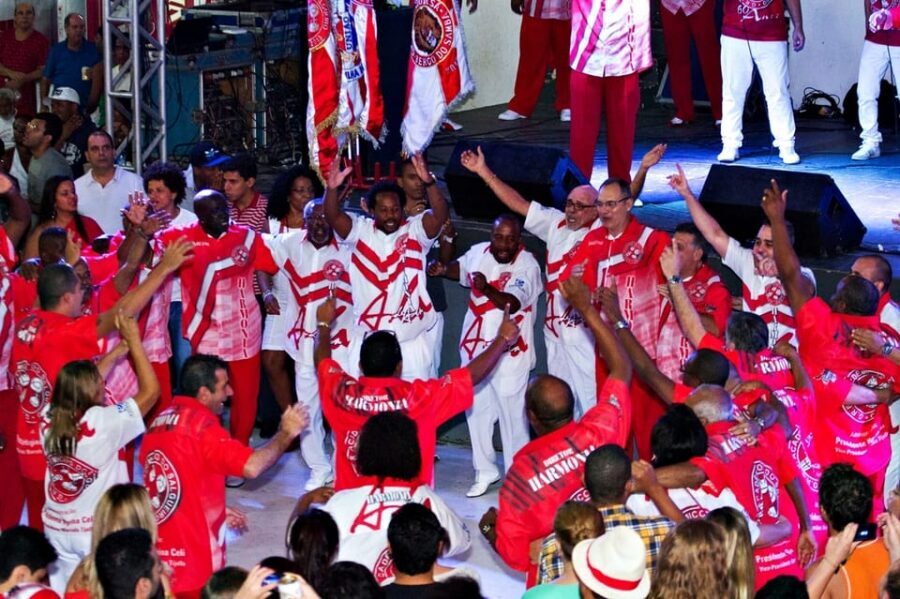
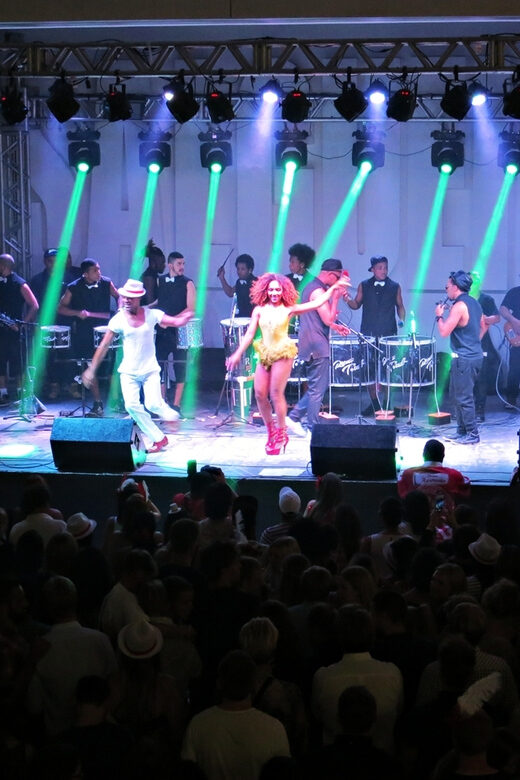
The core of your night is the rehearsal performance, which runs around 3 hours. This is where you’ll see the samba school in action: samba dancing, flag bearers, and lively drumming that keeps driving the energy forward.
Expect a lot of movement and rhythm. Samba schools don’t just “perform songs.” They stage formations and sequences that match the school’s style. During a rehearsal, that often means you’ll catch the feel of how changes happen in real time—drummers and performers feeding off the crowd energy, then adjusting as they go.
A key detail: the samba school venue can fit up to 4,000 guests. That’s big. It means you’ll be in the thick of it—real carnival scale—but also that you’ll want to settle in and keep your eyes on the movement patterns. In a space this size, the show works like a living map: you watch the front action, then your attention shifts as formations and flags move through the space.
The flag bearers are more important than they look
Flag bearers aren’t just decorative. They help communicate the school’s identity and keep the visual story moving. When you watch them closely, you start to understand how the parade’s “language” comes together. You’ll likely notice that drumming and movement feel linked, like one side of the same conversation.
You’ll probably shop and snack during the show time
There are bars on site for drinks and a samba souvenir shop for gifts. Since the show lasts hours, it’s not just a quick in-and-out activity. You’ll have time to get a drink and browse, especially when the energy gives you a natural pause to step away and come back without losing the whole event.
Bars, Drinks, and Souvenirs Without Killing the Vibe
This tour is set up so you don’t feel stuck. The school has multiple bars, and there’s a souvenir shop where you can buy samba-related gifts. That matters because carnival is as much about the feeling as the photos.
A practical tip: decide early how you want to handle drinks. If you’re the type who likes to buy something during the show, do it in a way that doesn’t turn into a long wait that pulls you out of the rhythm. In venues like this, lines and movement can shift fast when certain parts of the show kick in.
For souvenirs, you’ll have time, but don’t overthink it. If something catches your eye—an item linked to the school’s aesthetic—you can grab it then rather than hoping you’ll find the perfect one later.
The Guide Experience: Helpful, But Not Always the Same
The tour includes a live tour guide, described as bilingual and available in English, Spanish, and Portuguese. You’ll have an expert guide at your side for information, advice, and assistance.
That said, the guide’s effectiveness depends on the group and the language fit. In real-world situations, some communication can feel uneven—especially if the guide is trying to cover multiple languages in one group. The upside is that the tour is planned with interpretation in mind. The downside is that you shouldn’t assume you’ll get a deep, detailed talk at every moment.
So what should you do? Come in with a relaxed attitude. If you want to learn fast, ask the guide a couple of direct questions at the start—how the rehearsal works, what to watch for, or what the main elements mean. That way you get value even if the explanation style isn’t constant throughout the night.
How much you’ll learn
You should expect helpful context rather than a long lecture. The biggest “learning” comes from watching: how the drumming syncs with movement, how flags punctuate the show, and how a samba school builds energy across a long rehearsal.
If you’re Spanish-speaking, English-speaking, or Portuguese-speaking, your experience may feel smoother. But if you’re in a mixed-language group, you’ll likely rely more on your eyes than on a constant stream of translation.
Value Check: Tour vs. Going Direct
This tour bundles the experience with hotel pickup, guided entry flow (it includes skipping the ticket line), and a drop-off back to your hotel. That is real value if you want an easy night and don’t want to coordinate transport after a long show.
Still, the value question depends on what you care about most: comfort and coordination, or control.
Some people prefer buying tickets directly and arranging their own transport so they can control seating and timing more precisely. Why? Because when transport runs late or seating isn’t ideal, the tour package can feel like you paid extra for logistics rather than comfort. Also, some groups may find that the guide adds less value on site than they hoped, especially when seating and entry needs become the priority.
Here’s how I’d help you decide:
- Choose the tour if you want low-stress logistics and you like the idea of someone handling entry flow and getting you back to your hotel.
- Skip the tour (or go direct) if you’re very sensitive to timing, you’re picky about seating, or you’d rather manage everything with taxis/Uber and buy tickets on your own.
Since this is a night where timing and seating can make a difference, lean toward the option that matches your personality.
Who This Rehearsal Tour Is Best For
This is a great fit if you want:
- a hands-on taste of Rio carnival culture on a single night
- live drumming and dancing in a real samba school setting
- hotel pickup and drop-off so you can focus on the show
It’s also a strong choice for first-timers. You’ll get the core carnival ingredients fast—drummers, dancers, flags, and that rehearsal energy—without having to decode parade-day complexity.
Who might want to be cautious
If you hate schedule uncertainty, double-check your planning. If you’re planning tight connections, this may not be the best anchor event. Also, if you expect a heavy guided lecture, adjust expectations: you’re mainly paying for access and a guided experience around a live rehearsal.
If you want the most comfortable setup possible, consider whether you need to secure a better seat plan. Seating can be a big deal when the venue is designed for thousands.
My Booking Decision: Should You Pick This Tour?
I’d recommend this tour when you’re after carnival atmosphere with minimal hassle. Salgueiro’s rehearsal gives you a concentrated dose of what makes Rio samba schools special, and the guided support plus hotel pickup can make a big difference if you’re not comfortable navigating the city at night.
But book with eyes open. Build flexibility into your schedule. If timing matters to you—if you have other plans you can’t move—then plan a buffer or consider a direct-tickets approach with your own transport.
If you want a night where the main event is the samba itself, this is a solid way to do it. If you want perfect punctuality and guaranteed comfort like a theater show, you may want to compare options before committing.
FAQ
How long is the Rio de Janeiro Salgueiro Samba School rehearsal tour?
The total tour time is listed as 5 hours, and the rehearsal performance itself lasts around 3 hours.
Where does hotel pickup happen?
Hotel pickup is available only from hotels located inside the listed areas. Pickup starts at the reception area of your hotel.
What days does the rehearsal happen?
The show takes place on Saturdays.
What language is the tour guide?
The guide is available in English, Spanish, and Portuguese.
How many guests can the samba school hold?
The samba school venue has capacity for about 4,000 guests.
Does this experience include skipping the ticket line?
Yes, it includes skipping the ticket line.
What can I buy on site during the rehearsal?
You’ll have opportunities to buy drinks from bars on site and buy samba souvenirs in the shop.