
REVIEW · RIO DE JANEIRO
Rio’s Downtown Walking Tour: Unveiling Rich History and Landmarks
Book on Viator →Operated by Gregtur Turismo · Bookable on Viator
Downtown Rio has layers you can walk through. This tour strings together Cais do Valongo, Kobra’s Etnias mural, and several iconic churches and civic buildings into a route that’s easy to follow and genuinely meaningful. I like the small-group pace (max 10) and the fact that the stops are marked as admission-ticket free, so you’re mostly paying for the guide and the time. The main thing to consider is the schedule is weather-dependent, so heavy rain can mean a change of plan.
You start at the JW Marriott Hotel Rio de Janeiro in Copacabana at 9:30 am, and the guide may use subway, taxi, or ride-sharing to reach the downtown route depending on traffic. The walk is designed to be flat with short stretches between sights plus photo and restroom breaks, and you’ll finish near Cinelândia Square, a central hub for lunch afterward. One name that keeps coming up in the feedback is Aldo, praised for explaining the story behind what you’re seeing in clear, human terms.
In This Review
- Key Highlights You’ll Feel Right Away
- Starting in Copacabana: Meeting at JW Marriott and Getting Downtown
- Cais do Valongo (Valongo Wharf): The UNESCO Stop That Changes Your Lens
- Kobra’s Etnias Mural: When Street Art Becomes a History Lesson
- Museum of Tomorrow and the Navy Cultural Center: Modern Ideas on Historic Ground
- Candelária Church and São José: Baroque Details Without the Indoor Rush
- CCBB, the Legislative Assembly, and Praça XV: Rio’s Civic and Architectural Pulse
- Arco do Teles and Paço Imperial: From Cobblestones to the Monarchy
- São Bento Monastery and Real Gabinete Português: Baroque Gold and a Library Worth Slowing Down For
- Coffee at Colombo and Casa Cavé: A Real Break in the Middle of the City
- Ending in Cinelândia Square: The Classic Downtown Frame-Up
- Price and Value: Is $92 a Fair Deal for 4 Hours in Downtown Rio?
- Who Should Book This Downtown Walk (and Who Might Skip It)
- Should You Book Rio’s Downtown Walking Tour?
- FAQ
- Where do we meet, and what time does the tour start?
- How long is the tour, and is it mostly walking?
- Is the tour offered in English?
- Are admission tickets included for the stops?
- What’s the group size limit?
- What is included in the price, and what isn’t?
- What’s the cancellation policy if plans change or weather is bad?
Key Highlights You’ll Feel Right Away
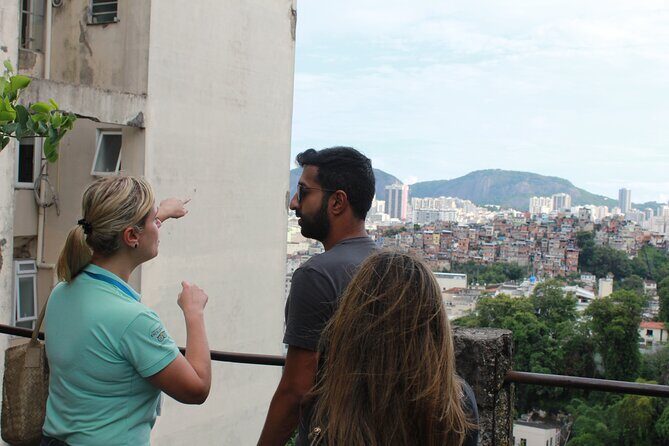
- UNESCO at Cais do Valongo: former arrival port for enslaved Africans, not just a pretty waterfront stop
- Kobra’s Etnias mural: large-scale street art that points you to key Black figures and cultural heritage
- Downtown churches you can read from outside: baroque details at Candelária and São José
- A Calatrava-designed counterpoint: the Museum of Tomorrow adds a modern science-and-sustainability vibe to old streets
- One stop that’s basically a time machine: Paço Imperial as the monarchy’s political center
- A practical coffee break: time at classic pastry institutions like Confeitaria Colombo and Casa Cavé
Starting in Copacabana: Meeting at JW Marriott and Getting Downtown
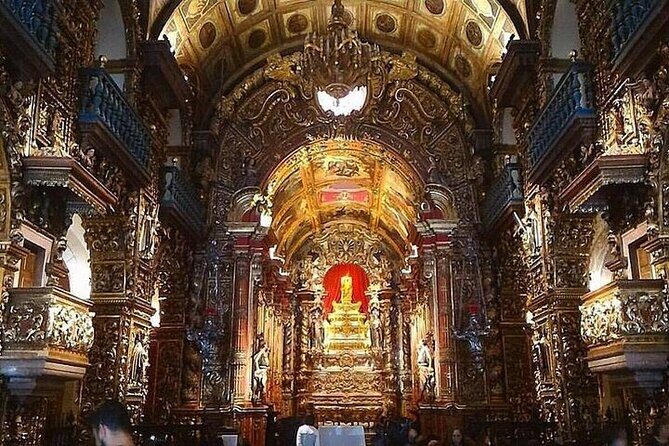
This tour starts in Copacabana, at the JW Marriott Hotel Rio de Janeiro (Av. Atlântica, 2600). Your meeting is at the hotel entrance at 9:30 am, and that opening matters because it sets the tone: you’re not just dropped into downtown chaos. The guide then coordinates the ride to the city center—subway, taxi, or ride-sharing—depending on traffic and group preference.
Once you’re moving on foot, the walking plan is built for comfort. The route is described as flat, with short distances between attractions. You’ll also get the real-life breaks you need: photo pauses, occasional restroom stops, and coffee time. That “small breaks, big payoff” rhythm is what makes a 4-hour downtown loop feel manageable instead of rushed.
The tour is offered in English, and it’s led by a professional bilingual guide. With a maximum of 10 people, you’re more likely to get back-and-forth questions instead of just being herded along. And yes, you’ll have a mobile ticket, which is one less thing to keep track of in a busy city.
You can also read our reviews of more walking tours in Rio de Janeiro



Cais do Valongo (Valongo Wharf): The UNESCO Stop That Changes Your Lens

One of the most important moments on the walk comes early: Rio Wonder Cais do Valongo, at the Valongo Wharf (Cais do Valongo). This is a UNESCO World Heritage Site and it was a former arrival port for enslaved Africans. In other words, this isn’t sightseeing-as-usual. It’s where you start understanding the city through the lives forced into its history.
Even if you’re not a history buff, the emotional weight of the place does the work for you. You’ll have a short window here, so the goal isn’t lingering for hours; it’s getting oriented to what the site represents. Your guide’s job is to help you connect the dots—how waterfront spaces shaped arrival, movement, and settlement.
Because the stop is free-entry and short, I’d treat it as a foundation. After this, the rest of the downtown landmarks start to make more sense. You’ll likely notice that the tour keeps switching eras—colonial, republican, monarchical, and modern—without ever losing the thread of human stories underneath.
Kobra’s Etnias Mural: When Street Art Becomes a History Lesson
Next up is Kobra’s Etnias mural, one of the city’s largest and most colorful works. It’s by Eduardo Kobra and it honors key Black figures and cultural heritage. This stop is a great contrast to the heavier emotional tone at Cais do Valongo. Instead of only looking back, you’re looking at recognition in public space.
You’ll spend a bit of time here, focused on the visual details and what they’re meant to communicate. The practical benefit: murals are easy to enjoy quickly, even if you’re tired. You don’t need a ticketed interior or a long line. You just walk up, look closely, and let the scale do the persuading.
One small consideration: this is an outdoor photo stop, so bring a phone camera you trust. If you’re hoping for perfect light, morning is often best, but you can still get good shots even with clouds. The tour’s schedule is built so you’re not stuck waiting too long at each place—just enough time to see it and move on.
Museum of Tomorrow and the Navy Cultural Center: Modern Ideas on Historic Ground
Rio’s downtown throws a curveball with a modern architecture icon. The tour includes the Museu do Amanhã (Museum of Tomorrow), designed by Santiago Calatrava. At this stop, you’ll explore the surroundings and take photos from the outside. So don’t expect a full museum session in this time slot, but do expect the building itself to be part of the message.
Then you’ll head toward Espaço Cultural da Marinha (Navy Cultural Center) near the harbor. The idea here is simple: the city isn’t just monuments and churches. Maritime history and naval heritage show up too, through preserved vessels and maritime exhibits. Like the museum stop, you’re viewing from the outside here, but it’s still useful for seeing how the harbor area connects to the broader downtown story.
What I like about this pair is the switch in perspective. One stop points you toward science and sustainability thinking. The other reminds you of the practical reality of ships, sea power, and trade routes. Together, they keep the tour from feeling like it only lives in older centuries.
Candelária Church and São José: Baroque Details Without the Indoor Rush

Two of the downtown highlights are churches with very different vibes, both tied to Rio’s colonial and baroque character.
First is Igreja de Nossa Senhora da Candelária (Candelária Church). It’s one of Rio’s most iconic churches, known for its baroque façade and historical significance during colonial times. The beauty here is in the details you can spot from outside: the façade’s shape and ornament give you a quick “you’re in the past” signal before you even step deeper into the district.
Later on, you’ll reach Igreja do Glorioso Patriarca São José, a charming baroque church from 1608. One of the fun parts of this stop is where it sits: it’s tucked between modern office buildings, which helps you see how old structures still survive inside a contemporary city block.
Possible drawback: church time is short on a walking tour. You’ll likely appreciate the exteriors most. If you’re the type who wants deep interior architecture study, you might want extra independent time after the tour ends in Cinelândia. But for most people, these exterior-focused stops are exactly right—quick, memorable, and easy to photograph.
You can also read our reviews of more historical tours in Rio de Janeiro






CCBB, the Legislative Assembly, and Praça XV: Rio’s Civic and Architectural Pulse

The route then leans into civic Rio—buildings that tell you how power and public life evolved.
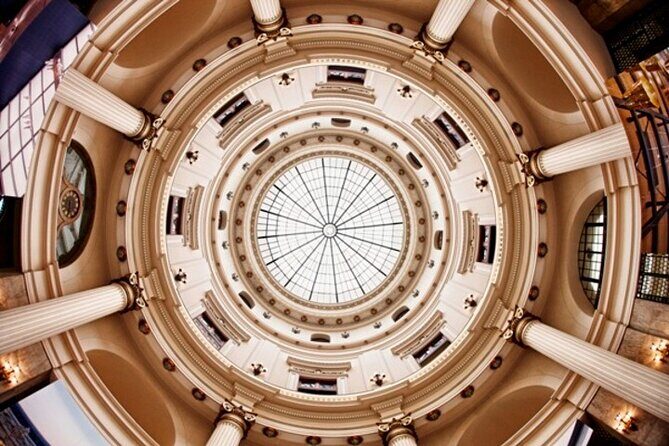
You’ll stop at Centro Cultural Banco do Brasil (CCBB Rio de Janeiro), a neoclassical building that hosts rotating exhibitions plus cafés and cultural programs. This is one of the best “flex” stops because you’ll have an optional break to go inside, use restrooms, and grab coffee if you want. When you’re walking for hours, that kind of break can be the difference between enjoying the tour and feeling wiped out.
After that comes Assembleia Legislativa do Estado do Rio de Janeiro, an impressive early 20th-century building that reflects Brazil’s republican-era architecture. Here, the value is in noticing scale and form—big institutional architecture that signals a government identity, not just religious or royal power.
Finally, you’ll visit Praça XV for the Pyramid Fountain (Chafariz da Pirâmide), designed by Mestre Valentim and dating to 1789. This is one of the few colonial monuments that still remains in the area. It’s a “small but meaningful” stop: short time, strong historical footprint, and a great place to re-check your bearings before moving into the more street-level scenery.
Arco do Teles and Paço Imperial: From Cobblestones to the Monarchy
Now you get a change of scenery that feels very downtown—cozy street texture mixed with big-time historical importance.
At Arco do Teles, you’ll walk through a picturesque colonial alley with cobblestones and preserved architecture, plus plenty of bars. It’s also a popular filming location, which is a hint that the street looks good on camera. Even if you’re not into filming trivia, it’s a smart mid-tour pause because the alley gives your eyes something different: narrow streets, older buildings, and a more human-scale feel than the grand civic façades.
Then you hit the anchor of the monarchy era: Paço Imperial (Imperial Palace). This was the former royal residence and the political center during Brazil’s monarchy. It’s one of the tour’s main historical highlights because it helps you connect architecture to governance—how rulers lived, and how decisions were made.
Time-wise, you won’t spend all day here, but you will get the big picture. I also like that the tour transitions from a small alley to a major political building; it shows how history lives at multiple scales in the same neighborhood.
São Bento Monastery and Real Gabinete Português: Baroque Gold and a Library Worth Slowing Down For
If you want proof that downtown Rio isn’t only about landmarks you can point at, this is the stretch.
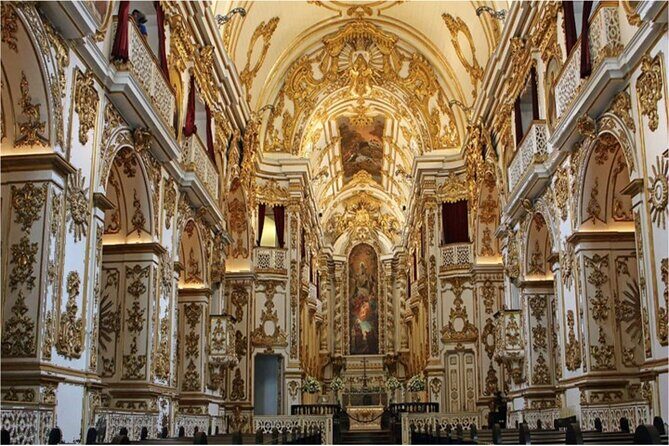
First is Mosteiro de São Bento (São Bento Monastery). It’s described as a masterpiece of Brazilian baroque, with richly gilded interiors. The plan is mostly about seeing the monastery as part of the route, and if time and schedule allow, you may visit inside to witness Gregorian chants. Even when you can’t go in, the stop helps you understand why baroque art in Brazil is more than decoration—it’s meaning in gold and detail.
Then comes one of the most striking stops on the walk: Real Gabinete Português de Leitura (Royal Portuguese Reading Room). This library is famous for its beauty, including Neo-Manueline architecture and rare books. The stop is longer than most, giving you time to take it in properly rather than rushing your photos.
Practical note: libraries and monasteries tend to reward calm attention. If you tend to move fast, slow down here. Even with limited time, you’ll get more out of it if you let your eyes adjust.
Coffee at Colombo and Casa Cavé: A Real Break in the Middle of the City
After so many façades and buildings, the tour wisely gives you a chance to reset with food and caffeine.
You’ll get time at Confeitaria Colombo, a Belle Époque-style café from 1894 that’s traditional and elegant. Then later you may stop at Casa Cavé, another historic Portuguese sweets shop that’s smaller and less visited, giving you a change of pace.
This is where you’ll likely thank the guide for pacing the route. The walk is designed to be flat and the stops include restroom breaks, but a coffee break helps you keep your energy up for the final stretch.
What you should do: decide ahead of time if you want something sweet, a drink, or just a quick stop to get out of the sun. Your time block is there for a reason, but you’ll still be moving through an active downtown area, so keep it simple.
Ending in Cinelândia Square: The Classic Downtown Frame-Up
The tour finishes near Cinelândia (Cinelândia Square), which is a central and well-connected plaza. Around it you have major landmarks such as the Theatro Municipal, the National Library, and the Fine Arts Museum.
Even if you don’t go inside any of those places during the tour, landing at Cinelândia is smart. It’s easy to plan lunch nearby and easy to continue exploring afterward. You’re also in a part of town where getting around tends to feel more straightforward than wandering out to the edges.
A final value detail: the tour is set up so the activity ends back at the meeting point. So you’re not left guessing how to get yourself home after four hours of walking and story time.
If you’re building a Rio first-day plan, this ending spot makes sense. You get orientation plus momentum, without feeling like you still need a whole transport day.
Price and Value: Is $92 a Fair Deal for 4 Hours in Downtown Rio?
At $92 per person for about four hours, you’re paying for a guided, structured route through 17 landmark stops (with outdoor views and some optional breaks). The best part for value is that the listed stops are marked as admission ticket free, meaning your cost is mainly going toward interpretation, route planning, and time with a bilingual guide rather than entrance fees.
You also get a small-group setup with a maximum of 10 people, plus VAT and taxes included in the price. That matters because it helps you avoid surprise add-ons when you’re planning.
What you’re not paying for (and you should plan for): tips are optional, and coffee or pastries aren’t listed as included. If you order a snack, you’ll pay for what you choose.
So is it worth it? If you want your downtown time guided—especially for sites like Cais do Valongo and Paço Imperial—this price feels reasonable. If you only want one or two famous monuments and you plan to wander on your own for the rest, you might feel you’re paying more for coordination than for personal discovery.
Who Should Book This Downtown Walk (and Who Might Skip It)
This tour is a strong fit if you want a guided orientation to Rio’s center that mixes major historical sites with architecture, street art, and a couple of built-in breaks. You’ll probably enjoy it most if you like walking at a steady pace, taking photos, and getting clear explanations as you move.
It’s also a good choice for first-timers who need to understand where different eras show up in the city—colonial, monarchical, republican, and modern all in one loop. And since the guide is bilingual and the group is small, you’re not stuck in a big crowd where questions get lost.
You might skip it if you want lots of long museum time indoors, because some stops are exterior-focused. Or if your schedule is tight and you can’t be flexible with weather, since the tour requires good weather and offers a different date or a full refund if it’s canceled due to poor conditions.
Should You Book Rio’s Downtown Walking Tour?
Yes—if your goal is to get a smart, story-led overview of downtown Rio without spending half your day figuring out logistics. The route is practical, the pacing is built for real breaks, and the lineup covers what matters: UNESCO at Cais do Valongo, iconic religious and civic architecture, and an ending in Cinelândia that makes it easy to keep exploring.
If you’re the type who loves deep interior visits only, you’ll likely want to add extra time after the tour. But for a first pass, this is a solid way to see more of Rio’s center with less guesswork.
FAQ
Where do we meet, and what time does the tour start?
You meet at the JW Marriott Hotel Rio de Janeiro in Copacabana at 9:30 am. The address given is Av. Atlântica, 2600 – Copacabana, Rio de Janeiro – RJ, 22041-001, Brazil.
How long is the tour, and is it mostly walking?
The tour lasts about 4 hours. It’s a guided walking tour with a flat route and short walking distances between attractions, plus occasional stops for photos, restrooms, and coffee.
Is the tour offered in English?
Yes. The tour is offered in English, with a bilingual private tour guide.
Are admission tickets included for the stops?
For the listed stops, admission ticket is shown as free. Coffee and pastries are part of scheduled break times, but the tour data does not say those purchases are included.
What’s the group size limit?
The maximum group size is 10 travelers.
What is included in the price, and what isn’t?
The price includes a professional bilingual private tour guide and VAT, along with all taxes and handling charges. Tips are not included and are optional.
What’s the cancellation policy if plans change or weather is bad?
You can cancel for a full refund up to 24 hours in advance of the experience’s start time. If it’s canceled due to poor weather, you’ll be offered a different date or a full refund.