REVIEW · RIO DE JANEIRO
Pico da Tijuca Hiking Tour in Tijuca Forest National Park
Book on Viator →Operated by Nattrip - Tourism, Ecotourism and Adventure in Rio de Janeiro · Bookable on Viator
A morning hike to Rio’s clouds and peaks.
I like how this trip pushes you up Pico da Tijuca at 1,021 meters without turning into a wall-of-mud grind. You also get context for what you’re walking through, with rainforest natural-history stories tied to a stop at the park’s museum. The one watch-out is the weather: if clouds roll in, the summit views can end up limited, and the day’s timing can feel tight.
What makes it feel good in real life is the early start and the small group size. With hotel pickup in Rio’s tourist zones and a maximum of 10 people, you get a calmer pace on busy paths, and the guide can keep the route moving while still pointing out plants, animals, and photo spots. Just plan on walking a lot; even when the uphill isn’t steep, it can still be a leg-burner.
In This Review
- Key things to know before you climb Pico da Tijuca
- Why Pico da Tijuca is worth the effort in Rio
- Early morning pickup: beating heat and crowds on the way in
- Getting oriented inside Tijuca Forest National Park
- Waterfall stops that make the hike feel like more than cardio
- The park museum stop: rainforest history you can actually use
- The King Albert staircase: an unexpected rock detail
- Tijuca Mirim viewpoint and the climb toward the peak
- Summit views: what you can see at 1,021 meters
- Difficulty level and what it feels like on your body
- Guides and pacing: information without losing your breath
- Price and value: is $64.74 a fair deal?
- Who should book this hike (and who should skip it)
- Quick booking checklist before you go
- Should you book the Pico da Tijuca Hiking Tour?
- FAQ
- How long is the Pico da Tijuca hiking tour?
- Does the tour include hotel pickup and drop-off?
- Is the tour offered in English?
- What are the age requirements?
- What should I bring for the hike?
- Is the trail steep?
- What happens if weather is bad?
Key things to know before you climb Pico da Tijuca
- A 1,021m summit that sets up city views from high above Rio, on clear days
- Waterfalls on the route like Cascatinha Taunay and Cachoeira das Almas, not just a straight hike
- A museum stop inside Tijuca Forest National Park, focused on natural history and local protection efforts
- A King Albert staircase carved into rock, a surprising colonial-era detail you’ll pass on the way
- Small group size (up to 10), which usually means less waiting on narrow trail sections
- Not steep, but still demanding: expect climbing, sore calves, and lots of steps overall
Why Pico da Tijuca is worth the effort in Rio
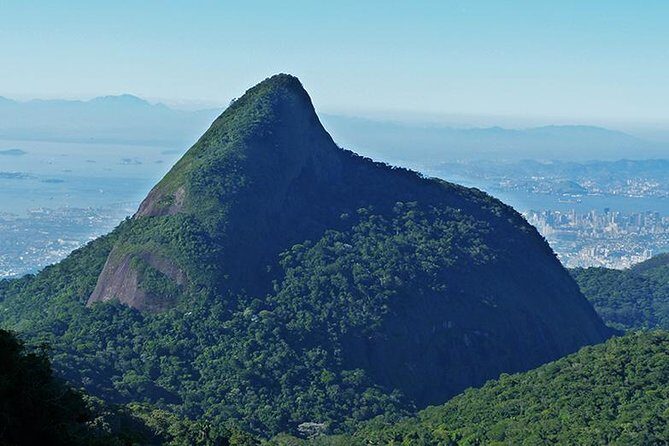
Tijuca Forest National Park is the kind of place Rio people talk about with pride. This forest has been protected since the mid-nineteenth century, and that long protection is why the walk feels more than scenic—it has stories in it.
Pico da Tijuca is the big reason to come. At 1,021 meters, it’s the highest peak in the Tijuca Forest area, and it sits in the center of the national park. What you’re chasing isn’t only a summit marker; it’s the shift from dense rainforest walking to wide-open “oh wow” views over Rio.
And on the good-weather day, the payoff includes famous landmarks in your line of sight. From the top you can see spots like Pedra da Gávea, Pedra Bonita, and Corcovado with Christ the Redeemer—meaning you’re not just looking at the city, you’re looking at the famous parts.
You can also read our reviews of more hiking tours in Rio de Janeiro

Early morning pickup: beating heat and crowds on the way in
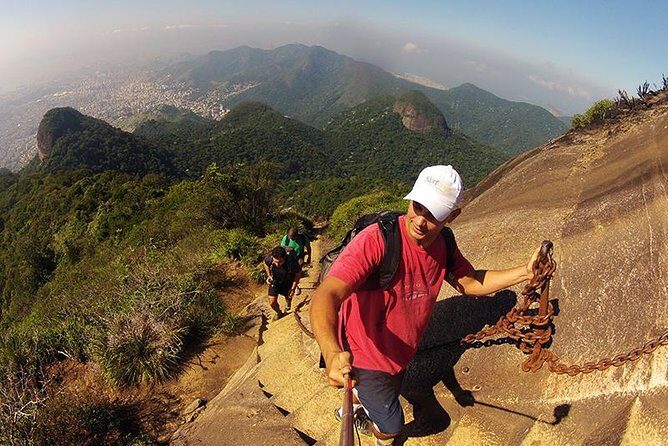
This tour is built for mornings. It runs about 6 hours total, and the hike itself happens early enough that you’re less likely to fight the worst of Rio’s heat and glare. The meeting point is Praça Afonso Vizeu in Alto da Boa Vista, and if you choose the pickup option, you’ll be taken from hotels in Rio’s tourist zones.
That detail matters. Tijuca can be busy, and the trails get harder to navigate when it’s hot. A well-timed start also helps with morale, because the trail is long even when it’s not overly steep.
Group size is capped at 10, and that tends to make the walking feel smoother. You’ll still share space on paths and viewpoints, but you’re not stuck behind a busload of people.
Getting oriented inside Tijuca Forest National Park
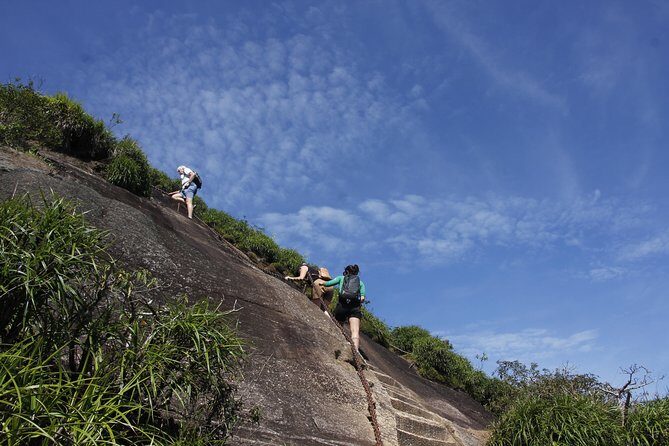
The day begins at the national park area—your first chance to understand what you’re entering. You start at Parque Nacional da Tijuca, where the guide helps set the tone: this is Atlantic Rainforest country, and your route is designed to show you what makes it special.
From the start, you’ll notice how the terrain and vegetation change as you gain altitude. The guide’s job isn’t only to “walk with you.” It’s to make the plants and animals feel less random. You’ll get explanations tied to what you see along the trail, so you’re not just passing trees—you’re learning what you’re looking at.
This is also where the day’s structure becomes clear. The hike isn’t a single straight ascent. It’s a loop-like experience of trails, viewpoints, and natural features, with stops that break up the effort.
Waterfall stops that make the hike feel like more than cardio
A good hike needs rhythm: go, pause, look, learn, repeat. This route follows that idea with waterfall breaks.
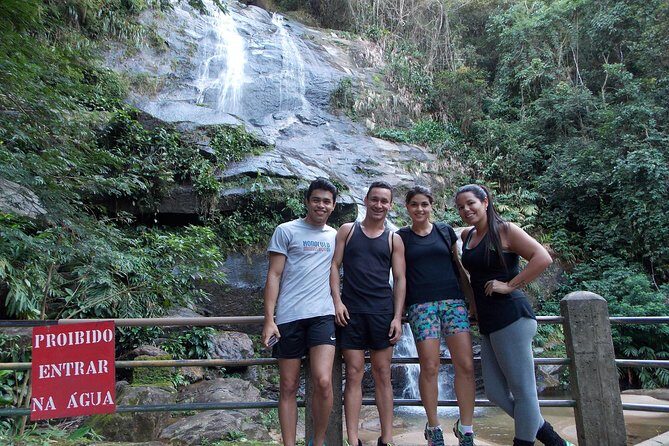
One stop is Cascatinha Taunay. Another is Cachoeira das Almas. These are the kinds of moments that give your legs a breather and your mind a reset. Even if you’re not a waterfall fanatic, it helps because it changes the focus from “how much farther?” to “wait, look at that.”
Waterfalls in forest can also be a practical weather signal. If you’re moving through damp, cool air near the falls, you’ll often feel less exposed to sun than on open stretches.
The park museum stop: rainforest history you can actually use
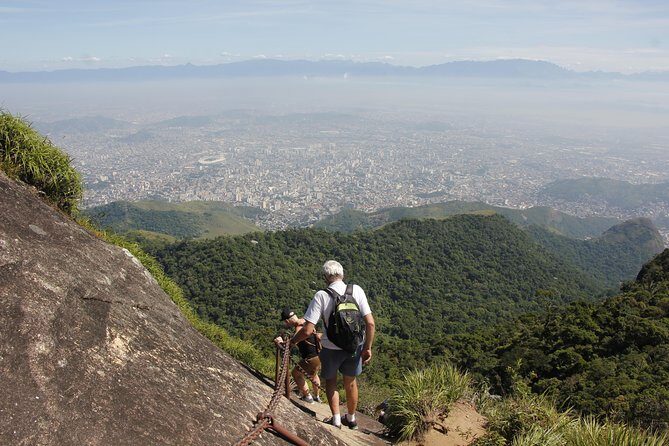
A standout part of the day is the National Park Visitor Center / museum-style stop. This isn’t a quick bathroom break. You’ll get a chance to learn how Tijuca Forest became protected and what that protection preserved.
I like this kind of stop because it turns the hike into something with context. Instead of thinking you’re just climbing toward views, you understand why these trails matter and what was saved over generations.
It also sets you up for the “small details” you’ll notice later, like rock-carved features and older structures tied to visitors from the early twentieth century.





The King Albert staircase: an unexpected rock detail
One of the coolest “only in Rio” moments on this route is the legendary staircase carved into rock. It was built in the early twentieth century for the visit of King Albert of Belgium.
Even if you’re not into royal history, it lands in a fun way: you’ll be hiking in rainforest, then suddenly you’re walking through a human-made pathway tied to a major visitor. It’s a reminder that Tijuca isn’t only natural—people shaped access to these views early on.
This stop also helps explain why the trail feels like it has layers. You’re moving through a protected forest, but you’re also crossing paths created for travelers looking for sightlines over Rio.
Tijuca Mirim viewpoint and the climb toward the peak
As you work toward the summit area, you’ll hit a viewpoint that’s described as Tijuca Mirim. That kind of stop matters because it gives you an “early taste” of the perspective you’re earning.
Then the route continues on sections that build you toward Pico da Tijuca itself. The good news: the ascent is described as not steep. The tricky part: it’s still a high-altitude hike with a lot of steps and overall effort.
This is where your mindset helps. Think of it as a steady climb with breaks, not a sprint. If you go in expecting an easy walk, you’ll be surprised by the total distance and climbing time.
Summit views: what you can see at 1,021 meters
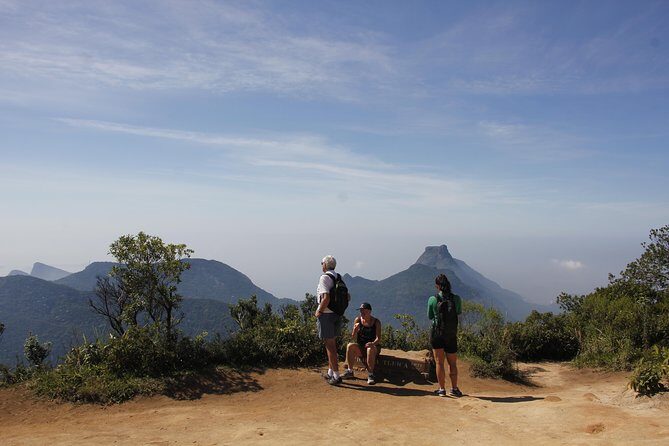
Reaching the top is the goal, and it’s a strong one. At the peak altitude—1,021 meters—you can see out toward well-known Rio features, including Pedra da Gávea and Pedra Bonita, plus the Corcovado area with the Christ the Redeemer statue.
You should also expect that the experience hinges on the sky. The route depends on favorable weather conditions, and if clouds sit over the summit, views can be muted.
Here’s the practical approach I recommend: bring patience. Even if you don’t get a crisp skyline moment, the forest walking and the stops along the way still make the hike worthwhile. If you do get clear skies, you’ll feel like the climb paid off in one unforgettable look.
Difficulty level and what it feels like on your body
This is not a “wimpy” hike, but it’s also not described as a steep grind. The real challenge is the combination of altitude, climbing sections, and long walking time.
You’ll want comfortable shoes with good grip. The day involves a high amount of walking, and you’ll be better off wearing footwear that can handle uneven forest ground. Bring a light snack and water, plus sunscreen and insect repellent, because you’re outside most of the time.
If you’re older or you’ve been sedentary for a while, treat this as a serious workout. It’s doable for many people, but it can still leave you with sore calves afterward. That’s normal. Go slower than you think you need to at the beginning, and you’ll enjoy the summit more.
Guides and pacing: information without losing your breath
A big reason people like this tour is how the guide manages the balance between teaching and movement.
Guides such as Rafaela, Sergio, and Eduardo show up in the experience, and the style that comes through is a mix of rainforest facts plus practical route guidance. Some guides also keep things light—jokes and humor can take the edge off when you’re working uphill.
Pacing is key here. You’ll have time at the summit, but the day is built as a full-route experience, so you shouldn’t assume you can linger forever if the weather shifts or the route needs to keep a schedule.
If you want maximum summit time, the weather matters even more. Cloud cover can change how much you see, and it can also affect the guide’s timing for leaving the top.
Price and value: is $64.74 a fair deal?
At about $64.74 per person, you’re paying for more than a trail ticket. What’s included is the guided hike, all fees and taxes, and a professional guide.
If you select the option, you also get hotel pickup and drop-off for hotels located in Rio’s tourist zones. That’s a real part of the value because it reduces planning stress. Tijuca isn’t always simple to reach on your own, especially early in the day.
What’s not included is extra transportation if you don’t take the group hike transportation option. So if you’re planning to meet at the start yourself, compare how you’ll get there versus how the pickup option fits your hotel location.
For many visitors, this is good value because the tour packages together: summit effort, museum/visitor-center learning, waterfalls, and viewpoints under one organized plan.
Who should book this hike (and who should skip it)
Book it if you want a guided rainforest hike that ends at Rio’s highest Tijuca peak. It’s especially a fit if you like mixing active time with learning stops—museum-style history, waterfall pauses, and viewpoint segments.
You’ll enjoy it if you’re comfortable with moderate walking and want a structured day rather than figuring out trail sections alone.
Skip it or reconsider if you’re looking for a short, easy outing. Minimum age is 10, and the route is still physically demanding. Also keep in mind that the tour depends on favorable weather conditions. If you’re only in Rio for one day and the sky looks uncertain, build flexibility if you can.
Quick booking checklist before you go
- Wear shoes with good grip and support
- Pack water and a light snack
- Bring sunscreen and insect repellent
- Plan for a lot of walking over the full 6-hour window
- If you can, choose the pickup option to reduce day-of hassle
Should you book the Pico da Tijuca Hiking Tour?
Yes—if you want the most satisfying way to experience Tijuca Forest National Park without spending your time researching trail details. The price feels fair for what you get: a guided climb to Rio’s highest Tijuca peak, plus waterfalls, a museum-style history stop, and a couple of memorable “only here” moments like the King Albert staircase.
Only book if you’re okay with the reality of weather and the fact that you’re trading lounging time for a serious walking day. If you’re the kind of traveler who enjoys moving through a place and learning it along the way, this hike is a strong choice.
If you want, tell me your travel dates and fitness level (and whether you’ll choose hotel pickup). I can help you decide if this is the right slot for Rio’s weather and your energy.
FAQ
How long is the Pico da Tijuca hiking tour?
The tour lasts about 6 hours.
Does the tour include hotel pickup and drop-off?
Hotel pickup and drop-off are included if you select that option. Pickup is available for hotels in Rio de Janeiro’s tourist zones.
Is the tour offered in English?
Yes. The tour is offered in English.
What are the age requirements?
The minimum age is 10 years.
What should I bring for the hike?
Bring comfortable shoes with good grip, a light snack, water, sunscreen, and insect repellent.
Is the trail steep?
The climb is described as not steep, but it still involves a high amount of walking and lots of climbing overall, so you should be prepared for effort.
What happens if weather is bad?
The tour requires favorable weather. If it’s canceled due to poor weather, you’ll be offered an alternative tour date or a full refund.