REVIEW · RIO DE JANEIRO
Rio Walking & Historical Tour
Book on Viator →Operated by Guided Tour In Rio · Bookable on Viator
Rio’s Centro makes sense when you walk. This 3-hour Rio walking and historical tour threads together the city’s key landmarks with a local carioca guide, including the Municipal Theater, Paço Imperial, Candelária Church, Santo Antônio convent, and more. I like that you get a guided route that explains what you’re seeing, and that many stops have free admission so your money goes to the experience, not tickets. One thing to consider: it’s a real walking tour in city streets, so it’s not ideal if you have limited mobility or you want a beach-only first day vibe.
You meet at Copacabana Palace at 9:00am and head into downtown, with a small group capped at 14 for a more personal feel. The tour runs in English (and sometimes Spanish), and you’ll use a mobile ticket. Reviews also point to the route using public transit like the subway, which helps you cover more ground.
In This Review
- The Best Way to See Historical Centro Without Getting Lost
- Highlights Checklist: What You’ll Actually Get
- Starting at Copacabana Palace and Moving Toward Downtown
- Municipal Theater: Rio’s “Paris-Style” Architectural Moment (1906–1909)
- Paço Imperial: From Viceroys to King John VI
- CCBB Rio de Janeiro (and the Bank Building That Hosts Culture)
- The Big Library Stop: When “Most Famous” Isn’t the Point
- Candelária Church: Baroque Facade Meets Later Design Inside
- Santo Antônio Convent on Morro de Santo Antônio (And Why the Hill Matters)
- St. Francis of Penance: Third Order Roots and a Church Built in Stages
- Praça XV, Cinelândia, Arco do Teles, and Casa Franca-Brasil: Rio’s Civic and Commercial Pulse
- CCJF (Federal Justice Cultural Center) and Correios Cultural Centre: When Power Becomes Public Space
- Price and Pace: Is $40.50 Good Value for This Walk?
- Should You Book This Rio Walking & Historical Tour?
- FAQ
- What is the duration of the Rio Walking & Historical Tour?
- How much does the tour cost?
- Where do I meet the tour?
- What time does the tour start?
- Is the tour offered in English?
- Is a mobile ticket provided?
- Is admission included for all stops?
- How big is the group?
- Do I need to book with at least two people?
- What’s the guidance for children and mobility?
- Should You Book This Tour?
The Best Way to See Historical Centro Without Getting Lost
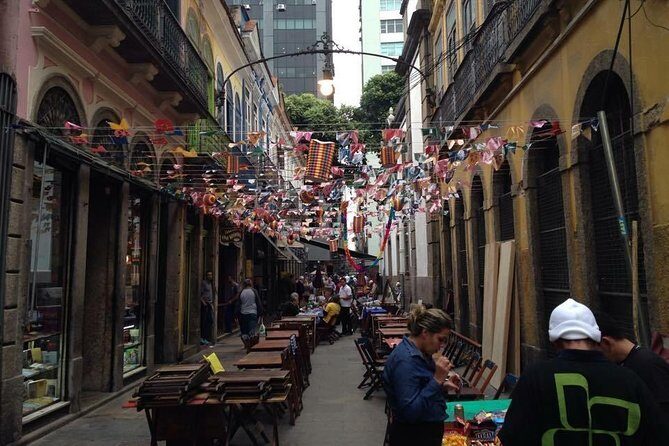
This tour is built for orientation. You start in Copacabana, then get moved into the historical center where Rio’s big buildings sit close enough to see as a chain, not a list. That matters because Centro can feel like a mix of impressive architecture, everyday life, and worn corners. A guide helps you connect the dots fast: who built what, why it matters, and how the city’s power shifted over time.
The pace is described as casual, but you should still plan on about 3 to 4 hours on your feet. The good part is you won’t be stuck staring at one spot for ages. You’ll rotate through major landmarks with short stop times, which makes it easier to keep energy up.
Language support is practical too. Confirmation says English, and it may be a multi-lingual guide in English and Spanish. If you’re comfortable with basic city walking and a few quick transitions, this is a smart way to get your bearings early.
Highlights Checklist: What You’ll Actually Get
- A compact Centro route that hits major historic and cultural sites on foot
- Municipal Theater exterior focus, built 1906–1909 with an eclectic style influenced by Paris
- Free-entry stops at many landmarks, keeping the tour value strong
- Church-and-convent storytelling, including the Franciscans on Morro de Santo Antônio
- Architecture and institutions close together, from royal palaces to postal and justice buildings
- A small group (max 14) for questions and smoother pacing
You can also read our reviews of more walking tours in Rio de Janeiro



Starting at Copacabana Palace and Moving Toward Downtown
The day starts at Copacabana Palace, A Belmond Hotel on Av. Atlântica. Expect a morning meet at 9:00am and then a trip toward Centro. Since the route is designed to cover multiple landmarks, you’ll likely spend some time using local transit rather than walking every step from Copacabana.
This is one of those smart practical choices. Walking the whole distance on your own would take forever. Using public transportation keeps the focus on the landmarks, not the commute.
If your plan is to spend day one soaking up beaches and views, you might feel mentally unprepared for Centro’s more serious vibe. One review noted the tour can be a surprise if you’re expecting a typical first-day sightseeing rush. If you’re already curious about how Rio became Rio, that’s exactly where this tour fits.
Bring the basics: comfortable shoes and water. Even at a casual pace, this is still a city-walking program.
Municipal Theater: Rio’s “Paris-Style” Architectural Moment (1906–1909)
One of the first big visual hits is the Municipal Theater. It’s often described as one of Rio’s jewels, built between 1906 and 1909. The interesting part here isn’t only the beauty—it’s the message. The theater follows the same architectural inspiration style as the Opera House in Paris, with an eclectic approach.
For you, that means your guide can point out how Rio borrowed prestige and European design cues while building its own cultural identity. This is a great stop for photos, but also for context. If you only glance at the facade, you’ll miss why it’s such a symbol of Rio’s ambitions.
At this stage, it’s also a useful warm-up. You’re fresh, the group is together, and you’re learning what the guide wants you to notice—details, materials, and what the building represents in the city’s storyline.
Paço Imperial: From Viceroys to King John VI
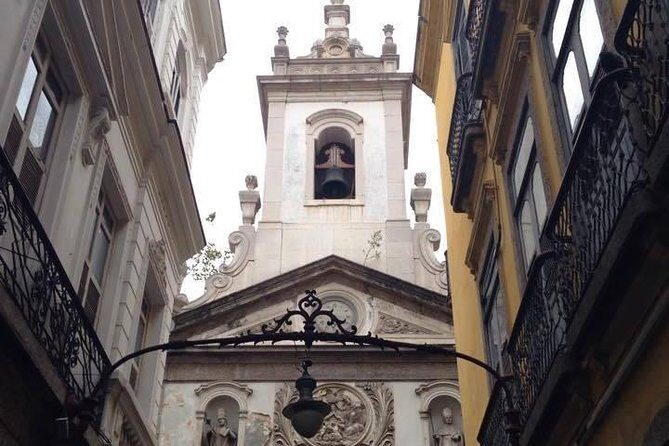
Then you shift to Paço Imperial, the Imperial Palace. This building is tied to Rio’s political turning points. It was constructed in the 18th century as the residence for governors of colonial Brazil. The big leap comes in 1808, when it became a royal residence for King John VI of Portugal—first as King of Portugal, and later as King of Brazil.
This stop works well because the guide can explain the building’s “job” as it changed. You’re not just looking at walls. You’re seeing the physical center of power as the country’s relationship with Europe changed.
Admission is listed as free here, which is a plus. You can spend your time absorbing the story instead of juggling ticket logistics.
If you like history that feels grounded in real places, Paço Imperial is the kind of stop that sticks with you.
CCBB Rio de Janeiro (and the Bank Building That Hosts Culture)
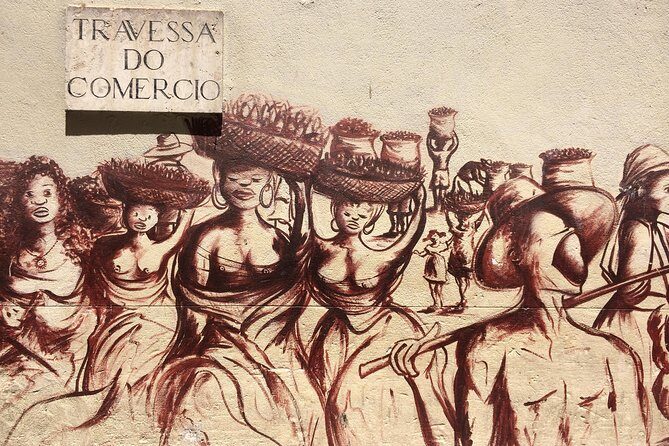
Next up is Centro Cultural Banco do Brasil, or CCBB Rio de Janeiro. The building’s described with neoclassical lines, and its foundation stone was launched in 1880. It ties back to finance and business origins, which makes the cultural shift feel especially meaningful.
This is also where the tour turns practical for modern visitors. CCBB is a place where you can see how institutional buildings get repurposed into public cultural space. That theme runs across the whole walk.
A tip from how the route is experienced: some people love stopping just a bit longer when there’s an exhibit inside the building. Even with short stop times, it’s one of the locations where a quick look can still feel rewarding because the museum-style content can be compelling.
Admission here is also free, so you’re getting a lot of value for the time you spend.
You can also read our reviews of more historical tours in Rio de Janeiro






The Big Library Stop: When “Most Famous” Isn’t the Point
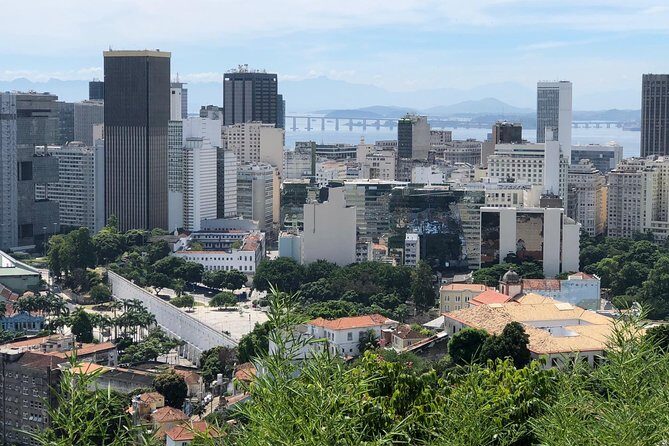
One stop is a major library building—described as the largest library in Latin America and the 7th largest in the world. The collections are about 9 million items, and it has organized early library science courses in Latin America. The staff has also helped modernize library services, including the development of online databases.
You might not expect a library to be a highlight on a walking tour. But this stop makes sense for two reasons.
First, it broadens your idea of what counts as cultural heritage in Rio. This isn’t just churches and palaces. It’s knowledge infrastructure. Second, it gives you a “thinking” break between architecture-heavy stops.
Even if you don’t go deep into catalog systems, you’ll come away with a clearer sense of how Brazil’s public institutions developed—not just its tourist attractions.
Candelária Church: Baroque Facade Meets Later Design Inside
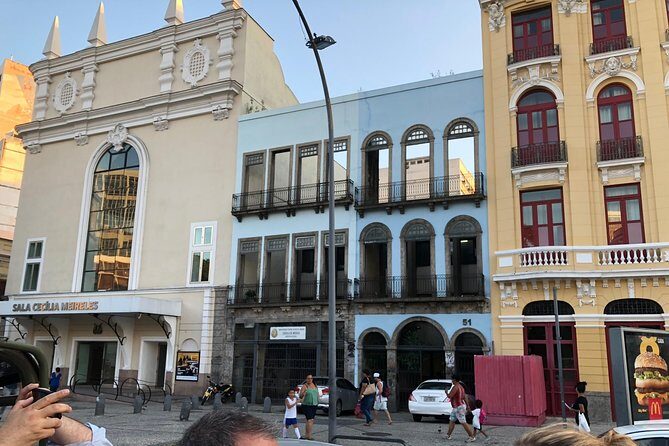
Church of Our Lady of the Candelaria is one of the city’s landmark Roman Catholic churches. What makes it interesting is how it grew over time: it was built and decorated from 1775 to the late 19th century. That long timeline shows up in the design mix.
The facade is Baroque, while the interior includes neoclassical and Neo-Renaissance elements. In other words, it’s a blending of styles that reflects changing tastes and eras.
This is a good stop if you want your walking tour to feel like more than straight-line sightseeing. A guide can connect the design shift to the historical period when Rio’s identity and wealth patterns were changing.
Admission is listed as free, so it’s low-stress. If you want a calm moment, this is often one of the easiest stops to slow down, look carefully, and soak in the details.
Santo Antônio Convent on Morro de Santo Antônio (And Why the Hill Matters)
Convent Of St. Anthony has a deep timeline. Franciscan friars arrived in Rio in 1592 and initially settled near the Beach of Santa Luzia. They later built a small hermitage on a hill area, and by 1607 they gained definitive possession of that hill, now known as Morro de Santo Antônio. Building began June 4, 1608.
This is one of those stops where the location explains the story. The hill setting is not just scenery—it’s part of how religious communities established themselves and how they viewed their relationship to the city.
For you, the key value is perspective. From a hilltop, Centro feels different. Even a short visit can help you understand why these institutions wanted elevation, visibility, and a sense of permanence.
Admission is listed as free here too. You’ll get a full historic feel without paying extra.
St. Francis of Penance: Third Order Roots and a Church Built in Stages
Sao Francisco da Penitencia Church focuses on the Third Order of San Francisco. The laity settled in Rio in 1619, occupying a chapel inside the Franciscan convent of Santo Antônio. Later, they received a plot of land next to the convent’s church to build their own temple.
Construction happened with interruptions, between 1657 and 1733. That “built in phases” detail is important. It hints at how resources, priorities, and politics can change a project over generations.
Here’s your planning note: admission for this church is not included. So if this stop matters to you, budget a little extra beyond the tour price.
This is also a strong stop for understanding the layers of Rio’s religious life. You’re seeing how different groups used the same sacred geography but expressed it through different structures.
Praça XV, Cinelândia, Arco do Teles, and Casa Franca-Brasil: Rio’s Civic and Commercial Pulse
Centro Rio is filled with squares and ceremonial spaces. Praça Quinze de Novembro is one of them. It sits in the historical center, bordered by Palácio Tiradentes (seat of Rio’s Legislative Assembly) and Paço Imperial. It’s also near the Praça XV Station ferry terminal, which serves routes to places in Rio de Janeiro and Niterói.
Then you move to Cinelândia, officially Praça Floriano Peixoto. It’s a major public square in the center, named for Floriano Peixoto, Brazil’s second president. Think of it as a stage where the city’s public life meets its architecture.
After that comes Arco do Teles. The story starts in 1738 with the House of Governors—later linked to the Imperial Palace. After construction finished in 1743, the Largo do Paço region became appreciated for its growth. The Portuguese judge Antônio Telles Barreto de Menezes bought land and built houses to rent to merchants visiting Rio, leading to the arch’s name.
Finally, there’s Casa Franca-Brasil, a neoclassical solar designed by Grandjean de Montigny from the French Artistic Mission. Commissioned by King João VI in 1819 for the city’s first Commerce Square, it was inaugurated May 13, 1820.
This cluster of stops is valuable because it shows Rio as a functioning city, not just a museum. You see civic power (legislative spaces), public gathering zones (squares), and the commercial logic behind urban growth (merchant housing and commerce).
CCJF (Federal Justice Cultural Center) and Correios Cultural Centre: When Power Becomes Public Space
Two more institutions round out the modern side of the Centro story.
The Federal Justice Cultural Center (CCJF) occupies the former seat of the Federal Supreme Court. Construction began in 1905 as part of the city’s broader reform under Mayor Pereira Passos, when Rio was the federal capital. It was originally intended for the Mithra Archiepiscopal, then purchased for the Supreme Court. The inauguration was April 3, 1909, designed by Adolpho Morales de Los Rios, and noted as an important testimony of eclectic architecture.
Then you see Correios Cultural Centre, built to house the Lloyd Brazilian shipping company’s school. It opened in 1922, but the school never operated as planned. After that, the building served administrative units and ran Brazilian Post and Telegraph operations for more than five decades.
For you, these stops answer a key question: what happens to big buildings when their original role ends? Here, the answer is public culture. You’ll walk away seeing how Rio recycles its architecture so it keeps working for the public.
Price and Pace: Is $40.50 Good Value for This Walk?
$40.50 for about 3 hours feels fair, especially when so many stops have free admission. You’re paying for the guide and the route design that strings landmarks together into a coherent story. You’re also capped at a small group size, which tends to make Q&A easier.
The main tradeoff is time and your comfort on your feet. The tour is described as walking-focused, and you should plan for around 3 to 4 hours total time. It’s also not recommended if you have walking difficulties.
Also watch for expectations. If you’re in Rio for beaches and sugarloaf views only, Centro may feel less fun at first. But if you want to understand the city’s architecture, institutions, and shifting eras, this is one of the better uses of a morning.
You’ll likely appreciate the guide’s style. In reviews, guides including Leonardo, Tauan, and Heraclito (Kiko) are praised for patience and humor, which matters on a tour like this where you’re moving constantly.
Should You Book This Rio Walking & Historical Tour?
Book it if you want a structured, intelligent way to see Centro early. The combo of iconic landmarks (Municipal Theater, Paço Imperial, Candelária) plus the lesser-known institutional buildings (CCJF and Correios) makes the tour more than a photo loop.
Skip or rethink if walking is hard for you, or if you want your first hours in Rio to focus on beaches and scenic overlooks. This tour is for people who like streets, architecture, and stories tied to real places.
If you’re deciding between doing it solo or with a guide, I’d choose the guide. It helps you see Rio’s historical center as one connected city, not a random pile of buildings.
FAQ
What is the duration of the Rio Walking & Historical Tour?
It runs for about 3 hours.
How much does the tour cost?
The price is $40.50 per person.
Where do I meet the tour?
You meet at Copacabana Palace, A Belmond Hotel, Rio de Janeiro (Av. Atlântica, 1702, Copacabana) at the start of the tour.
What time does the tour start?
Start time is 9:00am.
Is the tour offered in English?
Yes. The tour is listed as offered in English, and it may be operated by a multi-lingual guide who covers English and Spanish.
Is a mobile ticket provided?
Yes, the tour uses a mobile ticket.
Is admission included for all stops?
Most stops list admission as free, but admission for Sao Francisco da Penitencia Church is not included.
How big is the group?
The tour has a maximum of 14 travelers.
Do I need to book with at least two people?
Yes, there is a minimum of 2 people per booking.
What’s the guidance for children and mobility?
Children must be accompanied by an adult, and the tour is not recommended for people with walking difficulties.
Should You Book This Tour?
If you’re excited by Rio’s architecture and the story behind major institutions, yes—this is a strong morning-style introduction to Centro. If you’re mobility-limited or you’re not in the mood for history on your first day, you may want to save this for a day when you’ll enjoy getting your bearings on foot.