REVIEW · RIO DE JANEIRO
Rio: Olympic Boulevard, Museum of Tomorrow & History Tour
Book on GetYourGuide →Operated by C2RIO TOURS & TRAVEL · Bookable on GetYourGuide
Rio’s Downtown tells two stories at once.
This half-day tour strings together African heritage, Olympic-era design, and futuristic science in a tight route. I especially like how the day starts at Valongo Wharf and ends with a proper, old-school café stop at Confeitaria Colombo, so you get both meaning and a break.
My second big reason to book is the mix of visuals and context. You’ll see Eduardo Kobra’s huge mural with its five ethnic groups, then move on to the Museum of Tomorrow, a building that looks like it belongs to the future even before you step inside.
One thing to consider: quality and timing can matter a lot on a short, multi-stop day. Some guidance notes from past groups point to issues with getting between stops and staying on schedule, so you’ll want to confirm your pickup time and wear shoes ready for a moderate walk.
In This Review
- Key moments you’ll remember
- First stop: Valongo Wharf and the African influence story
- Eduardo Kobra’s mural: street art with a clear message
- Olympic Boulevard to the Museum of Tomorrow: futuristic, but human
- Inside the Museum of Tomorrow: what you’re meant to question
- Monastery of Saint Benedict: the surprise of gold Baroque
- Rio 2016 Olympic Cauldron: modern art you can’t ignore
- Praça XV: empire-era history in the middle of the city
- Confeitaria Colombo finale: an Art Nouveau café with serious style
- Hotel pickup, the van, and why timing matters on a 4-hour day
- How guide quality changes the whole experience (Emma, Pedro, Emanuella, and more)
- Who this tour is best for
- Price: is $67 a fair deal for four hours?
- Should you book this Downtown Rio Olympic Boulevard & Museums tour?
- FAQ
- FAQ
- How long is the Rio: Olympic Boulevard, Museum of Tomorrow & History Tour?
- What’s included in the tour price?
- Where does pickup happen?
- Are tickets to the Museum of Tomorrow included?
- Is food included at Confeitaria Colombo?
- Is Confeitaria Colombo open every day?
- Is this tour walking-heavy?
- Does the tour run in bad weather?
- What’s the maximum group size?
Key moments you’ll remember
- Valongo Wharf and the African influence in Brazil, explained with the UNESCO context
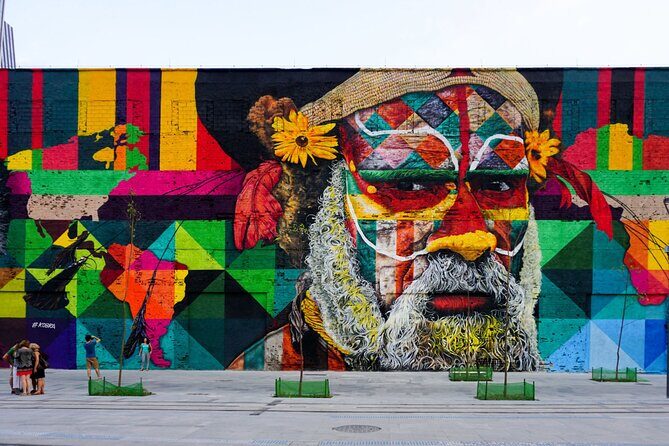
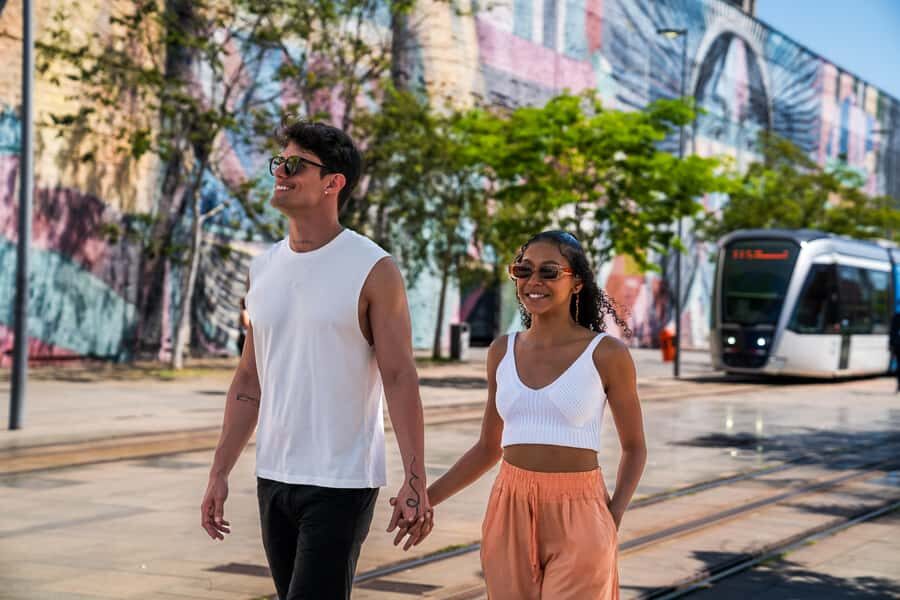
- Eduardo Kobra’s massive mural, with five ethnic groups in geometric color
- Museum of Tomorrow ticket included, with free time to explore at your own pace
- Monastery of Saint Benedict, simple outside, gold Baroque inside
- Rio 2016 Olympic Cauldron by Anthony Howe, a reflective kinetic-style sphere
- Confeitaria Colombo finale, Art Nouveau grandeur plus Brazilian snacks you can buy
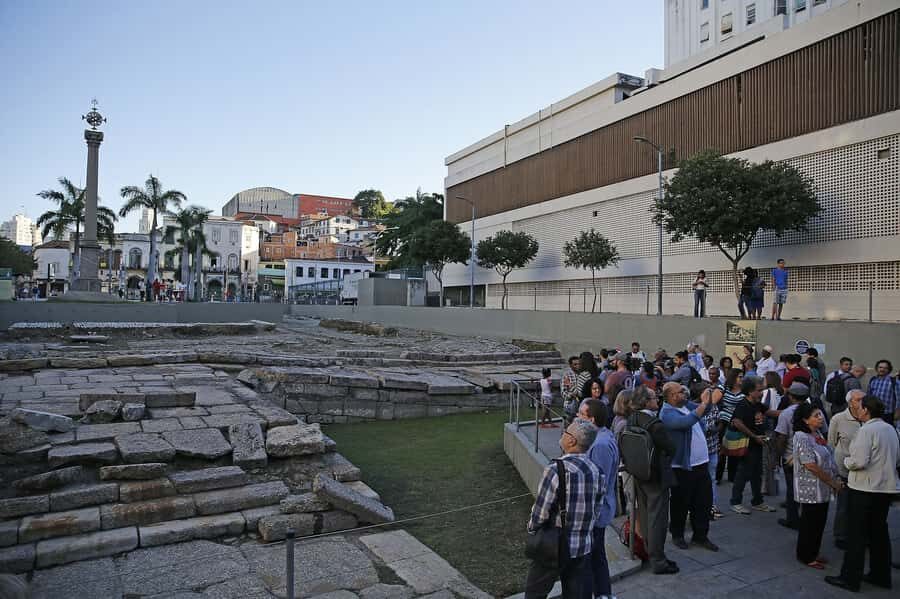
First stop: Valongo Wharf and the African influence story
Downtown Rio can feel like it’s rushing past you, but Valongo Wharf gives you a slower way to read the city. This is the area tied to the latest UNESCO World Heritage designation in Rio, and the tour focuses on what that means for Brazil’s African influence.
What I like about this start is that it anchors everything that comes later. You’re not just collecting sights. You’re learning why certain neighborhoods, streets, and cultural traces look the way they do.
Expect a guided walk that’s meant to be understood quickly. You’ll get the key ideas early, then carry them with you as the day shifts from heritage to art to science.
You can also read our reviews of more historical tours in Rio De Janeiro


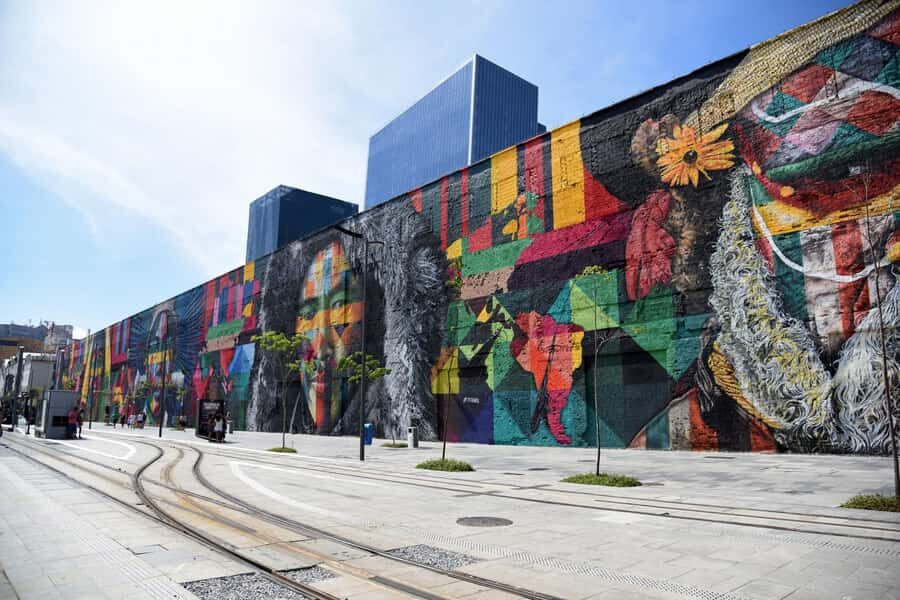
Eduardo Kobra’s mural: street art with a clear message
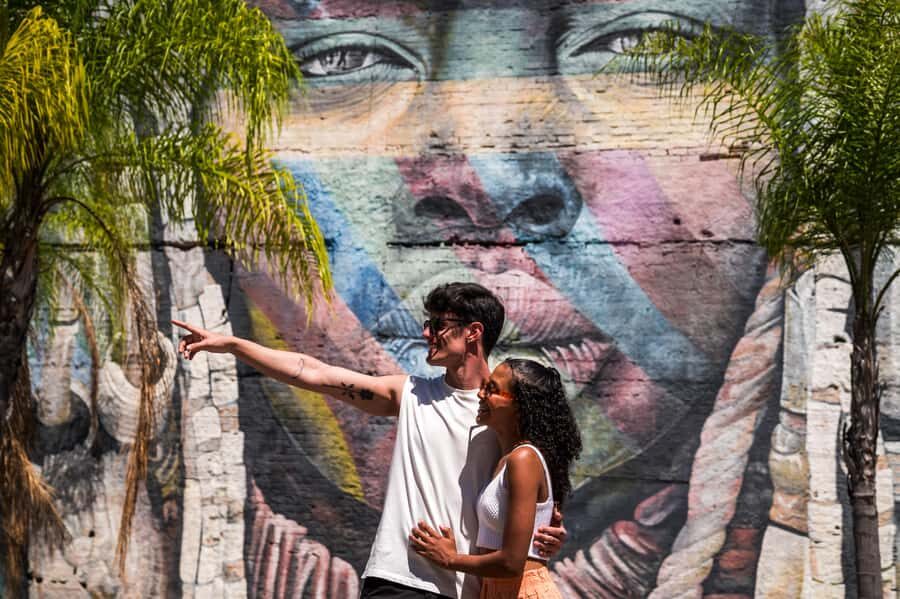
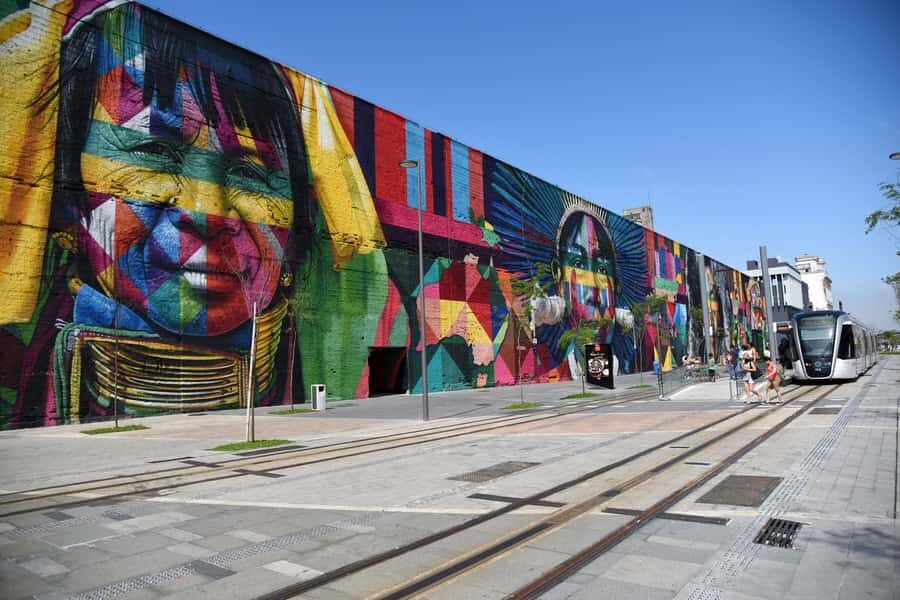
After Valongo Wharf, the route heads toward Eduardo Kobra’s enormous graffiti mural. It’s one of the largest graffiti walls in the world, and the design centers on five ethnic groups set in a colorful geometric background.
This is the kind of stop that works even if you usually skip street art. The mural is bold, but the tour framing helps you see it as more than color. The subject matter is the point.
Practical tip: bring your phone or camera, but also take 30 seconds to stand back. The mural reads differently from far away versus close up, especially with the geometric patterns.
Olympic Boulevard to the Museum of Tomorrow: futuristic, but human
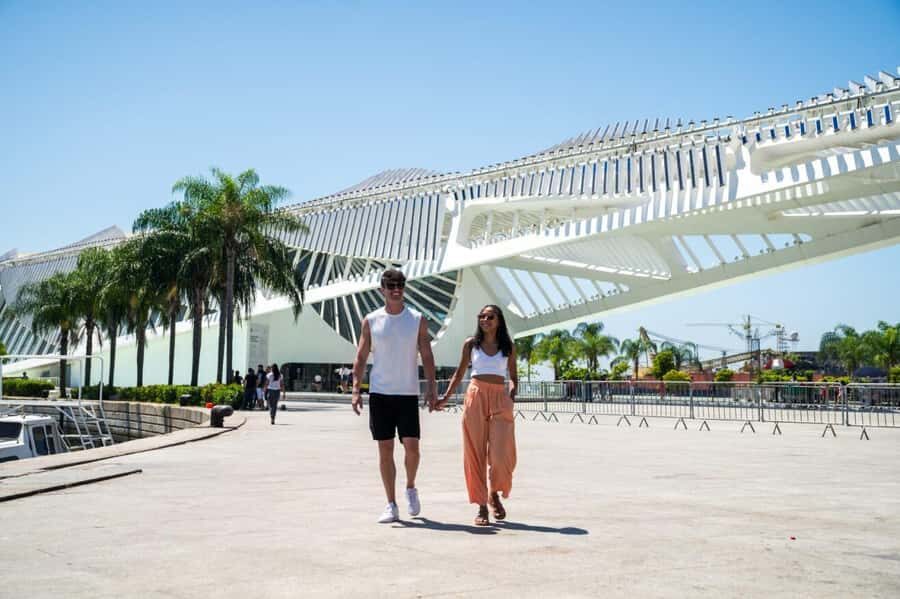
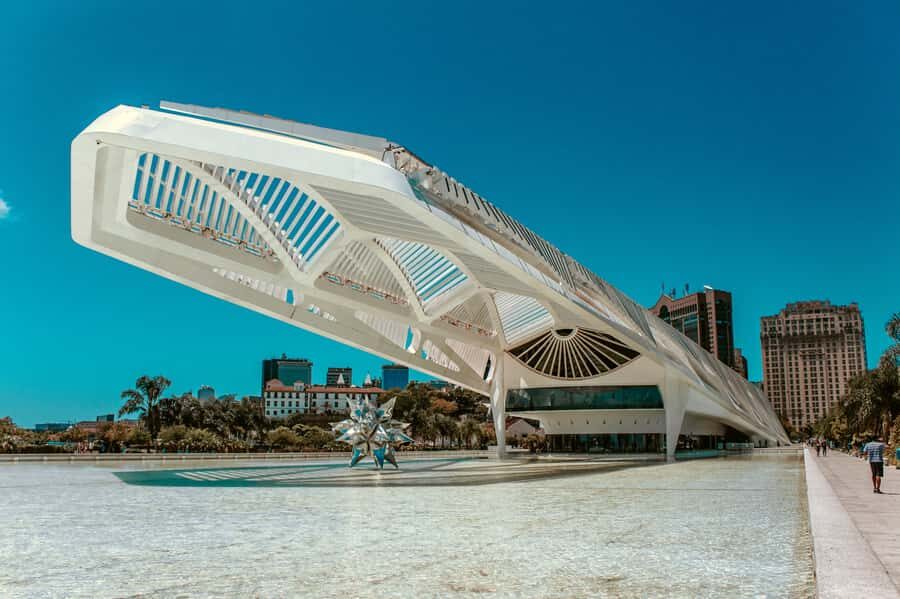
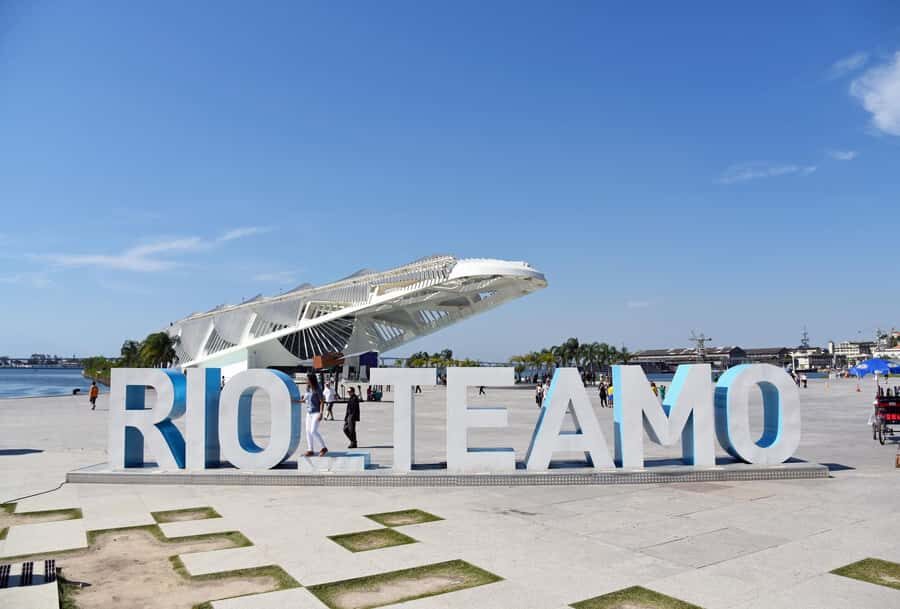
Then you’re walking along Olympic Boulevard, heading toward one of Rio’s best-known modern landmarks. The route builds anticipation by moving you through the Olympic-era visual language of the city before the museum itself.
The Museum of Tomorrow is dedicated to science, technology, and questions about the future of the planet and humankind. And yes, you’ll notice the architecture right away—this place doesn’t try to blend in.
This stop is one of the strongest reasons the tour works for most people. You get a major attraction with included admission, guided context, and enough time to look around without feeling trapped.
Inside the Museum of Tomorrow: what you’re meant to question
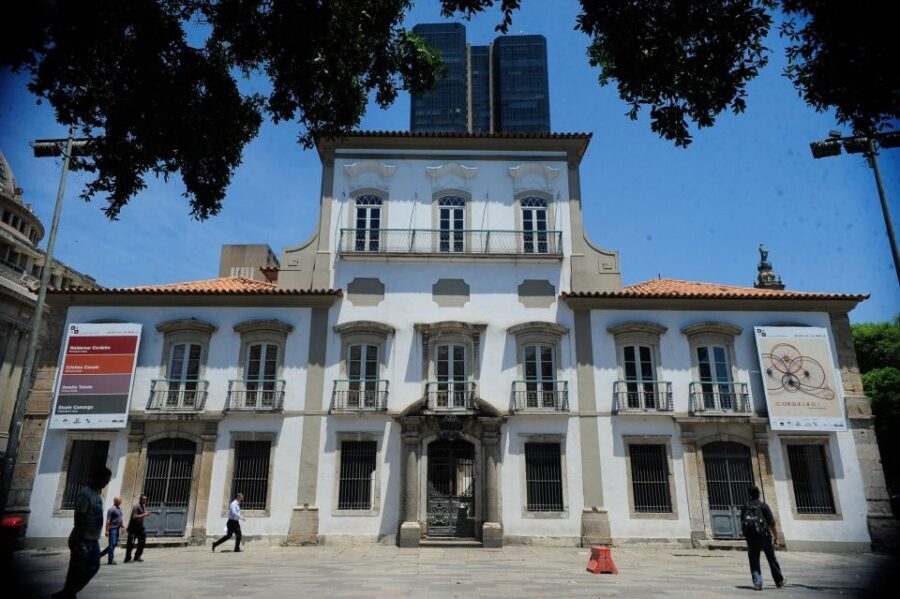
A big part of why the Museum of Tomorrow is so popular is that it doesn’t treat the future like sci-fi only. The emphasis is on possibilities—what we build, what we choose, and what those choices do to people and the planet.
I like tours that don’t lecture too hard. On this one, the guide’s job is to point you toward the big themes so you can enjoy the exhibits without turning the museum visit into a chore.
If you’re someone who likes a little control, this is where that helps. Some guide styles reportedly allow you to explore the museum at your own pace, which makes a big difference when you’re moving fast across Downtown.
Monastery of Saint Benedict: the surprise of gold Baroque
Right after the future, you switch time periods with the Monastery of Saint Benedict. The contrast is the show: the façade is simple, but the interior is covered with golden ornaments connected to the Baroque period.
This is one of those stops that feels like a plot twist. You enter expecting something modest, and then the space changes mood once you’re inside.
What makes it valuable on a short tour is that it breaks the rhythm. You’ve seen art, you’ve seen futuristic design. Now you get a quiet interior moment where detail does the talking.
You can also read our reviews of more museum experiences in Rio De Janeiro






Rio 2016 Olympic Cauldron: modern art you can’t ignore
Before you move deeper into the historical streets, you’ll see the Rio 2016 Olympic Cauldron created by American artist Anthony Howe. The structure uses a reflective-kinetic-sphered design, so it looks like it’s constantly interacting with light and movement.
This stop works best if you take it slowly for a minute. Even if you’re not an Olympics person, it’s a reminder of how large events shape a city’s public spaces and visual identity.
Also, it helps the day feel connected. Olympic Boulevard doesn’t just lead to the museum—it becomes part of the story you’re walking through.
Praça XV: empire-era history in the middle of the city
Next comes Praça XV, where you’ll see one of the former headquarters of the Brazilian empire. The tour uses this area to point out important historical facts connected to what happened there.
This is a good moment to get your bearings on the city’s timeline. Rio’s Downtown feels like a jumble of styles, but Praça XV gives you a geographic reference point for how power and governance shaped the urban layout.
I recommend watching for the guide’s way of linking details. When it’s done well, you can start noticing patterns in architecture and street layout that you’d otherwise miss.
Confeitaria Colombo finale: an Art Nouveau café with serious style
Your last stop is Confeitaria Colombo, one of Rio de Janeiro’s “must-see cafés.” It’s known for its opulent Art Nouveau decoration, including huge stained glass, ornate tiles, and mirrors imported from France, Portugal, and Belgium.
This is a great finish because it turns the end of the walk into a reward rather than just a place to sit. You can buy food and drinks, and the tour commonly gives you ideas like the coxinha de frango (little chicken thigh) and brigadeiro (brigadier) for dessert.
Important detail for planning: Confeitaria Colombo is closed on Sundays. If you’re traveling on a Sunday, verify whether your exact date includes the café stop or whether the tour adjusts.
Hotel pickup, the van, and why timing matters on a 4-hour day
The tour runs about 4 hours, and that short window is built around efficient movement. Pickup is included for hotels in Rio’s South Zone—Copacabana, Ipanema, Leblon, and Leme—between 8:10 AM and 8:55 AM.
That range means you should be ready early. If you’re staying somewhere like a hostel or B&B, you’ll be routed to a nearby pickup hotel.
A balanced take: many days run smoothly with attentive guides and on-time transport. But there are enough cautionary notes to treat logistics seriously. Some past groups reported issues like a guide getting lost between stops or having to rush between commitments, which then affected transport timing and drop-off.
My practical advice is simple: confirm your pickup time the moment you receive it, and build in buffer on your side. If you’re easygoing about timing, you’ll enjoy the tour more.
How guide quality changes the whole experience (Emma, Pedro, Emanuella, and more)
On a tour like this, the guide isn’t just translating. They shape what you notice, how long you spend at each spot, and whether the day feels like a story or a checklist.
Good experiences often sound like this: a friendly guide, clear explanations, and flexibility inside the Museum of Tomorrow. For example, Emma was described as a great, friendly guide with a tour style that gave people flexibility to explore the museum at their own pace.
When the guide focuses on history and makes it coherent, the whole day clicks. Pedro was noted as dedicated and very informative about Brazil history, which is exactly what you want for the Valongo Wharf and Praça XV parts.
Language also matters. Emanuella was praised for delivering a lot of history and building understanding of Brazil’s story and the buildings you’re seeing.
On the flip side, there are also negative notes tied to rushing, losing time between locations, or the guide not tracking the group well. Marilia was mentioned as getting lost during the route, and Gabriela was described as having rushed priorities that affected bus drop-off. You can’t control who you get, but you can control your own readiness—show up on time, keep your meeting instructions accessible, and ask quick questions if something feels unclear.
Who this tour is best for
This tour is a strong fit if you want a concentrated Downtown Rio overview with both big-name sights and meaningful context. It works well for first-timers because you hit major landmarks without a day-long transit marathon.
It’s also good for people who like contrast: African heritage at UNESCO sites, street art on a huge scale, Baroque interior beauty, and modern science in a single afternoon.
If you dislike walking or hate schedules, consider whether the 4-hour route is right for your pace. The walking is described as moderate, but it’s still a walking tour with multiple stops.
Not a great match if you’re traveling with someone who needs step-by-step pacing and reassurance at each location. This is efficient by design, and that’s part of its charm—and its risk.
Price: is $67 a fair deal for four hours?
At $67 per person, the value comes from what’s included. You’re not just paying for a guide. You get hotel pickup/drop-off from the South Zone, a professional guide with live commentary in English, Spanish, and Portuguese, and Museum of Tomorrow tickets bundled into the price.
In Rio, that combo matters. A paid museum ticket plus transport planning plus guided interpretation usually costs more when you piece it together yourself.
Would I only buy this for the museum? No. The real value is the tight grouping of stops that otherwise take time to navigate—Valongo Wharf, Kobra mural, Monastery of Saint Benedict, the Olympic Cauldron, Praça XV, and the Confeitaria Colombo finish.
One caution: food isn’t included. You’ll spend on snacks and drinks at Confeitaria Colombo, so plan a little budget for that.
Should you book this Downtown Rio Olympic Boulevard & Museums tour?
I’d book it if you want a guided route that connects the city’s themes—heritage, modern identity, and ideas about the future—without turning your day into commuting.
Book it confidently if you’re traveling from Copacabana, Ipanema, Leblon, or Leme and you can show up on time for pickup. The included museum ticket and transport make the price feel reasonable for a first visit.
I’d think twice if timing stress ruins your trip. Since the tour is only 4 hours and depends on smooth movement between stops, you’ll enjoy it more if you can stay flexible. If you’re picky about strict punctuality, send a message before the day of departure and confirm your pickup point and time.
FAQ
FAQ
How long is the Rio: Olympic Boulevard, Museum of Tomorrow & History Tour?
It lasts about 4 hours.
What’s included in the tour price?
You get a guided walking tour in Downtown Rio, hotel pickup and drop-off (South Zone hotels), museum tickets for the Museum of Tomorrow, and professional live commentary in English, Spanish, and Portuguese.
Where does pickup happen?
Pickup is available from hotels in Rio’s South Zone, including Copacabana, Ipanema, Leblon, and Leme, typically between 8:10 AM and 8:55 AM.
Are tickets to the Museum of Tomorrow included?
Yes. Tickets to the Museum of Tomorrow are included.
Is food included at Confeitaria Colombo?
No. Food and drinks are available for purchase at Confeitaria Colombo.
Is Confeitaria Colombo open every day?
No. Confeitaria Colombo is closed on Sundays.
Is this tour walking-heavy?
It involves a moderate amount of walking, so comfortable shoes are recommended.
Does the tour run in bad weather?
Yes. It operates rain or shine.
What’s the maximum group size?
The group is capped at 19 passengers.