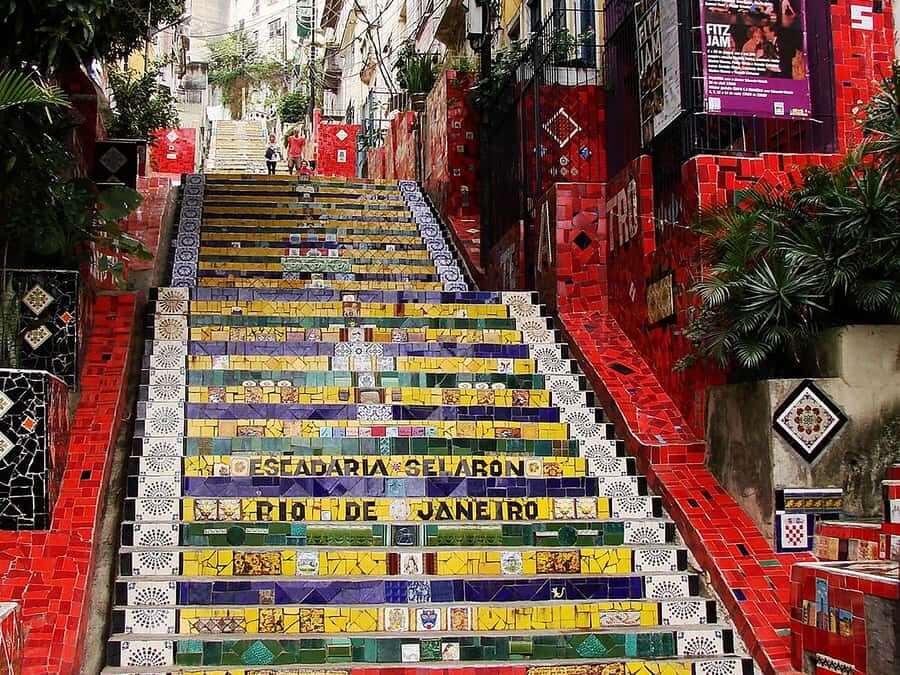
Cinelândia is where Rio shows off its big ideas. This half-day tour links the city’s landmark buildings to the stories that shaped Brazil, from colonial roots to belle époque style. You’ll see major sights like the Municipal Theatre area and the Fine Arts Museum zone, then slow down for the Escadaria Selarón staircase and the Metropolitan Cathedral.
Two things I really like: first, the tour is run as a small-group experience (up to 12 people), so you can actually ask questions instead of guessing. Second, the guide brings the place to life with “look closer” details, especially at the Metropolitan Cathedral of Saint Sebastian and around the art deco/old-school cafe stop.
One drawback to keep in mind: it’s a short 3 to 4 hours, and several big sights are viewed from the outside. If you want lots of time inside museums or churches, you’ll need to plan extra time on your own.
In This Review
- Key things to notice before you go
- Starting at the Municipal Theatre in Cinelândia Square
- What makes the route feel like Rio’s timeline
- Escadaria Selarón: the staircase with a biography
- The Metropolitan Cathedral of Saint Sebastian: learn the structure from the inside out
- Colombo cafe at the height of Brazil’s belle époque
- Cinelândia time machine: centuries in the same square
- Small-group value and why the price makes sense
- How to make the most of your 3–4 hours
- Who this tour suits best
- Should you book this half-day Brazilian history and culture tour?
- FAQ
- How long is the tour?
- What language is the tour offered in?
- Where is the meeting point?
- How many people are in the group?
- Do I need to pay admission for the main stops?
- What’s the cancellation window?
Key things to notice before you go
- Small group pace (max 12) keeps it personal and Q&A-friendly.
- Mostly free stops at the staircase, cathedral, and classic cafe mean you can focus on photos and stories.
- Cinelândia as the timeline: the route stitches together multiple eras of Rio without heavy museum time.
- Escadaria Selarón photo window: you’ll get time to take pictures after the story behind the tiles.
- Cathedral details: you’re not just looking up—you’re learning how the building “talks.”
- Colombo cafe break: a short pause for local coffee and cakes in a space with old-world style.
Starting at the Municipal Theatre in Cinelândia Square
Your tour begins at the Municipal Theatre of Rio de Janeiro, right in Praça Floriano in Cinelândia (Centro). This matters because Cinelândia isn’t just a convenient meeting point. It’s Rio’s showpiece square, a place where the city’s “official” face—big buildings, grand architecture, civic pride—meets the everyday pulse of downtown.
From here, the experience turns practical. You’re not spending the whole time staring at your phone. You’re walking with context. The guide connects the surrounding landmarks—Fine Arts Museum, National Library, City Council—and explains how this area sits in Rio’s story. Expect a lot of learning while you move, which is exactly how a half-day tour should work.
And yes, you’re in central Rio, close to public transportation. That’s handy if you plan to tack on dinner or a longer walk after the tour ends back where it started.
You can also read our reviews of more historical tours in Rio de Janeiro



What makes the route feel like Rio’s timeline
A big part of the value is that you’re seeing multiple eras without the stress of hopping between far-away neighborhoods. The route starts with that formal Cinelândia feeling and then pushes you toward spots that feel more personal—places where people leave marks, build symbolism, and shape a neighborhood identity.
The walking plan also helps you orient fast. You’ll get bearings on where key historic institutions sit relative to each other, and you’ll understand why this downtown area is treated like a kind of time machine. The square’s surroundings include buildings reaching back to the early settlement period, plus structures that span centuries up to modern times.
That’s the secret sauce: the tour helps you look at Rio like a map, not a checklist. Once you get that mindset, everything you do later—wandering, photo stops, even casual street scenes—reads a little clearer.
Escadaria Selarón: the staircase with a biography
The first big stop is Escadaria Selarón, the famous colorful staircase. You’ll spend about 15 minutes here, and the key is that you don’t just arrive and shoot photos. The guide shares the story behind the tiles and the staircase’s meaning, then you get time to explore the details and take pictures.
Why this stop works in a half-day format: the staircase is visually unforgettable, but the deeper value is in learning what you’re actually looking at. The tiles aren’t random decoration. They act like a long-running message—part personal, part cultural—woven into a public stairway people pass every day.
Practical tip: go in expecting a tight photo schedule. You can still get great shots, but this isn’t the kind of place where you can comfortably linger for an hour and lose the rest of the tour. If you want a specific angle, decide quickly and then move.
The Metropolitan Cathedral of Saint Sebastian: learn the structure from the inside out
Next is the Metropolitan Cathedral of Saint Sebastian. You’ll have about 25 minutes at the cathedral, and this is one of the tour’s standout learning moments. The guide focuses on stories hidden in the structure and details of the oddly shaped design.
This stop is valuable because it teaches you how to read architecture like a language. Instead of only admiring the look, you understand why it’s shaped the way it is—and how its design communicates ideas through form and symbolism. For many visitors, that shifts the cathedral from scenery into a real historical artifact.
A reasonable expectation: 25 minutes is enough to see the main views and absorb the guided explanation, but it’s still a quick visit. If you fall in love with the place and want more time, plan to return later. For this tour, your best move is to take the guide’s explanation first, then go back to the building with fresh eyes for your own observations.
Colombo cafe at the height of Brazil’s belle époque
Then you’re off to Colombo, one of Rio’s classic cafes. This is the brief “feet-down” moment: about 20 minutes, including time to enjoy coffee and cakes. It’s described as inaugurated at the end of the 19th century, during the Brazilian belle époque, with an art nouveau salon that feels almost museum-like.
This stop is small on time but big on atmosphere. A tour like this could easily skip food entirely, but it doesn’t. And that’s smart. Taking a break here gives your brain a reset while you’re still in the middle of the story. You’ll taste something local—coffee and cakes—and you’ll see a stylish historic interior instead of just viewing monuments from the sidewalk.
What to watch for: because this is a short stop, don’t plan on a slow sit-down. Think of it as a guided taste-and-look moment. If you want a longer meal, you’ll want to schedule that for after the tour.
You can also read our reviews of more tours and experiences in Rio de Janeiro






Cinelândia time machine: centuries in the same square
You’ll also spend time around the square area itself, described as a “time machine” because it connects back to the earliest settlement period in Rio. Around this zone are buildings dating from the 17th century through to the present, including an Imperial Palace and the church tied to coronations of Portuguese and Brazilian emperors.
This is one of those parts that feels abstract until you hear it out loud. Then suddenly the downtown streets make sense: you realize you’re standing inside the layers of a city that kept changing its rules, its rulers, and its ambitions.
Because much of what you see at this stage is about surrounding landmarks and understanding relationships, the tour works best if you stay a bit mentally present. Keep your curiosity switched on. If you do, you’ll walk away with a clearer sense of why this part of Rio matters so much.
Small-group value and why the price makes sense
The tour costs $40.38 per person, with a duration of about 3 to 4 hours. That’s not a bargain-basement price, but it also isn’t inflated for what you get.
Here’s the value equation I see:
- You’re paying for a guide who explains the meaning behind major landmarks.
- The group size is capped at 12, so it doesn’t feel like a crowded bus lecture.
- Key stops are free in terms of admission (including Escadaria Selarón, the Metropolitan Cathedral of Saint Sebastian, and Colombo).
That combination is why the tour feels like it uses your time well. Instead of spending money on entry tickets you didn’t care about, you’re putting the focus on interpretation and context. In a half-day, that’s usually the best use of your travel energy.
How to make the most of your 3–4 hours
This tour is designed to be efficient, so you’ll enjoy it more if you show up ready to move. Wear comfortable shoes for downtown walking. The itinerary includes short stops, quick transitions, and photo time that can’t stretch.
Also, give yourself a plan for after. Since you’ll return to the meeting point at the Municipal Theatre, you can easily extend your day in Centro—either by wandering nearby or heading to another activity without needing a new commute.
If you’re the type who likes to learn and then immediately test your new knowledge by looking around, this is a strong match. You’ll likely notice more on your own afterward because the tour gives you a framework.
Who this tour suits best
I’d book this if you fit one of these profiles:
- You want a history-and-culture overview without committing to a full-day itinerary.
- You like architecture and want the meaning behind what you see.
- You prefer guided stories and photo stops over long museum browsing.
- You’d rather pay for a guide than spend hours trying to piece together context on your own.
If you’re chasing maximum indoor time—like you want long stays inside museums or you need deep museum interpretation—this may feel a bit short. But if your goal is to understand downtown Rio quickly and taste a little of the old classic cafe vibe, it’s a solid choice.
Should you book this half-day Brazilian history and culture tour?
Yes, if you want an efficient introduction to Rio’s downtown stories, with a small group and a guide who connects the dots between landmarks. The highlights hit the right mix: a world-famous staircase, a cathedral where details matter, and a classic cafe stop that gives you a break without losing the cultural thread.
Book it especially if you’re trying to get oriented in a first or second day in Rio. You’ll leave with better instincts for where things sit, why they matter, and what to look for as you keep exploring.
If your ideal tour means long interior time and slow browsing, then you might want a different format. But for learning fast and seeing memorable places in 3–4 hours, this one is easy to recommend.
FAQ
How long is the tour?
The tour lasts about 3 to 4 hours.
What language is the tour offered in?
It’s offered in English.
Where is the meeting point?
You meet at the Municipal Theater of Rio de Janeiro, Praça Floriano, S/N – Centro, Rio de Janeiro – RJ, 20031-050, Brazil.
How many people are in the group?
The tour has a maximum of 12 travelers.
Do I need to pay admission for the main stops?
Admission is listed as free for Escadaria Selarón, the Metropolitan Cathedral of Saint Sebastian, and Colombo.
What’s the cancellation window?
Free cancellation is available up to 24 hours before the experience starts for a full refund.