REVIEW · RIO DE JANEIRO
Rio: Half-Day Jeep Tour at Floresta da Tijuca
Book on GetYourGuide →Operated by Rio Jeep Tour · Bookable on GetYourGuide
One ride, two worlds: city skyline and jungle noise. This half-day open-air Jeep tour turns Rio’s famous sights into a real walkable experience in the Tijuca National Forest, with stops that mix viewpoints, birds-and-monkeys energy, and a refreshing waterfall dip. I love the easy pace on the trails and the way the guide brings the forest to life with species, history, and practical stories. I also like the Christ statue and Vista Chinesa viewpoints that make you feel the scale of the city fast. One possible drawback: the walk time is brief, so if you’re hunting for lots of wildlife sightings or a deep, hours-long hike, you might leave wanting more.
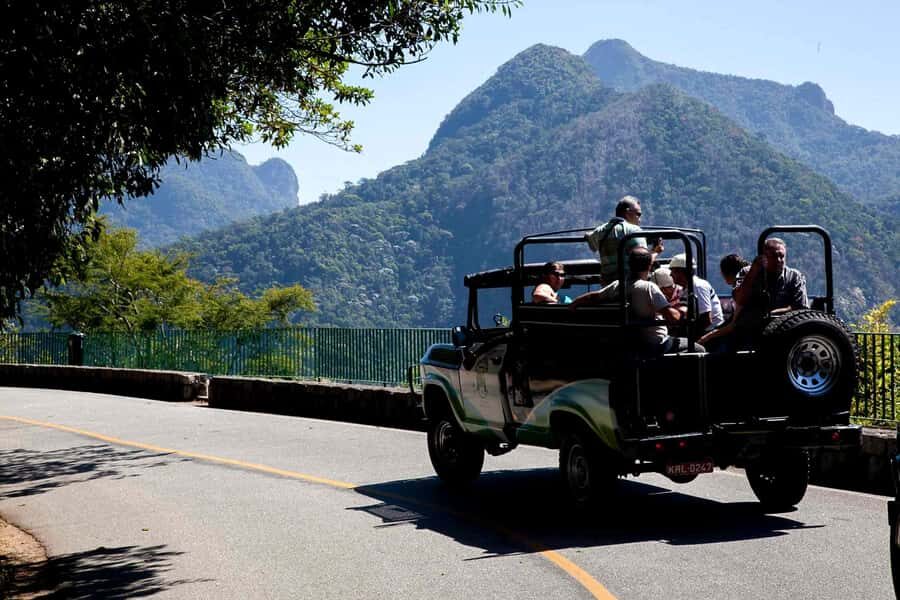
You’ll bounce along in restored ex-military off-road vehicles with an unobstructed view overhead, which is a big deal in Rio. Multiple guides called out by name in recent trips—like Aline, Jane, and Dario—kept things friendly, paced, and full of details about how the Atlantic Forest recovered and what you’re seeing right now. If you’re the type who likes hearing why something exists (not just what it looks like), this tour delivers.
The main consideration is weather and expectations. The itinerary includes a quick stop at Cascatinha Visconde de Taunay for a dip, but cold or conditions can affect what you can do on the day. Also, the forest can be quiet or muggy depending on timing, so animal sightings can range from great to just okay.
In This Review
- Key highlights worth aiming for
- Rio’s edge-of-city forest: why this Jeep tour works
- From your hotel to Tijuca National Park (and why timing matters)
- Lagoa and Christ statue views: the quick Rio hit before the trees
- Vista Chinesa: a monument viewpoint with story behind it
- Cascatinha Visconde de Taunay: waterfall time and a reality check
- Capela Mayrink (1855) and the two-trail forest rhythm
- Wildlife sounds are part of the “atmosphere” even when sightings vary
- São Conrado Beach hand-gliders: a fun end to the jungle day
- Price and value for $60: what you’re really paying for
- Who should book this—and who might prefer another format
- Should you book the Rio Jeep Tour of Floresta da Tijuca?
- FAQ
- How long is the Rio Half-Day Jeep Tour?
- What’s included in the price?
- Which languages are available for the live tour guide?
- Is the tour wheelchair accessible?
- Do I get picked up from my hotel?
- What should I bring to the forest?
- Is the waterfall dip part of the experience?
- Where does the tour end?
- Can I cancel for a refund?
Key highlights worth aiming for
- Open-top off-road Jeep that keeps you connected to the scenery (and the sounds)
- Vista Chinesa viewpoint with a real monument backstory
- Cascatinha waterfall stop with a chance for a quick swim when conditions allow
- Two easy forest trail segments with frequent chances for photos and spotting animals
- Capela Mayrink (1855) for a calm pause before you head back into the trees
- São Conrado Beach hand-gliders as a fun bookend to the forest
Rio’s edge-of-city forest: why this Jeep tour works
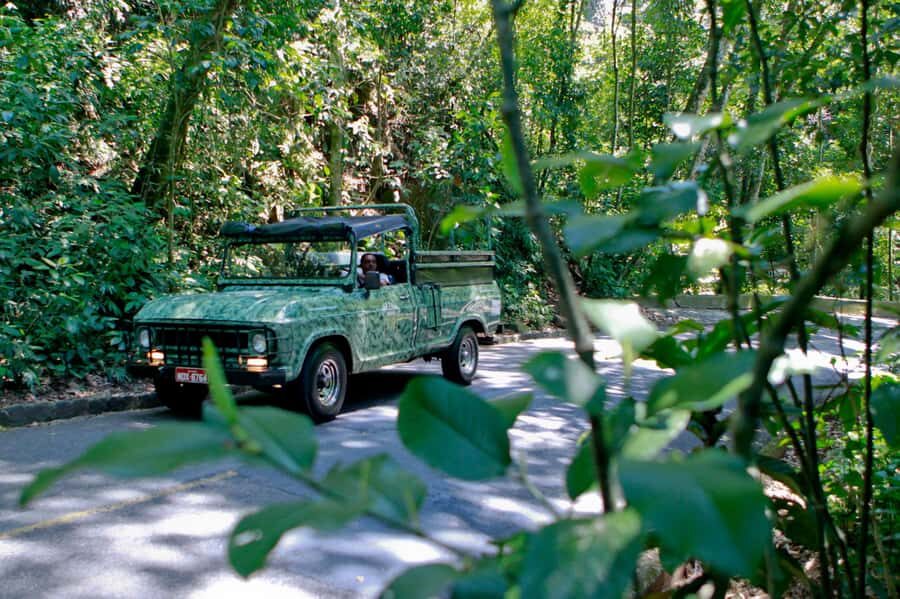
The Floresta da Tijuca experience is special because it sits right next to one of the world’s biggest party cities. You can still see the urban skyline in flashes—especially around the Lagoa and Christ statue views—then the air changes and the forest sound takes over. This tour is built for that “shift” in a short amount of time.
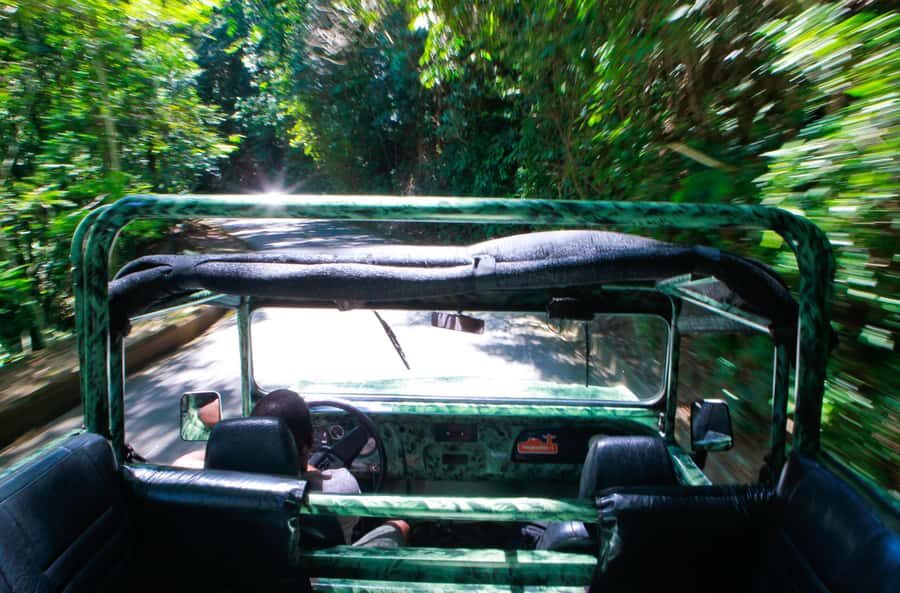
I like that it’s not just sightseeing from inside a bus. The Jeep is open-air, so you actually feel like you’re moving through the terrain, not passing by it. You’re also not stuck in one location all day; you get viewpoints, waterfall time, and small stretches of walking that break things up nicely.
The other thing I appreciate: this isn’t sold as a hardcore expedition. It’s a half-day outing with easy trails, plus a guide who points out coatis, toucans, monkeys, and other forest life when conditions line up. If you want a nature taste that fits into a Rio itinerary without burning half your vacation, this format makes sense.
You can also read our reviews of more tours and experiences in Rio De Janeiro



From your hotel to Tijuca National Park (and why timing matters)

Pick-up is designed around Rio’s most tourist-friendly areas, with multiple hotel options like Ipanema, Copacabana, Leblon, Botafogo, Centro, and Leme. You’ll wait in the lobby about 10 minutes before your scheduled time, and then your convertible Jeep ride begins.
That pick-up piece matters more than it sounds. Tijuca National Forest can feel far when you’re trying to navigate traffic and hills on your own. Getting transported by guide-led Jeep keeps the schedule efficient. It also means you’ll spend your energy on the forest walk and the stops, not on figuring out where to park or which turn leads where.
You’ll also notice the tour style: it’s guided, off-road where it counts, and designed to keep you moving. Recent trip experiences highlight punctual pick-ups and guides who manage the group well during stops and short trail segments.
Lagoa and Christ statue views: the quick Rio hit before the trees
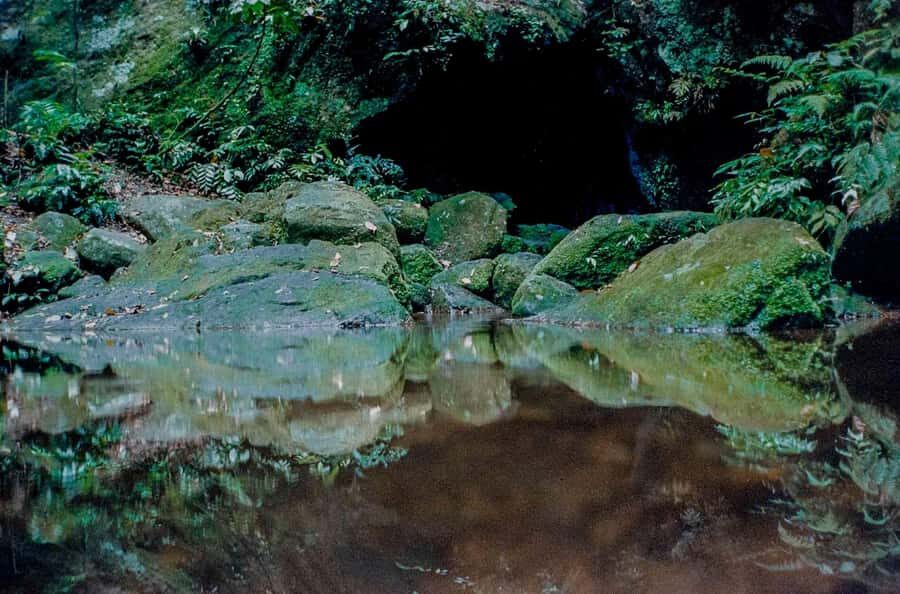
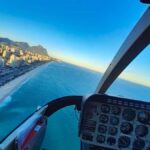
Before you fully enter the rainforest mood, the tour includes a drive toward the Lagoa with a view of Christ the Redeemer in the distance. This is a smart first act. It gives you context early: you can see where you are in Rio, then you head toward the slope where the city fades into forest.
From a planning standpoint, this is the kind of stop that helps photographers and first-timers. It’s not a long wait or a complicated process. It’s more like a visual warm-up that sets up what you’ll experience next.
And because you’re in an open vehicle, the roadside views feel less like a postcard moment and more like a traveling panorama. If you love that “I’m really here” feeling when a city landmark appears between trees or over water, you’ll get it quickly on this tour.
Vista Chinesa: a monument viewpoint with story behind it
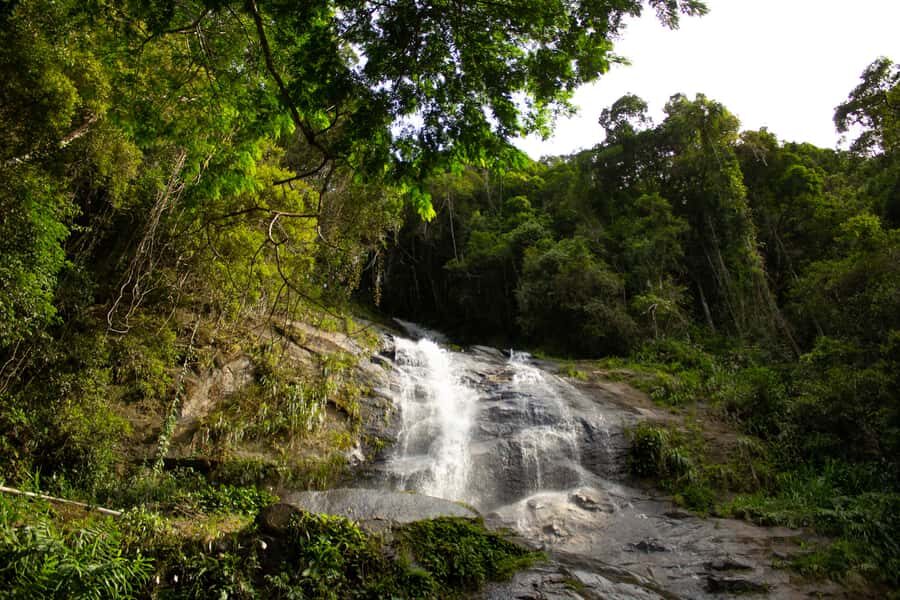
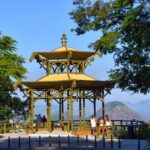
One of the itinerary anchors is Vista Chinesa, a famous viewpoint stop. This is where the tour leans into meaning, not just scenery. The guide explains the history of the monument as you soak up views of Christ statue out in the distance.
What makes Vista Chinesa a highlight for me is how it bridges two parts of the experience. You’re still in the Rio picture—Christ visible, city energy in the background—but you’re also looking into a forest that rises above the urban grid. It helps you understand why Tijuca National Forest feels both close and wild.
Also, the stop is built for photos, with a manageable amount of time. It doesn’t feel like you’re racing. You can get your shots and still enjoy the view.
If you’re traveling with someone who likes history or architecture, this viewpoint stop tends to land well because it gives the scenery a reason to exist.
Cascatinha Visconde de Taunay: waterfall time and a reality check
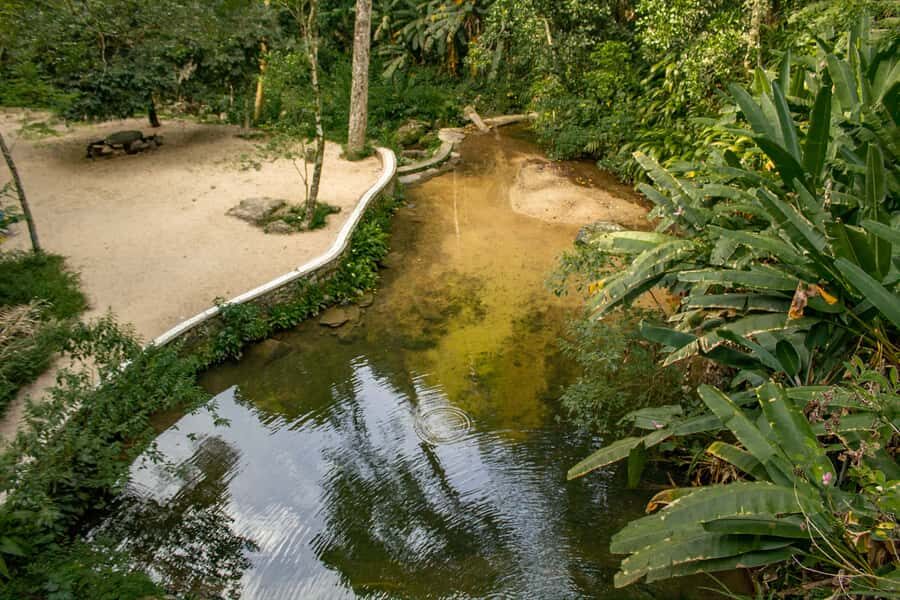
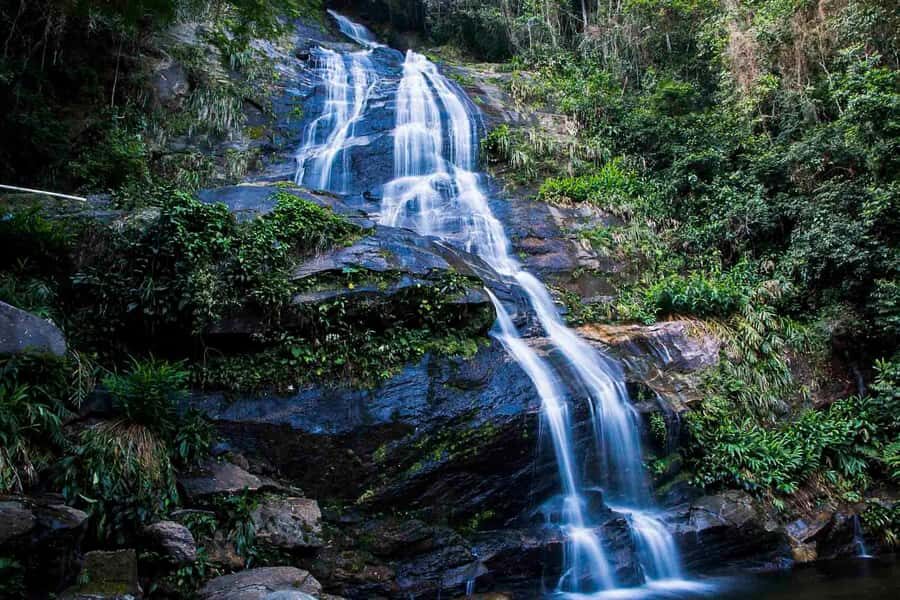
Next comes Cascatinha Visconde de Taunay waterfall, including a scenic approach and a photo stop. The plan calls for a quick dip in the crystal clear water.
In practice, what you should expect depends on the day’s conditions. At least one recent experience noted that colder weather can make a dip unrealistic. So I’d treat the swim as a bonus, not a guarantee. Bring what you can adapt with: sunglasses and hat are smart here, and if you’re hoping to get wet, pack a towel and water-friendly footwear. Keep it simple—half-day means you shouldn’t be overpacked.
Even if you don’t swim, the waterfall stop is still worth it. It breaks the forest rhythm with a visible feature, and it gives you that tactile “water is here” moment that photos alone can’t capture. It’s also a nice contrast to the hillside viewpoints.





Capela Mayrink (1855) and the two-trail forest rhythm
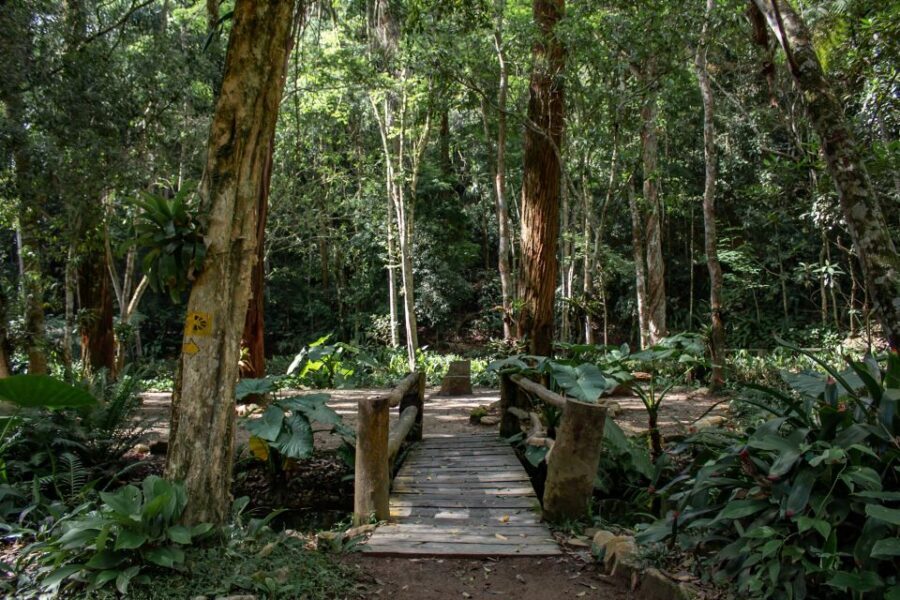
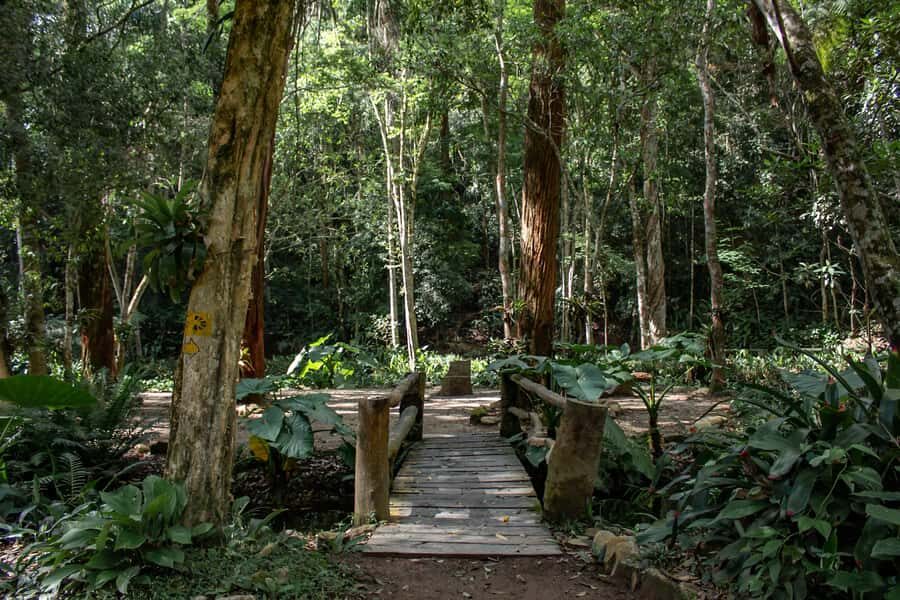
After the waterfall stop, you’ll reach a chapel constructed in 1855—Capela Mayrink. This isn’t just a quick snapshot stop. It’s a calm pause that works as a transition point: you go from viewpoints and water to forest walking.
Then comes the walk structure:
- You start the first trail with stops for spotting animals (coatis, toucans, monkeys are specifically mentioned as possible sightings).
- You’ll have a restroom stop.
- Then you start the second trail, with waterfalls sounds following your footsteps as you continue through Atlantic Forest terrain.
The trail effort is described as easy, and many recent guides and drivers were praised for keeping it comfortable and safe. So you’re not signing up for a fitness challenge. You’re walking slowly enough to look up, scan the canopy, and notice the understory plants.
A practical tip: wear layers. The tour notes the forest is high in altitude and can get chilly, and at least one recent experience strongly recommended long sleeves. Even in Rio, the temperature shift inside the trees can surprise you.
Wildlife sounds are part of the “atmosphere” even when sightings vary
This tour sells the idea of sound and life in the forest—birds singing across the valley, insects buzzing, and monkeys howling. That part matters because it changes how the forest feels even when you can’t instantly spot animals.
And sightings do vary. One experience pointed out that the number of animals and birds might not match your expectations. Another highlighted a walk that produced monkeys. My advice: go in for the full sensory experience, not just a checklist. If you focus on the smells, the bird calls, the way the guide points things out, you’ll enjoy it even on a quieter day.
The strongest element here is the guide’s ability to translate what you’re seeing into something you can recognize. Multiple guides were praised for humor, friendliness, and keeping the group engaged—names that came up include Aline, Jane, Kris, Angely, Eddie, Dario, Luciano, Gustavo, and others. A good guide turns random green into a living map.
São Conrado Beach hand-gliders: a fun end to the jungle day
After the second trail and the drive back into the open air on the Jeep, the tour includes a stop at São Conrado Beach. The goal here is simple: watch the hand-gliders.
This is a smart “bookend” stop. You’ve spent your morning immersed in forest sounds. Then you get a clean coastal viewpoint that feels lighter. It’s also a break from walking and a chance to reset before the return drive to your hotel.
You don’t need to be a paragliding expert to enjoy this part. Just bring your eyes and your camera. The mix of Rio shoreline and sky action makes the day feel complete.
Price and value for $60: what you’re really paying for
At about $60 per person for a 4-hour half-day, this Jeep tour prices itself in the sweet spot for Rio activities. You’re not paying for a long full-day excursion, and you’re not buying a barebones transfer. You’re getting:
- Roundtrip transportation in a military-style open Jeep
- A professional guide
- Multiple curated stops (viewpoints, chapel, waterfall, forest trails, and São Conrado Beach)
What makes it good value is the combination. One stop wouldn’t justify it for most people. But the day is packed enough that you’re buying time saved, route planning done for you, and a guide to interpret the forest and viewpoints.
One traveler felt the driving time didn’t feel like a lot and thought it could be cheaper. That’s fair as an opinion. But the counterpoint is that a half-day format is always going to feel “tight.” You’re paying to see the right pieces efficiently, not to ride for hours across the city.
Who should book this—and who might prefer another format
I’d recommend this tour if you want:
- A short, manageable forest walk with interpretation
- Christ and Tijuca scenery in the same outing
- A guide who makes nature and local history understandable
- An open-air ride that feels different from typical Rio tours
It might not fit as well if you want:
- A longer hike deep into the forest
- Guaranteed waterfall swimming every time
- A day focused on lots of animal sightings, every single hour
One mixed experience mentioned that the Jeep stayed mostly on road and that walking time felt brief. If you’re the type who equates value with time on foot, you may want to look for a longer trekking tour instead.
Still, for most people, the pacing is the point. This tour is built to let you experience Tijuca without turning your whole day into a workout.
Should you book the Rio Jeep Tour of Floresta da Tijuca?
Yes, if you’re aiming for an efficient, guided mix of Rio viewpoints and Atlantic Forest experience. The open-air Jeep, the Vista Chinesa viewpoint with history, the waterfall stop, and two easy trail stretches make it a strong “do-this-in-half-a-day” option.
I’d say book it if you value sensory nature time, like the idea of hearing monkeys and insects, and you want a guide who can point out species and explain what you’re looking at. Bring layers and insect repellent. And if you’re chasing specific animal sightings, keep expectations flexible.
If you tell me when you’re going and what you care about most (wildlife, photos, history, or just a great ride), I can help you decide whether this half-day format is the best match.
FAQ
How long is the Rio Half-Day Jeep Tour?
The tour duration is 4 hours.
What’s included in the price?
Roundtrip transportation in a military open Jeep and a professional guide are included. Meals and drinks are not included.
Which languages are available for the live tour guide?
The live guide is available in Spanish, English, French, Portuguese, and German.
Is the tour wheelchair accessible?
Yes, the tour is wheelchair accessible.
Do I get picked up from my hotel?
Pickup is offered at main hotels in the tourist area, and if you’re not staying in a hotel, the meeting point is arranged at a nearby hotel.
What should I bring to the forest?
Bring sunglasses, a hat, and insect repellent. The tour also recommends wearing layers because the forest can be chilly at altitude.
Is the waterfall dip part of the experience?
The plan includes a stop at Cascatinha Visconde de Taunay waterfall with time for a quick dip in the refreshing water, depending on conditions.
Where does the tour end?
You’ll return for drop-off at multiple locations, including areas like Copacabana, Ipanema, Leblon, Botafogo, Centro, and Leme.
Can I cancel for a refund?
Yes. You can cancel up to 24 hours in advance for a full refund.