REVIEW · RIO DE JANEIRO
Little Africa Unveiled: Vibrant Afro-Brazilian Heritage in Rio
Book on Viator →Operated by Gregtur Turismo · Bookable on Viator
Rio has footnotes in every stone. This 3.5-hour walk in Centro and Lapa connects visible landmarks to Afro-Brazilian history, from Santa Rita’s cemetery site to Valongo’s slave-port legacy and samba’s roots at Pedra do Sal. You get a story you can literally stand inside—then keep following with your own eyes.
I especially like the small group feel (max 15), because it makes it easier to ask questions without the guide talking over you. And I really enjoy the bilingual guiding, with guides like Joyce and Carolina able to explain the big picture clearly and also make connections in a way that feels practical for how you already think about history.
One consideration: the route is largely outdoors, and the experience needs good weather. Also, it can run a bit longer than the listed time, so don’t stack a tight plan right after.
In This Review
- Key highlights worth your attention
- A 3.5-hour walk that links slavery sites to samba Rio
- Price and logistics: what $89 buys you (and what it doesn’t)
- Meet at Windsor Guanabara in Centro (and why that starting point helps)
- Stop 1: Santa Rita Church in Largo de Santa Rita
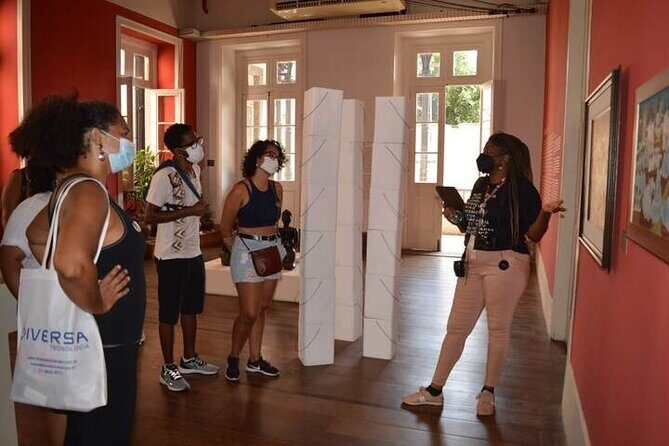
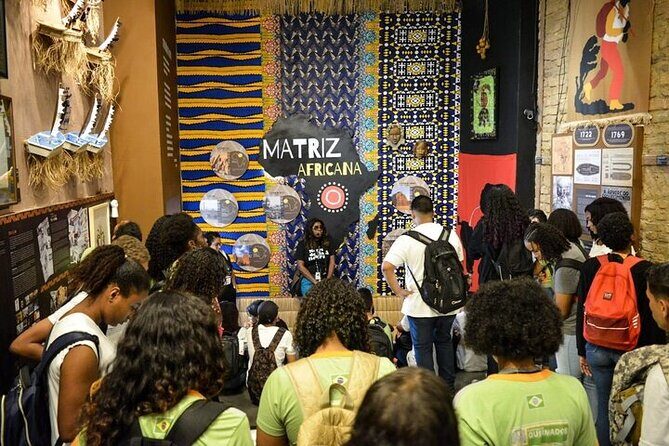
- Stop 2: MUHCAB and Afro-Brazilian culture through artifacts and documents
- Stop 3: IPN (Pretos Novos) and how memory gets preserved
- Stop 4: Cais do Valongo, the slave port you can’t ignore
- Stop 5: The Hanging Garden of Valongo and the city’s makeover
- Stop 6: Largo de São Francisco da Prainha for samba energy
- Stop 7: Beco João Inácio and the Hilário Jovino mosaic
- Stop 8: Pedra do Sal, samba’s birthplace and a community meeting point
- Guide impact: how Joyce and Carolina shaped the story
- How to prepare: wear, water, and how to pace yourself
- Should you book Little Africa Unveiled?
- FAQ
- What time does Little Africa Unveiled start, and how long is it?
- Where do I meet for the tour?
- How much does the tour cost?
- Is lunch or drinks included?
- Are admission tickets included?
- How big is the group?
- What if the weather is bad or I need to cancel?
Key highlights worth your attention
- Afro-Brazilian history mapped onto specific Rio locations rather than staying abstract
- Santa Rita Church and Valongo give you hard context about slavery tied to real places
- Pretos Novos memory at IPN focuses on research and preservation, not just sightseeing
- Samba sites like Pedra do Sal and Prainha connect history to lived culture
- Lapa’s streets and tile art (including Beco João Inácio and the Hilário Jovino mosaic) add atmosphere for photos
A 3.5-hour walk that links slavery sites to samba Rio
This is the kind of Rio experience that changes how you read the city. You’re not just ticking off views. You’re moving through a chain of sites tied to the African diaspora in Brazil, with enough context at each stop to understand why the location matters.
The route is built around contrasts. You start in Centro near Santa Rita Church, which marks the site of an early cemetery for enslaved people. Then you shift to museum-style stops that focus on Afro-Brazilian culture and memory. After that, you step into the physical history of the slave trade at Cais do Valongo, before ending in neighborhoods where the culture that grew from that history shows up in street life and samba.
If you like history with a human scale—explained in plain language, with room for questions—this fits well.
You can also read our reviews of more historical tours in Rio de Janeiro


Price and logistics: what $89 buys you (and what it doesn’t)
At $89 per person for about 3 hours 30 minutes, the value comes from two things: (1) you’re paying for interpretation, not just transportation, and (2) most stops either have free entry or included admissions.
Here’s the practical breakdown you should care about:
- MUHCAB and the IPN stop include admission tickets.
- Santa Rita Church, Cais do Valongo, the Hanging Garden of Valongo, Largo de São Francisco da Prainha, Beco João Inácio, and Pedra do Sal are listed as free.
So your money goes mostly to the guide and the time in the right places, not repeated paid tickets.
Two small logistics notes matter too:
- It starts at 2:00 pm, so you avoid some peak morning rush.
- Most days, it’s booked fairly ahead (about 77 days in advance on average), which is a hint to reserve early if your dates are fixed.
What you don’t get: no lunch and no beverages. Bring water and plan to eat after.
Meet at Windsor Guanabara in Centro (and why that starting point helps)
You meet at the Windsor Guanabara Hotel, at Av. Pres. Vargas 392 in Centro, near the historic Santa Rita Church area (Largo de Santa Rita). Starting here is smart because it lets you ease into the story with a landmark that anchors everything that comes next.
You’ll also find this area workable for getting to the meeting point, since it’s described as being near public transportation. That matters in Rio. Even when you know where you’re going, the city can surprise you with time and traffic—so starting from an easier access point is a real plus.
From a pacing standpoint, a 3.5-hour walk with multiple short stops is ideal if you like structured touring but don’t want to spend your whole day underground in museums.
Stop 1: Santa Rita Church in Largo de Santa Rita
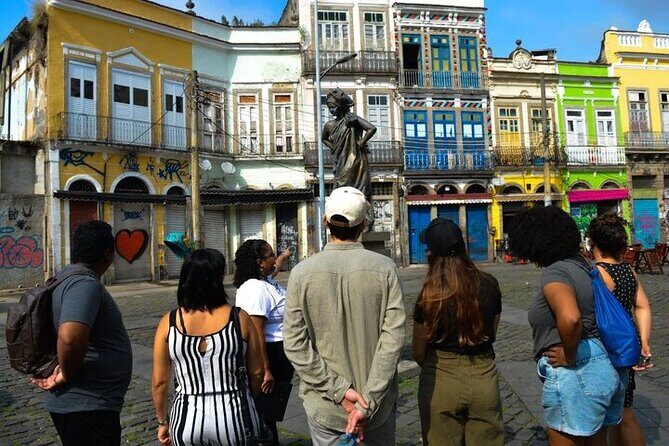
The tour begins at Windsor Guanabara Hotel, then makes its way to Santa Rita Church in Largo de Santa Rita.
This church matters because it’s built on the site of the first cemetery for enslaved people, and it shows a mix of colonial and baroque elements—ornate detail, religious artwork, and that heavy sense of place that only comes from history tied to a physical location.
What I like about starting here is that you get the framing early. Before the tour turns to ports, gardens, and samba gathering spots, you understand the human cost behind the later cultural story.
Practical tip for this stop: keep your pace slow. Photos are fine, but give yourself a few minutes just to look closely at the church’s decorative work. The guide’s explanations typically land better when you’re not rushing.
Also, this stop lists 30 minutes and admission ticket free, so it’s easy to fit respectfully into the overall schedule.
Stop 2: MUHCAB and Afro-Brazilian culture through artifacts and documents
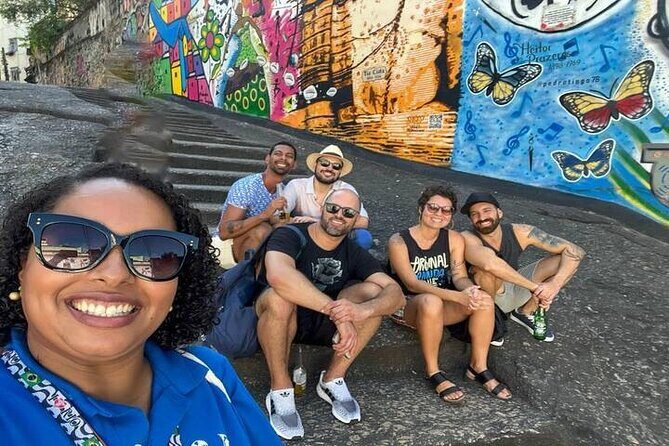
Next comes MUHCAB (Museu da História e da Cultura Afro-Brasileira), presented as a museum dedicated to preserving and promoting Afro-Brazilian heritage.
The focus here is on materials like artifacts, artworks, and documents, with an emphasis on the experiences and contributions of Afro-Brazilians across history.
Why this stop is valuable: it shifts the story from a single event or era into a wider view. The slave trade and colonial systems are only one part of the picture. MUHCAB helps you understand what communities built afterward—through culture, memory, and creative expression.
You’ll get about 40 minutes, and admission is included, which is helpful. You don’t need to think about tickets or timing here; you just show up and let the guide do the connecting.






Stop 3: IPN (Pretos Novos) and how memory gets preserved
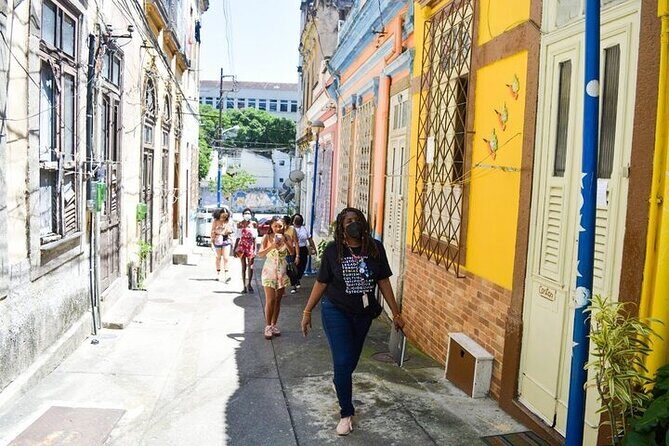
Then you head to Instituto de Pesquisa e Memoria Pretos Novos (IPN), where the main mission is research and preservation linked to the Pretos Novos Cemetery.
This institute focuses on the history and memory of that cemetery, described as an important burial ground for enslaved Africans and their descendants during the colonial period in Brazil. In plain terms: you’re standing near a place where loss was recorded in bodies, and the institute helps keep that memory from disappearing.
What I like here is that the tour doesn’t treat history as a brochure story. This stop emphasizes study and preservation—meaning you’re learning how information survives, how it’s shared, and why the site matters now.
This stop also lists 40 minutes with admission included. Plan to take notes if you’re the type who likes to revisit details later, especially the terminology around Pretos Novos and how it connects to the broader Afro-Brazilian narrative.
Stop 4: Cais do Valongo, the slave port you can’t ignore
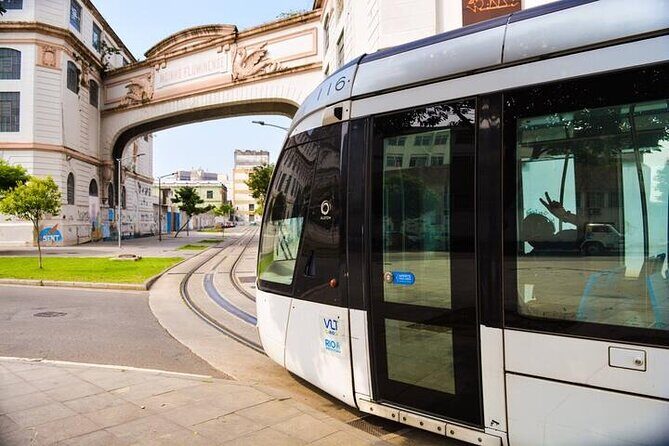
At Cais do Valongo, the tour zeroes in on one of the biggest physical reminders of the transatlantic slavery trade in Rio.
The port is described as the largest slave port, operating from the late 18th century into the early 19th century. The estimate given is huge—around one million enslaved Africans passing through.
That number can feel abstract until you’re at the place. Even on a short visit, the guide’s explanations help you connect scale to reality: ports meant forced movement, and movement meant families being broken apart.
This stop is listed as 20 minutes and admission ticket free, so it’s designed to be a focused hit, not a long museum session. Use that time well. Look for anything that helps you imagine the logistics of arrival and departure, and ask yourself what would have been normal in a system like this.
Stop 5: The Hanging Garden of Valongo and the city’s makeover
Next is the Suspended (Hanging) Garden of Valongo, which came into being in the early 20th century as part of city beautification under the Pereira Passos administration—the period often called the Belle Époque.
Here’s the key contrast: you go from the port tied to forced arrival to a garden tied to beautification and urban redevelopment. The juxtaposition is uncomfortable, but that discomfort is the point. It shows how cities can cover pain with prettier surfaces, and how you have to keep reading what’s underneath.
The garden stop is 20 minutes, free admission. For photos, it’s a great spot because it gives you a visual reset in mood—but don’t let the greenery replace the meaning. Let the guide’s words keep your attention on what the area was before it was redesigned.
Stop 6: Largo de São Francisco da Prainha for samba energy
Then you move to Largo de São Francisco da Prainha, a place known for its gathering vibe—samba, ice-cold beer, and a lively atmosphere.
The data also notes that it has been described as one of the coolest spots in the world by Times Out. I take that kind of praise with a grain of salt, but in this case it makes sense: this is where the story shifts from institutions and sites into street-level culture.
Expect about 20 minutes and free access here. This stop works best if you’re open to learning through atmosphere. The guide typically connects samba culture to what you’ve just learned about history, so you’re not just eating the moment—you’re understanding the moment.
If you’re someone who only wants heavy history, this can feel lighter. If you prefer history plus how it lives today, it’s a smart balance.
Stop 7: Beco João Inácio and the Hilário Jovino mosaic
In Lapa, the tour includes Beco João Inácio, described as a small historic narrow street with steep hills and stone pavement. It’s known for old houses—some reportedly over a century old—and the kind of tight street geometry that makes Rio feel like a living film set.
Right nearby is Mosaico Hilário Jovino, an urban art piece made of colorful tiles covering a long section of wall.
This combination works because it mixes history at street level with modern visual storytelling. You get texture underfoot, and color in your frame. Expect 20 minutes and free access.
Practical photo tip: bring your camera ready, but don’t block the path. These streets can be tight, and you’ll be sharing space with other visitors and locals moving through the neighborhood.
Stop 8: Pedra do Sal, samba’s birthplace and a community meeting point
The tour finishes at Pedra do Sal, also known as Pedra do Sol or Stone of the Sun.
This site is described as a historic gathering place for African-Brazilian communities and often considered the birthplace of samba music. That last part matters, because it ties musical culture directly to community space—not just to a performer or stage.
Expect about 20 minutes and free admission.
This is also a good moment to reflect on the full route. You started with cemetery history and slavery infrastructure. You moved through cultural memory at MUHCAB and IPN. Then you ended at a place where culture turns into daily life and music. That arc is what makes this tour feel more than a list of stops.
Guide impact: how Joyce and Carolina shaped the story
The tour’s biggest strength is the way the guide explains connections. In the feedback you can see two guide names repeatedly: Joyce and Carolina.
One review emphasized that Joyce brought extra energy and insight. Another highlighted Carolina’s clear explanations of the history of Africans in Brazil, especially Rio, and how she discussed parallel experiences in the US.
That style matters for you because it helps you process the story without getting lost in details. Instead of treating history like isolated facts, you get explanations that tie the experience of Afro-Brazilians to broader patterns of diaspora and memory.
If you’re the type who likes to ask questions, the small group size (max 15) also helps the guide adapt and answer on the fly.
How to prepare: wear, water, and how to pace yourself
This is a walking tour with multiple short stops. Here’s what you should do so the experience feels smooth:
- Wear comfortable shoes with good grip. Lapa’s steep streets and stone pavement can be slippery.
- Bring water. Lunch and beverages aren’t included.
- If you’re sensitive to heat, plan a light layer you can remove quickly.
- Keep your schedule flexible. The tour can run a bit over, so avoid a very hard deadline right after.
Also, since it touches slavery-related sites and burial memory, treat the quieter moments with respect. If you come ready to listen, you’ll get more out of the stops.
Should you book Little Africa Unveiled?
Book it if you want Afro-Brazilian history that stays grounded in real Rio places: Santa Rita, Valongo, Pretos Novos memory at IPN, and samba culture at Pedra do Sal. The price feels fair because admissions are included at two stops and many other sites are free, but the bigger value is the interpretation—especially with bilingual guiding in a small group.
Skip it or reconsider if you want only scenic sightseeing or you need long museum time. This tour is more about short, meaningful stops and a guided narrative than about sitting in one place for hours.
If your goal is to understand Rio beyond postcards, this is a strong bet—especially on a day when the weather holds and you can take your time looking at what history left behind.
FAQ
What time does Little Africa Unveiled start, and how long is it?
It starts at 2:00 pm and runs for about 3 hours 30 minutes.
Where do I meet for the tour?
You meet at Windsor Guanabara Hotel, Av. Pres. Vargas, 392 – Centro, Rio de Janeiro.
How much does the tour cost?
The price is $89.00 per person.
Is lunch or drinks included?
No. Lunch, meals, and beverages are not included, so plan to eat before or after.
Are admission tickets included?
Yes for two stops: MUHCAB and Instituto de Pesquisa e Memoria Pretos Novos (IPN). Other listed stops are marked free.
How big is the group?
The tour has a maximum of 15 travelers, and it notes that most travelers can participate.
What if the weather is bad or I need to cancel?
The experience requires good weather. If it’s canceled due to poor weather, you’ll be offered a different date or a full refund. You can cancel for a full refund up to 24 hours before the experience starts.