
REVIEW · RIO DE JANEIRO
Guided Walk through the Historic Center of Rio DE Janeiro
Book on Viator →Operated by RIO PASSEIOS EXPERIENCE · Bookable on Viator
Rio’s old downtown tells stories fast.
This guided walk through Rio’s Historic Center packs in big sights and the human details that usually get missed. I particularly love how the stop-by-stop pace keeps you moving without feeling rushed, and how the guide (like Cesar, in one group I met) gives clear context for what you’re seeing, including how the Portuguese era shaped Brazil’s early story. One thing to consider: some major entries have admission not included, so you may want extra cash if you plan to go inside the Theatro Municipal, the Fine Arts Museum, or the Church of Candelária.
You meet at Cinelândia Square, then follow the rhythm of Rio’s downtown—grand architecture one minute, older colonial corners the next. The guide speaks English (and also Spanish/Portuguese), and the group is capped at 15 people, which helps the questions land and the conversation stay lively.
At $105 per person for about 3 hours, this isn’t a bargain-bucket tour, but it does feel fair for the guided orientation you get in a compact area—especially if this is your first time in the center. Bring comfortable shoes, and if weather looks iffy, dress for it: the walk runs rain or shine, and the day you choose matters.
In This Review
- Key things to know before you go
- Starting at Cinelândia Square: your “map in motion”
- Theatro Municipal: gold leaves, rescued art, and a 350kg eagle
- Museu Nacional de Belas Artes: 19th-century art in the city’s core
- Convento de Santo Antônio: old colonial Rio, with free entry
- Biblioteca Nacional: UNESCO-scale reading power (and free time)
- Confeitaria Colombo and Primeiro de Maio: downtown legends on foot
- Confeitaria Colombo (a classic central confectionery stop)
- Primeiro de Maio: the old Rua Direita story
- Church of Our Lady of the Candelaria: major monument, extra ticket may apply
- Price and logistics: what $105 buys you (and what it doesn’t)
- Who should book this guided Historic Center walk?
- Should you book it?
- FAQ
- FAQ
- How long is the guided walk through Rio’s Historic Center?
- Where does the tour start?
- Is the tour offered in English?
- Are admission tickets included for all stops?
- Does the tour run in bad weather?
- How many people are in the group?
Key things to know before you go
- Small-group pace (max 15): enough space for questions without a long wait for the guide to wrangle everyone.
- Multilingual guide support: English is offered, with the guide also able to speak Spanish and Portuguese.
- Mobile ticket included: you’ll have something ready on your phone for the start.
- Some entrances cost extra: Theatro Municipal, Museu Nacional de Belas Artes, and Church of Candelária don’t include admission.
- You’ll connect the dots: you don’t just see buildings—you get the “why these places matter” story as you walk.
Starting at Cinelândia Square: your “map in motion”

The tour begins at Cinelândia Square, in the city center. This matters more than you might think. Rio’s downtown can feel like a lot at once—wide roads, dramatic facades, and sudden turns—so having a guide help you orient yourself early is a big win.
In practical terms, you’ll get a short briefing style of start: what you’ll see today, how long you’ll be at each stop, and what’s worth looking for when you arrive. The total time is about 3 hours, with each main stop built around a tight window (often 20 minutes, with one longer stop).
You’ll also learn how to pace yourself. The guide keeps you from “stalling” at one corner too long, but you’re not herded like a conveyor belt either. For me, the sweet spot is that you get to look up at details—especially the exterior showpieces—without missing the next location.
You can also read our reviews of more walking tours in Rio de Janeiro



Theatro Municipal: gold leaves, rescued art, and a 350kg eagle
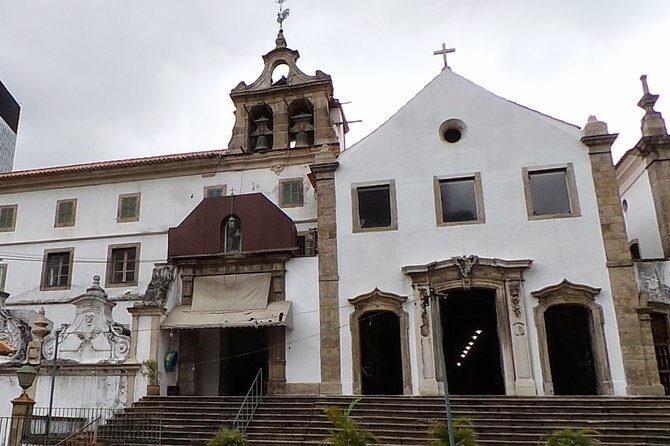
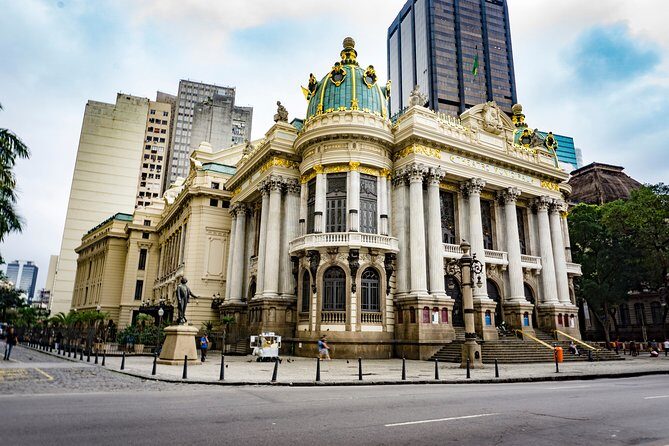
The first stop is the Theatro Municipal do Rio de Janeiro in Cinelândia. Even outside, it’s a statement. This theater is one of the most important in Brazil and Latin America, and it opened in 1909—which sets the tone for why downtown Rio looks the way it does.
During the visit, you’ll get a few very specific highlights that help you actually understand what you’re seeing:
- Renovations reportedly rescued an original panel by the Italian artist Eliseu Visconti.
- At the top of the building there’s an imposing 350kg eagle, decorated with 8,000 gold leaves in 23-carat gilding.
It’s the kind of detail that makes you slow down—because you can’t tell the “weight and materials” story just by looking at a photo. A good guide makes the architecture legible.
Admission ticket note: the theater stop is listed as not including admission. That means you might be able to see key parts from outside and with guide context, but if you want full interior time, plan on paying separately.
Tip: bring your phone camera, but also look without it for 10 seconds. The facade details are easier to appreciate when you’re not constantly framing shots.
Museu Nacional de Belas Artes: 19th-century art in the city’s core
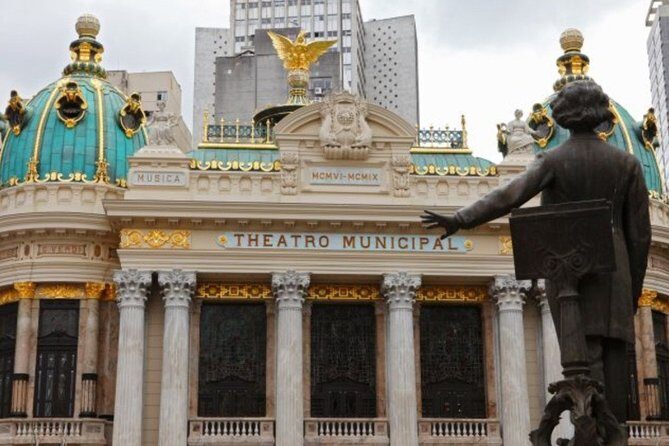
Next you’ll head to the Museu Nacional de Belas Artes. This is one of Rio’s best-known art museums, and the focus here is strongly on 19th-century works. The museum’s collection is described as the largest of its kind in Brazil and one of the most important in the country.
What I like about putting this after the theater stop is the contrast. Both are downtown landmarks, but they connect in a way that’s bigger than “two buildings on a route.” They show you how Rio’s cultural ambitions grew alongside its civic image.
Like the theater, admission here is not included, so your experience may depend on whether you’re aiming for entry inside or focusing on the museum as a landmark while the guide shares context.
If you care about art more than architecture, you’ll probably want to budget extra for admission so you can actually spend time with the works, not just the location.
Convento de Santo Antônio: old colonial Rio, with free entry
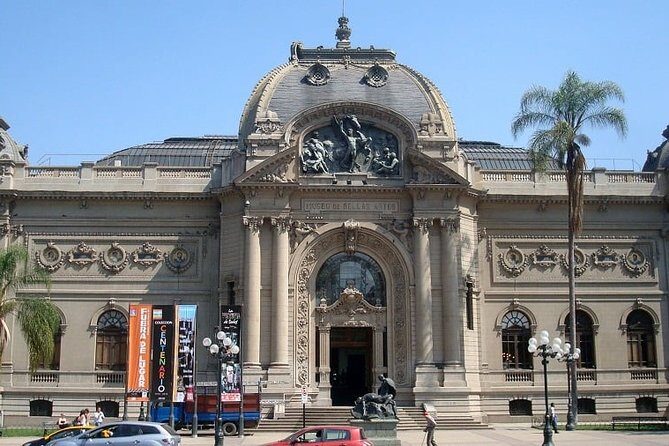
Then the tour shifts to the Convento de Santo Antônio, a Catholic monastery associated with the Franciscan Province of the Immaculate Conception. The setting is important: it’s on top of Morro de Santo Antônio and faces Largo da Carioca, right in the heart of the city.
This stop is special because it’s part of a rare surviving colonial grouping in Rio. The convent forms, together with the nearby Church of the Third Order of São Francisco da Penitência, one of the oldest and most important remaining colonial complexes in the city.
Good to know: this stop is listed as free. That means you can focus on the architecture, the religious complex, and the atmosphere without worrying about extra entry costs.
If you’re trying to understand “how old Rio still exists inside modern streets,” this is one of the best places on the route. It’s also a reminder that the city center isn’t only about theaters and art—it’s about long-standing community roots too.
Biblioteca Nacional: UNESCO-scale reading power (and free time)
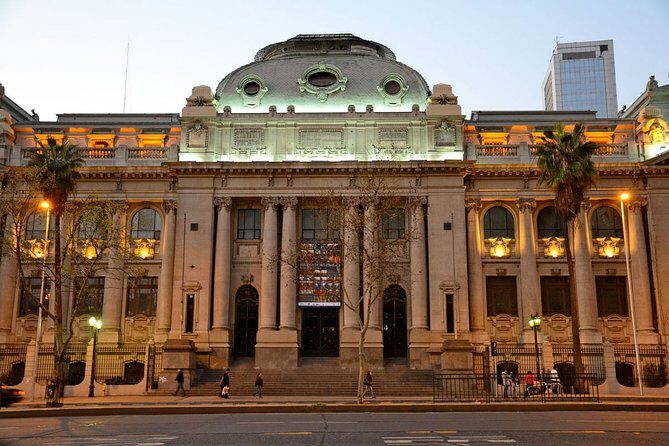
One of the most worthwhile stops is the Biblioteca Nacional (National Library of Brazil). This is one of those places where the guide’s context makes the visit feel bigger.
The library is described as a depository for Brazil’s bibliographic and documentary heritage. It’s recognized by UNESCO as one of the ten largest national libraries in the world and the largest in Latin America.
You’ll have about 30 minutes here, and the stop is free. Even if you don’t go deep into archives or special exhibitions, this is the kind of institution that explains why literacy and documentation mattered to building a country—not just a city.
What you’ll likely do with that half hour:
- Get oriented in the space and learn what makes it institutionally important.
- Use the guide to interpret the broader meaning of a national library (why it exists, what it protects, and how it ties to national identity).
If you’re the type who enjoys museums but gets bored after an hour, libraries can be a refreshing change—more quiet, more reflective, and often easier to absorb with a guide’s narrative.
You can also read our reviews of more guided tours in Rio de Janeiro






Confeitaria Colombo and Primeiro de Maio: downtown legends on foot
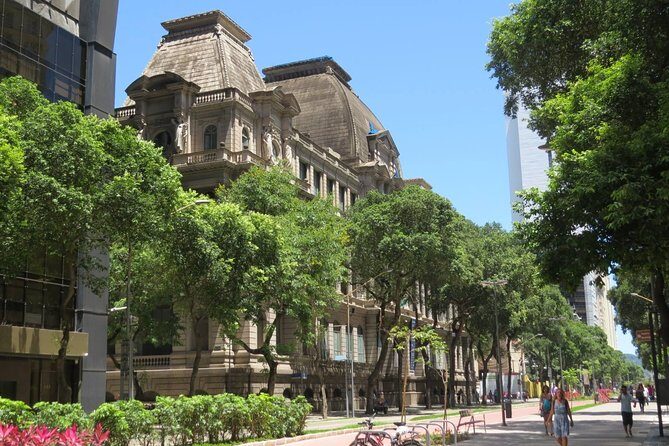
After the big institutional sites, you’ll get two more stops that are all about street-level identity and storytelling.
Confeitaria Colombo (a classic central confectionery stop)
You’ll pause at Colombo, a traditional confectionery in the city center and one of the main tourist points of the Central Region. This stop is listed as free, and since food and drinks aren’t included on the tour, it’s less about buying and more about using the moment.
Why it’s worth stopping: it gives you a sense of how everyday life and tourist culture mix in downtown Rio. Even if you don’t order anything, you’ll be reminded that the center isn’t only monuments—it’s also where people snack, meet, and move through.
If you do want something, keep it simple and plan for the rest of the walk.
Primeiro de Maio: the old Rua Direita story
Next up is Primeiro de Maio, formerly known as Rua Direita, described as the oldest street in Rio de Janeiro and the most important in the city during the 19th century. The original street connected Largo da Misericórdia to Morro de São Bento.
Then comes a very Rio-specific historical twist. In 1875, it was renamed March 1 to honor the allied victory at the Battle of Aquidabã, ending the Paraguayan War. And the date also lines up with the founding of Rio de Janeiro.
This is where a guided walk scores. It’s easy to walk down a street and forget dates and meaning. With a guide explaining the renaming and why it mattered, you start seeing the street as a timeline—one you can actually walk along.
This stop is also free, with about 20 minutes.
Church of Our Lady of the Candelaria: major monument, extra ticket may apply
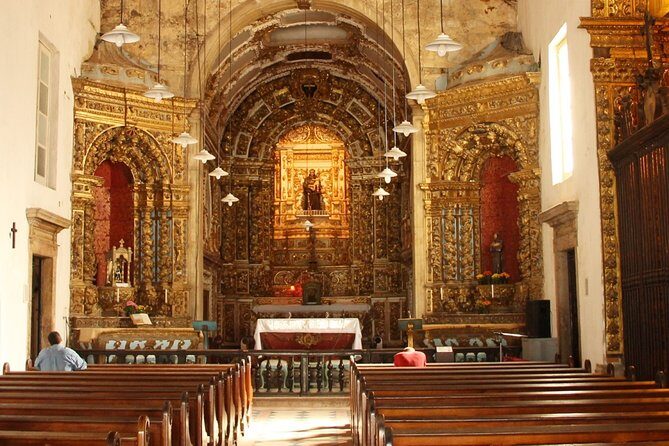
The final sight on the walk is the Church of Our Lady of the Candelaria (Nossa Senhora da Candelária). It’s listed as one of the main religious monuments in Rio’s city center.
You’ll hear why it’s culturally important, not just spiritually. The church has been described as a traditional stage for weddings in Rio society—so it isn’t only about visitors passing through; it’s part of real-life milestones.
Admission ticket note: this church stop is listed as not included, so you may need an extra ticket if you want full interior access.
Even if you’re only seeing it as an exterior-orientation stop, this is a classic downtown “finale” because the building’s role in public life makes it feel like an anchor point for the entire route you’ve walked.
Price and logistics: what $105 buys you (and what it doesn’t)

The price is $105 per person for about 3 hours, and it includes a professional bilingual guide. The group is shared, with a maximum of 15 travelers—small enough that you don’t get lost in a crowd, but big enough to keep the walk social.
What’s not included:
- Food and drinks
- Private transportation
- Some stop admission tickets (not included for the theater, the fine arts museum, and the Candelária church)
So is it good value? I’d say yes if you want help making sense of Rio’s center. Without guidance, you can still visit these places—but you’d likely spend more time figuring out what you’re looking at and less time appreciating why the city’s cultural identity formed where it did.
Also: you’ll receive a confirmation at booking, and the day before the tour you’re contacted to confirm the exact pickup time via WhatsApp or the booking platform. The meeting point is Cinelândia Square, and the tour returns you back to the same spot.
One more practical point: the tour runs rain or shine. If weather changes, you’ll still walk. That means you should pack a light rain layer, not just a backup umbrella.
Who should book this guided Historic Center walk?
This is a great fit if:
- You want a structured route through Rio’s center without wasting time guessing where to go next.
- You enjoy architecture, big institutions, and religious landmarks, and you want the context behind them.
- You like a guide who answers questions and helps turn “sights” into understanding—like the friendly, history-forward vibe you can experience when the guide shares how early Brazil formed under Portuguese influence.
It may be less ideal if:
- You only want the cheapest option and aren’t interested in paying extra for admission at major stops.
- You dislike walking for 3 hours in a compact downtown area, even with short breaks.
Should you book it?
If you’re spending only a short time in Rio and want your day in the center to feel purposeful, I think this walk is worth booking. The stops are arranged like a story: cultural power (the theater), art institutions (the Fine Arts Museum), colonial roots (Santo Antônio), national identity and documents (Biblioteca Nacional), then the street-level timeline (Primeiro de Maio) and major public religion (Candelária).
The one caution is simple: check what you want to enter. Because admission tickets aren’t included for several headline stops, your final cost might be a bit higher if you plan on going inside.
FAQ
FAQ
How long is the guided walk through Rio’s Historic Center?
The tour lasts about 3 hours.
Where does the tour start?
The start is at Cinelândia Square in Rio de Janeiro’s city center, and the tour ends back at the meeting point.
Is the tour offered in English?
Yes. The tour is offered in English, and the guide can also speak Spanish and Portuguese.
Are admission tickets included for all stops?
No. Admission tickets are not included for Theatro Municipal do Rio de Janeiro, Museu Nacional de Belas Artes, and the Church of Our Lady of the Candelaria. Convento de Santo Antônio and Biblioteca Nacional are listed as free stops, and Colombo and Primeiro de Maio are also listed as free.
Does the tour run in bad weather?
Yes, it runs rain or shine. The day is chosen by the customer, so come prepared.
How many people are in the group?
The group has a maximum of 15 people.