REVIEW · RIO DE JANEIRO
Rio: Historical Walking Tour
Book on GetYourGuide →Operated by CARIOCA TROPICAL TOUR OPERATOR · Bookable on GetYourGuide
Downtown Rio tells its story street by street. I love how the tour pairs a subway ride to downtown with a walking route that slows you down enough to notice details, from French-influenced façades around Cinelândia to the older Imperial-era power spots near Praça XV. I also love the architectural “wow” stops—big public buildings mixed with places like Confeitaria Colombo from 1894—so the history feels physical, not textbook. One drawback: it’s a 4-hour walk, and it’s not recommended if you have walking difficulties or need wheelchair-friendly access.
What makes this experience especially easy to enjoy is the small-group format and a professional guide. Depending on the departure, you might get a guide like Lucien, Monique, Ernani, or Mathilda—people who are comfortable answering questions and tying the scenery to how Rio developed. You’ll start near Copacabana, move into central Rio, and then head back to your hotel area by subway when you’re done.
In This Review
- Key Highlights at a Glance
- Why Downtown Rio Works Best on Foot (and by Subway)
- Cinelândia Station to Praça XV: French Influence and Imperial Echoes
- Confeitaria Colombo (1894) to Tiradentes Palace: Finishing the Story in Style
- Praça XV, Mestre Valentim’s Fountain, and Teles Arch: The Landmarks That Actually Teach
- Travessa do Comércio to Carmen Miranda’s Old Residence: Side Streets with Personality
- Church Stops and Cultural Centers: From Candelária to the Post Office Hall
- Price, Timing, and Group Size: Getting Value From $79
- Who This Tour Is Best For (and who should skip it)
- Should You Book This Rio Historical Walking Tour?
- FAQ
- How long is the Rio Historical Walking Tour?
- What is included in the price?
- What is the price per person?
- Where does the tour start?
- What languages are the guides?
- What main places are included in the walking route?
- Is it suitable for people with walking difficulties or mobility impairments?
- Is the tour food included?
- FAQ
- Is there free cancellation?
- Can I reserve and pay later?
Key Highlights at a Glance
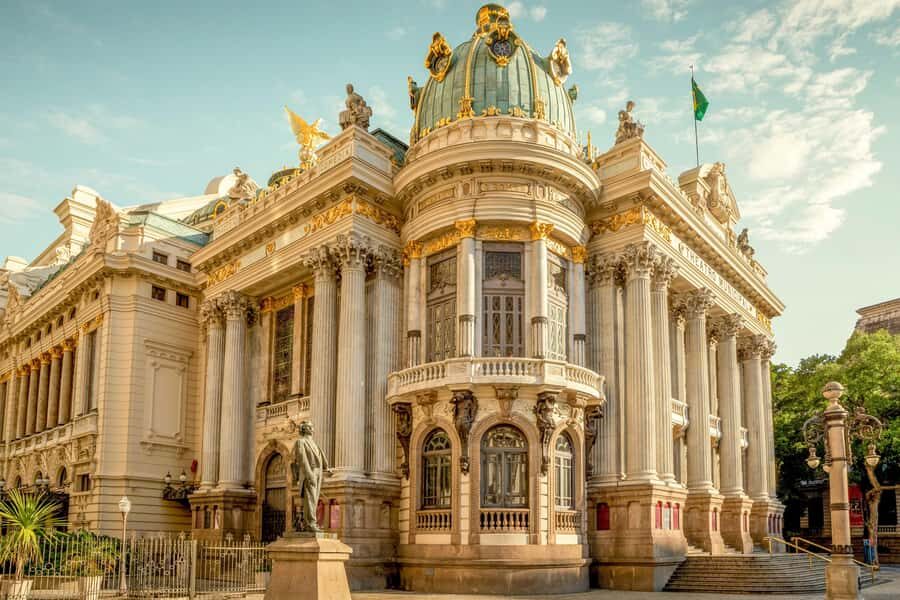
- Cinelândia to Praça XV route that spotlights French architectural influence and Rio’s former-capital center
- Guided walking that turns “pretty buildings” into understandable history, political context, and city logic
- Confeitaria Colombo (1894) as a signature stop for architecture and old-world atmosphere
- Praça XV landmarks like the Imperial Palace area, General Osório statue, Mestre Valentim’s Fountain, and Teles Arch
- Culture hubs including the Post Office Cultural Center, Bank of Brazil Cultural Center, and Candelária Church when open
- Easy pacing for downtown thanks to subway transport into the action and back again
Why Downtown Rio Works Best on Foot (and by Subway)
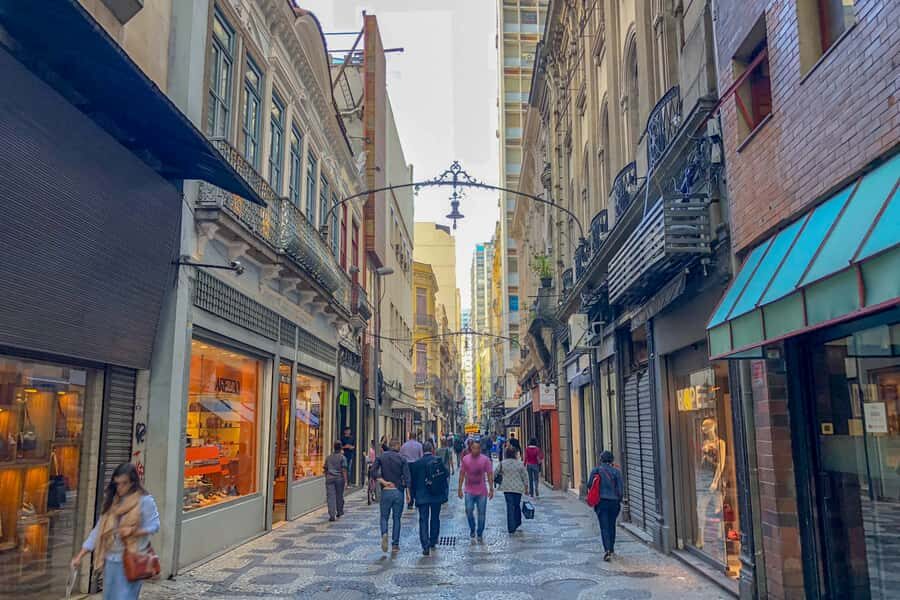
This is one of those tours where the logistics quietly do half the work for you. Taking the subway to downtown gets you into the heart of the city without wasting time navigating traffic. Then you walk, and walking is what makes downtown Rio click: you can read the architecture at human scale—corners, arches, stairways, and the small shifts from French-style influence to local design that happened as the city evolved.
The time window is also right for first-timers. Four hours is long enough to cover a meaningful stretch, but short enough that you’re not stuck for an entire day moving between landmarks. If you’re the type who likes to ask questions, the format helps, because your guide can point out what you’re seeing while you’re still looking at it.
Price-wise, I like that the tour doesn’t just sell sightseeing—it also includes entrance fees and subway transport. That matters in Rio, where entry costs can add up and transit can eat into your “wander” time. You’re paying for a guided route that strings together multiple high-interest locations in central areas.
One honest note: this route is not designed for slow pacing. If your legs get tired quickly, the tour’s walking focus will feel long.
You can also read our reviews of more walking tours in Rio De Janeiro



Cinelândia Station to Praça XV: French Influence and Imperial Echoes
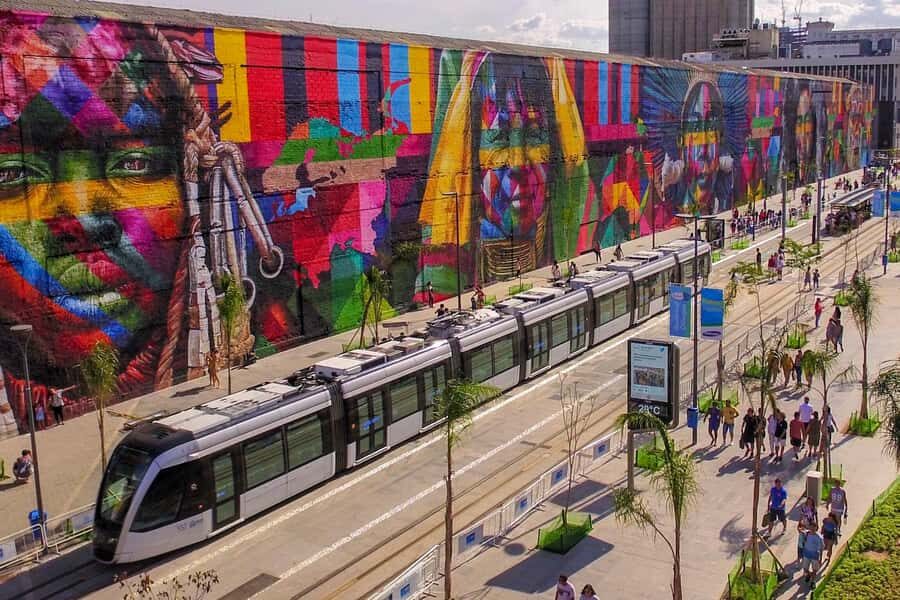
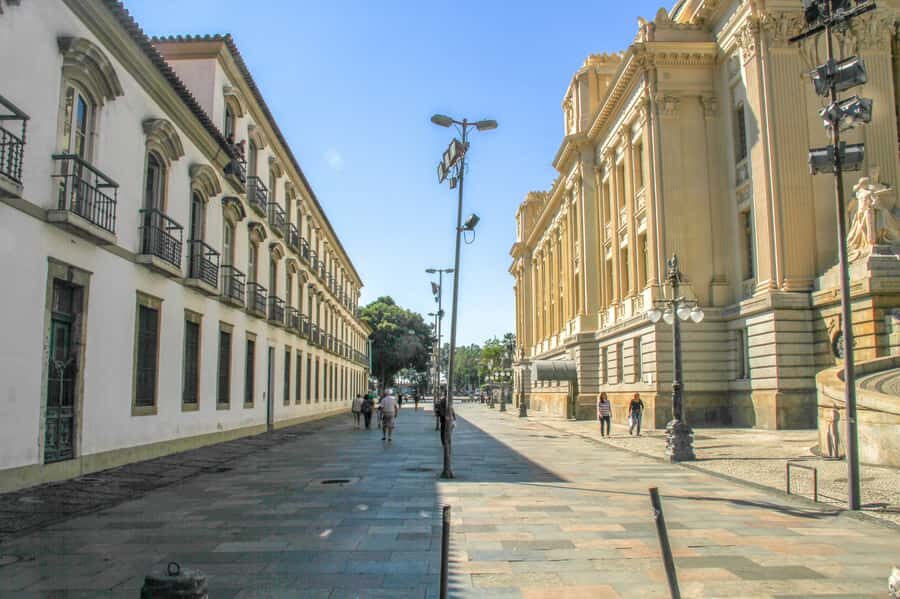
Your tour begins in Copacabana and heads by subway toward downtown, arriving around Cinelândia Station. This area is where you start seeing the French architectural influence that shaped Rio’s look during the period when the city wanted to project modernity and prestige. Standing and walking here makes the influence easier to understand than if you only pass by in a car.
From there, you head toward Praça XV, and this is where the route starts layering different eras. On the way, you pass by:
- the Naval Club
- the Monastery Church of Santo Antônio
- Ordem Terceira de São Francisco da Penitência
Even when you’re not stopping for a long visit, these pass-bys matter because they “set the stage.” A monastery church signals deep roots and religious power, while naval institutions hint at Rio’s maritime importance. The guide’s job is to connect those dots so you’re not just ticking off names.
Then comes Confeitaria Colombo—a big emotional shift from churches and institutions to a public-facing space built in 1894. This stop gives you a change of pace, and it’s also a useful contrast: history isn’t only sacred buildings and government halls. It’s also the everyday places where people gathered, shopped, and talked.
Near Praça XV, you also reach the zone around the Imperial Palace. That’s a key reason this walking stretch is so worthwhile. You’re moving through the former power center of Brazil, and the architecture feels like it’s built to impress.
Confeitaria Colombo (1894) to Tiradentes Palace: Finishing the Story in Style
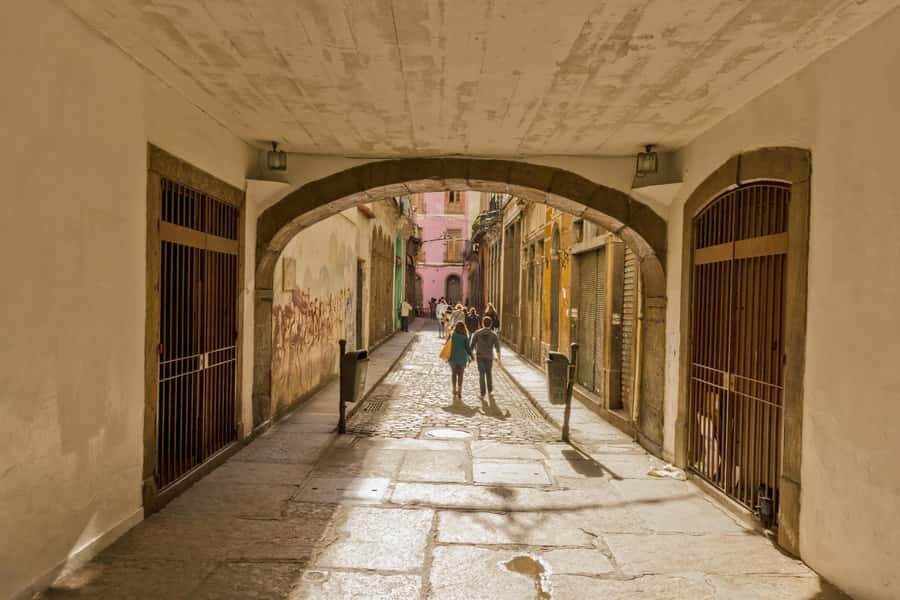
One reason I enjoy tours like this is when they don’t treat architecture as decoration. They treat it as evidence.
After Cinelândia, you move into a cluster where grand civic design and classic urban life sit close together. At Confeitaria Colombo (built in 1894), you get a strong marker of late 19th-century Rio. The building is old enough to feel like a time capsule, but it’s also a public place, which helps you picture how the city actually functioned—where people walked in, looked around, and socialized.
From there, the route continues to Tiradentes Palace (State Hall). This isn’t just another “big building.” It’s a clue to how Rio’s political center concentrated authority in a tight downtown radius. When you’re looking at a palace like this right after admiring a historic café, you get a fuller mental map of the city: commerce, religion, and government weren’t separate worlds. They lived side by side.
If you like guided context, this is one of the most satisfying transitions in the whole tour. You’ll likely hear the guide explain how power, design, and public space worked together in downtown Rio. That kind of framing is what turns a 4-hour walk into something you’ll remember.
Praça XV, Mestre Valentim’s Fountain, and Teles Arch: The Landmarks That Actually Teach
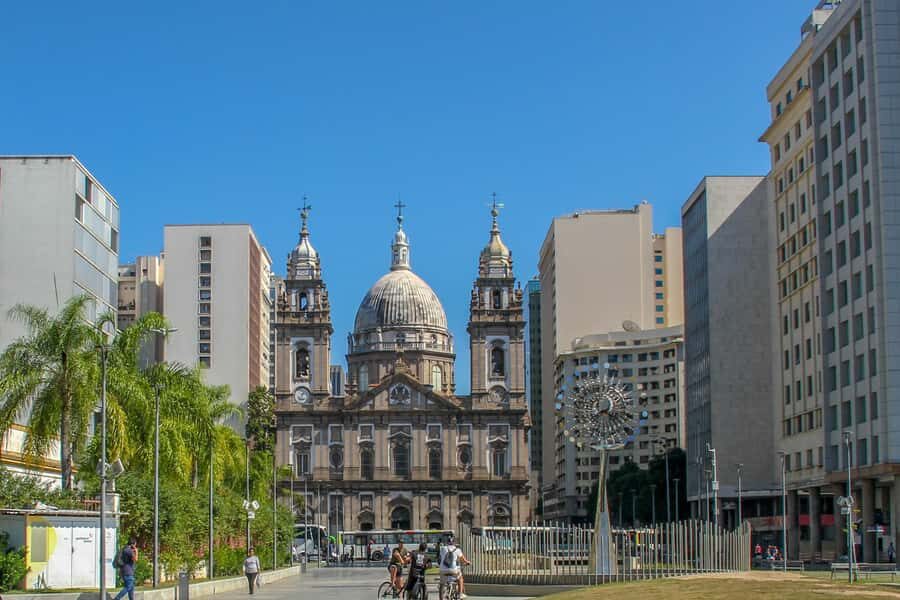
Praça XV is one of those squares where it feels like the city keeps older conversations going. In this stretch, you see:
- the area around the Imperial Palace
- the General Osório statue
- Mestre Valentim’s Fountain
- Teles Arch
Each one teaches a slightly different lesson. The Imperial Palace connection keeps you tied to the idea of Rio as a former capital and a place where national identity got shaped in public space. The General Osório statue adds a “who” to the “what,” and it’s the kind of figure your guide can help you place in a bigger storyline.
Mestre Valentim’s Fountain is especially useful because it pulls the focus from politics to art in public. It’s one of the reasons I like architectural walking tours: you stop thinking only about buildings and start noticing how cities express ideas through monuments and water features too.
Then Teles Arch gives you a strong architectural moment—an elegant piece of structure that’s easy to photograph and, more importantly, easy for your guide to contextualize as part of the downtown fabric.
If you enjoy urban design, this segment is a highlight. If you’re more into “one must-see church” style tours, it still works—because even then, these landmarks show you how downtown Rio was laid out to move people and attention.
Travessa do Comércio to Carmen Miranda’s Old Residence: Side Streets with Personality
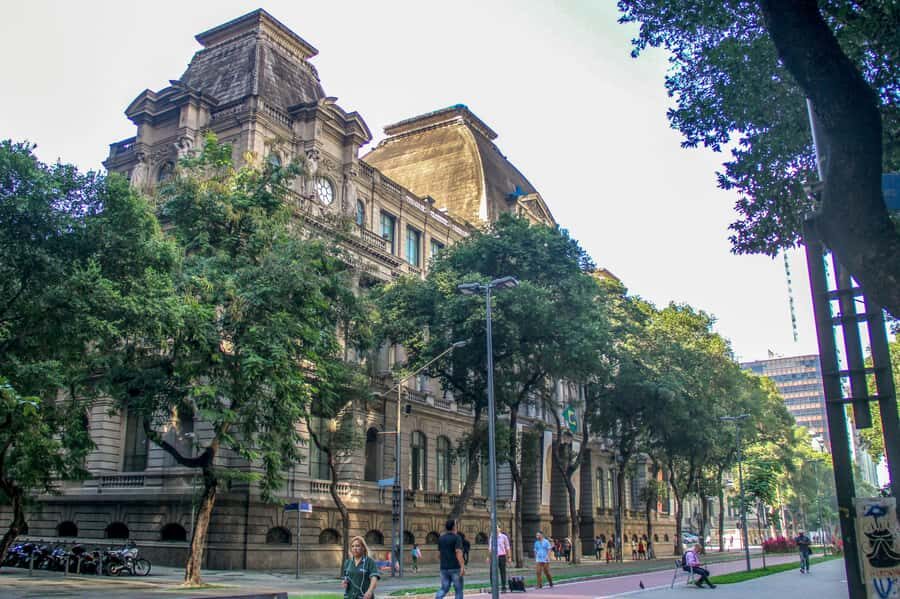
After the big square landmarks, the tour shifts gears toward something more tactile: cobblestones and tight lanes.
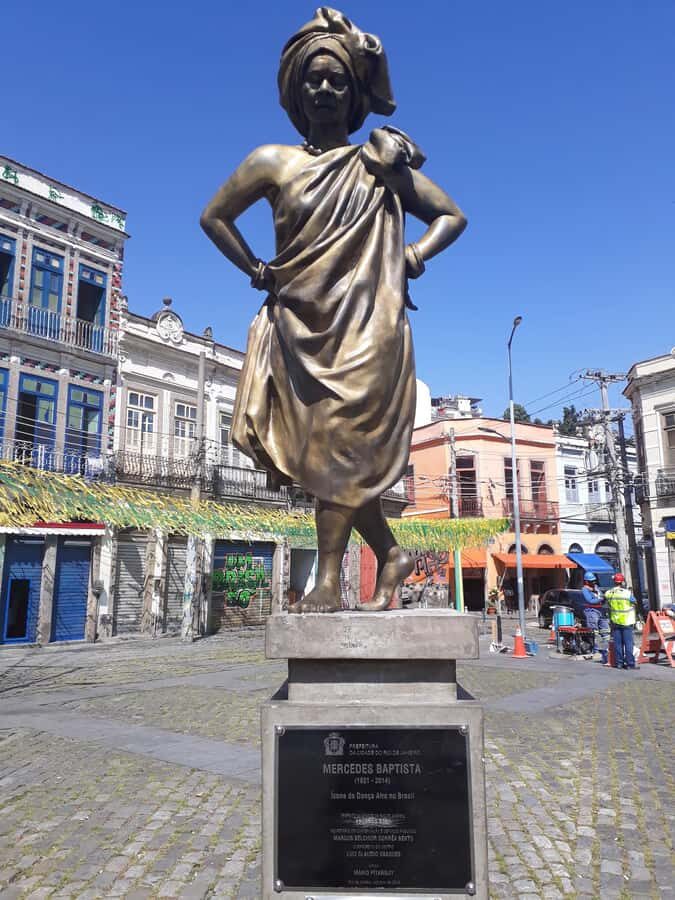
You reach Travessa do Comércio, where the surface changes and suddenly the pace feels different. Cobblestone streets tend to slow you down a bit, and that helps you look at details again—shopfront rhythm, building edges, street corners. In a short tour, that kind of “environment change” is surprisingly important.
Here, you also pass the former residence of Carmen Miranda. This is a fun cultural touch because it connects Rio’s architectural and political center to pop culture. Even if you don’t know every chapter of her story, the presence of her former home in this downtown web makes Rio feel like a place where art and history share the same streets.
This is also where I recommend mentally switching gears from facts to atmosphere. The guide’s job is still to explain what you’re seeing, but you can also take a second to just absorb the feel of the street. That’s how the tour stays memorable after the buildings start blending together.
You can also read our reviews of more historical tours in Rio De Janeiro






Church Stops and Cultural Centers: From Candelária to the Post Office Hall
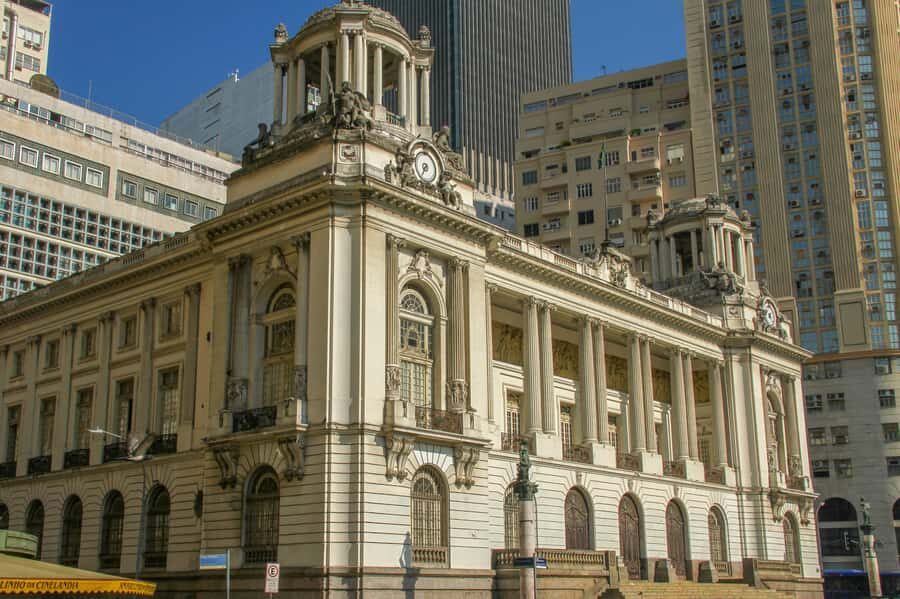
As you continue, you move into the part of the route that feels like a checklist of “classics” for central Rio—but with guided order and meaning.
You visit or pass:
- the Church of Our Lady of the Merchants
- the Post Office Cultural Center
- the France-Brazil House when open
- the Bank of Brazil Cultural Center
- Candelária Church when open
A church stop in downtown Rio is never just a pretty façade. These churches reflect how religion anchored community life, and how the city made major spaces for public worship. The Church of Our Lady of the Merchants name alone tells you something about who those neighborhoods served and valued.
The Post Office Cultural Center is a smart add because it uses an everyday civic building type—communication and bureaucracy—and turns it into a cultural stop. It’s the kind of conversion that explains how cities reuse space rather than only building new structures.
Then there are two culture-focused institutions: France-Brazil House (when open) and the Bank of Brazil Cultural Center. They help you see how international influence (France-Brazil connections) and local power (banking and economics) lived right in the same downtown corridor as churches and palaces.
Finally, Candelária Church (when open) brings the tour to another major architectural moment. In a 4-hour route, ending with a large, visually commanding site helps you cap the day with something that feels significant and place-defining.
Important practical note: some stops are explicitly listed as included when open. So plan for the reality of operating hours in downtown.
Price, Timing, and Group Size: Getting Value From $79
At $79 per person for about 4 hours, you’re paying for a set package: entrance fees, a professional guide, a small-group format, and subway transport. For downtown sightseeing, that’s not just a “convenience fee.” It’s value because you’re not spending your time figuring out routes between scattered sites, and you’re not paying separate admission tickets for each indoor stop.
Whether it feels like great value depends on how you like to travel. If you enjoy walking with a guide who can explain what you’re seeing, then the price makes sense fast. If you prefer roaming freely and you already know downtown Rio well, you could do parts on your own. But you’d lose the guided connections and the tight route sequencing that keeps this tour focused.
Small-group also matters here. A big group can turn a building-and-explanations tour into a moving crowd. With fewer people, it’s easier for the guide to keep track of questions and pace you enough to notice what’s in front of you.
Timing is another practical point. Four hours fits well for a first downtown day, especially if you’re staying near Copacabana and want to get into central Rio without committing a whole travel morning.
Who This Tour Is Best For (and who should skip it)
This tour suits you best if you want:
- a guided introduction to downtown Rio’s architectural and civic story
- a route that links squares, churches, palaces, and cultural centers without feeling random
- help understanding why these places sit next to each other and what they meant
It’s also great for people who like asking questions. Based on guide feedback you’ll hear from guides like Lucien, Monique, Ernani, or Mathilda, the commentary tends to go beyond surface facts and into how history, politics, and the city’s development show up in what you see.
Who should skip it?
- If walking long stretches is hard for you, this tour may not be the right fit.
- It’s not suitable for wheelchair users or people with mobility impairments.
One more reality check: since it’s a walking tour with multiple stops, you’ll want to be comfortable standing and walking for the full length of the experience.
Should You Book This Rio Historical Walking Tour?
If you’re visiting Rio for the first time and you want a structured way to understand downtown, I’d book it. This tour is designed to help you see Rio, not just pass by it—French-influenced architecture at Cinelândia, the Imperial-era cues near Praça XV, historic landmarks like Confeitaria Colombo (1894), and cultural institutions that keep the city’s layers readable in a single afternoon.
I’d hesitate only if you can’t manage a 4-hour walking route, or if you specifically need wheelchair-friendly access. Otherwise, $79 is a fair deal for a small-group, guided, subway-supported downtown day that hits the kinds of places you’ll be happy you learned about.
FAQ
How long is the Rio Historical Walking Tour?
It lasts 4 hours.
What is included in the price?
The tour includes entrance fees, a professional guide, a small-group tour, and transport by subway.
What is the price per person?
It costs $79 per person.
Where does the tour start?
The meeting point may vary depending on the option booked. One starting point listed is Av. Atlântica, 1702, at Copacabana Palace, A Belmond Hotel.
What languages are the guides?
Live tour guide languages include Spanish, English, and Portuguese.
What main places are included in the walking route?
The tour includes visits to Cinelândia, Largo da Candelaria, Confeitaria Colombo, the Church of Our Lady of the Merchants, France-Brazil House when open, Bank of Brasil Cultural Center, and Candelaria Church when open.
Is it suitable for people with walking difficulties or mobility impairments?
It is not recommended for people with walking difficulties, and it is not suitable for wheelchair users or people with mobility impairments.
Is the tour food included?
No. Drinks and meals are not included.
FAQ
Is there free cancellation?
You can cancel up to 24 hours in advance for a full refund.
Can I reserve and pay later?
Yes. There is a reserve now & pay later option, so you can book your spot and pay nothing today.