REVIEW · RIO DE JANEIRO
Full-Day Custom Private Tour of Rio
Book on Viator →Operated by Luis Darin Private Tour Guide · Bookable on Viator
Rio feels personal when you’re not rushing. This full-day custom private tour of Rio is built around your pace, with an air-conditioned vehicle and a guide who can steer you toward the best matches for your day.
I love the small group size (up to four), which makes it easier to change plans on the fly. I also like that many stops are free to enter, so your paid time goes where you really want it.
One thing to plan for: admission tickets are not included for several of the big draws, like Sugarloaf and Christ the Redeemer, plus a few museums and attractions.
In This Review
- Key highlights at a glance
- Custom touring in Rio: you steer, the guide handles the chaos
- Price and ticket reality: what your $192 buys (and what it doesn’t)
- Urca and Sugarloaf: the viewpoint you’ll talk about for years
- Christ the Redeemer meets Tijuca Forest: icon views with nature close by
- Downtown culture stops: where architecture does the talking
- Gardens, orchids, and monkeys: Botanical Garden and Parque Lage
- Beaches and viewpoints: Copacabana, Ipanema, and the road between
- Santa Teresa, Selarón steps, and the Lapa-to-samba thread
- What to do about the museums: soccer, aquariums, and the stadium atmosphere
- Food breaks and market moments: tasting Rio beyond the beaches
- Should you book this full-day custom private tour?
- FAQ
- How many people are in a booking?
- How long is the tour?
- What’s included in the price?
- Are attraction tickets included?
- Is the tour customizable?
- Is there a vegetarian option?
- Are children allowed?
Key highlights at a glance
- Up to four people: real customization instead of a bus-group script.
- Private, air-conditioned transportation: comfort matters in Rio heat and traffic.
- Mostly free sights: you can fill the day without buying tickets at every stop.
- Big viewpoints plus local textures: beaches, trails, architecture, and neighborhood color.
- Guide time-saving instincts: expect practical tips and routing that help you see more.
Custom touring in Rio: you steer, the guide handles the chaos

The best part of this tour is that it doesn’t feel like a checklist. In practice, you’ll spend the day bouncing between Rio’s main “wow” areas and calmer, culture-forward corners—without pretending you’ll do everything in one go.
Because the group is capped at four people, you’re not stuck waiting for someone else to finish a photo or decide they’re hungry. I like that this setup also makes it easier for your guide to adjust the plan as conditions change—crowds, weather, or even your energy level. In one example, the tour was adapted around a knee replacement, which tells me the guide is paying attention to how long you want to walk and what routes make sense.
Another smart piece: you’re in a private air-conditioned vehicle, so you’re not doing long stretches of city travel exposed to heat and sun. Rio can be gorgeous, but moving around without AC gets tiring fast.
If you want a tour where someone is proactive—suggesting stops, offering context, and keeping you moving—this format fits. If you prefer total independence and zero guidance, you’d probably do just fine with taxis and a self-made route, but you’d lose the “local math” the guide brings.
You can also read our reviews of more private tours in Rio de Janeiro



Price and ticket reality: what your $192 buys (and what it doesn’t)
At $192 per person for about an 8-hour day, this tour can be good value—mainly because a lot of what you’ll see doesn’t require paid entry. Many stops in the plan are free to enjoy from the outside or with no ticket needed.
At the same time, some of Rio’s biggest attractions are ticketed and you’ll handle them directly on-site. The list of ticket-not-included stops includes major experiences such as Sugarloaf Mountain and Christ the Redeemer, plus attractions like AquaRio and the Maracanã stadium. Fort museums and sports-related museums can also be ticketed.
So here’s the practical way to think about cost:
- If you choose only a couple of paid “anchor” attractions, this tour can feel efficient because many surrounding sights are free.
- If you decide you want multiple ticketed stops, budget extra for entrances and possible cable car or timed-entry style costs.
You’ll also want to plan for food. Meals or drinks aren’t included, so treat lunch like part of your day you’ll decide based on the vibe—especially since neighborhoods like Santa Teresa often turn a “quick stop” into the meal you remember.
Urca and Sugarloaf: the viewpoint you’ll talk about for years
The Urca area is where your day can start with maximum payoff. You’ll likely begin with Morro da Urca, the mountain mass that serves as the first leg for the cable car system heading toward Sugarloaf.
From there, Sugarloaf Mountain is the big centerpiece—over 1,200 feet above sea level, sitting right near the entrance of Guanabara Bay. Access is via cable cars that go straight up to the summit. Because it’s ticketed, you’ll pay there, but it’s also the kind of view where the money usually feels justified.
What makes this stop more than just a postcard:
- The cable car ride frames the bay and coastline in a way you can’t replicate from the ground.
- Your guide can help you time it so you’re not stuck in the worst waits.
For a lower-stress add-on, you may also stop for the Claudio Coutinho Trail—a flat walk at the base of Sugarloaf. It’s short, but the point is the monkeys and the views. If you’re looking for something active without turning the day into a hike, this is a strong fit.
And don’t overlook the area at the foot of Urca and Sugarloaf—small, scenic pockets with red-sand beach energy. It’s the kind of “in-between” moment that makes Rio feel lived-in, not staged.
Christ the Redeemer meets Tijuca Forest: icon views with nature close by
Rio’s most famous statue is Corcovado – Christ the Redeemer. It was inaugurated in 1931 and is famously large, with an Art Deco style influence. From up there, you get sweeping views that make the entire city feel like a single landscape.
Christ is also ticketed, so again: you’re paying for the main moment, and your guide’s job is to help the rest of the day feel like it connects smoothly around it.
The plan often layers in nature elements through Tijuca Forest and Parque Nacional da Tijuca, which is where you shift from city lines into thick greenery. Tijuca Forest is described as the world’s largest reforested urban forest, and the idea is simple: you get the city views, then you get the forest breathing around you.
Two related stops that can add meaning to your visit:
- Centro De Visitantes Paineiras: an environmental education space created in 2013, useful if you want context on what you’re seeing on the way to Corcovado.
- Parque Nacional da Tijuca itself: time here is less about ticketed interiors and more about noticing the scale of the forest and the way the air changes.
If you want a “Rio is both city and rainforest” day, this combo works well. If you hate getting stuck in crowds, ask your guide about timing and whether you should prioritize a specific order for Christ and surrounding viewpoints.
Downtown culture stops: where architecture does the talking
Rio’s center can be a blur if you’re only checking big landmarks. With a guide, though, you can slow down and notice how the city was built—sometimes by power, sometimes by art.
Here are a few standout cultural stops that are either free or mostly about looking rather than entering:
- Centro Cultural Municipal Parque das Ruínas: this cultural center keeps the legacy of Laurinda Santos Lobo, known for supporting artists. Even when you’re not going deep into galleries, the setting adds context.
- Theatro Municipal do Rio de Janeiro: you don’t enter here, but you spend time appreciating the architecture. If you like old-world public buildings, this stop can be a calm pause before you head back into the crowds.
- Centro Cultural Banco do Brasil (CCBB Rio de Janeiro): a neoclassical building tied to finance and business history. It’s also a good “reset” stop because you’re usually walking a bit less than you would on a tight sightseeing spree.
- Paço Imperial: a historic palace building that served as a residence for colonial governors and later became a royal residence after 1808. This is one of those places where the building’s past helps you read the city differently.
You can also add more “art + craft” energy with Sitio Roberto Burle Marx, an estate tied to Brazil’s acclaimed landscape designer. It’s ticketed-free in this plan, and even if you’re not a design nerd, Burle Marx’s influence is the kind of thing you start recognizing once you’ve seen it in context.
A quieter architectural contrast comes at Mosteiro de São Bento, where the exterior feels simple and the interior is described as rich with gilded Baroque engravings and plant motifs. The takeaway: Rio isn’t only about beaches—its old religious architecture can be as dramatic as its views.
You can also read our reviews of more tours and experiences in Rio de Janeiro






Gardens, orchids, and monkeys: Botanical Garden and Parque Lage
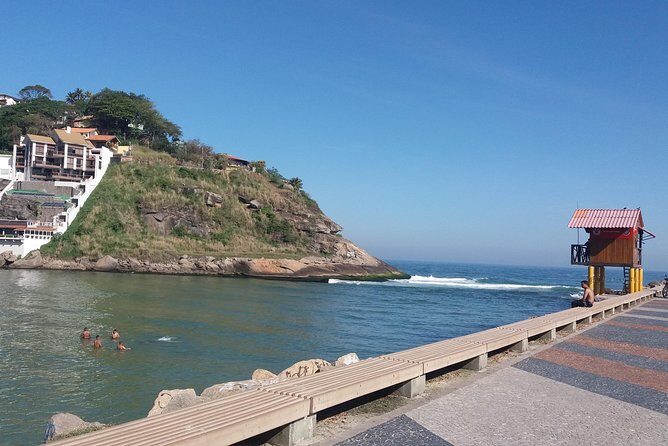
If you want a break from busy streets, the garden stops are where the day can breathe.
Rio’s Botanical Garden is created in 1808 under the Portuguese prince Dom João VI to acclimatize exotic plants. The walk includes imperial palm trees and greenhouse areas for orchids and bromeliads. The ticket isn’t included, but the payoff is the combination of plants and wildlife: capuchin and marmosets monkeys, toucans, red-throated guans, and other species you’re not guaranteed to see elsewhere in the city.
Near the botanical area, Parque Lage adds a different flavor. It used to be a sugar mill and later became a romantic-style garden designed by John Tyndale, hired by an English nobleman who bought the property in 1840. Again, even if you don’t obsess over design history, you feel the shift into slower pace and shaded paths.
A practical thought: this is the kind of part of Rio where you benefit from staying flexible. If the day is hot, your guide can help you pick the easiest paths, and you’ll spend less time rushing and more time actually seeing.
Beaches and viewpoints: Copacabana, Ipanema, and the road between
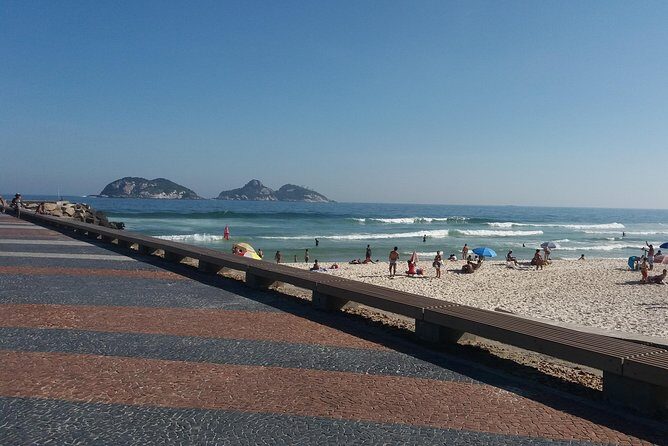
Rio’s beaches are famous for a reason, but the best way to enjoy them is to vary the angle and the energy level. This tour often strings together multiple beach neighborhoods, plus viewpoint stops, so you don’t just see one slice of the coastline.
You can expect a strong sequence around Copacabana and Ipanema:
- Avenida Atlantica sets the classic seaside mood along Copacabana.
- Copacabana Beach itself is where a lot of hotels cluster, so it’s lively and easy to recognize.
- Leme is the quieter end of Copacabana, good for photos without the same crush.
- Ipanema Beach is the south-side classic, with great photo opportunities and a view backdrop that includes Dois Irmãos.
- Praia do Arpoador is a strong sunset spot in summer.
Then there are “choose-your-adventure” beach options that feel more removed:
- Perigoso Beach is described as secluded and wild, reachable only by boat or a hiking trail.
- Praia da Macumba shifts you to the west part of Rio.
- Prainha shows up as a “scenery from viewpoint” type stop, plus the route can include small pauses on the way.
- Recreio dos Bandeirantes brings a different coastline feel, with preserved areas and calmer waters depending on where you stop.
- Pontal de Sernambetiba is a rock island that divides the oceanfront into separate beaches, which is exactly the kind of geography that makes photos pop.
If you’re the outdoors type, you might also add short trail segments like the one connected with Claudio Coutinho (Urca area) or the various viewpoint hikes mentioned around the city. These can be great, but don’t treat them as guaranteed—your guide should match effort to your day.
Also, there are stops described as:
- a nude beach,
- very isolated beach areas reachable only by private transport,
- and beaches reachable by hiking trails over rocky cliffs.
If any of those interest you, I’d make it explicit early. That way your guide can decide whether it’s safe and practical based on time and conditions.
Santa Teresa, Selarón steps, and the Lapa-to-samba thread
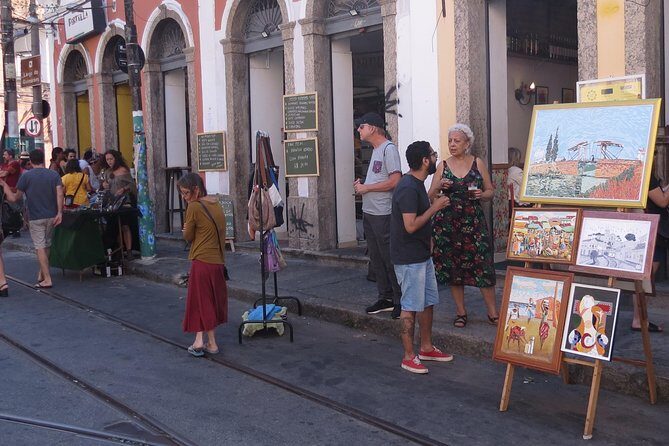
Santa Teresa is one of Rio’s most photogenic areas for a reason: cobblestones, murals, and a neighborhood energy built on small streets and slower wandering. In this tour, it’s more than a scenic backdrop—you can use Santa Teresa as the day’s “human scale” break after viewpoint stops.
You’ll also hit Escadaria Selarón, the famous staircase covered in thousands of colorful tiles. It’s credited to Chilean-born artist Jorge Selarón as a tribute to Brazilian people. Even if you’ve seen it online, standing next to it feels different because the tiles are tactile and layered with personal meaning.
Nearby, Arcos da Lapa gives you another side of Rio’s character: an aqueduct once used to supply water from rivers in the Tijuca Forest area, now part of the tram route between Downtown Rio and Santa Teresa. This is the kind of stop that teaches you how infrastructure becomes identity over time.
For samba lore, Pedra do Sal is often described as a birthplace of samba. If you want culture stops to feel grounded instead of museum-only, this is a strong choice.
What to do about the museums: soccer, aquariums, and the stadium atmosphere
Rio’s museum world can fit into a full-day format if you pick the right beats.
For sports lovers, Museu Seleção Brasileira – CBF is a ticketed stop in Barra da Tijuca, described as an interactive museum with relics like uniforms, trophies, and photographs. There’s enough here that you can spend real time if soccer is your thing.
You can also add stadium atmosphere even if you’re not attending an event:
- Maracanã is mentioned with ticket not included.
- Sambodromo da Marques de Sapucaí is the Carnival parade stage and is free in this plan.
If you prefer animals and indoor calm on a hot day, consider AquaRio, described as South America’s largest aquarium with about 3,000 sea animals in 28 tanks. It’s ticketed, but it’s also a straightforward “this will be fun for hours” option when you don’t want the day to be all walking and sun.
Food breaks and market moments: tasting Rio beyond the beaches
A good guided day includes food in the middle, not food at the end as an afterthought.
One memorable stop here is a street market area where farmers set up stands on different streets each morning. You can walk through and sample fruits, street food, and vegetables. The key detail is that fruit tastes different here, so you’re not just buying snacks—you’re resetting your idea of what a mango, papaya, or other fruit should taste like.
If you end up in Santa Teresa for lunch, that kind of meal tends to be more than fuel. It’s where you start mixing local routines—bars, cafés, and everyday street life—into your sightseeing plan.
For a classic old-Rio sweet break, Confeitaria Colombo is included as an icon from 1824, described as a Belle Époque landmark with beautiful mirrors and stained glass. It’s not listed as free, so treat it as a chance to spend wisely on one standout stop rather than buying everything.
And if your timing lines up, Feira de São Cristóvão is a big cultural food-and-music stop tied to Northeast Brazilian traditions. The plan describes hundreds of tents, forró performers, singers, and folk literature, with huge monthly attendance. Even if you only sample a couple things, it can make your day feel like it has more than just coastline.
Should you book this full-day custom private tour?
I’d book this if you want a first-week Rio plan that feels tailored and not mechanical. It’s especially strong for couples, solo travelers, and small groups who value comfort, flexibility, and a guide who can help you pick the right attractions based on how your day is going.
I’d think twice if you already know exactly what you want and you’re comfortable handling every paid ticket and timing detail yourself. Since many major stops cost extra for admission, you’ll get the best value when you treat those ticketed attractions as your chosen anchors, not mandatory checkboxes.
If you do book it, my advice is simple: tell your guide what matters most—views, nature, history, beaches, or food—and ask them to build around that. That’s where this tour turns into a day that feels like Rio, not just a list of famous stops.
FAQ
How many people are in a booking?
The tour is limited to a maximum of four people per booking.
How long is the tour?
It runs for about 8 hours.
What’s included in the price?
You get a local guide, private transportation in an air-conditioned vehicle, and coverage for tolls and parking fees, fuel surcharge, and landing and facility fees.
Are attraction tickets included?
Admission tickets for attractions are not included. You pay directly at the attractions. Meals or drinks are also not included.
Is the tour customizable?
Yes. The tour is described as full-day custom private, and you can tailor what you want to see.
Is there a vegetarian option?
A vegetarian option is available if you advise at booking.
Are children allowed?
Children must be accompanied by an adult, and most travelers can participate.