
REVIEW · RIO DE JANEIRO
Historical Downtown and Lapa – Walking Tour
Book on Viator →Operated by Rio by Foot - Tours · Bookable on Viator
Rio makes sense on foot. This 3-hour walk through Centro and Lapa gives you close-up streets and in-depth political and historical context from guides like Rafael, with plenty of chances to ask questions. One heads-up: English tours can get cancelled if the group doesn’t hit a minimum number, so bring a backup plan.
I like that the pace is active but manageable. You’re moving through classic sights—libraries, museums, big boulevards, and the famed tiled steps—so you’re not stuck inside one building. Still, it’s about a 3-mile walk, so sunny days can be tiring.
For $40, the value is the guidance plus the included entry tickets at key stops. You’ll also end near the lively center (Praça Quinze de Novembro), which makes it easy to keep exploring after the tour.
In This Review
- Key things I think are worth your attention
- Why Centro and Lapa work better than a checklist
- Start at Praça Floriano, end near Praça Quinze de Novembro
- What 3 hours feels like on the street
- Biblioteca Nacional: where Rio’s intellectual life has a big voice
- Museu Nacional de Belas Artes and a WWII memorial nearby
- Avenida Rio Branco: the grand boulevard with political weight
- Escadaria Selarón: street art that begs for context
- The Republic stop: reading modern Brazil in public spaces
- Feira da Praça XV: a lively Centro stop you don’t need a ticket for
- Guides can make or break a history walk
- Who this tour is best for (and who should choose something else)
- Value check: is $40 a fair deal?
- Tips to get the most out of your walk
- Should you book this walking tour?
- FAQ
- Is admission included for all the stops?
- How long is the walking tour?
- Where do I meet the guide and where does the tour end?
- Is food included?
- Are the guides multilingual?
- What about kids?
Key things I think are worth your attention

- Museum time is built in: Biblioteca Nacional and the Museu Nacional de Belas Artes include admission
- You’ll ask questions a lot: guides field politics-and-history queries without rushing you
- Photo-friendly route: old façades, grand streets, and the Selarón steps give you constant stops for pictures
- Small groups (up to 20): easier to hear the guide and keep up at a walking pace
- Guide personalities matter: Rafael brings energy and clarity; Juliana adds high-energy stories in both Portuguese and English
- Centro-to-Lapa rhythm: you cover multiple moods of Rio instead of repeating the same highlights
Why Centro and Lapa work better than a checklist
Most first-time Rio plans zoom in on the big-name icons. This tour takes a different angle: it helps you understand how Rio’s power centers and neighborhoods connect—politics, public life, and everyday culture all in one long walk.
What I like is that the history doesn’t feel like a lecture. The guide uses the buildings and streets as prompts. You start noticing how changes in Brazil show up in architecture, monuments, and the way people gather in public squares.
And because it’s a walking tour, you see the city at human speed. Rio can be loud and fast. On foot with a guide, it becomes readable.
You can also read our reviews of more walking tours in Rio de Janeiro



Start at Praça Floriano, end near Praça Quinze de Novembro
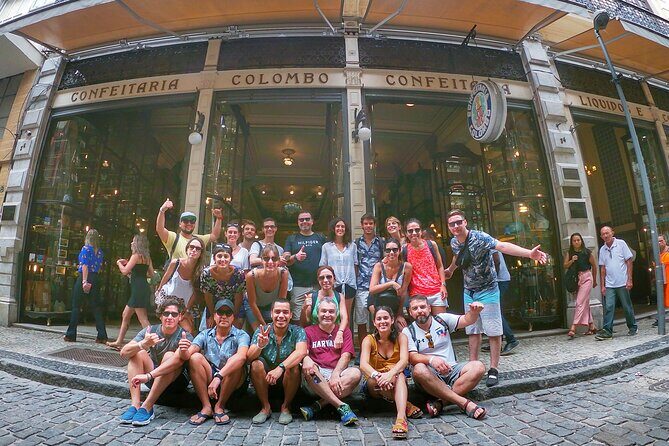
You’ll meet in Centro at Praça Floriano, 1 (right by the city’s action zones). The tour ends at Praça Quinze de Novembro in Centro, which is convenient because you’re not dropped in a random spot.
One practical tip: guides may wear identifying clothing—one guide Rafael was described as easy to spot in green shirts. That kind of cue helps, especially if you arrive a few minutes early.
Also, the meeting area is in the part of Rio that’s near public transportation. That matters because it’s one less headache on a day when you’re already doing a lot of walking.
What 3 hours feels like on the street

The duration is about 3 hours, give or take. The route is active, but it’s not a forced march. You’ll cover roughly 3 miles at a steady pace, which is a good distance for most people who wear decent walking shoes.
There’s also time for a quick break. People mention a toilet break and a refill moment, which I’m grateful for. In hot or sunny weather, that small pause makes the rest of the walk feel easier.
Still, plan for the elements. If the sun is strong, you may want a hat and sunscreen. One review note made it clear: cool weather helped the experience a lot, while intense sun could be less fun.
Biblioteca Nacional: where Rio’s intellectual life has a big voice
Your first museum stop is Biblioteca Nacional. The tour schedule sets aside about 25 minutes and includes admission. Even if you only spend part of that time looking carefully, it’s enough to get the point across: this isn’t just a bookish stop—it’s part of Brazil’s public identity.
Why this matters on a history tour: libraries are power. They show what a country values, what it tries to preserve, and how ideas get organized. Standing in front of a major national library helps you connect politics to culture without turning it into a dry timeline.
If you like architecture or you enjoy learning how institutions shaped society, this is one of the stops that makes the whole walk feel worth it.
Museu Nacional de Belas Artes and a WWII memorial nearby
Next comes a short stop at Museu Nacional de Belas Artes, about 15 minutes, with admission included. This is a quick hit, so treat it like a guided orientation: you’re there to understand the setting and what to notice, not to become a curator for the day.
The area also ties into a World War II memorial theme in the tour description, so you’re not just looking at art; you’re also seeing how public spaces remember world events. That combination can help you grasp how Brazil’s modern story sits inside larger global events.
One potential drawback: because the time is short, the guide may move efficiently from spot to spot. If you’re the type who wants long, quiet time alone, plan to return later on your own.
You can also read our reviews of more historical tours in Rio de Janeiro






Avenida Rio Branco: the grand boulevard with political weight
After the museum stop, you’ll walk along Avenida Rio Branco for about 20 minutes. This is the kind of street where Rio’s ambition shows. It’s wide, formal, and built to be seen from a distance.
On a tour like this, the value isn’t only the view—it’s the commentary. The guide uses the boulevard to explain how Brazil’s political life and public identity changed over time. You begin to understand why certain buildings and monuments land where they do.
Practical angle: this section is a walk, so it’s easiest to keep a comfortable pace and stay tuned to directions. If you’re taking photos, don’t drift too far from the group—Avenida Rio Branco is impressive, but it’s also busy.
Escadaria Selarón: street art that begs for context
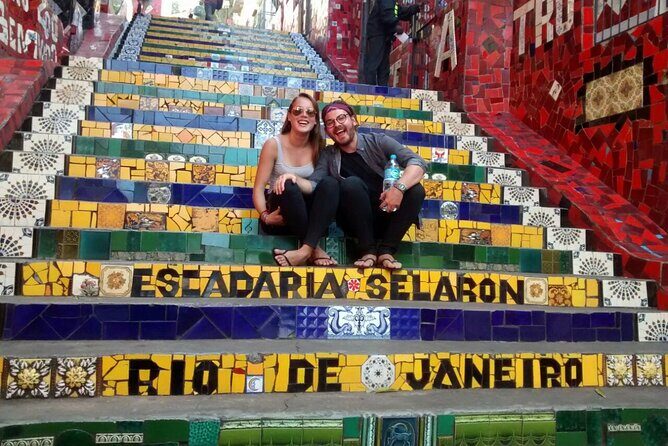
Then you get to Escadaria Selarón. This is the stop most people recognize, and it’s more fun when you have a guide putting meaning on the details.
The tiled steps turn a simple promenade into a conversation. You’ll see the mix of colors, shapes, and the way the steps have become part of Rio’s public life. With the guide’s explanation, it’s easier to understand how street art can become a landmark and a symbol at the same time.
This is also where photo opportunities tend to multiply. People like this portion because it’s visually dramatic and easy to enjoy even if you’re not a museum person.
The Republic stop: reading modern Brazil in public spaces
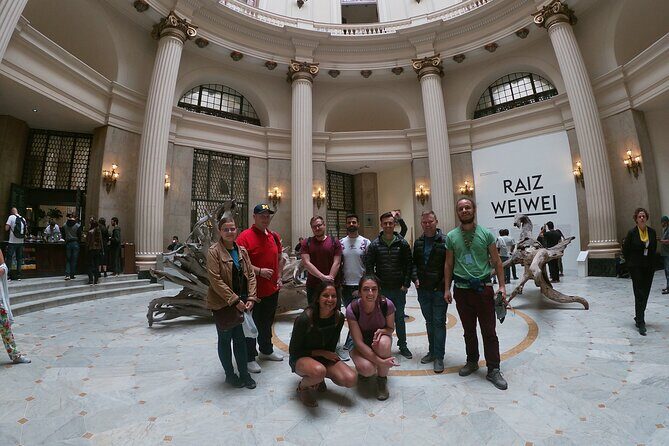
The tour includes a stop labeled the Republic. The time isn’t specified, but it functions like a mini “what does it all mean?” moment—another place where political history becomes visible without needing a textbook.
This kind of stop is useful because it pulls together what you just learned at the library and museum. You start seeing the pattern: institutions and monuments aren’t neutral. They reflect ideas about governance, nationhood, and who gets to define public space.
If you love asking questions, this is a good point in the walk to do it. Guides typically have a lot to say when you connect the dots between stops.
Feira da Praça XV: a lively Centro stop you don’t need a ticket for
Near the end, you’ll spend about 15 minutes at Feira da Praca XV. This part is listed as external, and admission is not included—so you’re not paying extra just to experience it.
If you walk this segment with the guide’s context in mind, you’ll notice something: Rio isn’t only made of formal monuments. It’s also made of everyday gathering—markets, commerce, and people watching.
A practical takeaway: if you want to keep the experience going after the tour, this area is a good transition zone. It’s easy to continue exploring without feeling like you’re stranded on the edge of nowhere.
Guides can make or break a history walk
This tour has a guide-centered approach. The guide sets the tone and controls how quickly you move from stop to stop while keeping the story clear.
From the experiences people shared, Rafael is described as friendly, energetic, and strong on historical knowledge. Juliana is described as high-energy and able to speak both English and Portuguese, plus she shares personal observations living in Rio. That mix—history plus a local voice—is usually what makes the tour feel more like a guided conversation than a scripted route.
You’ll also have time to ask questions. That matters for Brazil, because the political and historical themes can feel broad. A good guide makes them feel specific.
Who this tour is best for (and who should choose something else)
This walking tour is a great fit if you:
- like history that connects to real places
- want a structured route without committing to a full-day program
- enjoy asking questions and getting local recommendations
It can also suit people who have already done some classic sights and want to understand the city beyond the postcards.
You might want a different plan if:
- you hate walking in heat (sun protection helps)
- you need long, quiet museum time (some stops are short by design)
- you’re traveling with a tight schedule and want zero risk of last-minute change (there have been cancellation reports tied to minimum numbers)
Value check: is $40 a fair deal?
At $40 per person for about 3 hours, the value comes from three things: the guide, the time efficiency, and the included admission tickets at major stops.
Admission tickets are included at Biblioteca Nacional and Museu Nacional de Belas Artes. That helps offset part of the cost, especially compared with tours where you pay for a guide plus everything else separately.
Add in the chance to learn political and historical connections while you walk, and the experience becomes more than just sightseeing. You’re paying to understand what you’re looking at.
Tips to get the most out of your walk
A few practical habits can make a big difference:
- Wear shoes you trust. This is a solid 3-mile stretch, and Centro streets can be uneven.
- Bring water and take advantage of the short refill break.
- Keep your camera ready for Avenida Rio Branco and Selarón steps, but don’t block the group while others try to hear.
- If you’re booking in English, keep an eye on your language setting and be ready with a backup plan if the tour doesn’t meet a minimum group size.
Should you book this walking tour?
If you want Rio’s history in a form that feels human—buildings, monuments, and street life on a single route—this is an easy yes. The included museum admission, the Q-and-A style guide, and the combination of Centro formality with Lapa color make it a strong use of a half-day.
Book it if you enjoy learning and you’re comfortable walking around 3 miles at a steady pace. Consider a different option (or at least line up Plan B) if heat and schedule risk are big concerns for you.
FAQ
Is admission included for all the stops?
Admission is included for Biblioteca Nacional and Museu Nacional de Belas Artes. Feira da Praca XV is an external stop and does not include admission.
How long is the walking tour?
The tour is about 3 hours.
Where do I meet the guide and where does the tour end?
You start at Praça Floriano, 1 – Centro, Rio de Janeiro and end at Praça Quinze de Novembro – Centro, Rio de Janeiro.
Is food included?
No. Food and drinks are not included.
Are the guides multilingual?
The tour may be operated by a multi-lingual guide.
What about kids?
Children must be accompanied by an adult.