REVIEW · RIO DE JANEIRO
Climb to the Top of Sugarloaf Mountain
Book on Viator →Operated by Climb in Rio - Day Tours · Bookable on Viator
Sugarloaf is more than cable cars. This is the hands-on way to experience Rio’s most famous peak, with a small-group climb and real guided rock-scrambling along the way. You start at the mountain’s foot, hike around to the steeper side, and work up to summit views that feel earned, not handed to you.
Two things I like a lot are the professional guidance (folks like Mingo, Andrew, and Domingos are repeatedly praised for making people feel safe and confident) and the mix of hiking plus a short rope section that teaches you what that “climbing” part actually feels like. The main drawback to plan for is that the route includes exposure and some unroped scrambling, which can be tough if you have a serious fear of heights.
In This Review
- Key Highlights You’ll Feel On the Climb
- Why Climb Sugarloaf at All When the Cable Car Exists?
- Your 2:00 pm Start in Urca: Where the Adventure Begins
- Small-Group Climb (Up to Six): The Safety and Comfort Factor
- The Route Up: Steep Trail, Exposure, and Those Big Views
- Philosopher’s Stone and View Stops That Feel Like Rewards
- The 15-Meter Rope Pitch: A Real Climbing Moment, Not a Leap of Faith
- Summit Time: Views Plus Food and Drink Options
- Getting Down: Cable Car Return to Morro da Urca
- What to Bring (So the Climb Feels Better)
- Price and Value: Is $98.10 Worth It?
- Who This Tour Fits Best (and Who Should Rethink)
- Weather Matters: Why Timing Can Change Your Plan
- Should You Book the Sugarloaf Mountain Climb?
- FAQ
- How long is the Sugarloaf Mountain climb experience?
- What time does the tour start?
- Where do we meet, and where does the tour end?
- What’s included in the price?
- What should I bring since it’s not included?
- How physically fit do I need to be?
- What happens if the weather is poor?
- Can I cancel for a full refund?
Key Highlights You’ll Feel On the Climb

- Max six people keeps the guide close enough to correct your footing and manage pace.
- Backside ascent starts after circling around, so you get the real effort instead of the easy approach.
- Unroped scrambling early on builds excitement fast, with coaching to help you through.
- A 15-meter rope pitch gives you a beginner-friendly taste of harness and rope technique.
- Philosopher’s Stone viewpoints are the kind of views you don’t get from the cable car line.
- Cable car descent + a short walk makes the finish simpler than some full-day hikes.
Why Climb Sugarloaf at All When the Cable Car Exists?
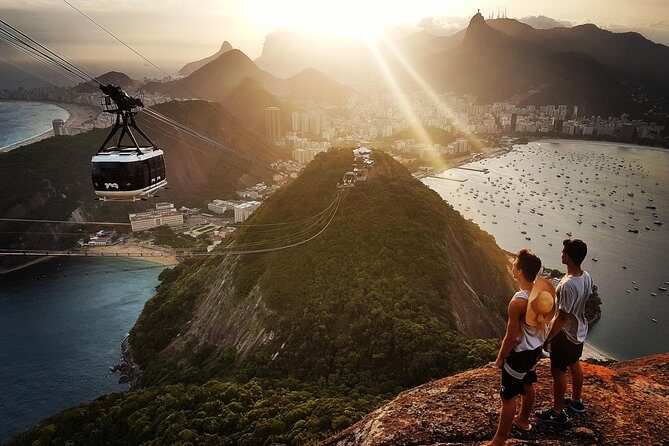
Sure, the cable car is the quick way up. But Sugarloaf hits different when you’re moving your hands and feet, not just watching the city slide past from a cabin. This tour turns the mountain into a workout and a skill-building moment, with a steady push from start to summit.
The value here is that you’re not just “doing something hard.” You’re doing it with instruction. The route gives you that mix of steep but doable, plus a short, more technical climbing segment that’s still approachable with the right setup and a guide who can talk you through what to do next.
You can also read our reviews of more tours and experiences in Rio de Janeiro.



Your 2:00 pm Start in Urca: Where the Adventure Begins
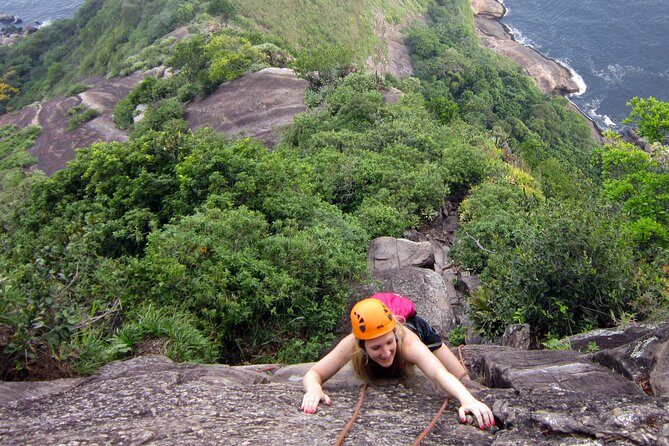
The meeting point is Av. Pasteur, 520 – Urca, Rio de Janeiro – RJ, Brazil, and the tour starts at 2:00 pm. Expect the afternoon timing to matter for energy levels and daylight for photos, especially once you reach the viewpoints on the way up.
This part is also practical: the meeting area is described as near public transportation, which can make getting there and heading back easier than hopping across town at rush hour. Still, plan to arrive a few minutes early so you’re not starting your climb rushed.
Small-Group Climb (Up to Six): The Safety and Comfort Factor
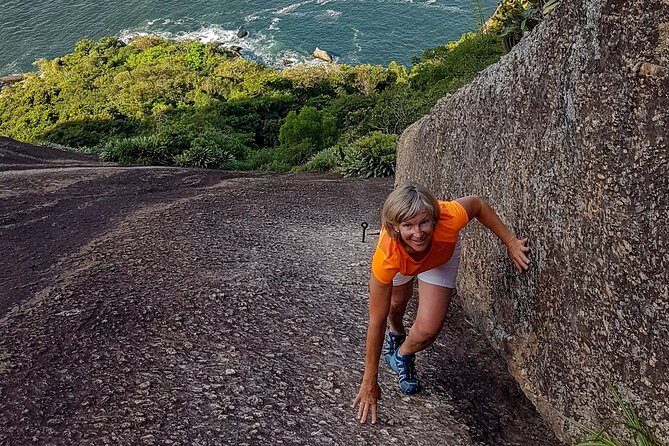
A maximum group size of six may sound like a small detail, but it changes the whole experience. When the guide isn’t juggling a large crowd, you get quicker feedback and more patience if you need extra time on tricky steps.
It also helps psychologically. Feeling safe is not just about gear. It’s about clear instruction, calm pacing, and someone watching your body position as you move through exposed sections. From the guidance style praised by Mingo, Andrew, and Domingos, you can expect a supportive approach that adjusts to different comfort levels—especially for first-timers.
The Route Up: Steep Trail, Exposure, and Those Big Views
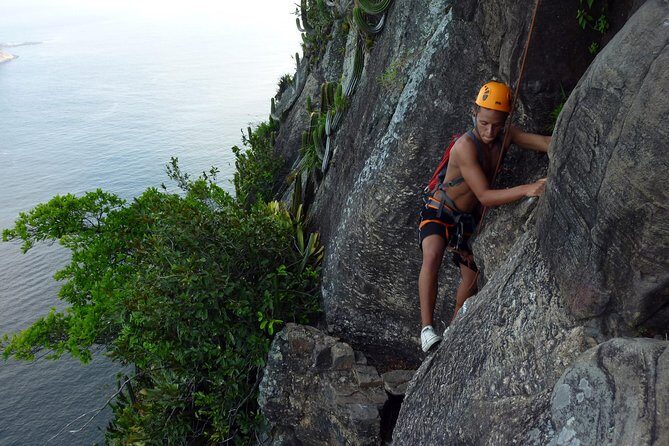
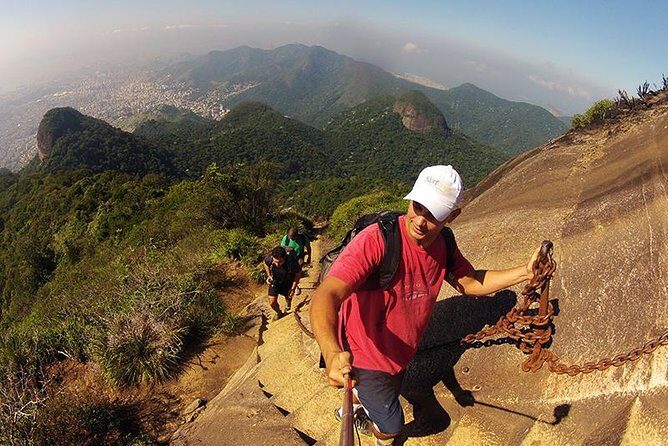
You begin at the foot of Sugarloaf, then the route swings around the backside before the ascent gets steep. That shift matters. It means you’re not just walking uphill on a flat path—you’re earning your elevation from the start.
Early on, you’ll tackle a well-traveled trail that turns into a technically simple but steep climb. The key word here is simple. You’re not being asked to do advanced technical moves right away. But there are some unroped scrambling sections that can feel intense, especially if you’re not used to heights.
Here’s the useful part: you’re not left to guess. Your guide talks you through it, and the emphasis is on staying safe while you learn how to place your weight and move with control. If the idea of exposure makes your stomach drop, take it seriously—but don’t automatically assume you won’t be able to do it. The coaching is part of the package.
Philosopher’s Stone and View Stops That Feel Like Rewards
Once you get rolling uphill, you’ll stop for views that you simply don’t see from the cable car approach. One highlight called out is Philosopher’s Stone, a famous viewpoint you reach along the climb’s progression.
These stops are more than photo breaks. They’re also how you manage energy. If you sit quietly during a pause, you may notice wildlife moving nearby—small monkeys called marmosets can come quite close, and at least one guide-led moment has included a pair of vultures sitting nearby as people climb and catch their breath.





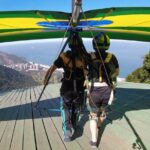
The 15-Meter Rope Pitch: A Real Climbing Moment, Not a Leap of Faith
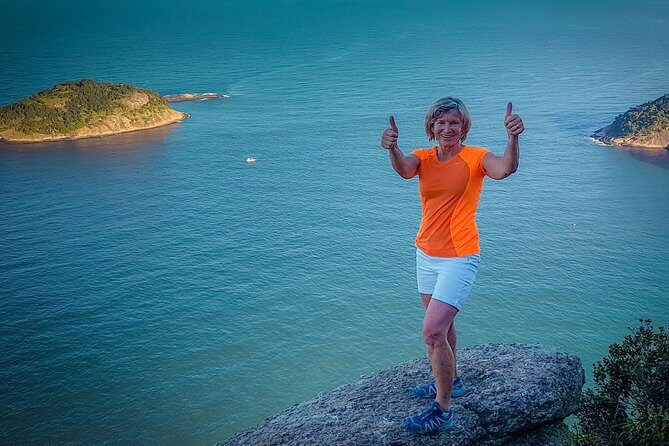
About halfway up, the tour includes a short 15-meter pitch that’s more technical than the hiking and scrambling before it. This is where the gear matters: you’ll use a rope and safety harness, and that setup is included.
This is a big reason the tour is popular with people who want a climbing taste without committing to something extreme. You get a structured experience: you’re tied in, you’re not improvising, and you’re learning what a rope pitch feels like in a controlled way.
It’s also where you learn that “climbing” doesn’t always mean complicated gym moves. Sometimes it means staying calm, moving steadily, and trusting the system while your body learns the rhythm.
Summit Time: Views Plus Food and Drink Options
When you reach the top, the reward is immediate. The summit is described as stunning and it also offers options for food and drinks. This is your chance to slow down, soak in the panorama, and take photos without rushing.
You do need to plan for one thing: snacks and water are not included, and purchases on the summit are also not included. So if you know you burn through energy, pack something simple. Even a small snack can help you enjoy the summit instead of thinking about your next energy fix.
Getting Down: Cable Car Return to Morro da Urca
The descent is smartly designed so you’re not stuck doing the hardest part twice. You take the cable car down from the summit to Morro da Urca, and then walk about 15 minutes back toward the starting point.
A nice detail: the cable car descent is not charged to climbers. That’s part of the tour value. It also means you finish the experience feeling satisfied instead of wrecked.
What to Bring (So the Climb Feels Better)
This is not a “wear sneakers and hope for the best” situation. You’ll want gear that keeps you stable and comfortable on uneven rock.
From practical tips shared by people who did the climb:
- Wear pants and a breathable shirt, not heavy stuff that soaks you.
- Use hiking shoes with excellent traction. Running shoes are not the best choice for grip on rough surfaces.
- Bring plenty of water and a snack, since neither is included.
- Bring mosquito repellent, especially if you’re sensitive to bites.
- If you can, dress to move. You’re climbing, not just hiking.
Also, bring a mindset adjustment. This tour mixes hiking and climbing, so pacing matters. If you treat it like a trail walk, you’ll push too fast and end up needing more breaks than you planned.
Price and Value: Is $98.10 Worth It?
At $98.10 per person for roughly three hours, this isn’t a budget add-on. But the price makes more sense when you look at what’s included and what you’re paying for.
You’re getting:
- All required safety equipment
- A trained guide (with small-group attention)
- The cable car descent from the summit to Morro da Urca with no extra charge
You still pay for your own water/snacks, and you’ll handle transportation to and from the meeting. But overall, you’re paying for safety, instruction, and access to the kind of summit route that most people experience only from the cable car.
If you’re already the type who likes learning skills and not just ticking a landmark, the value gets even better. This is one of those experiences where paying for coaching turns a scary-sounding activity into a confident one.
Who This Tour Fits Best (and Who Should Rethink)
This experience is for you if you want a challenge and you have strong physical fitness. The climb includes steep sections, and you’ll likely need to stop and catch your breath at intervals.
You should be cautious if:
- You have a serious fear of heights, since early unroped scrambling can feel exposed.
- You’re not comfortable with physically demanding movement, even if the technical climbing is described as not difficult.
It also seems like a great option for first-time climbers who are willing to listen and slow down. People have brought kids as young as 15 and still found the guidance worked well, as long as everyone is prepared for effort and stops.
Weather Matters: Why Timing Can Change Your Plan
This tour requires good weather. If conditions aren’t right, the experience can be canceled and you’ll be offered a different date or a full refund.
That matters because climbing is a safety-first activity. Cloudy weather can shift footing and grip, and even if a hike feels like it should go on, the operator may decide it’s not worth the risk. Plan to be flexible with your Rio schedule.
Should You Book the Sugarloaf Mountain Climb?
I’d book it if you want to do Sugarloaf in a way that feels active, personal, and skill-based. You’re paying for guidance, safety gear, and a route that includes rope climbing plus summit views that come from effort, not just paying for a ticket.
Hold off if heights make you panic or if you know you struggle with physical climbs. You can still visit Sugarloaf by cable car, and that can be the better match. But if you’re up for a real challenge with a calm guide—this is one of the best ways to feel what the mountain is like.
FAQ
How long is the Sugarloaf Mountain climb experience?
The duration is approximately 3 hours.
What time does the tour start?
The start time is 2:00 pm.
Where do we meet, and where does the tour end?
You meet at Av. Pasteur, 520 – Urca, Rio de Janeiro – RJ, Brazil, and the activity ends back at the same meeting point.
What’s included in the price?
The tour includes all required safety equipment, and the cable car descent from the summit to Morro da Urca is also included at no extra charge.
What should I bring since it’s not included?
Snacks and water are not included, so bring your own. Any purchases you make on the summit are also not included.
How physically fit do I need to be?
You should have a strong physical fitness level, since the route includes steep sections and climbing/scrambling.
What happens if the weather is poor?
This experience requires good weather. If it’s canceled due to poor weather, you’ll be offered a different date or a full refund.
Can I cancel for a full refund?
Yes. You can cancel up to 24 hours in advance for a full refund. If you cancel less than 24 hours before the start time, the amount paid is not refunded. Cut-off times use local time.