REVIEW · RIO DE JANEIRO
3-Hour Urban Arts Walking Tour
Book on GetYourGuide →Operated by LOCAL55 TRAVEL · Bookable on GetYourGuide
Rio’s walls tell stories. This 3-hour walk is built around urban art and the people who make it, from neighborhood scenes to the big, famous pieces. I especially like the way the guide connects what you see to Brazilian culture and to artists from around the world, and I like the momentum of riding the tram so the tour feels more than just a straight downtown slog.
You’ll meet in Cinelândia and start with a short briefing before you head toward the VLT station, where the street art shows up almost immediately. One drawback to plan for: this is still a walk in the open, so on hot days you’ll want to pace yourself and keep drinking water.
In This Review
- Key Highlights at a Glance
- Starting in Cinelândia: meeting at the Municipal Theatre (13:30)
- The 6-year project behind the walk: why the art has context
- From the briefing to the VLT: spotting street art before you even board
- The Olympic Boulevard tram ride: a simple way to cover ground
- Olympic Boulevard murals: where the tour’s big wow moments live
- The Santa Teresa and Selarón Stairs energy: street art meets Rio icon sites
- Learning the artists’ network: Brazilian voices and international influences
- Timing and comfort: the 3-hour format in real Rio weather
- Price and value: is $45 worth it?
- Who should book (and who should skip)
- Should you book this Rio Urban Arts tour?
- FAQ
- Where does the tour start?
- What time does the tour start?
- How long is the experience?
- What languages are the guides?
- What is included in the price?
- Are foods and beverages included?
- What should I bring?
- Is the tour cancellable?
- Who shouldn’t book this tour?
Key Highlights at a Glance
- Meet by the Municipal Theatre in Cinelândia at 13:30, so you start right in downtown Rio
- A tram ride on the 2016 Olympic-era VLT line to Olympic Boulevard, with tram tickets included
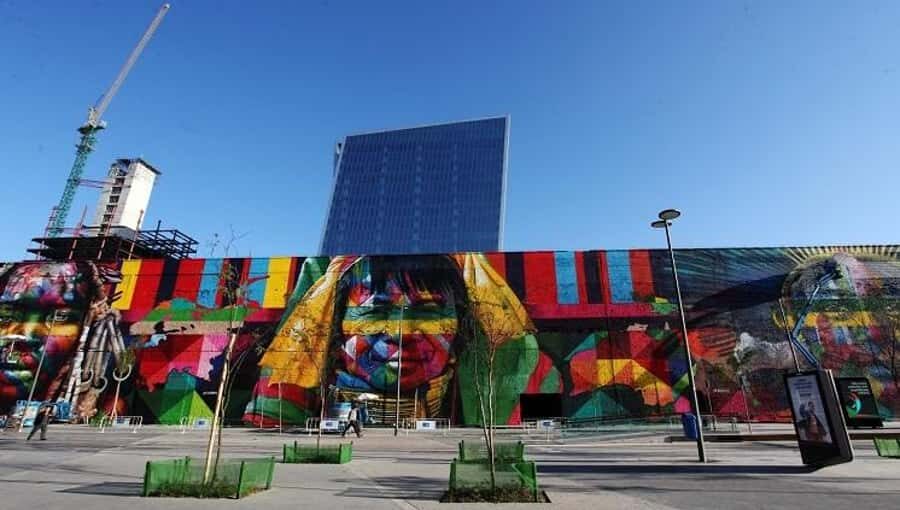
- World-scale mural viewing at Olympic Boulevard, including the huge street mural by name mention
- Murals like The Ethnicities, tied to a multi-year project and real cultural context
- English, Portuguese, and Spanish guides, so language is usually not a problem
Starting in Cinelândia: meeting at the Municipal Theatre (13:30)
Your tour starts at 13:30 in front of the Municipal Theatre of Rio de Janeiro, at Praça Floriano in Centro. It’s a practical meeting point: you’re in a central, recognizable area, not a hidden side street where you have to play guessing games.
Before you move, there’s a quick briefing. That matters because this tour is about reading street art like a language, not just taking photos and moving on. If your guide asks you to keep an eye on specific details (styles, lettering, themes), it helps you notice more than you would on your own.
Also, plan to be ready to move. You’re not starting with a long sit-down talk. You’re starting with footsteps and sightlines.
You can also read our reviews of more walking tours in Rio De Janeiro



The 6-year project behind the walk: why the art has context
The core idea is a result of a six-year project, and you feel that in how the route is explained. Instead of treating graffiti as random decoration, the guide frames it as public expression—shaped by politics, identity, and international artistic exchange.
This matters for your experience because you’ll stop seeing murals as just big pictures. You’ll start connecting themes: who gets represented, how artists borrow visual styles, and how street art can react to the same news and events that hit regular media.
It also helps that your guide doesn’t only point at the art. The tour is built to show how the urban art scene lives across different neighborhoods, not only in one postcard area. Even when the walls change, the motivations behind the work stay part of the conversation.
From the briefing to the VLT: spotting street art before you even board
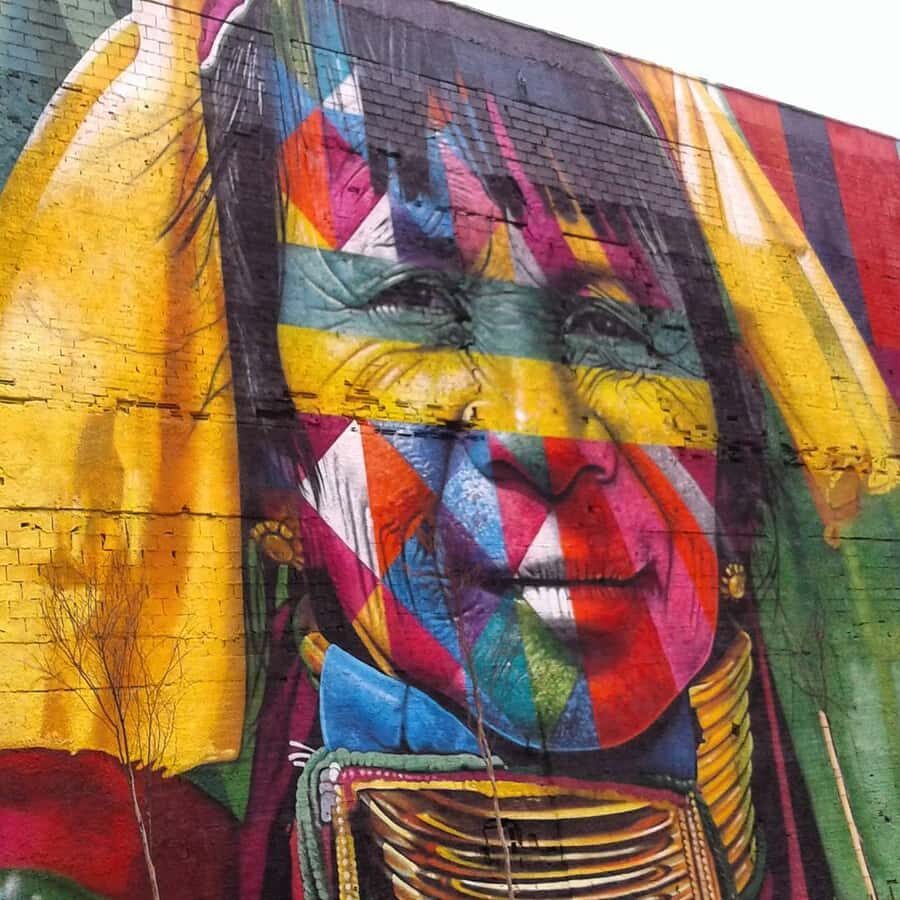
After that initial orientation, you head toward the nearest VLT station. This is one of those small design choices that really improves the tour: you don’t jump straight from one major stop to another.
On the way, you begin to see urban art surrounding the downtown area. For you, this means you’re warming up your eyes early. You start noticing materials, lettering, layering, and how styles shift block to block.
And because you’re with an urban arts specialist guide, those first sights aren’t just “wow, paint.” They’re “here’s what that style is doing” and “here’s why this theme shows up.”
The Olympic Boulevard tram ride: a simple way to cover ground
One of the best practical parts of the tour is the tram ride. You board the VLT (the new tramway inaugurated for the 2016 Olympic Games) and hop off at the Olympic Boulevard stop. Tram tickets are included, which is a nice value add because you’re not paying extra for transport on top of the guide.
For you, the benefit is twofold:
- You save time and walking distance between key areas.
- You get a smoother transition between “old and modern Rio,” since the city changes as the route carries you forward.
When you get off, your eyes are already trained. That makes the first big mural moment hit harder.
Olympic Boulevard murals: where the tour’s big wow moments live
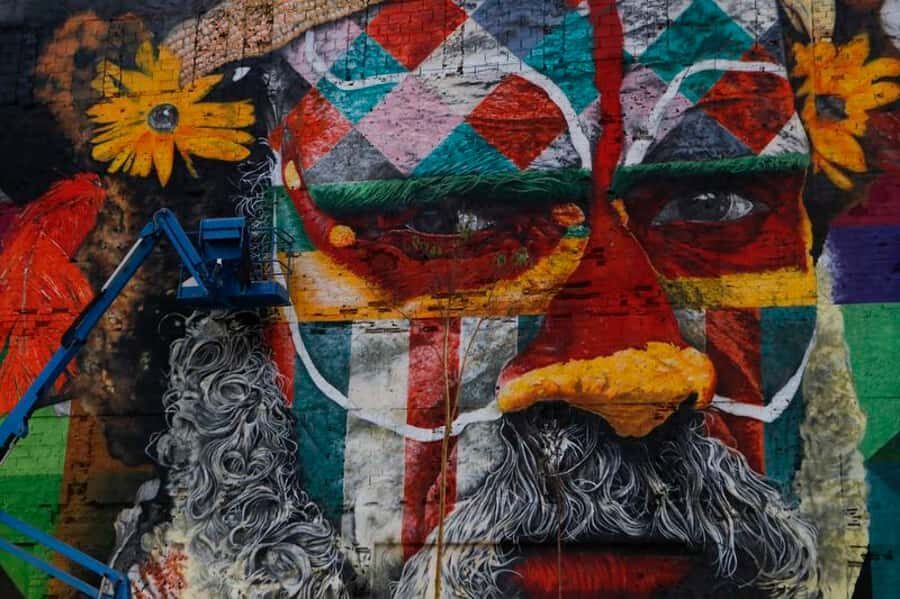
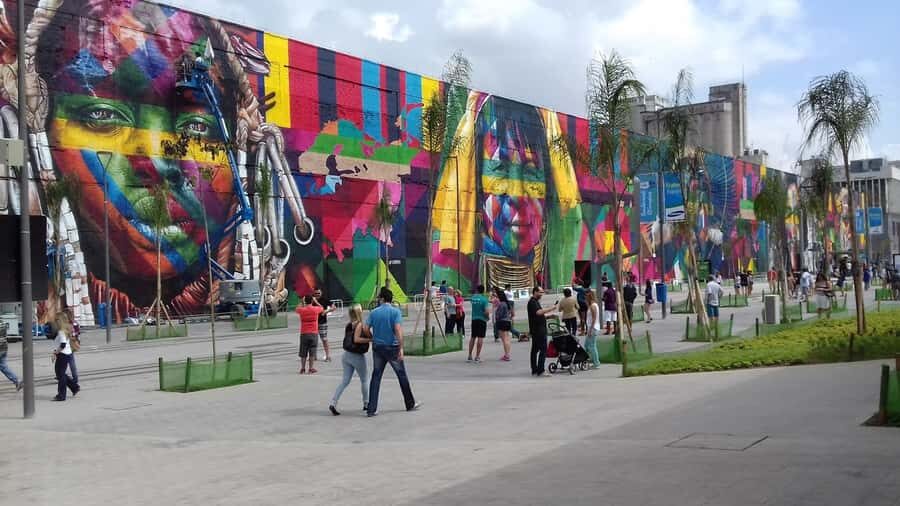
Olympic Boulevard is where the tour really leans into scale. You’re told you’ll experience old and modern Rio side by side, and the graffiti viewing here is a centerpiece.
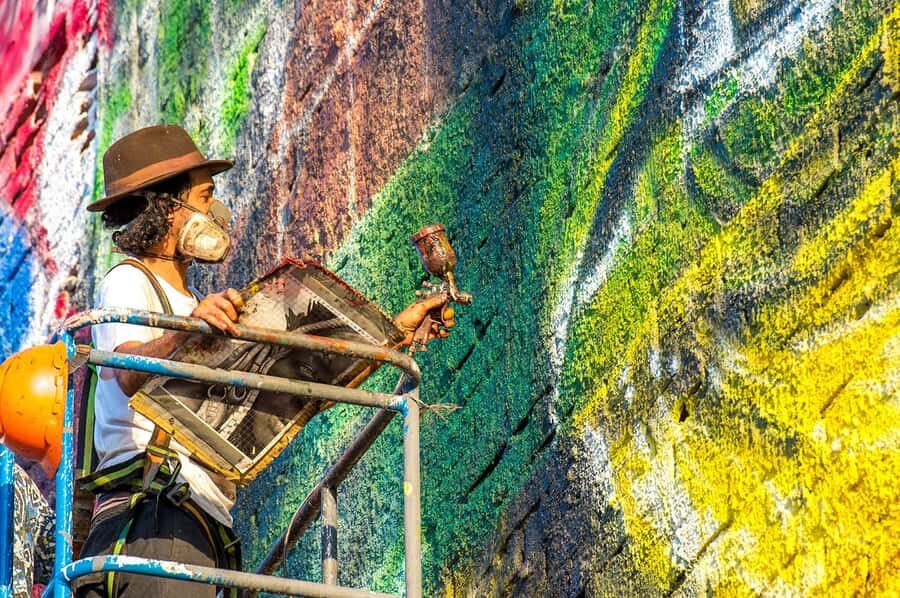
This is where you’ll be directed to the world’s largest street mural (as part of the tour’s highlight focus). You’ll also hear about major murals including The Ethnicities—a name you’ll want to remember because it’s a guide anchor for the themes behind the art.
What I like about this part is that it’s not just “stand here and look.” The guide helps you understand how murals can function like public statements: they’re meant to be read by crowds, by passersby, by commuters who don’t ask for art—they’re just living next to it.
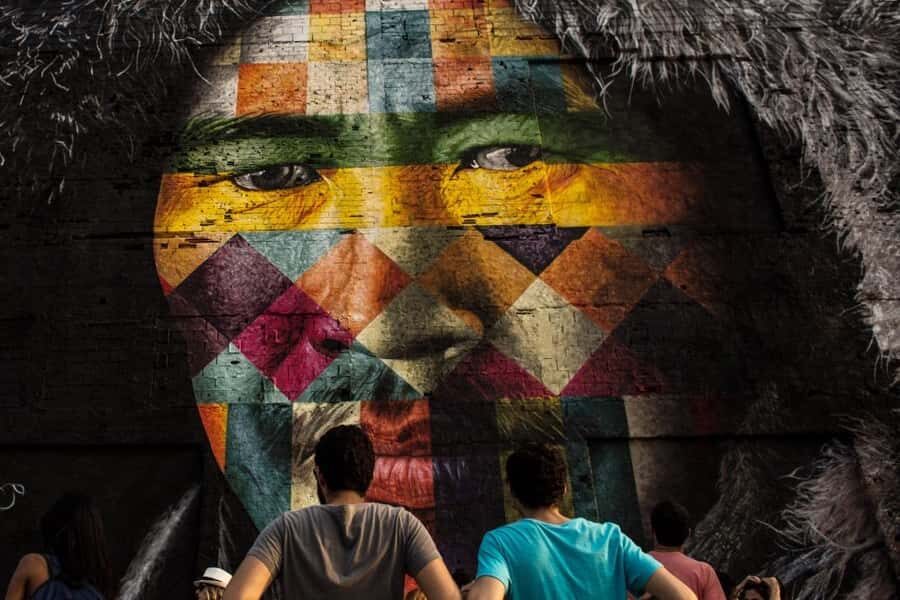
Photo-wise, you’ll have plenty of chances to capture graffiti details. Bring your camera plan: close-ups of lettering and faces are usually more interesting than only wide-angle shots of the whole wall.
You can also read our reviews of more tours and experiences in Rio De Janeiro




The Santa Teresa and Selarón Stairs energy: street art meets Rio icon sites
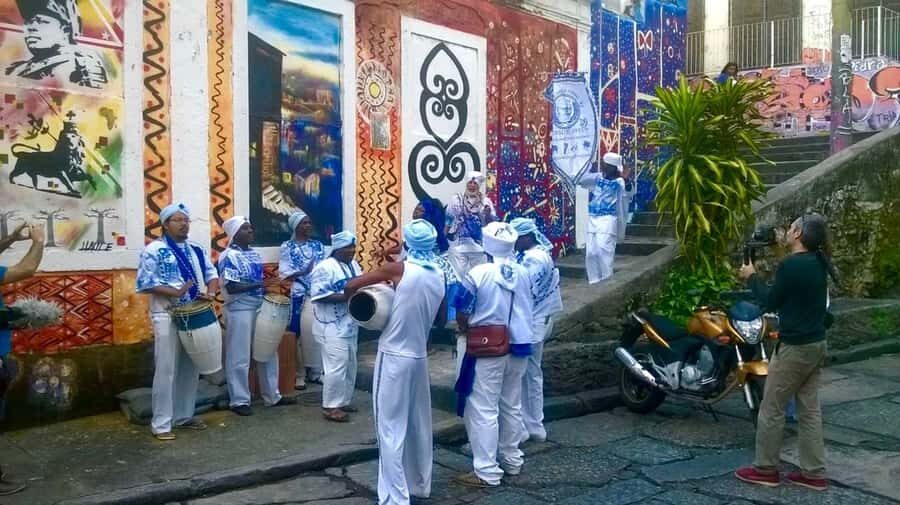
Even though the official framing centers on Olympic Boulevard, the tour route often connects you to other landmark-feeling art areas. In particular, you may learn about the history of the Santa Teresa area and see how artists respond to that neighborhood’s identity.
And the Selarón Stairs come up too, with many short stops built into the timing. If your route includes them, treat it like a breathing point: the tiles and artwork are dense, and it’s easy to rush past details.
Here’s the practical advice: if the day feels hot or the group pace is quick, look for one thing you want to photograph. Maybe it’s a face, a symbol, or a readable phrase. Then let the rest become background. That keeps you from feeling like you missed everything when you only had time for a fraction.
Learning the artists’ network: Brazilian voices and international influences
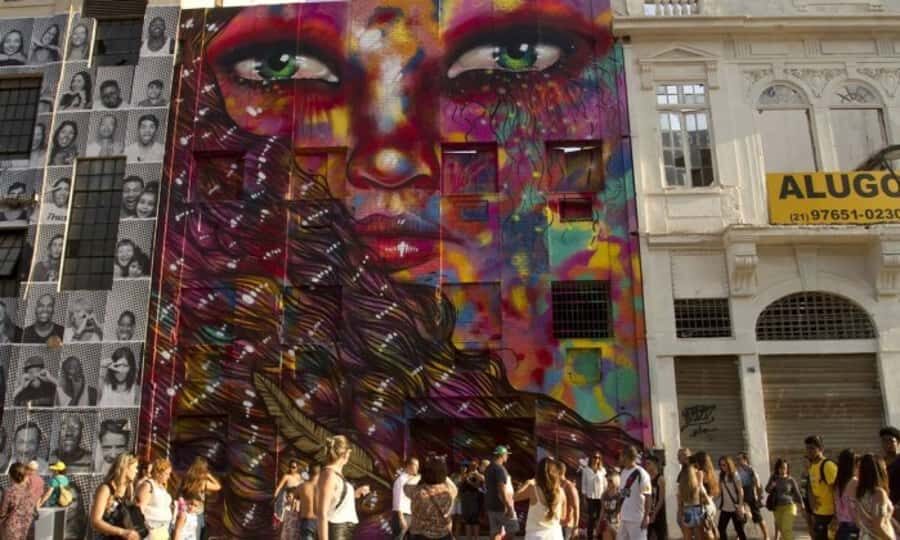
One of the most meaningful parts of this tour is how it treats the art as human work. You get a glimpse of the urban art scene in Rio’s diverse neighborhoods, and you learn about Brazilian artists as well as foreigners who contribute to the mix.
That matters because it changes what you think you’re seeing. Street art isn’t just decoration. It’s collaboration, influence, and sometimes cultural negotiation—especially in a city where visitors and locals overlap constantly.
During the walk, you’ll spot dozens of different graffiti and paintings across walls and surfaces. The guide’s role is to help you separate styles and read what each artist is “saying” through color, layout, and subject matter.
And if you get a guide such as Edmundo (spelled similarly as Edmund in different bookings), you’re in for extra storytelling. At least some groups report that Edmundo can connect street art styles and the backgrounds of particular artists, and even talk about relationships with artists personally. That kind of detail makes the city feel less like a backdrop and more like a living conversation.
Timing and comfort: the 3-hour format in real Rio weather
The tour runs for about 3 hours, and that’s a workable length for seeing multiple stops without burning your whole day. Still, pacing is everything.
One thing to plan for: on very hot afternoons, you may wish there was more shade and more time between photo points. This doesn’t mean the tour is wrong for you. It just means you should manage your expectations and your energy.
Your best comfort strategy is simple:
- Start hydrating before you meet.
- Keep water within reach during the walk.
- Wear comfortable clothes you can move in.
- Use breaks to rest your feet, not just to check your phone.
If your ideal vacation style is slow wandering with long lingering moments, you might feel the schedule as tight. But if you like guided focus—route, context, and clear stops—the timing usually works.
Also, the tour may include quick attention to some non-street-art elements (like stained glass you pass by). That can feel a bit off-topic if you came only for murals. On the bright side, those moments can add context about how art shows up in the city beyond the walls covered in graffiti.
Price and value: is $45 worth it?
At $45 per person, you’re paying for three main things: an urban arts specialist guide, a structured route, and tram tickets. Food and beverages are not included, so you’ll either grab something before or after (or pick up water separately if needed).
Here’s how I judge the value: street art tours can go either way—some give you a list of places and some actually teach you how to interpret the work. This one is built to teach. You’re paying for that interpretation plus the transit into the mural-heavy zone.
You also get time discipline. You’re not trying to piece together how to reach Olympic Boulevard and where to stop for the biggest mural points. The tram ride reduces friction, and the guide reduces confusion.
Is it perfect value for everyone? Not necessarily. If you already know Rio street art and only want a self-guided photo hunt, you might find a cheaper way. But if you want real explanations tied to Brazilian culture and international artists, $45 for 3 hours with transport usually lands as fair.
Who should book (and who should skip)
This tour fits best if you:
- Want a guided look at street art with cultural context
- Like murals and public art at major landmarks
- Prefer organized movement with a tram leg to cover distance
It may not fit you if:
- You’re sensitive to heat and long outdoor walking
- You need wheelchair access (the tour is not suitable for wheelchair users)
- You have respiratory issues or heart problems
- You’re traveling with very young children (it’s not suitable for children under 2, and it also lists limits for under 3, under 4, under 5, and under 10)
Age matters here too. The tour lists restrictions for people over 70 years and over 95 years. If you’re in that range, it’s worth thinking carefully about walking time and pacing.
Should you book this Rio Urban Arts tour?
If your goal is to see the most important street art moments in Rio with explanations that help you understand what you’re looking at, this is a strong choice. The tram to Olympic Boulevard saves time and makes the route feel purposeful, and the guide-led focus on themes like identity makes the murals more than photos.
If you’re the type who wants total freedom, lots of sitting down, or zero schedule pressure, you may find the walking pace a bit brisk on hot days. Still, that’s easy to adjust with hydration, smart clothing, and a mindset of “get the story, then enjoy the city.”
FAQ
Where does the tour start?
The meeting point is in front of the Municipal Theatre of Rio de Janeiro, Praça Floriano, S/N – Centro, Rio de Janeiro – RJ, 20031-050, Brazil.
What time does the tour start?
The tour starts at 13:30.
How long is the experience?
It lasts about 3 hours.
What languages are the guides?
The live tour guide is available in English, Portuguese, and Spanish.
What is included in the price?
The tour includes an urban arts specialist tour guide and tram tickets.
Are foods and beverages included?
No. Foods and beverages are not included.
What should I bring?
Bring water and wear comfortable clothes.
Is the tour cancellable?
Yes. It offers free cancellation up to 24 hours in advance for a full refund.
Who shouldn’t book this tour?
It is not suitable for wheelchair users, people with heart problems, people with respiratory issues, and it lists age limits (including children under 10). It also lists restrictions for people over 70 years and over 95 years.