REVIEW · RIO DE JANEIRO
Visiting Museum of Tomorrow, Art Museum of Rio, and CCBB
Book on Viator →Operated by Wowtour Experience · Bookable on Viator
One afternoon, three very different Rio museums. This is a smart way to see CCBB, MAR, and the Museum of Tomorrow without spending your day on transit. What I like most is that the pace is guided and efficient, plus you get admission included at every stop. The main catch: you’ll be on a time budget—40 to 60 minutes per museum—so if you want to linger, you may wish you had a second visit.
I also like that the Museum of Tomorrow isn’t just futuristic “tech talk.” It links science, design, and sustainability ideas in a way that’s easy to follow and built for walking around. One possible drawback is that the Museum of Tomorrow can feel text-heavy and more reflective than hands-on, so plan your expectations if you prefer lots of screens and activities.
In This Review
- Key Points You’ll Care About
- Plan Your 5-Hour Museum Sprint in Rio
- Stop 1: CCBB Rio (Centro Cultural Banco do Brasil) and the 19th-Century Building Feel
- Stop 2: Museu de Arte do Rio (MAR) and Its Vision-Based “School Museum” Style
- Stop 3: Museu do Amanhã (Museum of Tomorrow) and the Sustainability Mission
- Inside: the foyer globe, and how to handle lines
- Stairs and levels: built to move, but not punishing
- Outside: Frank Stella’s star sculpture and bay views
- The balanced take: thoughtful, but not always hands-on
- What Makes This Tour Good Value (and What You Should Watch)
- How to Get the Most From Each Stop
- A quick guide tip from real-world experience
- Who This Tour Suits Best
- Should You Book This Tour?
- FAQ
- How long is the tour?
- What museums are included?
- Is admission included?
- Do I get hotel pickup?
- What time does the tour start?
- Is the tour in English?
- What’s included in the price besides the museums?
Key Points You’ll Care About
- Three major museums, one afternoon: CCBB, MAR, and the Museum of Tomorrow with tickets included
- Efficient guided pacing: short, focused museum blocks so you actually cover all three
- Private-vehicle transport + pickup options: hotel drop-off in select areas and quick logistics from Copacabana
- Museum of Tomorrow’s standout design: a striking “ship/flower/bird” look with energy-saving features
- More than exhibits: outdoor sculpture areas and bay views that you can enjoy even if lines get long
- Small group size (max 14): better flow and less crowding than the big-bus style tours
Plan Your 5-Hour Museum Sprint in Rio
This tour runs about 5 hours and starts at 2:00 pm. You’ll meet at H. Stern, Av. Atlântica 1.702, Lojas 4 e 5, Copacabana. If you’re staying within about a 15 km radius (including places like the Copacabana Palace), pickup can be arranged on request, and the local operator confirms the exact time by phone or email.
They handle the transportation by private vehicle, and you get bottled water and snacks. That matters in Rio, because you don’t want your museum day to turn into a “where can we grab a bite?” puzzle when lines and traffic start stacking up.
The tour is offered in English, and the guide may be multi-lingual. The group is capped at 14 travelers, which is a sweet spot: small enough for a real explanation, large enough that you’re not trapped in a one-on-one situation.
Timing note: admission times matter. This tour’s structure keeps each stop short, so you’ll move through highlights with the guide rather than doing a slow, museum-by-museum deep study.
You can also read our reviews of more museum experiences in Rio de Janeiro



Stop 1: CCBB Rio (Centro Cultural Banco do Brasil) and the 19th-Century Building Feel
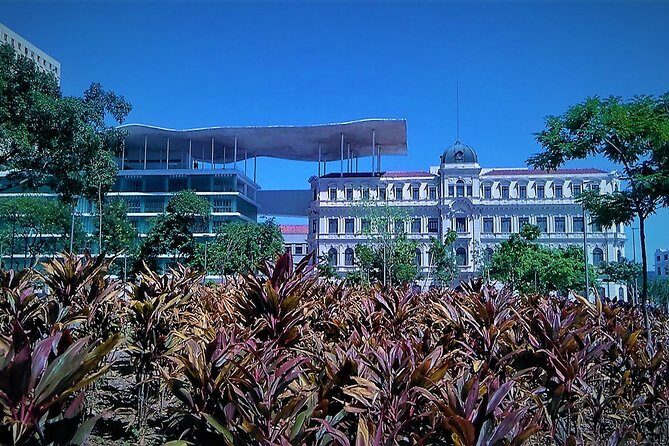
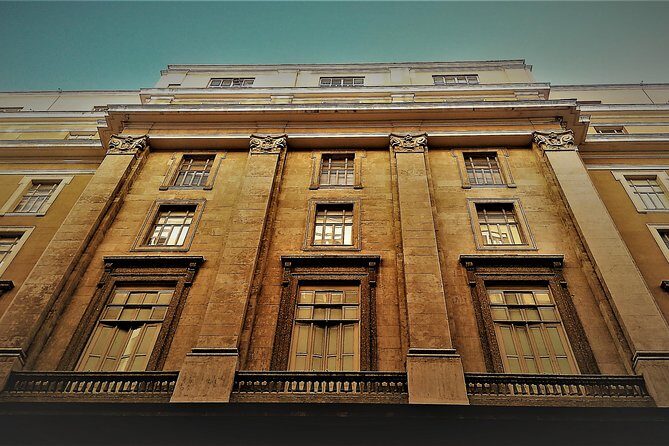
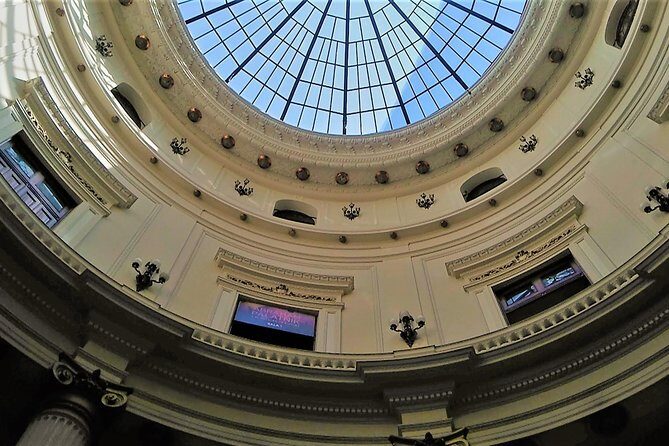
Your first stop is Centro Cultural Banco do Brasil (CCBB Rio de Janeiro). The standout here is the setting: it’s in a classic-style building from the 19th century, and that old-world shell gives you a nice contrast right at the start of the day.
Expect about 30 minutes inside. That’s just enough time to get oriented, see what’s on during your visit, and understand why CCBB is treated as a major cultural center—not just a random museum stop.
What I’d pay attention to here: use CCBB to reset your brain. Before you go modern at MAR and futuristic at the Museum of Tomorrow, take the first half-hour to notice how the architecture frames the exhibits. Even if you’re not chasing every artwork detail, walking through a historic cultural center helps you “read” Rio’s layers—past shaping present.
Good for: people who like context and want a strong kickoff without wasting time.
Potential downside: 30 minutes goes fast. If CCBB’s displays on your day are your top priority, you’ll likely want more time than this tour allows.
Stop 2: Museu de Arte do Rio (MAR) and Its Vision-Based “School Museum” Style
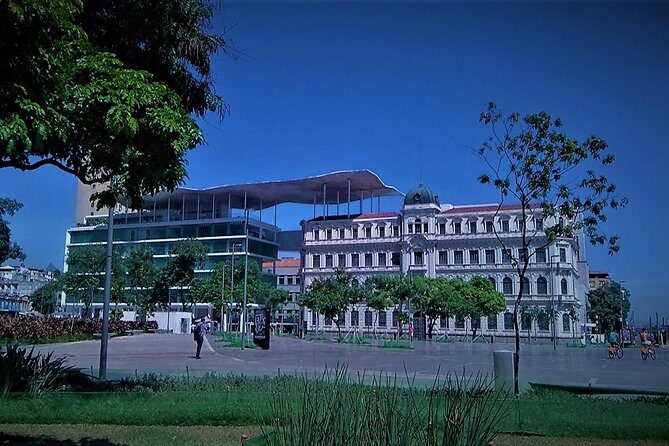
Next up is Museu de Arte do Rio (MAR), with about 40 minutes on the clock. MAR has a concept that frames the museum like a school museum, tied to what they call the School of the Vision.
In plain terms, this kind of approach usually means you’ll get more than labels on walls. You should expect the guide to steer you toward how to see and interpret—not just what you’re looking at, but how the museum wants you to think about it.
This is a great middle stop because MAR sits between CCBB’s historic feel and the Museum of Tomorrow’s heavy ideas. You’ll likely come away with a sense that art here isn’t just decoration—it’s part of education and perspective.
What you’ll probably enjoy most: when the museum explains its own learning approach, it makes the short time feel less like a sprint and more like a guided lesson.
What to watch for: 40 minutes means you’re not doing a full museum sweep. If you’re the type who wants to stand in one room for 30 minutes, this stop may feel quick.
Stop 3: Museu do Amanhã (Museum of Tomorrow) and the Sustainability Mission
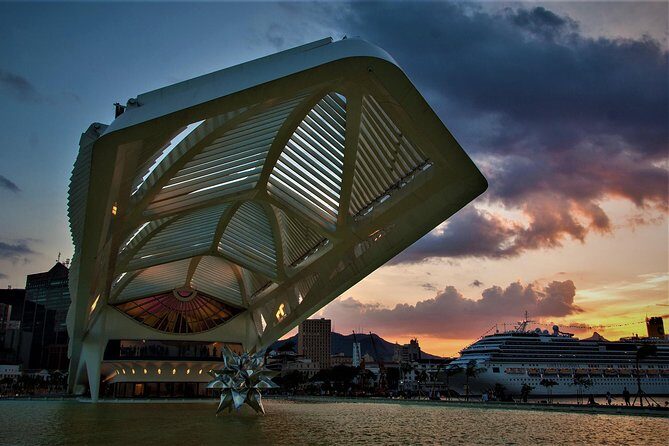
This is the big one. Museu do Amanhã (Museum of Tomorrow) gives you about 1 hour and leans into a future-focused theme tied to sustainability. It’s science-based, but it’s not written like a textbook. The tone is meant to make you think about what kind of future we’re choosing—especially for how we live on Earth.
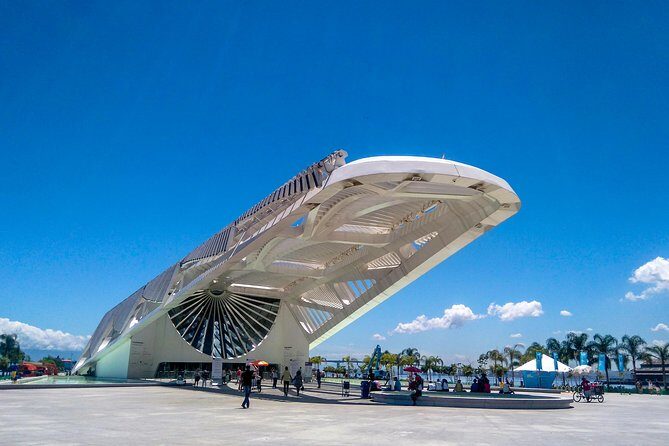
The building itself is a spectacle. People describe it as having the feel of a ship, bird, or even a flower, built to look dramatic against the waterfront. You’ll also see design choices meant to reduce energy use, including solar panels.
Inside: the foyer globe, and how to handle lines
Right when you enter, there’s a huge slow-spinning globe in the foyer. It’s one of those “stop for a second” moments that helps you get grounded before the exhibits start. Some exhibits use audio and video, so the museum can feel like a guided conversation rather than a silent gallery.
One very popular feature is a large sphere with a film shown during the experience. If there’s a long line, you may not get to it within your hour. My practical advice: don’t let the line control your entire visit. If your time is limited, pick the areas that match your curiosity fastest—often the sustainability-focused rooms give the strongest payoff.






Stairs and levels: built to move, but not punishing
The museum is three stories. You may notice that you’re encouraged to walk up stairs, but there’s an elevator if you need it. If you have moderate mobility concerns, it’s worth taking the elevator plan seriously so your hour doesn’t become an exhausting climb-and-queue cycle.
Outside: Frank Stella’s star sculpture and bay views
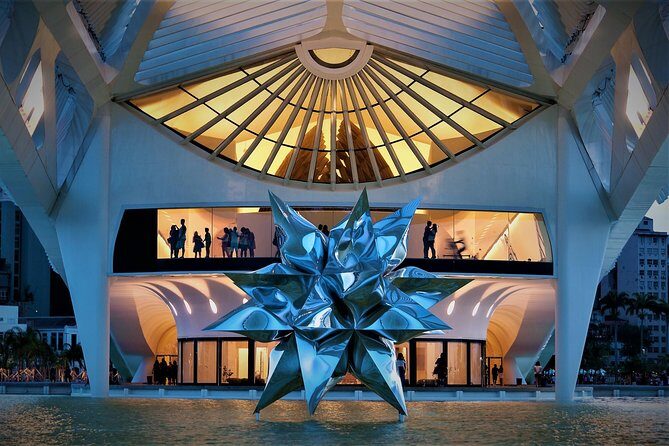
There’s also an outdoor area people love. A highlight is a large Frank Stella sculpture—a big star-like form—set in a reflecting pool. It’s the kind of artwork where you can stand back, let the geometry settle, and then look out for the vistas over Guanabara Bay.
If you want the “wow” moment of the Museum of Tomorrow, this outdoor pavilion is often where it lands. Even if one indoor exhibit feels like more reading than you expected, the outside space can still make your visit feel complete.
The balanced take: thoughtful, but not always hands-on
Here’s the fair warning from the experience’s style: it can be lots of text and ideas, not a nonstop ride of animations. If you prefer interactive science booths and constant motion, you might feel the content is more reflective than playful. On the other hand, if you like museums that make you pause and consider your choices as a person, this place fits beautifully.
Also, there’s a museum store at the bottom floor, and it tends to have more distinctive items than the usual souvenir racks. If you’re shopping for gifts, this is a solid stop without needing extra time afterward.
What Makes This Tour Good Value (and What You Should Watch)
This costs $108.72 per person and runs around 5 hours. For that money, you’re getting:
- Admission tickets included for all three museums
- Hotel pickup and drop-off for selected hotels (and requestable pickup near the meeting point)
- Private vehicle transport
- Snacks and bottled water
That’s why it can feel worth it: you’re paying for convenience and entry, not just guiding. In Rio, saving time and dodging transport guesswork is real value—especially when you’re trying to cover multiple sites in a short afternoon.
The main trade-off is that the hour at the Museum of Tomorrow and the shorter blocks at MAR and CCBB mean you’ll be chasing highlights. If you’re the type who can lose track of time in a single gallery, this tour is better for getting the broad story and then planning follow-up visits later.
How to Get the Most From Each Stop
A short, three-part tour works best if you plan your attention.
- At CCBB: use it to understand the context. Don’t try to memorize every detail—look for what the museum itself is emphasizing during your visit.
- At MAR: pay attention to how the museum frames viewing as a kind of learning. If the guide explains the vision/education angle, let it change how you look at the art.
- At the Museum of Tomorrow: decide what you want most—architecture, sustainability rooms, or the outdoor pavilion. With limited time, you’ll enjoy the visit more if you don’t try to see everything.
A quick guide tip from real-world experience
Some guided moments are what make the day feel smooth. One guide experience tied to this kind of itinerary stands out for being prepared even when weather turned, with humor and quick adjustments. With a group of up to 14, you can usually count on the guide keeping the flow moving and the timing practical.
Who This Tour Suits Best
I’d point this tour toward:
- First-timers who want three major Rio museum stops without overplanning
- People who like big ideas as well as architecture (especially at the Museum of Tomorrow)
- Families with teens/young adults who can handle the science and reflection theme
I’d think twice if you:
- Want a slow, self-paced museum day
- Prefer mostly hands-on, fast-moving exhibits (some Museum of Tomorrow areas can feel more text-and-video driven than interactive)
- Have a strong need for lots of downtime between stops
For moderate fitness levels, this can work well because the tour includes transport and keeps walking segments reasonable. Still, remember you may climb stairs at the Museum of Tomorrow, though an elevator is available.
Should You Book This Tour?
If you want a high-impact Rio museum afternoon—historic architecture at CCBB, an art-and-learning style at MAR, and a future-and-sustainability experience at the Museum of Tomorrow—this tour is a solid buy. The combination of admissions + private transport + small group size makes it easier than trying to stitch these stops together on your own.
Book it if your goal is: get oriented fast, see the main highlights, and leave with a few strong themes to think about afterward. Skip it or plan a shorter personal follow-up visit if you’re the type who always wants more time in every gallery. With this tour, you’re not meant to linger—you’re meant to get the story in one smooth sweep.
FAQ
How long is the tour?
It lasts about 5 hours.
What museums are included?
You’ll visit CCBB Rio de Janeiro, Museu de Arte do Rio (MAR), and the Museum of Tomorrow (Museu do Amanhã).
Is admission included?
Yes. Admission tickets are included for each museum stop.
Do I get hotel pickup?
Pickup is offered for selected hotels. Pickup can also be requested within a 15 km radius of the meeting point, and the operator confirms the exact pickup time by phone or email.
What time does the tour start?
The tour starts at 2:00 pm.
Is the tour in English?
Yes, the tour is offered in English.
What’s included in the price besides the museums?
You get hotel pickup/drop-off (selected hotels), transport by private vehicle, bottled water, and snacks. Food and drinks are not included unless specified.