REVIEW · RIO DE JANEIRO
Rio Street Art Tour
Book on Viator →Operated by Guia Wellington/Berimbautour · Bookable on Viator
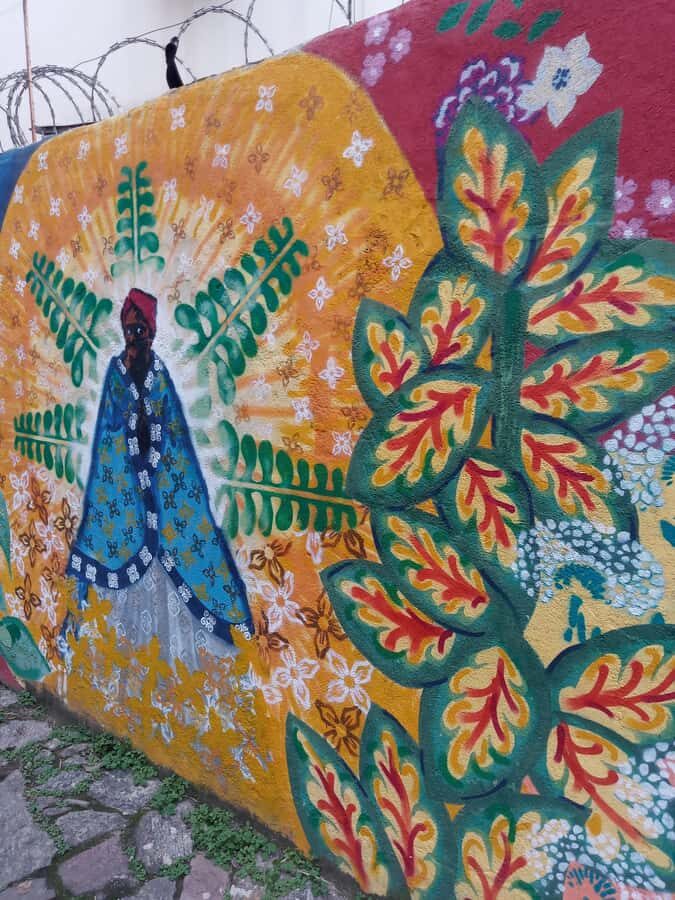
Rio’s walls tell stories. This 3-hour Rio street art tour ties murals to politics, architecture, and Afro-Brazilian culture, moving you by metro and VLT between neighborhoods. I especially like how guide Wellington (Guia Wellington/Berimbautour) explains what you’re seeing in plain terms, then adds local context so the art doesn’t feel random.
I also like the way the route blends big-name icons with major mural moments, from Escadaria Selarón to the huge street-art panels in Porto Maravilha. One drawback to keep in mind: it’s a walk-heavy outing, and some of the murals you’ll see are long-established, so if you’re hunting brand-new pieces only, you may wish there were more very recent additions.
In This Review
- Key Highlights (What Makes This Tour Worth Your Time)
- Starting at the Municipal Theater and Getting Oriented Fast
- Glória, Boulevard Olímpico, and the “Legal” Side of Graffiti
- The Selarón Staircase: More Than a Photo Stop
- Cinelândia: Libraries, Theater, and the City’s Cultural Power
- Olympic Boulevard: Museums Nearby, Lessons Included
- Porto Maravilha: The Big Finale With World-Scale Murals
- How Transport and Timing Actually Help You See More
- What You Learn: Politics, Architecture, and Afro-Brazilian Identity
- Who This Tour Fits Best (And Who Might Want a Different Option)
- Price and Value: Why $68.61 Can Make Sense
- Should You Book the Rio Street Art Tour?
- FAQ
- How long is the Rio Street Art Tour?
- What does the tour cost?
- Is this a private tour?
- Where do we meet?
- Where does the tour end?
- Do the stops require paid admission?
- How will we get around during the tour?
- Is the tour suitable for most travelers?
- What happens if the weather is bad?
- What is the cancellation policy?
Key Highlights (What Makes This Tour Worth Your Time)
- Wellington connects graffiti to Rio’s real stories, not just aesthetics
- You ride public transport the local way with metro and VLT in the mix
- Escadaria Selarón fits naturally into the street-art route, not as an isolated photo stop
- Porto Maravilha ends strong with the world-scale mural payoff
- A private group experience means you can ask questions without feeling rushed
- Street art + city design: architecture, landmarks, and social themes show up in the same walk
Starting at the Municipal Theater and Getting Oriented Fast
The tour begins at the Municipal Theater of Rio de Janeiro in Centro, right by Praça Floriano. It’s a handy meetup spot because you’re already in the middle of the action, and it gives you an easy starting point for a neighborhood-hopping afternoon.
From the first minutes, you’ll get a sense of how Rio layers its culture. You’re not just looking at walls—you’re learning how street art, architecture, and public spaces talk to each other across the city. You’ll also be moving at a steady pace, using transit when it makes sense so you don’t burn your whole energy on crossing town.
You can also read our reviews of more tours and experiences in Rio de Janeiro

Glória, Boulevard Olímpico, and the “Legal” Side of Graffiti
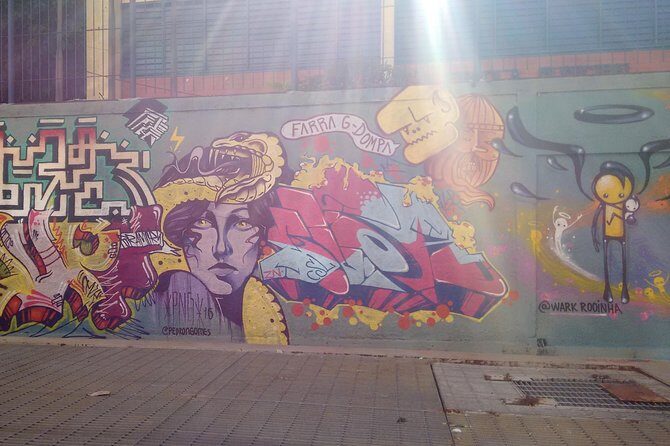
Your first main stop is Boulevard Olímpico, in the area of Glória. This is where the tour sets an important theme: graffiti didn’t just stay on the edges of the city—it became part of how Rio expresses itself.
You’ll start by looking at the neighborhood’s place in the story of the first legalized graffiti in Rio. That matters because it flips the usual assumption that all graffiti is outside the system. Here, you see how the city’s attitude changed over time, and how street art can become a public language.
Then you’ll shift into an architectural viewpoint. The guide points out European architectural influence you can actually spot as you move through the area. It’s a good reminder that Rio’s street art didn’t grow in a vacuum; it formed in a city shaped by waves of culture, power, and migration.
You’ll also pass the famous Selarón Staircase as the route moves along. Even when you’re not stopping for long at each landmark, the guide keeps tying the pieces together so the whole afternoon feels like one connected story.
The Selarón Staircase: More Than a Photo Stop
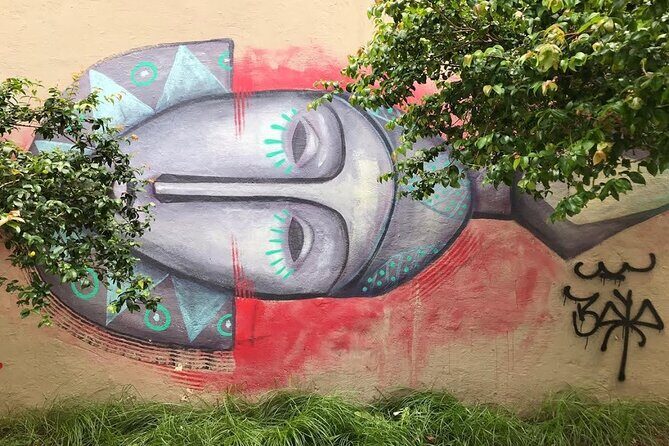
Escadaria Selarón is the next major moment. This staircase is one of Rio’s most visited sights, and the tour uses that fame wisely. Instead of treating it like a simple look-and-go attraction, you’ll learn how the staircase fits into Rio’s wider visual culture.
Time at this stop is short—about 20 minutes—so you’ll want to show up with a clear plan: take a first look for yourself, then focus on what the guide points out. In a short window, you’ll get more value by paying attention to symbolism and style than by trying to photograph every single tile.
The real payoff is that it slots into the bigger theme of the day: how public art can represent identity, memory, and community meaning. If you’re the type who normally rushes through attractions, this stop is a good place to slow down for a moment.
Cinelândia: Libraries, Theater, and the City’s Cultural Power
Next comes Cinelândia, an area known for some of Rio’s major cultural buildings. Here you’ll see the main libraries and the main theater of the city, and you’ll understand why this part of town matters beyond looks.
This is where the tour makes a smart move: it uses “traditional” cultural institutions alongside street art. You’re comparing how different systems—public libraries and big theaters on one side, street murals on the other—both build a city’s identity. The guide connects the dots so you don’t just collect sights; you build a mental map of Rio’s cultural power.
You’ll then take the VLT again to keep the momentum going. That choice is practical. It saves time, keeps you from stuck-in-traffic frustration, and it gives you the feeling of moving through neighborhoods rather than hopping between isolated hotspots.
Olympic Boulevard: Museums Nearby, Lessons Included
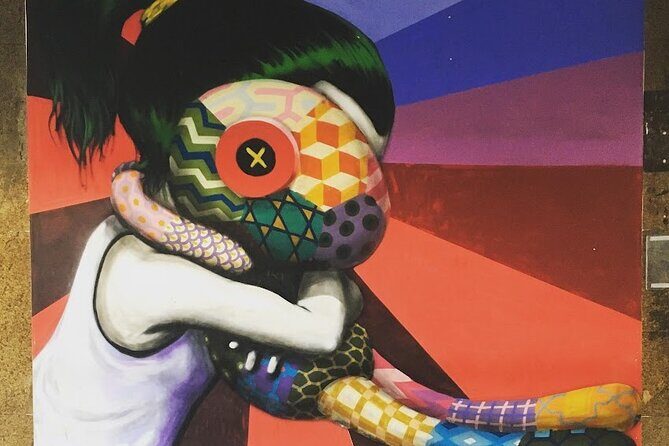
You’ll reach the Olympic Boulevard after Cinelândia. This area is home to Rio’s main museums, and it’s an easy place to see how art shows up in different settings. Some art lives behind museum walls. Other art lives on streets where anyone can encounter it.
The tour keeps the museum area from turning into a generic “pretty district” stop. The guide continues the theme: who gets to define culture, what gets funded or protected, and how visual expression becomes tied to the city’s public identity.
This stop runs around 30 minutes. That’s enough time to orient yourself, soak in the atmosphere, and understand the role of the area without feeling like you’re waiting for a bus that never arrives. Wear comfortable shoes here—you’ll still be on foot more than you expect.






Porto Maravilha: The Big Finale With World-Scale Murals
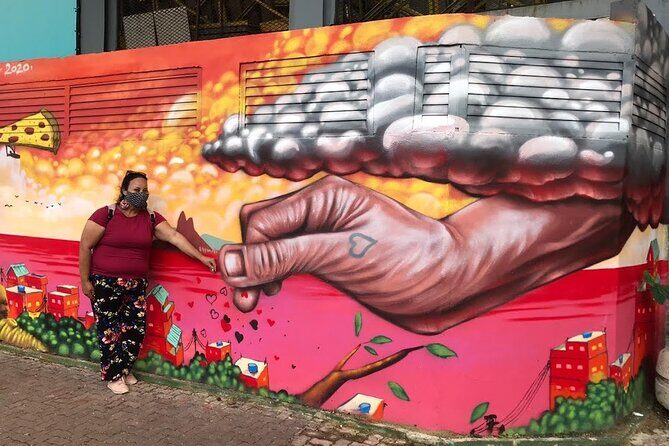
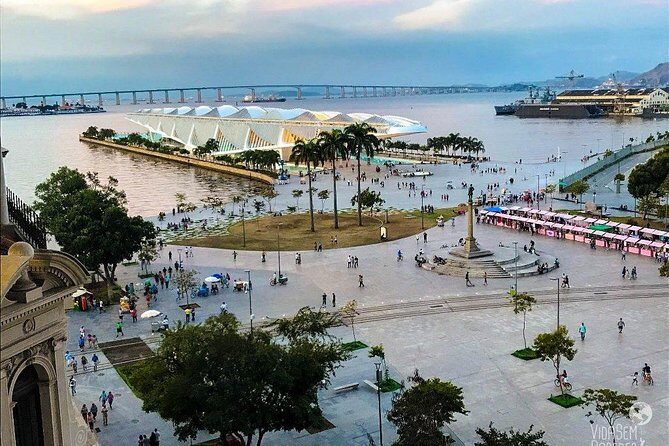
The final stretch is Porto Maravilha, where the tour ends with the city’s largest graffiti mural moment. The ending here is one of the strongest reasons to book this tour because you get a big, satisfying visual payoff after a story-driven walk.
Porto Maravilha is also tied to deeper city history. In the way the guide talks about the murals, you’ll hear connections that go beyond surface-level art appreciation—especially themes involving the history of enslaved Africans and how that legacy shows up in modern public expression.
One of my favorite aspects of an ending like this: you’re not just leaving with photos. You’re leaving with context. When you finally stand in front of a massive mural, you’ll know what you’re looking at and why it was made.
If you’re lucky with timing, you may also get an extra cultural stop connected to Rio’s celebrations. Some groups have an opportunity to see Carnival float staging and storage as an add-on. Even if you’ve been to Carnival before, seeing how it’s built behind the scenes adds a new layer to your understanding of Rio’s creativity.
How Transport and Timing Actually Help You See More
This tour is built around public transit: you’ll use the subway early, then switch to VLT several times, plus walking between sights. That matters because it keeps the day feeling efficient without turning it into a “ride past everything fast” experience.
It also helps you avoid the most common problem on city tours: spending too much time crossing between neighborhoods. Here, transit is part of the plan, so you’re more likely to enjoy the walk segments instead of dreading them.
Duration is around 3 hours, so it’s a sweet spot. You get enough time to learn and move through multiple areas, but you’re not stuck all day in a schedule that drains you.
What You Learn: Politics, Architecture, and Afro-Brazilian Identity
The best street art tours don’t just point out cool images. They explain why the images exist. This one leans heavily into meaning: politics, architecture, and identity show up again and again as themes.
You’ll hear how graffiti can move from informal expression into something the city recognizes. You’ll also see how European architectural influence can sit next to modern public art styles—because Rio’s story is not one single timeline.
And then there’s the Afro-Brazilian dimension. Several moments in the day connect the visuals to African Brazilian history and the social questions embedded in the artworks. It’s not taught like a textbook, either. It’s woven into what you see, which keeps it from feeling heavy or academic.
One nice detail from experiences shared with this tour: the guide may be willing to help you practice Portuguese. That’s a small thing, but it turns the tour into more than a passive slideshow. You’re interacting with your surroundings, which is exactly what makes a city come alive.
Who This Tour Fits Best (And Who Might Want a Different Option)
This is a great match if you want a first real intro to Rio that goes beyond the standard sightseeing checklist. You don’t need prior street art knowledge. You just need curiosity and the willingness to keep your eyes open for details.
You’ll likely enjoy it more if you like:
- Culture that mixes art and real social themes
- Learning through walking neighborhoods, not just from a bus window
- Public transport as a way to feel how the city actually moves
It’s also a good option for solo travelers because the tour is offered as private for your group. That means you can ask questions freely and set the pace with your guide.
If you have mobility limits, consider the walking involved. One review mentioned it’s a lot of walking, and you’ll want water and comfortable shoes even if the stops are short.
Price and Value: Why $68.61 Can Make Sense
At $68.61 per person for roughly 3 hours, you’re paying for a guided, interpretation-heavy experience with transit built in and free admission for the key viewing stops. More importantly, you’re paying for someone who can translate street art into context you can actually carry with you after the tour ends.
For me, the value comes from the combination:
- Local guide with strong Rio-specific context (Wellington is repeatedly highlighted)
- Multiple neighborhood stops in a short time
- Big visual anchors at both the beginning and end, not just random side streets
- A private group setup, which makes your questions and pacing feel personal
If you’re only interested in taking photos with zero interpretation, you could technically DIY some of this. But if you want the meaning and the city connections, this price feels fair.
Should You Book the Rio Street Art Tour?
I’d book it if you want Rio to feel like a living story. The tour’s strength is the way it connects murals to the city’s layers—architecture, culture, and social history—while still showing you iconic places like Selarón Staircase and ending in the big Porto Maravilha mural payoff.
Do it if you’re the type who likes learning why something exists, not just where it is. Skip it if you strongly prefer brand-new street art only, or if long walking is a deal-breaker.
If the weather is good, it’s the kind of afternoon that sticks with you. And if you’re asking me for one practical tip: bring water, wear comfy shoes, and plan to slow down at the mural moments so the explanations land.
FAQ
How long is the Rio Street Art Tour?
It runs for about 3 hours.
What does the tour cost?
The price is $68.61 per person.
Is this a private tour?
Yes. It’s private, so only your group participates.
Where do we meet?
The meeting point is the Municipal Theater of Rio de Janeiro, Praça Floriano, S/N – Centro, Rio de Janeiro – RJ, 20031-050, Brazil.
Where does the tour end?
The activity ends in a different location. The exact end point is provided in the booking details.
Do the stops require paid admission?
The tour information lists admission tickets for the stops as free.
How will we get around during the tour?
You’ll use public transportation such as the subway and VLT, along with some walking.
Is the tour suitable for most travelers?
Most travelers can participate.
What happens if the weather is bad?
The experience requires good weather. If it’s canceled due to poor weather, you’ll be offered a different date or a full refund.
What is the cancellation policy?
You can cancel up to 24 hours in advance for a full refund. If you cancel less than 24 hours before the start time, you won’t get a refund. Cut-off times are based on local time.