
REVIEW · RIO DE JANEIRO
Rio Street Art Tour
Book on Viator →Operated by Rio Street Art Tour · Bookable on Viator
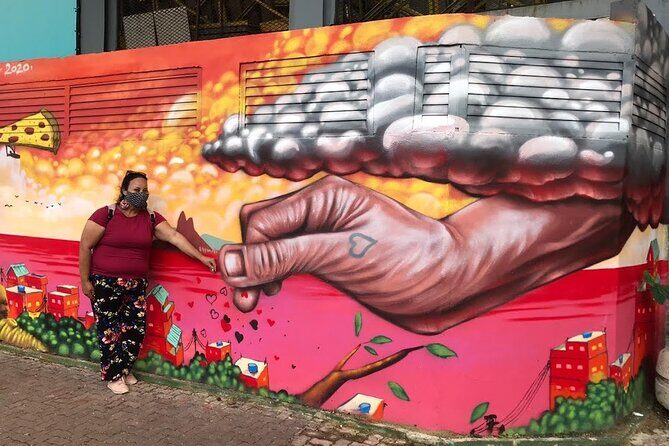
Rio’s walls talk back. This street art tour gives you the cultural context behind the murals, folk art, and street pieces that shape daily life in Rio. You’ll walk through multiple neighborhoods and see artwork on buildings and houses, with a small group for closer attention.
I especially like how the tour is built around stories, not just photos. The guide works in connections between street art and folk art, so you understand why these works matter to Rio’s identity and community.
One thing to plan for: it runs about four hours and it depends on good weather, plus there’s no hotel pickup. If you’re sensitive to walking or you want private, door-to-door transport, you’ll need to think about how you’ll get to the start and back from the finish.
In This Review
- Key things to know before you go
- Street Art in Rio: Why This Tour Feels Like the Real City
- Price and Value: Is $75 a Good Deal for 4 Hours?
- Getting There: Start in Copacabana, End in Botafogo
- Stop 1: Copacabana Street Art—Learning the City’s Background Fast
- Stop 2: São João Batista Cemetery—Selarón’s Tile Homage (Optional, But Powerful)
- Stop 3: Botafogo Murals and Stories—A Younger Art-Friendly Tempo
- The Guide Factor: What Nina’s Style Adds to the Art
- What You’ll Actually Do (And How It Feels)
- Things to Bring and Plan for a Smooth 4 Hours
- Who This Tour Is Best For (And Who Might Want a Different Option)
- Should You Book This Rio Street Art Tour?
- FAQ
- How long is the Rio Street Art Tour?
- How much does the tour cost?
- Where does the tour start and end?
- Is hotel pickup and drop-off included?
- Are admissions included for the stops?
- What group size can I expect?
- Is it okay to bring a child or a service animal?
- What happens if the weather is bad?
- Can I cancel, and when?
Key things to know before you go
- Small group size (max 15): easier questions, tighter pacing, and more guide attention.
- Free sights at every stop: each location on the route lists free admission for your visit.
- Multiple neighborhoods in one outing: Copacabana, then São João Batista Cemetery, then Botafogo.
- Selarón’s tile tribute: you can choose to see the intimate homage at the cemetery.
- No alcohol included: drinks are available to purchase, but you’ll bring your own water plan.
- English support shown in feedback: the guide’s communication style comes up as clear and easy to follow.
Street Art in Rio: Why This Tour Feels Like the Real City
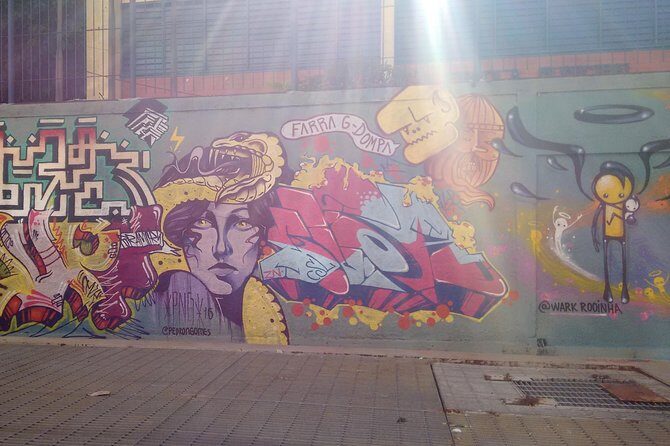
A good street art tour does two things. First, it shows you the work. Second, it explains how that work becomes part of the street’s everyday life.
This one is built around that second part. You’re not only looking at murals and installations; you’re learning about the cultural impact of folk art and street art on Rio. That context changes what you notice. Instead of seeing paint on walls, you start reading the city like a living conversation—between artists, residents, and the passing crowd.
It helps that the tour is small. With a max of 15 people, you’re not stuck listening to your guide through the back of a crowd. You can ask what something means, and you’re more likely to get the “why” behind an artwork rather than just a quick description.
You can also read our reviews of more tours and experiences in Rio de Janeiro

Price and Value: Is $75 a Good Deal for 4 Hours?
At $75 per person for about four hours, you’re paying for three main things: a local guide, focused time with multiple art stops, and the convenience of a structured route with activities included.
What makes the value feel stronger is that the planned stops are listed as free admission. So a big chunk of your cost is not going to ticket fees—it’s going to interpretation, guiding, and the route itself. You also get a guide-led visit in more than one neighborhood, which is hard to recreate on your own without already knowing what to look for.
That said, this isn’t a full-day city tour with vehicle time. If your ideal street art experience includes long rides, extensive detours, or extra stops beyond the set route, you may feel the price is less attractive. The route is walking-focused, and the tour is designed for a compact art-and-stories window.
If you want a tight, high-attention art loop—this tends to work. If you want lots more time in fewer places, you might want a different option.
Getting There: Start in Copacabana, End in Botafogo
Logistics matter with street art, because the best walls aren’t usually lined up at your hotel. This tour starts in Copacabana and finishes in Botafogo, near metro access.
- Start point: Rua Siqueira Campos, 96, Copacabana (Rio de Janeiro)
- End point: Parcão da Nelson Mandela, R. Nelson Mandela, 53-31, Botafogo
There’s no hotel pickup and drop-off. So I’d plan your day around public transit or a simple taxi/ride-share to the start. The good news: the tour is described as near public transportation, and it ends at another metro station area, which helps you continue exploring without needing a complicated return plan.
Because the tour is weather-dependent, it’s smart to check conditions before you commit. If the weather turns, you’ll have to wait for a reschedule or a full refund.
Stop 1: Copacabana Street Art—Learning the City’s Background Fast
Copacabana gets attention for beaches, but the neighborhood’s walls tell you another side of Rio. This first stop is where the guide typically sets the tone: what you’re looking at, how to read it, and how street art fits into the broader cultural landscape of the city.
You’ll spend about 1 hour 30 minutes here. That time is long enough to see a range of pieces rather than a quick “look and go” stop. It’s also enough for the guide to connect street art to what’s happening culturally—how artists respond to Rio’s identity, how folk art traditions influence styles, and how the street becomes a gallery for everyday people.
A practical tip: Copacabana can feel busy and open. Wear comfortable shoes and plan for sun or sudden shade. Even if you love art, the “best view” is usually still a wall at walking distance.
Stop 2: São João Batista Cemetery—Selarón’s Tile Homage (Optional, But Powerful)

Then you shift gears from neighborhood street walls to a more quiet, intimate kind of art site.
At São João Batista Cemetery, the tour gives you a choice: you can view an intimate homage connected to Chilean artist Selarón, at his eternal resting place. The idea here is simple but moving: street art energy meets memorial space. It changes the tone of what you’ve been seeing, and it makes you think about art’s permanence and meaning.
You’ll have about 1 hour 10 minutes at this stop, listed with free admission. That duration matters. Cemeteries move slowly. You’ll likely take time to notice details rather than sprint past them for photos.
If you’re someone who likes symbolism and story-driven travel, this is often the “pause” moment of the tour—the time when you stop scanning for color and start reading for intention.
If you skip the Selarón portion, you can still use the time for other cemetery-focused art and atmosphere. The key is that this stop is designed to be more than a quick sightseeing transfer.






Stop 3: Botafogo Murals and Stories—A Younger Art-Friendly Tempo
After the cemetery, the route finishes in Botafogo, where the pace tends to feel more current and everyday. This part of the tour is about continuing the thread: how art lives in the street, how neighborhoods build their own visual language, and how you can spot artist identity through style and repeated themes.
You’ll spend about 1 hour 20 minutes here. The goal is to end while you still have energy to look closely—walls, building fronts, and the kinds of pieces you might not notice if you were just passing through.
Botafogo is also where the tour ends near transit access. That’s useful because it means you can naturally roll into dinner or a museum visit afterward without turning your evening into a logistics puzzle.
If you want the best results from the last stop, I suggest saving your questions for this stretch. The guide often has a stronger “big picture” feel by now, since you’ve already seen how art works in the earlier neighborhoods.
The Guide Factor: What Nina’s Style Adds to the Art
This tour’s main engine is the guide. In the feedback, the guide is often described as passionate about street art and deeply invested in explaining not just what you see, but who made it and why it was made.
One name you’ll see repeatedly is Nina. In descriptions of the experience, Nina comes through as someone who:
- shares the cultural and city-side context behind the art
- helps you identify artists and connect the works you saw earlier with artists you might recognize later
- stays engaged and keeps the walk interesting with a down-to-earth style
Nina’s English skills also come up as strong, with guidance described as clear and easy to understand. That matters on a street art tour. Without good explanation, street art can turn into visual noise. With good guidance, it becomes a set of readable messages.
A nice detail mentioned in feedback: Nina checks in about comfort—things like whether you need rest or water. That might sound small, but it affects whether the tour feels like an enjoyable walk or a rushed sprint.
If you’re hoping for a “show me the art” experience, you’ll get it. If you want the “teach me how to see it” experience, this tour leans that way.
What You’ll Actually Do (And How It Feels)
This is not a sit-down workshop. It’s a guided walking route where the art appears as you move between neighborhoods.
That makes the experience feel more like local street time than an indoor museum visit. You’re also watching how street art sits in real environments—next to apartments, in mixed-use streets, and as part of how people use their neighborhoods.
Because the route is spread across Copacabana, a cemetery stop, and Botafogo, you also get tonal variety. The tour starts with neighborhood context, shifts to a memorial-style art experience, and ends with a more everyday neighborhood art vibe.
The small-group structure keeps the feel personal. With fewer people, it’s easier for the guide to steer you toward details and respond to what you notice.
Things to Bring and Plan for a Smooth 4 Hours
This tour is designed for “most travelers can participate,” and the provider notes it’s near public transportation. That helps, but the walking still takes a bit of real effort.
I’d plan on:
- comfortable shoes for uneven sidewalks and standing to look up at artwork
- water (especially if the day is warm)
- sun protection if Copacabana is hitting you with direct light
- a light layer if the evening cools down
Also note the basics that affect planning:
- children must be accompanied by an adult
- service animals are allowed
- there are no hotel pickup/drop-off services
If you’re building the rest of your day around the tour, treat it like a half-day commitment and keep your next activity simple.
Who This Tour Is Best For (And Who Might Want a Different Option)
This tour is a great fit if you:
- want a street art day with context, not just photos
- enjoy walking between neighborhoods and learning what makes each area feel different
- care about how folk art and street art shape Rio’s cultural identity
- like the idea of ending in a neighborhood with a lot of art to keep thinking about
It’s also a good option if you’re traveling solo or as a couple because the small group size keeps the experience from feeling impersonal.
Where it may not satisfy everyone is if you want:
- a longer tour with more time at each site
- a ride-based format with lots of transport included
- a trip that feels more like a private charter than a structured route
For some people, the price feels justified because of the guide-led stories and multiple stops. For others, it can feel high if they were expecting more time in a vehicle or more stops than the compact route delivers. If that sounds like you, compare different street art options and choose based on how much time you want to spend.
Should You Book This Rio Street Art Tour?
Book it if you want to see Rio’s street art through the lens of cultural meaning, and you’re excited by the idea that art lives in daily life—not just behind museum glass. The small group size, free admission at stops, and guide-led storytelling make it a practical way to get value in about four hours.
I’d think twice if you hate walking, if weather is unpredictable during your dates, or if you need hotel pickup to make half-day tours work for you. In that case, you’ll spend more energy managing logistics than enjoying the art.
If you’re on the fence, here’s my simple decision rule: if you’ll actually use a guide to learn how to read what you’re seeing, this tour is likely a strong match.
FAQ
How long is the Rio Street Art Tour?
It lasts about 4 hours (approx.), with stops in Copacabana, São João Batista Cemetery, and Botafogo.
How much does the tour cost?
The price is $75.00 per person.
Where does the tour start and end?
It starts at Rua Siqueira Campos, 96 in Copacabana and ends at Parcão da Nelson Mandela on R. Nelson Mandela in Botafogo, near another metro station.
Is hotel pickup and drop-off included?
No. Hotel pickup and drop-off are not included.
Are admissions included for the stops?
Yes. The listed admission for the Copacabana stop, the cemetery stop, and the Botafogo stop is free.
What group size can I expect?
The tour has a maximum of 15 travelers.
Is it okay to bring a child or a service animal?
Children must be accompanied by an adult. Service animals are allowed.
What happens if the weather is bad?
This experience requires good weather. If it’s canceled due to poor weather, you’ll be offered a different date or a full refund.
Can I cancel, and when?
You can cancel for a full refund if you cancel at least 24 hours before the experience’s start time. If you cancel less than 24 hours before, the amount paid will not be refunded.