REVIEW · RIO DE JANEIRO
Centro Historico and Lapa – Santa Teresa Walking, Historical and Bohemian Tour
Book on Viator →Operated by Good Guide In Rio · Bookable on Viator
Rio tells its story in stone and color. This Centro Histórico and Lapa–Santa Teresa walk is a smart way to connect major sights with neighborhood character, and it pairs big architecture with street-level creativity. I like how the route is planned like a timeline, from Cinelandia to the yellow Santa Teresa tram. I also like the human touch: the guide (often Ivan/Yvan) is praised for turning Rio’s history into clear, memorable storytelling. One watch-out: there’s no lunch provided, so plan for snacks during the day.
You’ll start near Copacabana and spend the morning and early afternoon moving through old squares, churches, and museums—many with free or included entry moments. Then the second half climbs into Santa Teresa, where you’ll trade wide boulevards for steep streets, viewpoints, and a whole lot of colorful art.
With a group size capped at 12, this is more manageable than cramming the same sights on your own. Still, it’s a long walking day (and Santa Teresa has hills), so comfortable shoes matter.
In This Review
- Key Highlights You’ll Actually Feel on the Day
- Rio’s Centro to Santa Teresa in One Long, Practical Day
- Cinelandia Square: Big Opera House Energy Before You Even Reach the Old Town
- Inside the Metropolitan Cathedral of Saint Sebastian: Stained Glass You Can’t Skip
- Largo da Carioca: Two Baroque Churches and a Panoramic Terrace Feel
- Confeitaria Colombo: Old-Rio Coffee Stop, Art Deco Charm
- Praça Quinze de Novembro: Republic Square, Ferry Lines, and Water Views
- Praça Pio X and Centro Cultural Municipal: Churches, Culture, and the Bank of Brazil Center
- Mosteiro de São Bento: One of Rio’s Most Beautiful Church Visits
- Mauá Square and the Museum of Tomorrow View: Architecture Without the Museum Detour
- Etnias and Graffiti as Olympic Legacy: Eduardo Kobra’s Mural
- Back to Santa Teresa: The Yellow Bonde Tram Ride Is Part of the Experience
- Largo dos Guimarães: Old Houses, Views, and Easy Bar-Hopping Energy
- Parque das Ruínas: Laurinda Santos Lobo’s Legacy and a Perfect Overlook
- Escadaria Selarón: The Multicolored Steps and Why They Matter
- Arcos da Lapa: The Aqueduct Walls Where Graffiti Meets Real Infrastructure
- Drinks, No Lunch, and the Real Value of the Price
- Who This Tour Suits Best (And Who Might Want a Different Plan)
- Should You Book Centro Histórico and Lapa–Santa Teresa?
- FAQ
- What time does the tour start?
- How long is the tour?
- Where does the tour meet and where does it end?
- What’s included in the price?
- Is lunch included?
- Is the tour refundable?
Key Highlights You’ll Actually Feel on the Day
- A tight, chronological route through Rio’s Centro squares, so the city makes sense fast
- Monument stops with free entry (like Cinelandia landmarks and the Metropolitan Cathedral)
- One memorable included ride: the yellow Bonde from the Santa Teresa tram station
- Street art with real meaning, including the famous large-scale Eduardo Kobra mural
- Santa Teresa viewpoints and photo stops: Parque das Ruínas, Selarón steps, and Lapa arches
- A drink included, with options like caipirinha, beer, soda, fruit juice, or water
Rio’s Centro to Santa Teresa in One Long, Practical Day
This is a 7 to 8 hour walking-and-rambling tour that makes sense if you want an overview of Rio’s center plus a strong dose of bohemian Santa Teresa and Lapa. It starts at 9:00 am at the Copacabana Palace, A Belmond Hotel and returns to the same meeting point when you’re done.
The day is built around frequent “what you’re looking at” moments. You’re not just standing in front of buildings—you’re getting context for why they’re there, what period they represent, and how they connect to each other across the city. With a maximum group size of 12, you can usually keep up without feeling like a human wave.
The value question is simple: the price is $137.80 per person, and it bundles more than sightseeing. You also get guided explanations, a chunk of transportation (the tram ride is included), and an included drink during the tour (caipirinha, beer, soda, fruit juice, or water). You’ll still want to budget for lunch on your own because lunch isn’t included.
You can also read our reviews of more walking tours in Rio de Janeiro



Cinelandia Square: Big Opera House Energy Before You Even Reach the Old Town
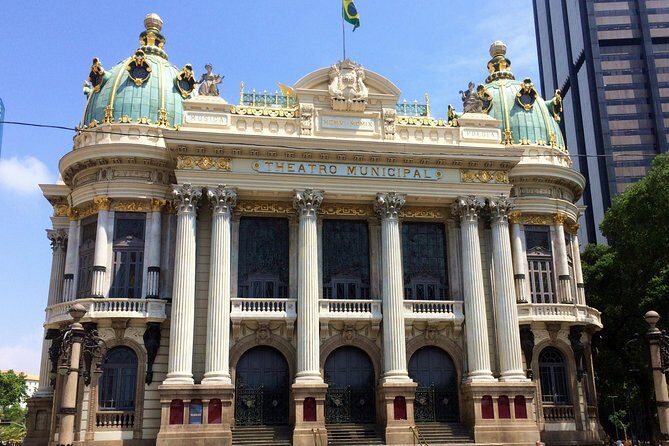
You kick off at Cinelandia, and this square is a perfect warm-up because it’s dramatic at first glance. You’ll get a guided look at major landmarks like the Teatro Municipal (the Rio opera house), the Museu de Bellas Artes, the municipal hall, the national library, and the Teatro Odeon—still operating as a cinema.
What I like about starting here is how it sets the visual tone. This is Rio showing off with grand public architecture and cultural institutions clustered in one place. Even if some of the buildings are only seen from outside, your guide’s framing helps you notice details you’d otherwise miss—like the way the square functions as a cultural stage.
Time is short here—around 20 minutes—so treat it as orientation. Get your bearings, note the scale of what you’ll see later, and let the guide point out what you should remember.
Inside the Metropolitan Cathedral of Saint Sebastian: Stained Glass You Can’t Skip
Next up is the Metropolitan Cathedral of Saint Sebastian. You’ll go inside for about 15 minutes, with a focus on architecture, history, and the standout monumental stained glass windows.
Cathedrals can turn into “just another church” if you don’t have a lens. Here, the guided approach matters: you’ll see why the building is a major city symbol, not only a place of worship. The stained glass is the kind of thing that rewards a slow look—so even though your stop is brief, don’t rush your eyes.
This stop also works well for pacing. After the wide-open feel of Cinelandia, the cathedral gives you a calmer, more sheltered moment to reset before the walking gets more intimate.
Largo da Carioca: Two Baroque Churches and a Panoramic Terrace Feel
Then you’ll pass through Largo da Carioca. You’ll see the São Antonio church and São Francisco da Penitencia, described as one of the most beautiful baroque churches in Brazil. Your guide also highlights panoramic viewpoints from a terrace near these two churches.
This is a smart stop because it gives you three things at once: architectural contrast, religious landmarks side by side, and an elevated view. The terrace part is especially useful because it’s where you’ll start to “read” the city—how old Rio sits under modern streets and how neighborhoods relate to each other.
You’ll spend about 25 minutes here, and it includes admission. That means you’re paying with time and footwork, not just stopping for photos. If you enjoy churches but hate “scripted” visits, this is the kind of guided approach that feels purposeful instead of rushed.
Confeitaria Colombo: Old-Rio Coffee Stop, Art Deco Charm
After the church zone, you’ll move through pedestrian streets toward Confeitaria Colombo, one of the oldest cafes in Rio. The focus is on its art deco look and why it’s an icon in the Centro.
This stop is only about 10 minutes, but it serves a real function. It’s a small break from walking, and it gives you a taste of how historic Rio isn’t only monuments—it’s also daily culture in classic spaces. Even without a long sit-down, the cafe is worth connecting to the larger story of old city life: institutions, habits, and public gathering places.
If you’re sensitive to crowds or you get tired easily, this is still a short commitment. If you love atmosphere, use the moment to notice the style and the way the cafe holds onto the past visually.
You can also read our reviews of more historical tours in Rio de Janeiro






Praça Quinze de Novembro: Republic Square, Ferry Lines, and Water Views
You continue to Praça Quinze de Novembro, also known as the 15th of November square, tied to the proclamation of the Republic. About 20 minutes here covers key landmarks: the Church of Our Lady of the Carmelites, Paço Imperial, the equestrian statue of General Osorio, and the Tax Island area.
One of the more interesting practical bits is the mention of the ferry pier to Niterói and Paquetá in Guanabara Bay. Even if you’re not taking the ferry today, it helps you understand Rio’s geography—how the city turns outward toward the water instead of inward only.
This stop is good for photo breaks, but also for mental mapping. After spending time in dense streets and churches, this open square gives you space to orient yourself again.
Praça Pio X and Centro Cultural Municipal: Churches, Culture, and the Bank of Brazil Center
Next you reach Praça Pio X through pedestrian streets. Your guided walk covers Candelária church, the Olympic boulevard, and the Centro Cultural do Banco do Brasil, plus Casa França-Brasil.
Time is about 15 minutes, so this part works like an “information scan.” You’re not lingering to study every detail; you’re learning what these places are and how they fit into Rio’s cultural life.
The benefit here is speed with clarity. The Centro can feel confusing without a framework, and these names give you anchors. Even if you later return to only one of these places, you’ll know why it matters and where it sits in the larger city picture.
Mosteiro de São Bento: One of Rio’s Most Beautiful Church Visits
You’ll continue to the Mosteiro de São Bento. This stop is about 15 minutes, focused on visiting a beautiful church and explaining its history.
This is the kind of stop that can feel short if you love religious architecture. But the guided version is still valuable because the history and purpose help you understand what you’re seeing. Monastic sites also tend to have a different rhythm—more stillness, more ceremony, less rushing—so take a moment to slow down your pace even if your time is limited.
If you’re traveling with someone who likes art and buildings but doesn’t want a long museum day, this fits well. It gives you depth without turning the day into endless indoor time.
Mauá Square and the Museum of Tomorrow View: Architecture Without the Museum Detour
At Mauá Square, you’ll spend about 20 minutes. The plan does not include visiting the Museu de Amanha (Museum of Tomorrow), but you’ll still look at it for architectural interest. The stop also includes the Art Museum of Rio and a panoramic terrace on the top floor.
From that terrace, you’re set up for an incredible view over Mauá Square, the Niterói Bridge, and the surrounding waterfront areas. This is one of the strongest “payoff” moments because you get a skyline-style perspective without needing a separate viewpoint day.
The practical value: it breaks the walking pattern and gives you a visual reset. After Santa Teresa’s hill later, it helps to have this earlier, calmer viewpoint experience.
Etnias and Graffiti as Olympic Legacy: Eduardo Kobra’s Mural
Then you head to Etnias – Mural de Graffiti (Estúdio Kobra), where you’ll see a mural described as the largest in the world. It represents five ethnic groups and was produced by Eduardo Kobra for the Olympic Games.
This stop is only about 15 minutes, but it’s meaningful. Street art can be hard to interpret if you only treat it as decoration. Here, the guided context tells you what it’s representing and why it was created for that global event.
If you like modern art and you’re also into history, this is a good connection point: Rio’s cultural story isn’t frozen. It keeps being produced in new forms.
Back to Santa Teresa: The Yellow Bonde Tram Ride Is Part of the Experience
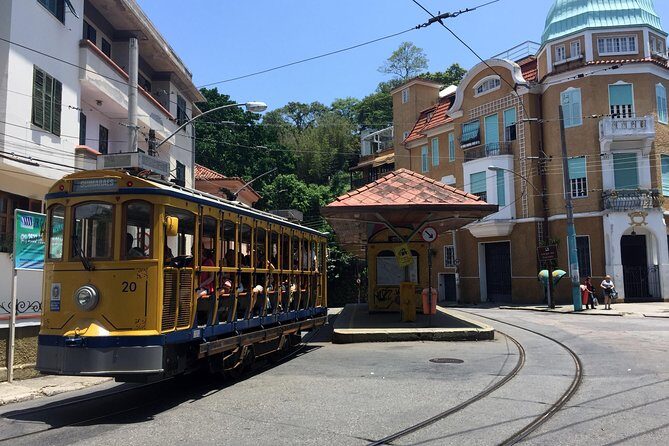
Now you return to the Santa Teresa tram station to ride the famous yellow Bonde up to Santa Teresa. This is included and takes about 30 minutes of panoramic charm.
This ride is more than transport. It’s one of those experiences where you feel the city’s vertical geography. You’ll see streets and buildings from a moving perspective, and you’ll arrive ready to explore rather than already tired from climbing.
If you’re deciding whether this kind of ride is worth it, the answer is yes for most people: it turns a steep neighborhood into something you can enjoy instead of fight. You still do plenty of walking afterward, but you save energy and reduce the “I’m going uphill all day” feeling.
Largo dos Guimarães: Old Houses, Views, and Easy Bar-Hopping Energy
In Santa Teresa, you move around Largo dos Guimarães for about 45 minutes. This area is described as being in the heart of Santa Teresa, where you’ll discover late 19th and early 20th century houses, plus views, restaurants, and bars.
This is a flexible zone. You can take photos, wander slowly, and just soak up the neighborhood rhythm. The guided part helps you notice architectural details that would otherwise blend together.
One practical tip: treat this as your time to grab a snack or a drink of your choice if you haven’t already. Since lunch isn’t included, Largo dos Guimarães is a good place to solve that without derailing the schedule.
Parque das Ruínas: Laurinda Santos Lobo’s Legacy and a Perfect Overlook
Next is Centro Cultural Municipal Parque das Ruínas, a key Santa Teresa viewpoint spot. Your guide connects it to the former home of Laurinda Santos Lobo, now turned into a gazebo with an incredible view over the Centro, the Arches of Lapa, Christ, and Botafogo.
Time is about 30 minutes, and this is where the tour really delivers on “Rio at angles.” You’re up higher, looking out, and getting a sense of how the old city and the bay connect.
This stop is also a reminder that Santa Teresa isn’t only about colorful stairs. It’s about perspective—seeing how Rio’s parts fit together. If you’re the type who likes taking photos but also likes understanding what you’re photographing, this is a highlight.
Escadaria Selarón: The Multicolored Steps and Why They Matter
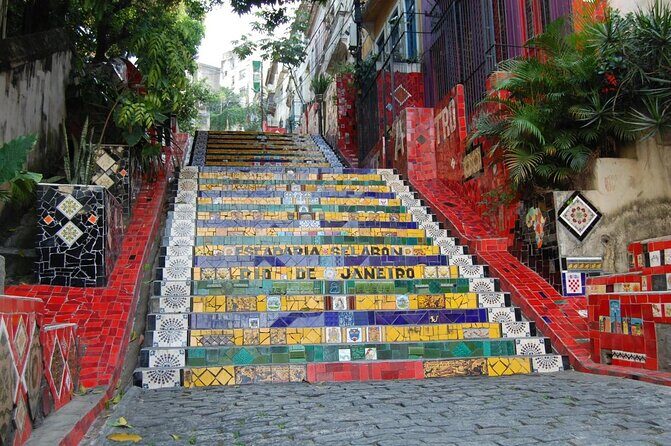
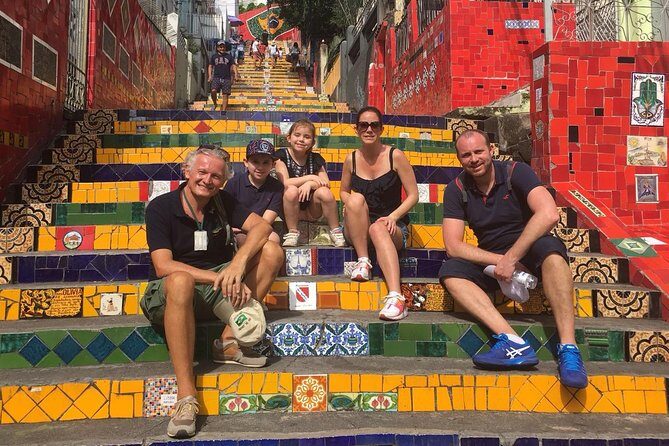
Then you head toward Lapa at the foot of the hill, passing the Escadaria Selarón—the famous multicolored staircase created by Chilean artist Jorge Selarón over about twenty years.
You’ll spend around 30 minutes here. It’s free to look, but it’s not a casual “quick photo” stop if you want the story. The guide’s framing helps you see it as community art and personal devotion rather than just a painted landmark.
Practical note: stairs mean slow movement. Give yourself time, especially if you’re taking photos or traveling in warm weather. This stop is worth it, but it’s not the moment to rush.
Arcos da Lapa: The Aqueduct Walls Where Graffiti Meets Real Infrastructure
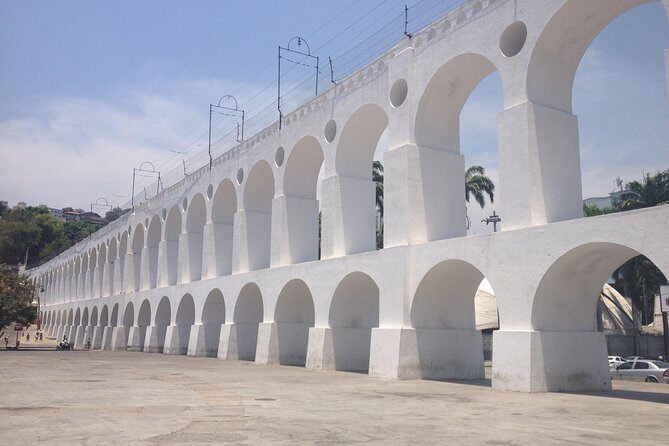
From Selarón you stroll to Arcos da Lapa, including a guided look at the graffiti that decorates the walls in the district. These arches are part of an old Rio aqueduct dating from the 18th century, used to supply water to the city until the end of the 19th century.
Time here is about 20 minutes. The connection is powerful: the tour links infrastructure (water distribution) with visual culture (graffiti). You’re not just seeing street art; you’re seeing it layered on real historical stonework.
This is also where Santa Teresa and Lapa feel like one story. You’ll remember the earlier tram ride, and then understand how the aqueduct area belongs to the same neighborhood geography.
Drinks, No Lunch, and the Real Value of the Price
Let’s talk price and what you’re actually getting for $137.80.
You’re paying for:
- A full-day guide with structured explanations across many major stops
- Multiple free admission moments (including Cinelandia highlights and the Cathedral)
- One included admission stop (Largo da Carioca)
- One included ride (the Santa Teresa yellow tram segment)
- A drink included during the tour: caipirinha, beer, soda, fruit juice, or water
- Small group size, capped at 12, which helps the pacing
The one clear gap: lunch isn’t included. That doesn’t make the tour bad—it just means you should plan for your own food. If you’re prone to skipping meals, fix that ahead of time. You’ll pass through areas with restaurants and bars, especially in Santa Teresa.
Also note: the tour includes many free admissions, which helps keep your day predictable. You’re not constantly pulling out cash for tickets and entry fees.
Who This Tour Suits Best (And Who Might Want a Different Plan)
This tour fits you if you want:
- A guided orientation to Rio’s Centro and historic squares
- A balance of monuments, churches, and street art
- A gentle-to-moderate sightseeing pace with frequent context stops
- Included transport up into Santa Teresa via the Bonde tram
It may be less ideal if:
- You hate long walking days or steep hills
- You need a guaranteed sit-down lunch break built into the schedule
- You’re looking for a purely museum-heavy day with long indoor time
Overall, it’s a strong choice for first-timers, and also a smart second visit if you want to connect neighborhood pieces that feel separate on your own.
Should You Book Centro Histórico and Lapa–Santa Teresa?
If you want one day that ties Rio’s layers together—grand public buildings, baroque churches, iconic cafes, major squares, then Santa Teresa’s color and views—this is a very practical booking.
I’d recommend it especially because the guide approach seems to be the core strength. In the feedback tied to this tour, the guide named Ivan/Yvan gets credit for explaining Rio’s history in a way that feels like a story, not a lecture. That’s the difference between seeing landmarks and actually understanding them.
Book this when you:
- Plan to spend your limited time wisely
- Want street art plus architecture, not just one or the other
- Are comfortable walking all day and you’ll handle lunch on your own
Skip it if you need long meal breaks or a low-walking pace. Then look for a shorter, more segmented neighborhood tour.
FAQ
What time does the tour start?
The tour starts at 9:00 am.
How long is the tour?
It runs about 7 to 8 hours.
Where does the tour meet and where does it end?
It starts at Copacabana Palace, A Belmond Hotel, Rio de Janeiro and ends back at the same meeting point.
What’s included in the price?
The price includes the guide, a drink during the tour (caipirinha, beer, soda, fruit juice, or water), and the Santa Teresa yellow tram segment. Several stops have free admission or included admission as listed in the route.
Is lunch included?
No. Lunch is not included.
Is the tour refundable?
No. The experience is non-refundable and cannot be changed for any reason. If the minimum number of travelers isn’t met, you’ll be offered a different date/experience or a full refund.