REVIEW · RIO DE JANEIRO
Little Africa: Historical & Heritage Tour of Rio de Janeiro
Book on Viator →Operated by BE FREE TRANSPORTADORA TURISTICA · Bookable on Viator
Rio has an African map you can walk. This Little Africa route connects the dots from burial grounds to the docks where enslaved people arrived, with stories you can see. I like that the stops are practical and admission-free along the way.
You also get a real sense of how history shows up in everyday corners of the city—churches, squares, and street life—without turning it into a lecture. For me, the best part is the way the route builds to Cais do Valongo, not just random photo stops.
One thing to consider: it’s a walking tour with some standing time, so if you have limited mobility or an older travel companion, plan for breaks. And like any guided experience, guide style and pace can vary—some days feel more personal than others.
In This Review
- Key things I’d focus on
- The point of this tour: turning monuments into meaning
- Where you start and where you finish (and how that helps)
- Stop-by-stop: from Osorio statue to Boulevard Olímpico’s port layers
- Stop 1: Statue of General Osorio
- Stop 2: Boulevard Olímpico
- Stop 3: Matriz da Paroquia de Santa Rita
- Stop 4: Mauá Square
- Burial places that shift your understanding fast
- Stop 5: Largo de São Francisco da Prainha (former beach to bar stronghold)
- Stop 6: Cais do Valongo
- Stop 7: Pedra do Sal
- Finishing near the docks: optional IPN museum time
- Stop 8: Instituto de Pesquisa e Memoria Pretos Novos (IPN)
- Price and value: what you’re actually paying for
- Walking pace, guide style, and comfort planning
- If you want the cultural angle, Pedra do Sal is key
- Should you book this Little Africa tour?
- FAQ
- How long is the Little Africa: Historical & Heritage Tour of Rio de Janeiro?
- What does it cost?
- What language is the tour offered in?
- Is this tour private?
- Where does the tour start and end?
- Are there admission fees at the stops?
- Is the IPN museum visit included?
- Will I receive confirmation after booking?
- Is cancellation allowed, and how far in advance?
- Is the tour near public transportation?
Key things I’d focus on

- Valongo docks route: you end where enslaved arrivals entered Rio in the 1800s
- Free stops: most listed locations have free admission on the itinerary
- Burial-place stops: Santa Rita and Pretos Novos change the tone fast
- Olympics-era geography: Boulevard Olímpico sits on top of older port-area layers
- Culture meets memory: Pedra do Sal links religion and Carnaval beginnings
- Optional IPN museum: you can choose whether to add time (and cost)
The point of this tour: turning monuments into meaning

The Little Africa tour is built like a guided walking timeline. You’re not just looking at old buildings—you’re learning what those places were for, and why they mattered to enslaved Africans, their descendants, and the city that grew around them.
What I like is the “keep moving” structure. Rio can feel big and confusing, but this route gives you a clear chain of locations: from colonial-port traces to burial grounds, then to the docks. That order helps the story land in your body, not just in your head.
And yes, you’ll get some heavy emotional weight. Two of the stops are directly tied to burial and death before arrival, so your brain will be working harder than on a typical sightseeing walk. If you’re up for that, the payoff is real.
You can also read our reviews of more historical tours in Rio de Janeiro



Where you start and where you finish (and how that helps)
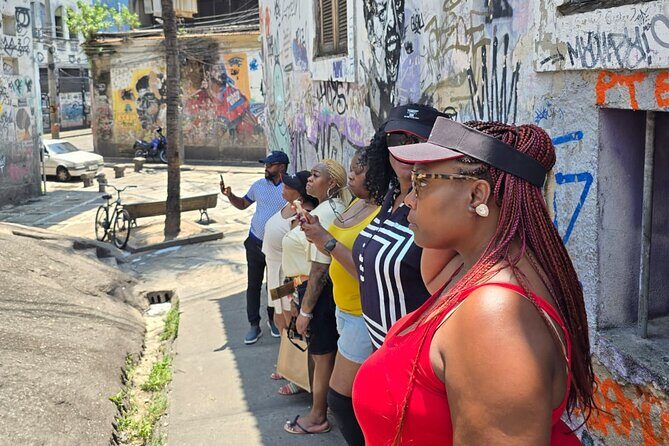
The tour meets at Praça Quinze de Novembro – Centro and finishes at Cais do Valongo, Av. Barão de Tefé – Saúde. That end point is a gift: instead of going back the same way, you naturally end near one of the most important sites on the route.
The duration is listed as 2 to 4 hours. In practice, walking times and how long you linger at each stop can shift, so I’d plan your day with a bit of breathing room—especially if you want the optional museum visit.
You’ll also have a mobile ticket, and the tour is offered in English. It’s a private tour in the sense that only your group participates, which usually makes it easier to ask questions and keep the pace comfortable.
Stop-by-stop: from Osorio statue to Boulevard Olímpico’s port layers
Stop 1: Statue of General Osorio
You start with a city landmark and a meeting point that’s easy to find: Statue of General Osorio. The admission is listed as free, and the time here is short—about 10 minutes—so think of it as setting context rather than a full stop.
This opening helps you get bearings quickly. Rio’s Centro can look one way from the street but feel totally different once you understand the port history behind the blocks.
Stop 2: Boulevard Olímpico
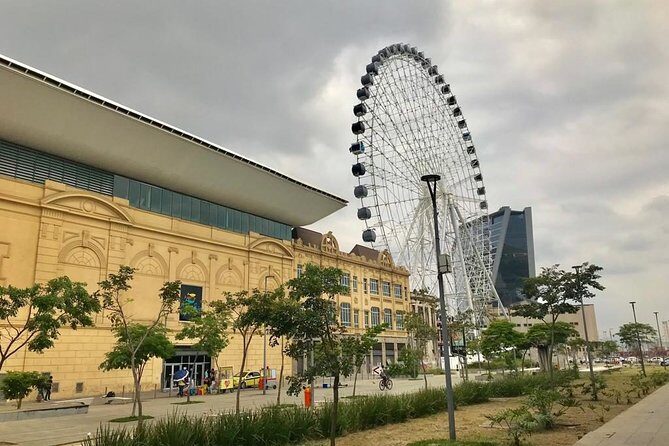
Next comes Boulevard Olímpico, described as an Olympic corridor built where the old port area used to be in colonial times. That’s a powerful setup: you’re seeing how the city repurposes space across centuries.
This stop is about 15 minutes. The main value is perspective—how modern infrastructure overlays older routes where goods moved, and where human lives were treated as cargo.






Stop 3: Matriz da Paroquia de Santa Rita
Then the tour turns personal and solemn at Matriz da Paroquia de Santa Rita, described as a former burial place for African slaves. The stop is brief (around 10 minutes), but it matters.
This is the kind of location where listening closely changes what you see. Even if you’re not religious, a parish tied to burial and memory forces you to slow down.
Stop 4: Mauá Square
At Mauá Square, you’re next to major modern cultural landmarks, including the Museum of Tomorrow and the Rio Art Museum. The tour keeps it to about 10 minutes, so it’s more like a bridge stop than a museum visit.
I like this contrast: you go from burial memory to a square that feeds into today’s cultural life. It reminds you the city didn’t stand still while history happened—it kept building.
Burial places that shift your understanding fast

Stop 5: Largo de São Francisco da Prainha (former beach to bar stronghold)
Largo de São Francisco da Prainha is described as an area of a former beach that was buried, now known for local bars. Time here is about 15 minutes.
This is one of those stops that makes the city feel real. The space might have changed purpose over time, but people still gather there. You can hold two truths at once: the ground has layers, and life continues on top of them.
A practical tip: this is a good place to notice the crowd and decide how you’ll manage your energy for the final stretch. If you need a quick sit-down moment or a snack, you’ll know you’re close to options.
Stop 6: Cais do Valongo
Now you reach Cais do Valongo, the docks where African slaves arrived in the 1800s. The time is about 20 minutes, and this stop often becomes the emotional anchor of the whole route.
This is also where the itinerary starts feeling less like a sequence and more like a destination. You’re at the site tied to forced arrival, so the stories you’ve heard at earlier stops can suddenly click into a clear picture.
If you’re the type who needs a second to process, give yourself one. Standing here for the last minutes of the tour doesn’t make it less respectful—it often makes it more meaningful.
Stop 7: Pedra do Sal
Just after Valongo comes Pedra do Sal, described as a historic site where Carnaval and some African religions began to spread. The time is short—around 5 minutes—but that doesn’t mean it’s shallow.
This stop flips the tone. Instead of focusing only on arrival and burial, you’re seeing the growth of cultural identity and community practices. It’s a reminder that survival included culture, rhythm, and public expression.
And because the stop is brief, it works best when you’re ready to pay attention immediately. Keep your phone away for a minute and let the guide connect the dots.
Finishing near the docks: optional IPN museum time

Stop 8: Instituto de Pesquisa e Memoria Pretos Novos (IPN)
The final stop is Instituto de Pesquisa e Memoria Pretos Novos – IPN, described as the place where enslaved people who died before arriving in Brazil were buried. The time is about 30 minutes, and it’s listed as optional paid and not included.
This is the one choice point you’ll feel in your body. If you want more context and a museum setting, adding IPN is a strong way to continue the story after Cais do Valongo and Pedra do Sal.
But if you’re already carrying emotional fatigue, the optional setup lets you control the intensity. Either way, your tour ends at or near Cais do Valongo, so you’re not stuck far from where the story culminates.
Price and value: what you’re actually paying for

The tour price is listed as $75.46 per person, lasting about 2 to 4 hours. On paper, that can sound steep until you look at what’s included in practice.
Here’s the value math that matters for you:
- Most listed stops show free admission on the itinerary.
- You’re paying mainly for guided interpretation—how the guide connects burial grounds, docks, churches, and modern squares into one understandable route.
- The optional museum at IPN is where extra cost might appear if you choose to add it.
That’s also why guide style matters. In different days and with different leaders, the same route can feel more conversational or more detached. One day you might connect instantly; another day might feel like you had to read the meaning off your own brain.
So if you’re considering this for a short visit to Rio, I’d book it when you want structured context and you have the stamina to walk. If you’re only after casual scenery, you’d likely get more satisfaction from a lighter tour.
Walking pace, guide style, and comfort planning

This is a walking tour, and some standing time is part of the design. One review-style concern that you should take seriously: if you’re traveling with an elderly parent or anyone with limited mobility, moving between stops can be tiring.
The itinerary includes multiple short segments—often 5 to 20 minutes each—but that adds up. It’s not a sit-down museum day, and the emotional stops (Santa Rita, Valongo, Pretos Novos/IPN) can also make you slow down internally.
Guide style can be a variable too. I’ve seen examples of guides who were warm and super engaged, like Anna Maria, and others who were friendly and insightful, like Nathaly and Rafael. In short: on the right day, this feels like walking with a person who genuinely cares about connecting history to place.
Practical comfort tips:
- Wear shoes you can stand and walk in for a couple hours.
- Bring water and expect there may be stretches between opportunities to pause.
- If you’re sensitive to heavy topics, build in a plan afterward for a lighter meal or a slower neighborhood walk.
If you want the cultural angle, Pedra do Sal is key

A lot of African heritage tours focus only on tragedy and loss. This one adds a cultural thread through Pedra do Sal, where the route connects Carnaval and African religious practices spreading.
For you, that can be the difference between feeling only overwhelmed and leaving with a fuller understanding of how people shaped Brazil’s cultural life. It’s not just about what happened; it’s also about what endured and what grew.
And because this stop is short (around 5 minutes), you’ll want to be mentally ready. When the guide connects it back to the docks and burial sites, the story becomes more balanced.
Should you book this Little Africa tour?
Book it if:
- You want an organized walking route that links slave-arrival history and African heritage to specific Rio locations.
- You like learning through places—church sites, docks, squares—rather than only through museum walls.
- You’re comfortable with a route that can include emotional stops like Santa Rita and Pretos Novos/IPN.
Skip or switch to a different option if:
- You or your group has trouble with walking and standing for extended stretches.
- You want a purely casual, scenery-first tour without heavy historical content.
- You’d rather pay for a museum-based experience only, since IPN is optional and the main route is outdoors.
My final take: this tour can be powerful because it uses the city as the lesson plan. If your goal is to understand Rio’s African roots in a way that feels grounded in real streets and real sites, the structure is a strong match.
FAQ
How long is the Little Africa: Historical & Heritage Tour of Rio de Janeiro?
The tour is listed as lasting about 2 to 4 hours.
What does it cost?
The price is $75.46 per person.
What language is the tour offered in?
The tour is offered in English.
Is this tour private?
Yes. It’s described as a private tour/activity, so only your group participates.
Where does the tour start and end?
It starts at Praça Quinze de Novembro – Centro, Rio de Janeiro and ends at Cais do Valongo, Av. Barão de Tefé – Saúde, Rio de Janeiro.
Are there admission fees at the stops?
All listed main stops include free admission on the itinerary, except the optional Instituto de Pesquisa e Memoria Pretos Novos (IPN).
Is the IPN museum visit included?
IPN is listed as optional paid and not included, with about 30 minutes for the visit if you choose it.
Will I receive confirmation after booking?
Yes. Confirmation is received at the time of booking.
Is cancellation allowed, and how far in advance?
You can cancel for a full refund if you cancel up to 24 hours in advance of the experience start time.
Is the tour near public transportation?
Yes. The tour is listed as near public transportation, and it also notes that service animals are allowed.