
REVIEW · RIO DE JANEIRO
Explore Little Africa : Unveiling Afro Heritage in Rio de Janeiro
Book on Viator →Operated by Agência Etnias Turismo e Cultura · Bookable on Viator
Rio hides its Afro roots in plain sight. This 3.5-hour route connects key Little Africa sites with clear storytelling, so you can read the city’s past and present in the same walk. You also get an included short VLT ride that helps the day feel efficient instead of just a long wander.
What I like most is the way it blends on-the-street landmarks with museum time. You’ll spend meaningful moments at places like the Instituto de Pesquisa e Memoria Pretos Novos and MUHCAB, not just pass by buildings and move on.
One thing to plan around: there’s walking and outdoor time, so it’s not recommended for people with disabilities. Also, the New Black Institute can be closed on Sundays, and museums shut down during Carnival and from Dec 16 to Jan 5.
In This Review
- Key highlights before you go
- Why Little Africa in Rio deserves a guided route
- From Santuário de Santa Rita to the port: how the walk works
- Matriz da Paroquia de Santa Rita: starting with a decolonial story
- Instituto Pretos Novos (IPN): memory turned into a place
- MUHCAB in Gamboa: Afro-Brazilian culture on the move
- Cais do Valongo and Pedra do Sal: the port and the sacred corner
- Largo São Francisco da Prainha: zungus, Black presence, and today’s vibe
- Price, walking comfort, and what’s included for $82.53
- Should you book this Little Africa tour?
- FAQ
- How long is the Little Africa tour in Rio?
- Where does the tour start and end?
- What is the price per person?
- What’s included in the tour price?
- Is lunch included?
- Are tips included?
- Is the tour suitable for people with disabilities?
- Are service animals allowed?
- When are museums closed?
Key highlights before you go
- Small group size (max 20): easier pacing and more chances to ask questions.
- Pretos Novos IPN included time: a focused stop tied to archaeological memory.
- Valongo Wharf context (Cais do Valongo): the port history is explained in plain language.
- MUHCAB in Gamboa: Afro-Brazilian history and culture shown in a “territory museum” setting.
- Finish at Largo São Francisco da Prainha: a square tied to Black presence and zungus, with today’s cool factor.
- Included VLT ride: you’ll use public transit without having to figure it out.
Why Little Africa in Rio deserves a guided route
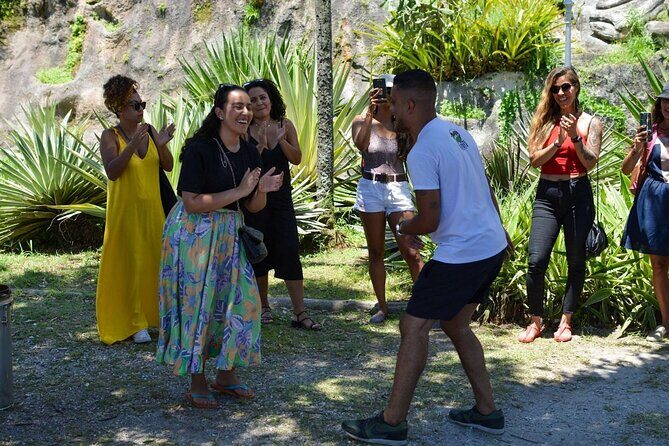
Rio’s “big sights” are famous for a reason, but Little Africa is where you learn how the city became itself. This tour is built around places tied to the African diaspora, slavery, memory, and cultural survival, and it keeps the story grounded in geography. You won’t just hear history as facts; you’ll connect it to streets, ports, and neighborhood landmarks you can still recognize.
I especially like that the guide’s framing is decolonial—it pushes you to look at power, naming, and who gets remembered. And because the route is short (about 3 hours 30 minutes), you can actually stay present. You’re not stuck sprinting across the city all day.
This is also a good “first round” tour if you want to understand Rio beyond postcard Rio. It sets up the other neighborhoods you’ll visit later, and it makes the city feel less random.
You can also read our reviews of more historical tours in Rio de Janeiro



From Santuário de Santa Rita to the port: how the walk works
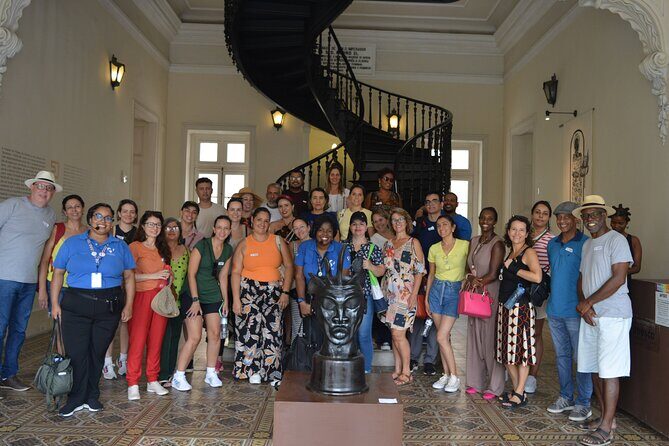
You meet at Santuário de Santa Rita in Centro (Largo de Santa Rita, s/n). The tour ends at R. São Francisco da Prainha, 7 in Saúde, at Largo da Prainha—so you get a clean beginning and finish line.
The best part for logistics is that it’s not all walking. You’ll do a short ride on VLT public transport, which is included in the price. That means you spend more time listening and less time crossing the city.
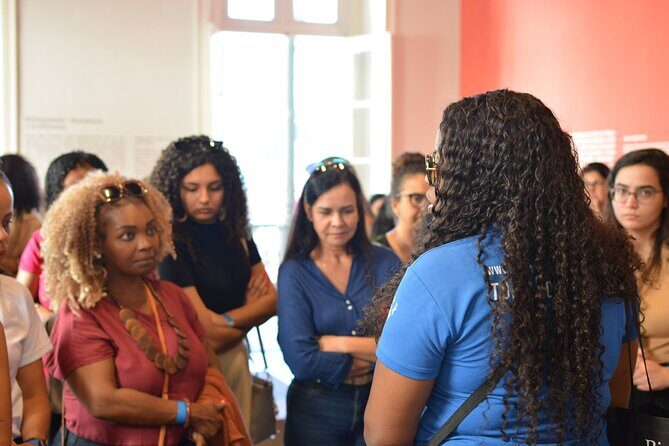
Group size is capped at 20 travelers, which matters in Rio heat. One review noted how guides paced well for older relatives, and that same idea applies here: you should be able to keep up without feeling like you’re being dragged along.
Comfort tip: bring shoes you can walk in for a solid chunk of time. This isn’t a “museum-only” day.
Matriz da Paroquia de Santa Rita: starting with a decolonial story
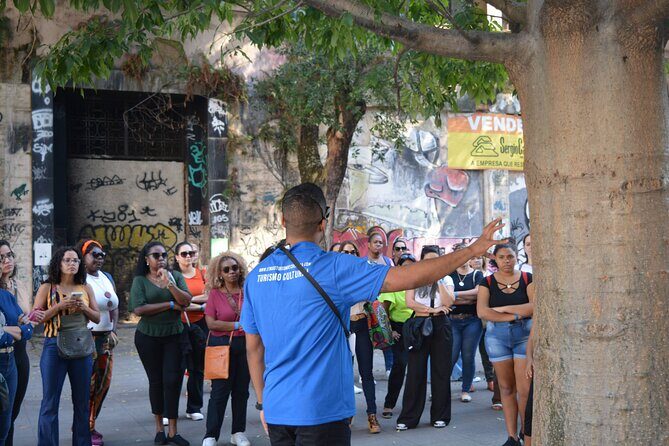
The first stop is an external visit to Matriz da Paroquia de Santa Rita, near the meeting area. Even though you’re not going inside, you get heritage-based context and a decolonial narrative that frames what you’re about to see next.
This opening matters more than it sounds. It gives you language for the rest of the day, so when you reach places like the port district and memorial sites, you understand what to look for—social power, forced movement, and how memory gets preserved or erased.
Time-wise, this is about 20 minutes. It’s a solid warm-up: enough to set meaning, not enough to slow you down before the stronger museum stops.
If you’re the kind of traveler who likes to ask “why does this place matter,” this first segment is where the guide usually hooks you.
Instituto Pretos Novos (IPN): memory turned into a place
Next up is Instituto de Pesquisa e Memoria Pretos Novos (IPN). You’ll get an external look, then you spend about 40 minutes at the institute, and admission is included.
This stop is powerful because it treats memory like something physical. It’s tied to the archaeological story of the Pretos Novos in Rio, and the institute’s role is research and memory—not just a one-note exhibit. You end up understanding why this site is still discussed today, not as a distant tragedy, but as a foundation for how Brazil remembers.
A lot of people love this tour because it explains the larger African diaspora through Rio’s specific places. IPN is one of the clearest examples on the route: it turns big themes into a real setting you can point to.
One practical note: the tour schedule depends on openings. The New Black Institute is closed on Sundays, and museums shut during Carnival and from Dec 16 to Jan 5, so check your calendar before you plan the rest of your trip.
MUHCAB in Gamboa: Afro-Brazilian culture on the move
After Pretos Novos, you go to MUHCAB (Museu da História e da Cultura Afro-Brasileira) in the Gamboa region. This is another about 40 minutes, and admission is free.
MUHCAB is described as a “territory museum,” which is exactly what you want from a day like this. It’s not just objects behind glass; it’s history and culture tied to place. You get a clearer view of how Afro-Brazilian identity shaped neighborhoods, traditions, and everyday life—not only through suffering, but through creation, community, and continuity.
In reviews, guides like Carolina, Raphael/Rafael, Malu, and Val are praised for pacing and for connecting facts to meaning in a way that’s easy to follow. That’s what you should look for here: explanations that help you leave with understanding, not just names.
Because this stop is free for admission, it’s also a straightforward value win in the day’s overall cost.






Cais do Valongo and Pedra do Sal: the port and the sacred corner
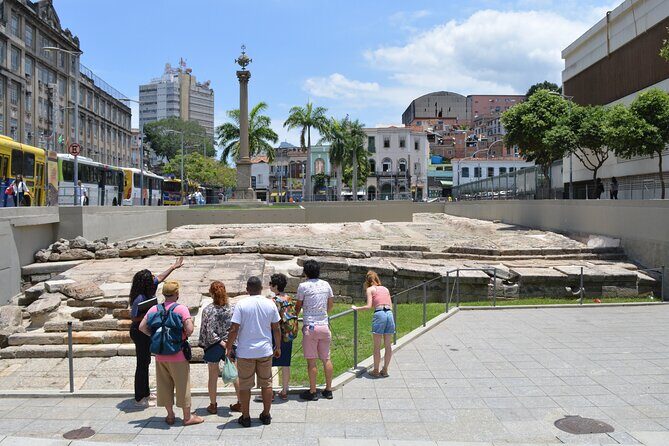
Now you shift to the port story with Cais do Valongo. This is a former wharf in Rio’s port district, described as located between today’s Coelho and Castro and Sacadura Cabral streets. Your visit here is about 30 minutes, and it’s free to enter.
This is one of the days best “you can feel the city’s layers” moments. A wharf is logistics: movement, commerce, arrival. When the guide places it within the story of the enslaved African diaspora, it stops being just architecture and becomes a timeline in stone and waterline.
Then the tour moves to Pedra do Sal, a historical and religious landmark in the Saúde neighborhood, near Largo da Prainha. Expect about 25 minutes, with an external visit. It’s the kind of stop that helps you balance the heavier themes with the spiritual and community significance tied to the site.
Together, Valongo + Pedra do Sal give you both systems and meaning: the port explains the machinery of the past, and Pedra do Sal helps you understand how people held onto identity through faith and tradition.
Largo São Francisco da Prainha: zungus, Black presence, and today’s vibe
You finish at Largo São Francisco da Prainha. This is about 20 minutes, and it’s free. The square is described as a former symbolic territory of Little Africa marked by Black presence and the zungus, and today it’s considered one of the coolest places by Time Out.
I like endings like this because they don’t feel like a history dump. You end in a public space, where you can look around and see how the story still shapes the neighborhood. It helps you connect past and present, instead of leaving with names only.
This final stop is also a good mental reset: by the time you reach the square, you’ve already covered the decolonial framing, memorial sites, cultural museum context, and port history. So Largo São Francisco da Prainha lands as a “now I get it” moment.
For photos, plan to keep your pace steady. One guide response highlighted that after 2 pm the sun goes down sooner, and people are often already fed—so afternoon starts can help comfort and photo conditions.
Price, walking comfort, and what’s included for $82.53
At $82.53 per person for about 3 hours 30 minutes, the value comes from what’s actually included. You get all fees and taxes, a ticket tied to The New Black Institute, and the included VLT ride. Several key stops are admission-free, but you’re still paying for guided context and the time spent inside the places that do require tickets.
Compared to piecemeal museum tickets, it’s a good deal because the tour stitches everything together. You’re not just paying for entry—you’re paying for a route that gives meaning to each location, so you understand why each one belongs in the Little Africa story.
Comfort-wise: plan for walking. Rio heat can be intense (one response mentioned over 40ºC), so wear breathable clothes, drink water, and bring something light to protect yourself from sun.
Also, tips aren’t included, so budget a little extra if you’re happy with the guide. Lunch isn’t included either, so if you start late, you may want to eat beforehand.
Group size stays capped at 20, and the tour is near public transportation—both help keep the day smooth.
Should you book this Little Africa tour?
Yes, if you want Rio that goes beyond the headline attractions. This tour is especially worth it when you care about Afro-Brazilian history, diaspora stories, and place-based context—Valongo Wharf, Pretos Novos IPN, MUHCAB, and the Saúde landmarks. It’s also a strong choice if you like guided pacing and a small group feel; guides such as Carolina, Raphael, Rafael, Malu, and Val are repeatedly praised for clarity and adjusting pace for real needs.
Skip or rethink if you can’t do moderate walking or if your dates fall on days when key museum access is closed (Sundays for the New Black Institute, and Carnival / Dec 16–Jan 5 for museums). If you’re flexible on timing, look for a start time that matches your energy and the afternoon light.
If you come for culture and leave with understanding, this is the kind of tour that changes how you see the city.
FAQ
How long is the Little Africa tour in Rio?
It runs about 3 hours 30 minutes.
Where does the tour start and end?
You start at Santuário de Santa Rita in Centro and end at R. São Francisco da Prainha, 7, at Largo da Prainha in Saúde.
What is the price per person?
The price is $82.53 per person.
What’s included in the tour price?
Included are all fees and taxes, a ticket for The New Black Institute, and a short ride on the VLT public transport.
Is lunch included?
No, lunch is not included.
Are tips included?
No, tips are not included.
Is the tour suitable for people with disabilities?
It’s not recommended for people with disabilities.
Are service animals allowed?
Yes, service animals are allowed.
When are museums closed?
On Sundays, The New Black Institute is closed. Also, from 16th December to 5th January, and during Carnival season, museums are closed.