REVIEW · RIO DE JANEIRO
Private Petrópolis -Imperial Museum,dummont house,Cristal Palace,S.Pedro Church
Book on Viator →Operated by Trip In Rio · Bookable on Viator
Petropolis is a full day of big stories. This private tour lines up the key stops with your guide’s full attention, and I especially like the included Imperial Museum ticket plus the air-conditioned ride that makes the long trip from Rio feel manageable. One thing to factor in: some of the house/brewery tickets are listed as optional or not included, so I’d double-check what you’re actually paying for when you book.
I’m drawn to tours where the guide sets the pace, explains what you’re looking at, and doesn’t rush you through the good parts. In this case, Ederson is mentioned for giving calm, detailed explanations and good timing, including at the Imperial Museum, where historical paintings help show how the area changed over time.
You’ll be in Petropolis for roughly 7 to 10 hours, starting at 9:30 am, and the experience is weather-dependent. If it’s a rainy day, plan for the possibility of a change of date, since the tour requires good weather.
In This Review
- Key Things I’d Prioritize on This Private Petropolis Tour
- Petropolis From Rio: Why This Trip Works
- Catedral de Sao Pedro de Alcantara: Neo-Gothic, Imperial Mausoleum, and 37 Years of Construction
- Santos Dumont’s House in Petrópolis: A Encantada’s Clever Design (and Its Funny Stair Rules)
- Optional Stop: Cervejaria Bohemia for Beer History, Not Just Tastings
- Crystal Palace: A France-Built Structure That Ended Up as Petropolis Glass Story
- Imperial Museum: Neoclassical Pride, Petropolis Origins, and a Guide’s Artful Explanations
- Quitandinha Palace: Norman Glamour, Hollywood-Style Interiors, and a Gambling Ban Twist
- Getting There and Keeping Your Day Comfortable: 9:30 Start, A/C Ride, and Timing
- Price and Value: What You’re Actually Buying for $167.57
- Who Should Book This Private Petropolis Tour
- Should You Book This Private Petrópolis Tour?
- FAQ
- How long is the Petrópolis private tour?
- What time does the tour start?
- Is this tour private?
- What’s included in the price?
- Which stops have tickets included, and which are optional?
- Do I need to pay for the cathedral or Crystal Palace?
- Is lunch included?
- What happens if the weather is bad?
- What is the cancellation window?
Key Things I’d Prioritize on This Private Petropolis Tour
- A guide who stays with your group so you can ask questions and slow down where you care.
- Imperial Museum admission included, which is the backbone stop for understanding how Petropolis was created.
- Free time at the cathedral and Crystal Palace, so you can see the architecture without extra ticket friction.
- Santos Dumont’s “A Encantada” stands out for practical design quirks, not just famous names.
- Quitandinha Palace gives you a Hollywood-style interior story tied to a real moment in Brazil’s history.
- Long ride handled well with an air-conditioned vehicle and a full-day schedule that’s designed to fit everything in.
Petropolis From Rio: Why This Trip Works
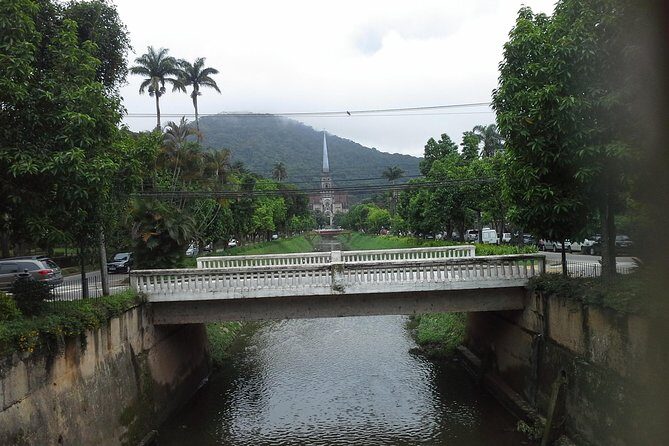
Petropolis is one of those Rio-area escapes where the change in altitude and design feels immediate. You’re leaving the coastal city behind and heading into a mountain town shaped by imperial ambition, European immigration, and later, a very Brazil style of reinvention.
What makes this day trip practical is the structure: you’re not left to coordinate transit, tickets, and timing across multiple sites. A private guide and a dedicated ride mean you can spend your time looking at the places instead of figuring out how to get between them.
The total duration (about 7 to 10 hours) also matters. It’s long enough to feel like a real day out, but not so long that you’re constantly in transit. This is especially helpful if you’re trying to see Petropolis without sacrificing too much of your Rio schedule.
You can also read our reviews of more private tours in Rio de Janeiro



Catedral de Sao Pedro de Alcantara: Neo-Gothic, Imperial Mausoleum, and 37 Years of Construction
This stop is short—about 30 minutes—but it packs a lot of meaning into that time. The Catedral de Sao Pedro de Alcantara began as a modest concept in an earlier part of Petropolis, then the city planned for a new matrix church. The current building finally started in 1884, based on a neo-Gothic project by Francisco Caminhoá, influenced by northern France’s older cathedral style.
If you want something concrete to look for, keep your eyes on the overall church form and the way the design signals a European mood. The façade story is also dramatic: after decades of work, the cathedral wasn’t fully finished when it opened in 1925, and the main façade and tower took later phases, with the tower built between 1960 and 1969.
There’s also an imperial layer that makes the stop more than just architecture. The remains of Dom Pedro II and D. Tereza Cristina were moved to the Metropolitan Cathedral in Rio, then transferred to the cathedral’s sacristy in 1925. Later, in 1939, the Imperial Mausoleum was inaugurated and the Emperor and Empress were moved again—followed by Princess Isabel and Count D’Eu in 1971.
Practical tip: since admission is marked as free here, you can focus on the explanation and the details rather than ticket logistics. Just be ready for a tight time window.
Santos Dumont’s House in Petrópolis: A Encantada’s Clever Design (and Its Funny Stair Rules)
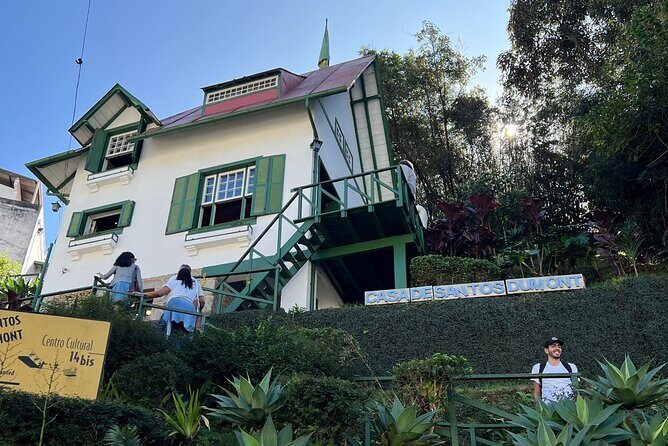
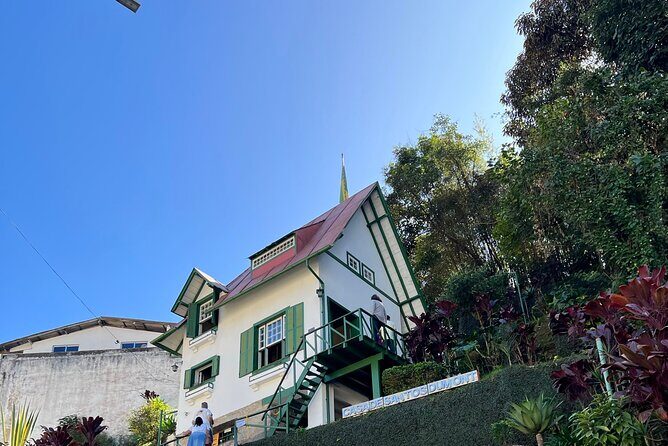
Santos Dumont’s Petrópolis home is called Museu Casa de Santos Dumont, and it’s known as A Encantada. The big reason to care is that it’s not presented as a museum exhibit first—it’s a real residence built for comfort during the imperial golden season, when Princess Isabel invited Santos Dumont to spend summers in town.
The house sits in a steep setting, so this is one of the places where comfortable shoes actually matter. Beyond that, I love how the design details feel practical and slightly playful.
Here are the kinds of quirks worth looking for:
- A shower with hot water, heated to alcohol, described as the only one of its kind in Brazil at the time.
- An outside staircase where you start climbing with the right leg.
- An inside staircase rule that says you raise the stairs with the left leg.
- An architectural plan with no partitions between rooms, giving the home an open flow.
The visit is about 1 hour, and the house has three floors plus an observatory on the roof. So you’ll want to use that hour actively: don’t just walk through—ask your guide what to notice in the layout and the engineering choices.
One booking note to keep you sane: the stop details say admission is included for this museum, but the pricing section also lists “Tickets for Dummont house” under not included. Before you go, confirm what your specific reservation includes so there are no surprise charges when you arrive.
Optional Stop: Cervejaria Bohemia for Beer History, Not Just Tastings
Cervejaria Bohemia is one of the most interesting choices on this day because it turns history into something you can smell and taste. The brewery was founded in 1853 by German settler Henrique Kremer, working under the name Bohemia. After his death in 1865, the company shifted through heirs and partners, eventually becoming Companhia Cervejaria Bohemia under Frederico Guilherme Lindscheid and later family ties.
The tour logic here is simple: early German beers were bitter and strong, but over time the flavor profile lightened and became less bitter to match the market and competing brands. If you like beer culture, you’ll probably enjoy how the story tracks change—economics, ingredients, and consumer taste.
The brewery portion shown is roughly 1 hour, and admission is labeled as not included, with the visit described as optional. That’s a good setup if beer isn’t your top priority. If you are a beer person, you might treat it like an extra museum stop—one where the exhibits are the production legacy and the beer lineup.
Also worth knowing: the brewery re-opened in 2012 as a remodeled site functioning like a museum and beer memorial, with interactive equipment and social-media friendly elements. So even if you don’t buy anything, you should still find the experience structured around learning.
If you’re budgeting, treat Bohemia as the variable. It’s optional for a reason, and the ticket situation is clearer here than it is for Dumont.
Crystal Palace: A France-Built Structure That Ended Up as Petropolis Glass Story
Crystal Palace is listed at 45 minutes and marked with free admission. Even if you only have a short window, it’s worth treating this as a photo-and-context stop.
The structure was commissioned by Count d’Eu and built in French workshops (Saint-Souver Lés Arras Corporation). It was inspired by London’s Crystal Palace and also the Crystal Palace of Oporto—so you’re seeing how European architectural ideas traveled to Brazil and were adapted for local use.
The Count’s intention ties the building to imperial life: he wanted Princess Isabel to cultivate vegetables. Later, in 1938, the palace was covered with tin sheets and bricks to house the Historical Museum of Petropolis, before that museum moved to the Imperial Museum area.
The building went through heritage decisions too. In 1967, the National Historical and Artistic Heritage Institute dropped it from the protected listing, though it stayed covered. In 1984, similar walls to the original were placed for the centenary celebration. Today, the palace walls are covered in glass and used for exhibitions and events, including Bauernfest, an annual feast honoring German settlers of Petropolis.
What I’d watch for: the mix of an imported idea (Crystal Palace style) with local meaning (German settlement celebration). It’s the kind of stop that gives you a quick mental map of how Petropolis blended cultures.
You can also read our reviews of more museum experiences in Rio de Janeiro





Imperial Museum: Neoclassical Pride, Petropolis Origins, and a Guide’s Artful Explanations
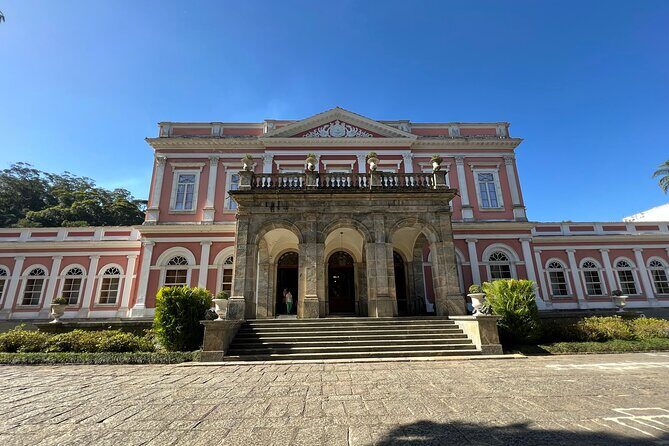
The Imperial Museum is the centerpiece stop, scheduled for about 2 hours with admission marked as included. This is where Petropolis turns from a pretty mountain town into a city with a founder’s plan.
The museum building traces back to Dom Pedro II. He had a summer residence developed on a site connected to earlier Portuguese-era movements and imperial decisions. A key date here is 1843, when Pedro II signed a decree creating Petropolis on March 16. Construction on what became the museum began in 1845 and finished in 1862.
European immigrants—mainly Germans—were involved under Major Júlio Frederico Koeler, who served as engineer and superintendent of the Imperial Treasury. If your guide is good (and Ederson is singled out for this kind of work), you’ll get more than a timeline. You’ll likely be shown how the region’s view changed over time using historical paintings, which makes the imperial planning feel real rather than academic.
Architecture lovers will also enjoy the materials and design choices:
- The building has a neoclassical style.
- Koeler worked on the original design, and after his death, modifications were made, including a granite portico added by Cristoforo Bonini.
- Decoration involved architects tied to the Imperial Academy of Fine Arts.
- Floors and frames used hardwoods sourced from the provinces of the Empire, including woods listed as jacaranda, cedar, pau-satin, pink and vigna.
- The vestibule floor used Carrara marble and black marble from Belgium.
Even if you don’t care about every material name, the cumulative effect is what matters. This museum doesn’t feel like a small countryhouse stop. It feels like the imperial mindset made physical—especially because it’s linked to the founding of the city itself.
Practical note: since this is the ticket-included museum, it’s also the safest value bet in the day. If you’re deciding what matters most, prioritize this one.
Quitandinha Palace: Norman Glamour, Hollywood-Style Interiors, and a Gambling Ban Twist
Quitandinha Palace Congress and Convention Center is a wild stop in the best way. It’s about 1 hour, and it’s described with a Norman-style exterior vibe (similar to European casinos), while the interior is compared to American film sets in style.
The interiors were decorated by Doroth Draper, set designer associated with Hollywood productions. If you like dramatic visual spaces, you’ll probably understand why this place became a magnet for high-society visitors. The palace spans about 50,000m2 and was built to function as Brazil’s game capital, with marble bathrooms, crystal pendant chandeliers, and lighting planned at a grand scale.
The “wow” details are specific:
- Mauá Hall was built to be enormous—30 meters high and 50 meters in diameter.
- Teatro Mecanizado had three rotating stages and capacity for 2,000 people.
- There’s also a lake shaped like the map of Brazil, with a lighthouse on an island shaped like Marajó.
Then comes the historical pivot: on May 30, 1946, President Dutra banned gaming in the country, and Quitandinha eventually stopped operating as a hotel. From 1989 onward, it was restored, and now the social spaces are used for congresses, events, shows, and fairs.
This is one of the best stops on the tour if you want a sense of modern Brazil’s story—not just empire. It also explains why Petropolis has such an out-of-time feel: the town wasn’t only about imperial summer life. It was also a stage for 20th-century fantasy.
One practical caution: the stop details say the admission ticket is included, but the package list includes “Tickets for Quintandinha Palace” under not included. Confirm your booking so you don’t get stuck on that last step.
Getting There and Keeping Your Day Comfortable: 9:30 Start, A/C Ride, and Timing
The tour starts at 9:30 am. Total time is listed as about 7 to 10 hours, which is long enough to include transport, walking, and ticket checks without cutting any stop too aggressively.
Transport is part of the appeal: it’s an air-conditioned vehicle, and that’s not a small deal in Rio’s climate when you’re doing a full day out of town. In the experience, the route is treated as a core part of the value—stress-free ride to Petropolis and back.
Because the itinerary includes sites with very different vibes (a cathedral with imperial mausoleum connections, a small house with quirky engineering, a glass palace, and a huge 20th-century convention complex), pacing is important. This is a private tour, so your guide can adjust the flow to your group’s interests rather than trying to follow a rigid crowd rhythm.
Also, plan around food. Lunch is not included. That’s not a dealbreaker, but it means you should budget extra time or money for a meal on your own.
Finally, note that this tour is often booked ahead (average booking is 42 days in advance). If Petropolis matters a lot to your Rio plan, don’t wait until the last moment.
Price and Value: What You’re Actually Buying for $167.57
At $167.57 per person, you’re paying for a day built around two big advantages: private guidance and logistics. A private guide matters here because Petropolis’s story is spread across architecture, imperial planning, and later cultural shifts—and you’ll get more out of it when someone points out what to notice.
You also get admission support for at least the Imperial Museum (and it’s clearly marked as included in the stop detail). That’s an important value anchor because the Imperial Museum is the main context stop.
Where value can swing is the optional or unclear-ticket portion. Santos Dumont and Quitandinha have admission marked as included in some parts of the stop descriptions, but the package notes list those tickets under not included. Cervejaria Bohemia is clearly optional with tickets not included.
So here’s the honest way to judge the deal:
- If you want the Imperial Museum as the core, the price makes more sense because you’re getting that ticket covered.
- If you also want Dumont and Quitandinha without extra payments, you’ll need to confirm exactly what’s included in your booking.
- If beer is your thing, treat Bohemia as a bonus you add when it fits your budget.
Who Should Book This Private Petropolis Tour
This is a strong choice if you want:
- A full Petropolis highlights day without planning or juggling transit.
- A guide who can explain imperial-era decisions and later cultural changes in plain language.
- A mix of sites: church and mausoleum connections, Santos Dumont’s home quirks, glass pavilion architecture, and a big dramatic convention palace.
It’s also a good fit for small groups who like a slower pace. Private tours work best when you care about asking questions and spending real time on what you find interesting.
Should You Book This Private Petrópolis Tour?
Yes—if Petropolis is on your must-see list and you want a guided, organized day that includes the Imperial Museum. The mix of stops is balanced: you’ll see imperial planning, a famous inventor’s daily life, an architectural import, and a 20th-century palace with a clear historical turning point.
Before you confirm, do one quick check: confirm whether Santos Dumont, Quitandinha, and any brewery visit tickets are included in your exact reservation. The details you’re given can conflict depending on how the package is described, and it’s better to verify once than pay twice later.
If you’re flexible on optional stops and mainly want the best “Petropolis story per hour,” this tour is a smart use of a day from Rio.
FAQ
How long is the Petrópolis private tour?
The duration is listed as about 7 to 10 hours.
What time does the tour start?
It starts at 9:30 am.
Is this tour private?
Yes. It’s a private tour/activity, meaning only your group participates.
What’s included in the price?
Included items are an air-conditioned vehicle, a professional guide with information during the tour, and museum tickets (with the Imperial Museum ticket specifically marked as included in the stop details).
Which stops have tickets included, and which are optional?
Catedral de Sao Pedro de Alcantara is marked as free. Crystal Palace is marked as free. Imperial Museum is marked as included. Santos Dumont and Quitandinha are marked as included in the stop details, but ticket notes in the package text list them as not included, so confirm your booking. Cervejaria Bohemia is described as optional with tickets not included.
Do I need to pay for the cathedral or Crystal Palace?
No. Both are marked with free admission in the stop details.
Is lunch included?
No. Lunch is not included.
What happens if the weather is bad?
The tour requires good weather. If it’s canceled due to poor weather, you’ll be offered a different date or a full refund.
What is the cancellation window?
You can cancel up to 24 hours in advance for a full refund. If you cancel less than 24 hours before the start time, the amount paid will not be refunded.