
REVIEW · RIO DE JANEIRO
From the Past to the Present: A Historical Walking Tour of Rio
Book on Viator →Operated by Boston Bruno Tours · Bookable on Viator
Rio feels like a movie set of different eras. This 4–5 hour historical walk stitches Rio’s past to the present using real landmarks, not generic talking points. I love how the route stays anchored in Rio Centro’s iconic buildings right from Cinelândia, and I also love the guide style—Bruno’s clear English, patience, and stories make the timeline easy to follow.
One thing to consider: a couple of stops may be quick on the inside, especially where lines get long (the Portuguese Reading Room is the big one). That’s not a deal-breaker, but it does change what you’ll see if you’re hoping for long interior time at every stop.
In This Review
- Key highlights you’ll notice fast
- Entering Rio Centro at Cinelândia’s grand landmark cluster
- Passeio Público: where public parks started taking shape
- Escadaria Selarón: street art measured in tiles and time
- A 1700s water aqueduct—and the ride it supports today
- Metropolitan Cathedral of Saint Sebastian: faith with a different shape
- Real Gabinete Português de Leitura: stunning rooms, timing reality
- Paróquia de São Francisco and São Bento: two very different church experiences
- Mauá Square to Painel Etnias: where public art becomes city identity
- Cais do Valongo: the port history that changes how you see Rio
- Price, group size, and timing: is it good value?
- What you can realistically expect from Bruno’s guide style
- Who this tour suits best (and who should adjust expectations)
- Should you book the Past to the Present walking tour of Rio?
- FAQ
- How long is the Rio historical walking tour?
- What does the tour cost?
- Where do I meet, and where does the tour end?
- What time does the tour start?
- How many people are in a group?
- Is admission included for the stops?
- Will we be able to go inside every building?
- Is the tour near public transportation?
- Can most travelers participate?
- What if the weather is bad?
- Is free cancellation available?
Key highlights you’ll notice fast
- Small group size (max 10) means less crowd pressure and more chances to ask questions.
- Bruno’s story-telling style turns stone-and-dates into cause-and-effect about how Rio grew.
- Selarón Steps stretches about 125 meters and uses over 2,000 tiles.
- Painel Etnias / Kobra graffiti is a must-see public art moment, even if you’re not a graffiti fan.
- Cais do Valongo connects Rio’s founding port history to the landing and trading of enslaved Africans (1811–1831).
- Then-and-now comparisons are part of how Bruno helps you “see” the city’s changes.
Entering Rio Centro at Cinelândia’s grand landmark cluster
You start where Rio’s official power and culture were packed together: Cinelândia. The meeting point is a Starbucks in Praça Floriano, and the neighborhood works like an open-air textbook. From here, you’re surrounded by a stack of landmark buildings, including the Theatro Municipal, Biblioteca Nacional, Museu Nacional de Artes, and older civic institutions tied to the city’s legal and political past.
What I like about this start is the pacing. You begin with architecture that’s easy to recognize and easy to orient around. That matters in Rio, where neighborhoods can feel like separate worlds. This first segment gives you mental bearings, so later stops hit harder when you connect them to how the city expanded, rebuilt, and rebranded itself.
The route keeps moving too. Most visits here are short (about 20 minutes), so you’re not stuck watching someone rush through one building. You’ll get a focused sweep of what’s where and why it mattered, then shift toward the more human-scale history of public space and daily life.
You can also read our reviews of more walking tours in Rio de Janeiro



Passeio Público: where public parks started taking shape
Next comes Passeio Público, described as the first public park in Latin America. That’s a huge claim, and it’s also a useful clue for how to read this walk. You’re not only seeing “pretty spots.” You’re watching Rio adopt civic ideas—space for strolling, gathering, and public life.
This stop is about 30 minutes, which is a good length for a park visit on a timed walking tour. You can look around, take in the setting, and let the guide connect the park to a broader story: how cities decide who gets public space and what that space signals about social priorities.
The drawback? If you’re expecting a long park break with time to sit and linger, this tour keeps things brisk. It’s built for movement and context, so bring the mindset of a “see it, learn it, move on” day.
Escadaria Selarón: street art measured in tiles and time
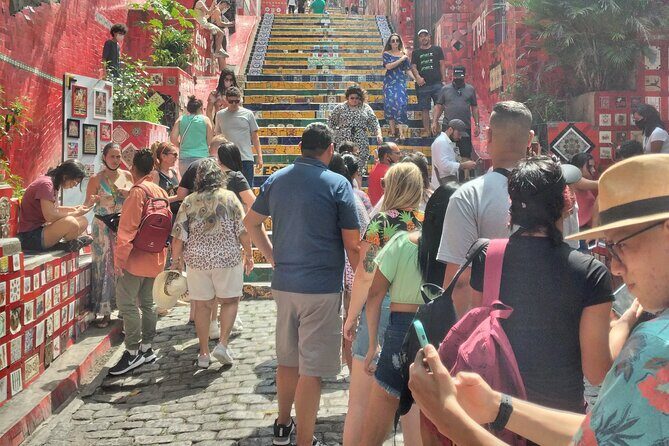
Then you hit one of Rio’s most famous “how did that happen?” sights: the Escadaria Selarón—the Selarón Steps. The scale is part of the story: the steps run roughly 125 meters long and include over 2,000 tiles.
This is where the tour’s whole past-to-present theme gets playful. You’re looking at a public art installation that acts like an evolving monument. Tiles can mean craftsmanship, collecting, and personal devotion, but in a place like Rio they also become a public language. You can understand it in seconds by seeing it. You understand it better when you get the context from the guide—why it became famous, and what it signals about how street-level culture shapes the city’s identity.
The stop is short (about 20 minutes), but that’s enough time to get your photos and take in the details without feeling like you’re waiting in lines forever. If you’re the type who likes to scan for hidden references in artwork, you’ll appreciate the time limit more than you’d think—you’ll be forced to pick a few focal points instead of trying to read everything at once.
A 1700s water aqueduct—and the ride it supports today
Somewhere in the middle of the walk you’ll see an engineering marvel from the 1700s: a water aqueduct that once supplied the city. Today, it’s connected to the Bondinho de Santa Teresa, which means the old infrastructure still has a role in how people experience the city.
This stop is clever because it shows continuity. Rio isn’t only changing through new buildings or new politics. It changes by reusing what was already built. The aqueduct is the “why,” and the modern usage is the “how,” and that contrast helps you understand the city’s practical side.
Because this is a walking tour with multiple quick stops, the aqueduct segment isn’t an all-day technical lecture. You’ll get the essentials, then move on. That’s perfect if you want insight without turning your itinerary into an engineering seminar.
Metropolitan Cathedral of Saint Sebastian: faith with a different shape
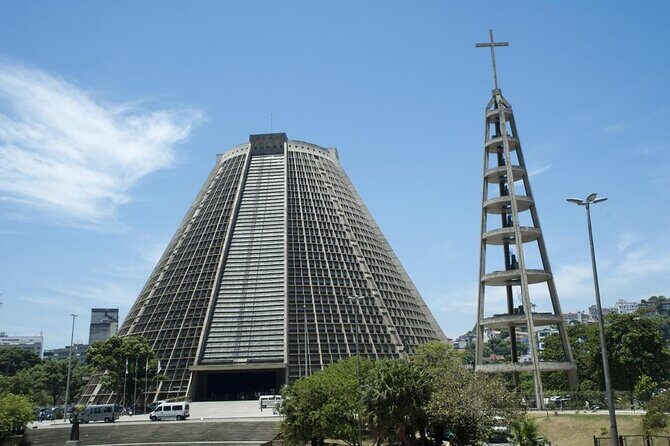
Next is the Metropolitan Cathedral of Saint Sebastian, noted as unique and different. This is one of those stops where “cathedral” might lead you to expect traditional design, and Rio does not always do what you expect.
The visit is brief (about 20 minutes), which keeps things in balance with the rest of the itinerary. The value here isn’t spending an hour searching for quiet corners. The value is learning how the city’s religious and public identities can shift in style and in symbolism.
If you want longer interior time, plan for it elsewhere during your trip. On this tour, the cathedral works best as part of a chain: public buildings, civic spaces, then faith architecture, each adding a new layer to the timeline.
You can also read our reviews of more historical tours in Rio de Janeiro






Real Gabinete Português de Leitura: stunning rooms, timing reality
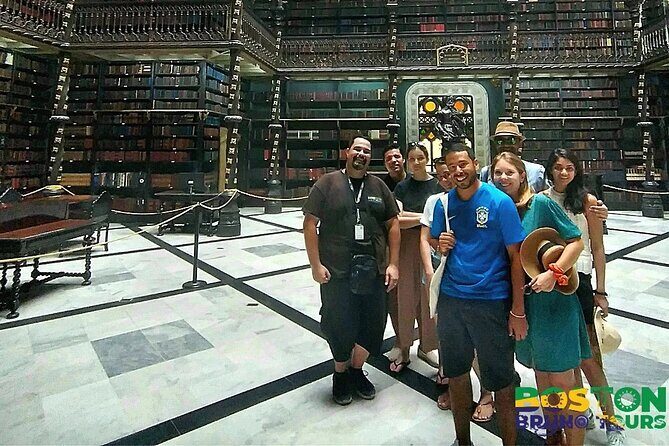
The Real Gabinete Português de Leitura (Royal Portuguese Reading Room) is described as truly stunning—but there’s a practical note: it can get incredibly busy with long lines. To keep the tour on schedule, you might only see the outside.
This is the kind of detail that actually matters for your decision. If you’re someone who dreams of long museum-style interior time, this stop can be frustrating on a fixed schedule. If you’re happy seeing the exterior and using the guide’s explanation to place it in the city’s broader cultural story, you’ll still get value.
Either way, the stop ties culture to power in a way that matches the Cinelândia start. Reading rooms and libraries are not neutral spaces. They represent institutions, education, language, and who gets access to knowledge.
My advice: if you really care about interior time, keep a little buffer in your overall Rio plan so you can add a separate visit if the reading room is packed on tour day.
Paróquia de São Francisco and São Bento: two very different church experiences
You’ll then visit Paróquia de São Francisco de [e E G], described as one of the most beautiful churches in Rio and also the second-largest temple in the city (as stated in the tour details). The visit here is short (about 10 minutes), which means the tour approach stays consistent: quick stops, focused explanations, and move-on momentum.
After that, you reach Mosteiro de São Bento do Rio de Janeiro. This is a historic monastery on Morro de São Bento and one of the main monuments of colonial art in the city and the country. The stop is about 15 minutes.
Here’s why these two religious stops work together: you’re not treating churches as standalone “pretty buildings.” You’re using them as chapters in a larger narrative—how colonial influence took shape in architecture and how Rio’s identity still carries those layers.
The only likely drawback is sheer sensory volume. Multiple religious sites in succession can blur into one big “church blur” if you’re not paying attention. A good way to solve that is simple: pick one detail per stop—facade, interior light, materials, or layout—then let the guide’s context connect it to the bigger story.
Mauá Square to Painel Etnias: where public art becomes city identity

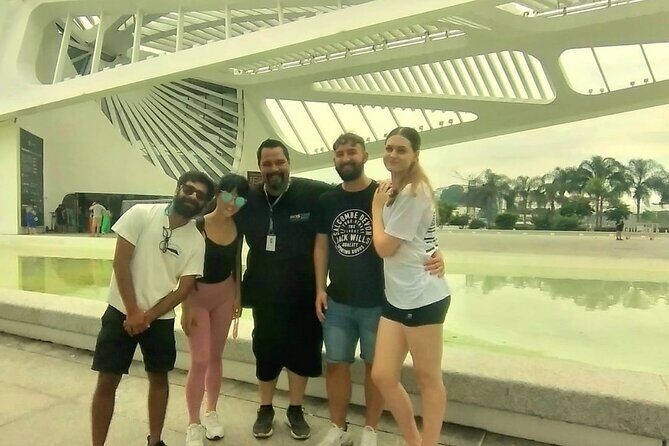
On the way to the next major mural moment, you’ll pass by Mauá Square, then head toward Painel Etnias, described as the largest graffiti in the world. This is where the tour shifts from stone-and-statutes history into a more modern, street-level expression.
The reason this matters: graffiti in Rio isn’t only decoration. It’s a visible marker of identity, community, and modern artistic authorship. You can treat it like a visual snapshot of the present era, then let the guide connect it to the “from the past to the present” theme you’ve been building since Cinelândia.
The time here is short (around 5 minutes), so you’re not going to linger like you might at a museum wall. But if you’ve ever seen a big piece like this and wished you had a guide to interpret it, you’ll appreciate the tight format. You’ll still leave with the meaning, not just the photo.
Cais do Valongo: the port history that changes how you see Rio
You finish at Cais do Valongo (Valongo Wharf), in the port area. This stop is one of the tour’s biggest historical anchors: it holds immense historical and spiritual significance as the main landing point and trading center for enslaved Africans brought to Brazil between 1811 and 1831.
This is where the entire route stops feeling like a highlight reel. When you end here, you understand that Rio’s “growth story” includes brutal human realities that shaped the city’s economy, demographics, and culture. The timing is appropriate too—you’ve learned how civic and religious institutions formed earlier, and now you meet the port system that helped drive the city’s transformation.
Because this is only about 5 minutes on tour time, you won’t get an exhaustive education at the end. But you will leave with the key idea in place: the city’s history isn’t only about beautiful buildings. It’s also about trade routes, forced migration, and memory—then and now.
If you’re the type who likes to take a moment at the end of a trip to absorb what you just learned, build in a little personal time after the tour. The location itself makes it easy to pause and look around before you move on.
Price, group size, and timing: is it good value?
At $49.05 per person for about 4 to 5 hours, this tour offers value for three reasons.
First, it’s organized around major stops spread across Centro and the port area. That’s not only convenient—it saves you from stitching together multiple half-day plans on your own. Second, the max group size is 10, which usually keeps the guide’s attention focused and the pace manageable. Third, the tour details list admission as free for the stops, so you’re not hit with a pile of paid entry fees as the day goes on.
The average booking window is also interesting: on average it’s booked about 57 days in advance, which tells me this is one of those Rio experiences that tends to fill up when people plan their weeks. If your dates are fixed, I’d treat it as something worth locking in early.
Timing-wise, the tour starts at 8:30 am. In Rio, mornings help. You’re more likely to beat the worst crowds and heat, and the day feels less like a sprint.
What you can realistically expect from Bruno’s guide style
The strongest theme in the feedback is the guide himself: Bruno. People describe him as friendly, patient, and willing to go above and beyond. They also emphasize that his English is clear and that he knows how to keep different ages interested, including teenagers.
Another standout pattern: Bruno doesn’t only recite facts. He answers questions, and the tour can shift based on what you care about. One review even talks about a book of vintage then/now photos, which is a practical teaching tool. It helps you compare changes in key spots without your brain doing detective work.
There’s also a safety element in the feedback—people felt secure walking with him. That doesn’t mean you should stop using common sense, but it does suggest he understands pacing and street sense, which matters on a multi-stop urban route.
So if you want a guide who treats history like a story you can follow step-by-step, this fits that goal well.
Who this tour suits best (and who should adjust expectations)
This historical walk is a strong match if:
- you’re a first-timer in Rio Centro and want a fast orientation
- you like your history tied to actual streets, buildings, and public art
- you prefer small groups and lots of room for questions
- you want to connect landmarks to how Rio developed over time
It’s less ideal if:
- you need long interior time at every stop (some sites may be limited by lines)
- you hate walking or want frequent sit-down breaks
- you’re looking for a slow, museum-grade pace rather than a moving city route
In other words, it’s not a “read every plaque” day. It’s a “learn the story behind what you’re seeing” day.
Should you book the Past to the Present walking tour of Rio?
I’d book it if you want a well-structured introduction to Rio’s Centro-to-port history, and you’re happy with a pace that keeps the tour lively and efficient. The price is reasonable for a small-group guided route, and the guide quality stands out in the feedback—clear English, patience, and a story-driven approach.
I’d think twice if your top priority is maximum interior time at specific sites like the Portuguese Reading Room. On this tour, you might only see the outside if lines are long.
If you’re trying to decide between “famous sights only” and “famous sights with context,” this is the second option. It ends where the city’s deeper history is impossible to ignore, which is exactly why the walk feels like more than a checklist.
FAQ
How long is the Rio historical walking tour?
It runs about 4 to 5 hours.
What does the tour cost?
The price is $49.05 per person.
Where do I meet, and where does the tour end?
You meet at Starbucks in Praça Floriano, 7 – Centro, Rio de Janeiro. The tour ends at Cais do Valongo on Av. Barão de Tefé – Saúde.
What time does the tour start?
The start time is 8:30 am.
How many people are in a group?
The tour has a maximum of 10 travelers.
Is admission included for the stops?
The tour details list free admission for each stop.
Will we be able to go inside every building?
Not necessarily. The Royal Portuguese Reading Room may be limited to seeing the outside if long lines affect the schedule.
Is the tour near public transportation?
Yes, it is near public transportation.
Can most travelers participate?
The tour notes that most travelers can participate.
What if the weather is bad?
The experience requires good weather, and if it’s canceled due to poor weather, you’ll be offered a different date or a full refund.
Is free cancellation available?
Yes. You can cancel up to 24 hours in advance for a full refund.