REVIEW · RIO DE JANEIRO
Favelas do Vidigal or Rocinha’s experience
Book on Viator →Operated by Guia Wellington/Berimbautour · Bookable on Viator
Rio’s favelas are a different kind of classroom. This private tour is built around real conversations, local social reality, and getting a feel for everyday Rio beyond the postcards. You’ll also spend time in one of the two favelas highlighted in Rio—Rocinha is the big name, and it’s the largest favela in Brazil.
I like that the tour is straightforward about what you’re here for: contact with residents and their stories, plus good food as part of the experience. I also like the practical setup in Copacabana, starting from the Copacabana Palace, a Belmond Hotel, and returning you there after 3 to 4 hours.
One thing to consider: this is not a quick photo-stop. You’ll be walking and engaging, so it’s best if you’re comfortable with a more direct, human-focused style of visiting neighborhoods like Rocinha or Vidigal.
In This Review
- Key things you’ll notice on this favela experience
- Meeting at Copacabana Palace and setting your expectations
- Vidigal or Rocinha: seeing Rio through residents, not just buildings
- What the tour does with stories (and why that’s the value)
- Food and everyday life: the part you’ll remember later
- Timing, duration, and how to plan the rest of your day
- Guides and communication: why bilingual matters here
- Price and what you’re paying for (74.91 for 3–4 hours)
- Practical comfort and respectful behavior (your role on the day)
- Should you book this favela tour from Copacabana?
- FAQ
- How long is the tour?
- What does the tour cost?
- Where does the tour start and end?
- What time does the tour start?
- Is this a private tour?
- Which favela areas are included?
- Do I get food during the tour?
- Is the meeting point easy to reach?
- What languages does the guide use?
- What is the cancellation policy?
Key things you’ll notice on this favela experience

- Private group only: you won’t be packed in with strangers.
- Copacabana Palace start point: easy to reach and easy to get back to.
- Rocinha context: you’ll be oriented to how Rocinha fits into Rio, including why it matters.
- Local stories + social reality: the point isn’t just views; it’s what life is like day to day.
- Good food included: you get more than scenery.
- Bilingual guide experience: at least one guide, Martín, is praised for English and Spanish.
Meeting at Copacabana Palace and setting your expectations

This tour meets at the Copacabana Palace, a Belmond Hotel, on Av. Atlântica (1702), with a start time of 1:20 pm. It ends back at the same meeting point, so you don’t have to worry about figuring out transportation afterward—nice when you’re already in Copacabana.
Because the tour is private, the pace is easier to manage. If your group wants to ask more questions, you’re not fighting the clock or a crowd. That matters on favela visits, where the quality of the experience comes from relationships and respectful attention, not from checking off “a site.”
I also like that it’s described as near public transportation and most travelers can participate. Translation: it’s not designed like a hardcore expedition. You should still expect real neighborhood walking, but the format aims to be accessible for a wide range of people.
You can also read our reviews of more tours and experiences in Rio de Janeiro.



Vidigal or Rocinha: seeing Rio through residents, not just buildings
The heart of this experience is your contact with true Rio culture—through residents, stories, and the lived social reality of the city. The tour is specifically tied to Vidigal and Rocinha, and Rocinha is called out as the largest favela in Brazil. That context matters, because it keeps you from treating the area like an isolated curiosity.
You’ll be visiting one of the two most beautiful favelas seen in Rio de Janeiro (the tour language puts it that way). The key point for you: the guide isn’t just taking you to a viewpoint. The focus is on how people live, how communities form, and what daily life feels like.
Here’s the practical way to frame it before you go: you’re not “touring a movie set.” You’re walking through a real place where people live, work, raise families, and keep life going. So your best move is to come with curiosity, listen more than you speak, and follow your guide’s cues on where to go and how to behave.
What the tour does with stories (and why that’s the value)
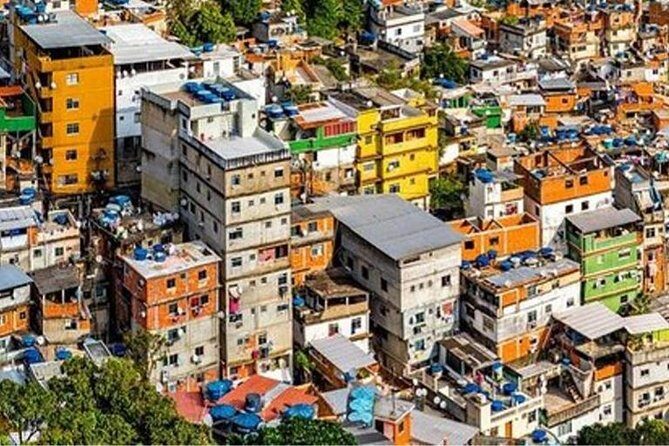
Many city tours hand you facts like trivia cards. This one leans into stories—meaning you get context for why certain things look the way they do. The tour is built around social reality, and that’s exactly where the value is.
You should expect a guide-led conversation style where you hear about life in the neighborhood and the forces that shape it. That’s the stuff that makes the “wow” last longer than a camera snapshot.
In the reviews, the standout praise is for the guide’s ability to connect and communicate. One written review calls out Martín as phenomenal, with strong English and Spanish. That’s important for you because it means you’re more likely to leave with understanding, not just surface impressions.
If you want Rio in a more honest, human version—this is the kind of tour that fits.
Food and everyday life: the part you’ll remember later
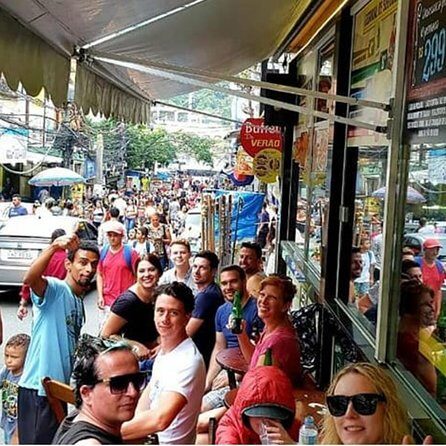
The tour summary explicitly includes good food, and that’s not a throwaway add-on. In places like Rocinha or Vidigal, shared food often becomes a natural bridge to daily life: where people eat, what’s convenient, what tastes like home, and how community rhythms work.
I like this because it shifts the experience from “watching” to “participating in small ways.” Even if you don’t speak Portuguese, a food moment can be surprisingly effective for building connection. It also gives you a reset during a longer walk—useful in Rio’s heat when you’re out exploring.
A practical tip: come hungry (as much as you can), and be ready for a relaxed timing flow. Food stops tend to set the tempo of the whole afternoon.
Timing, duration, and how to plan the rest of your day
The tour runs 3 to 4 hours. Starting at 1:20 pm means it’s well-placed for a later afternoon block, especially if you already explored the beach side of Copacabana earlier.
Because it’s private, your group likely won’t be rushed like a mass-market group might. Still, you should plan your day so you’re not sprinting across town afterward. You’ll return to the meeting point, so it’s easiest to keep your next plans nearby—dinner in Copacabana or an easy hop to another neighborhood.
What to bring:
- Water (Rio afternoons can get warm)
- Comfortable shoes for real neighborhood walking
- A charged phone/camera, but remember the point is people and stories, not just photos





Guides and communication: why bilingual matters here
The experience provider is listed as Guia Wellington / Berimbautour. The review highlights a guide named Martín and specifically praises English and Spanish. Put those together and you get a clear message: the tour isn’t trying to be vague or confusing.
For you, this matters because favela visits often come with complex questions. The more clearly your guide can explain, the more you can actually understand what you’re seeing.
Also, a strong guide changes the feel of the tour. With good communication, you’ll ask smarter questions, and you’ll be more likely to notice the details that local people point out—how spaces are used, how community life works, and what residents want you to understand.
Price and what you’re paying for (74.91 for 3–4 hours)
At $74.91 per person, this isn’t priced like a generic “bus + viewpoint” tour. You’re paying for a private guided experience that includes:
- access to a neighborhood context (Vidigal or Rocinha)
- guided storytelling and social reality framing
- good food
- a guide team that’s been praised for language skills
The value depends on your goal. If you want the classic postcard Rio only, you may feel this is too focused. If you want a more direct way to understand Rio and you’re excited by human stories and local food, that price starts to make a lot more sense.
I also like that it’s booked on average 16 days in advance. That’s a sign there’s real demand for this kind of small-group, narrative-based experience. If you’re traveling in high season or on a tight schedule, don’t wait until the last week.
Practical comfort and respectful behavior (your role on the day)

The tour is set up for most travelers to participate, and it’s private—so your experience should be shaped by your comfort level. Still, there are a few habits that will make everything smoother in neighborhoods like Rocinha and Vidigal:
- Listen first. Save questions until your guide gives you space to ask.
- Keep your movements calm. Crowding around people or changing direction abruptly can create friction.
- Follow your guide’s instructions on where to go and how to interact.
- Treat it like a visit to a living community, not a performance.
A sense of respect goes a long way, and your guide will almost certainly guide you on how to do that.
Should you book this favela tour from Copacabana?
You should book it if:
- you want Rio beyond beaches and viewpoints
- you like guided storytelling that explains social reality
- you value a private format with a bilingual, well-reviewed guide
- your group wants food included, not just walking and photos
You might skip it if:
- you only want iconic viewpoints and fast stops
- your group hates close, human interaction or long conversations
- you’re looking for an adventure that feels completely detached from daily life
If your goal is to leave Rio with more understanding than Instagram energy, this is a solid choice. Start at Copacabana Palace, spend a few hours in the heart of Vidigal or Rocinha, and come away with stories you’ll actually remember.
FAQ
How long is the tour?
It lasts about 3 to 4 hours.
What does the tour cost?
The price is listed as $74.91 per person.
Where does the tour start and end?
It starts at Copacabana Palace, a Belmond Hotel (Av. Atlântica, 1702) and ends back at the same meeting point.
What time does the tour start?
The start time is 1:20 pm.
Is this a private tour?
Yes. It’s private, and only your group will participate.
Which favela areas are included?
The experience is described as Favelas do Vidigal or Rocinha, with Rocinha noted as the largest favela in Brazil.
Do I get food during the tour?
Yes. Good food is included as part of the experience.
Is the meeting point easy to reach?
The activity is noted as near public transportation.
What languages does the guide use?
One review specifically praises Martín for English and Spanish. The listed guide provider is Guia Wellington / Berimbautour.
What is the cancellation policy?
You can cancel for a full refund up to 24 hours before the experience starts.