
REVIEW · RIO DE JANEIRO
Favela Walking Tour in Rio de Janeiro
Book on Viator →Operated by Brazil Expedition Day Tours · Bookable on Viator
Rocinha feels like Rio, just closer. You’ll walk through Rocinha, the largest favela in Latin America, with a local guide who explains what daily life looks like and how economic and political forces shape the city. What I love most is the street-level access you get, plus the way the tour turns stereotypes into real context. One thing to consider: the routes involve lots of steps, so comfortable shoes and a moderate fitness level matter.
I also like that this runs as a small group, capped at 14 people. The whole experience is built around transport to and from the area, then a long walking block that keeps your focus on what’s happening around you—not a bus lecture. If you want a polished, low-effort sightseeing day, this probably won’t be your style. If you want to understand Rio from inside the neighborhood, you’ll likely find it memorable.
In This Review
- Key things to know before you walk Rocinha
- Meeting at Copacabana and what the 4-hour block really means
- Walking Rocinha: what that 3-hour street circuit feels like
- Learning Rio’s power map: history, economics, and politics on the streets
- Respect rules that actually help (especially with photos)
- Food and shopping: what’s not included, and why that’s normal here
- Safety and comfort: how to make the day feel secure
- Price and value: is $34 a smart spend in Rio?
- Guides you might meet: resident voices that shape the tour
- Who should book this Rocinha walking tour
- Should you book this Favela Walking Tour in Rio?
- FAQ
- How long is the Favela Walking Tour in Rio de Janeiro?
- Where does the tour start and what time do I meet?
- How many people are on the tour?
- Is transport included?
- Is food and drinks included?
- Do I need hotel pickup or drop-off?
- How much walking is involved?
- What fitness level do I need?
- What is the minimum age for the tour?
- Can I cancel for a full refund?
Key things to know before you walk Rocinha
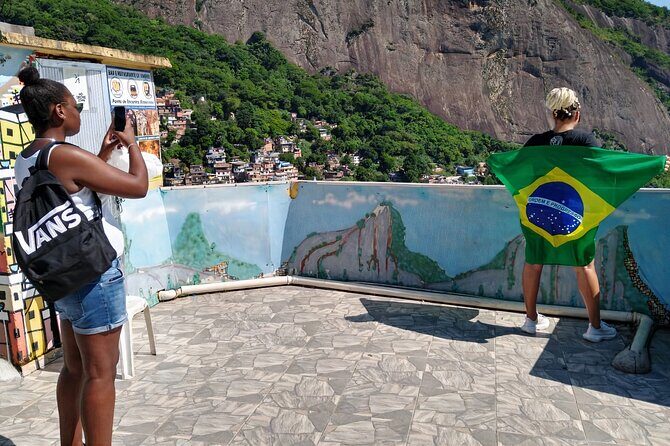
- Small group (max 14), which makes it easier to keep together and ask questions
- Rocinha for about 3 hours on foot, with real neighborhood streets and viewpoints
- Local resident guides who can share history and everyday details from firsthand experience
- Steep, narrow paths are part of the deal, so plan on stairs going up
- Food and drinks are not included, though you may have chances to buy snacks or grab a drink locally
- Respect matters: you’ll be encouraged to be thoughtful about photos and recordings
Meeting at Copacabana and what the 4-hour block really means
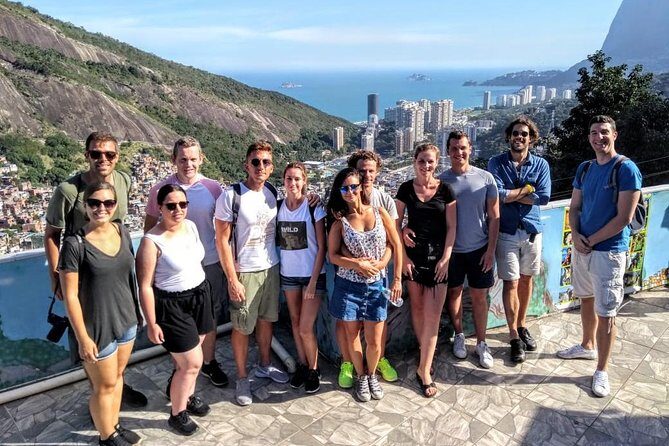
The tour starts in Copacabana at Belmond Copacabana Palace, right on Av. Atlântica (meeting time 13:25 for a 1:25 pm start). You’re told it ends back at the same meeting point, so this is easy to plug into a normal Rio afternoon.
The advertised duration is about 4 hours, and that’s realistic if you remember there’s travel time plus the walking time. The core experience is around 3 hours in Rocinha, so most of your time is spent on the ground—up close, not from a distance.
This also means the logistics are simple on paper: you get transport included, but there’s no hotel pickup or drop-off. So come to the meeting point. Think of it like a guided neighborhood walk that happens to be connected to a convenient starting spot in Copacabana.
You can also read our reviews of more walking tours in Rio de Janeiro



Walking Rocinha: what that 3-hour street circuit feels like

You’ll spend the main block crossing and walking through Rocinha, guided step-by-step through everyday life and local landmarks. The goal isn’t to speed through photos. It’s to show you how the neighborhood actually functions and how people experience Rio from here.
Expect a lot of walking. Reviews from people who did it highlighted that the uphill sections can be more strenuous than the downhill parts, and the paths can be steep and narrow. That’s not a minor detail—it changes your pacing and your comfort. If you’re unsure about stairs, bring a better plan for your energy levels than you’d use for a flat city stroll.
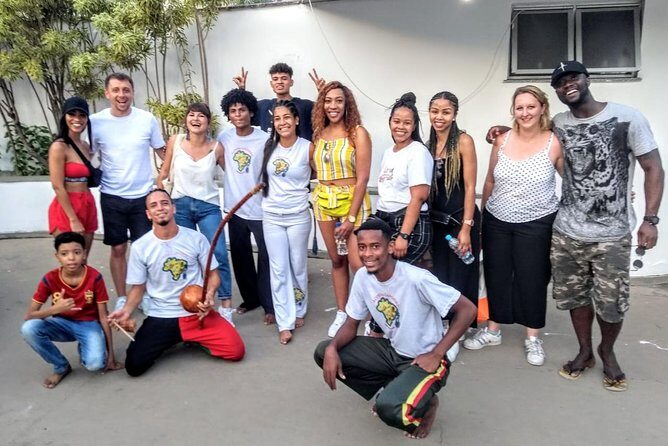
Along the way, you may also encounter community moments that make the tour feel less like a museum and more like a real afternoon in the neighborhood. People have mentioned fun add-ons like rooftop capoeira and a quick pick-up football moment. Don’t count on those exact scenes every time, but do expect that the guide will point out the kind of everyday culture that visitors often miss when they only pass by.
And yes, viewpoints matter here. Some guides lead you to spots where you can look back across Rio and understand why geography shapes the city’s layout and pressures. Even when you think you know Rio, these angles can surprise you.
Learning Rio’s power map: history, economics, and politics on the streets
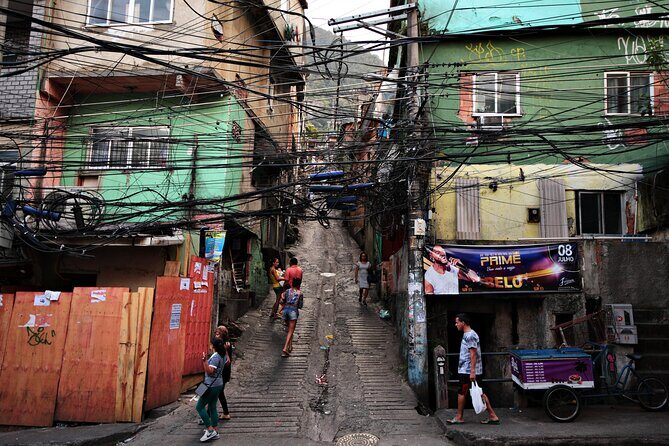
A big part of the value is what you learn once the group starts moving. The tour is designed to help you connect Rocinha to the bigger Rio story—especially the economic and political factors that influence the city.
In plain terms, the guide tries to answer questions you might not get from standard sightseeing:
- Why neighborhoods like this exist where they do
- How power, opportunity, and infrastructure play out daily
- How people build community, work, and stability in a system that doesn’t always make it easy
Rocinha is often discussed with stereotypes from a distance, but the whole point here is to bring that discussion down to real life. You’ll hear history and context from someone who’s living the reality. You also get direct conversation with community members, which helps shift the day from seeing to understanding.
One subtle benefit I like: this style of learning changes how you look at Rio afterward. You’re not just “at” a place. You’re reading the city with better information.
Respect rules that actually help (especially with photos)

Because this is a neighborhood, the social rules matter. More than once, people doing the tour pointed out how important it is to be respectful—especially about pictures and recordings.
Here’s how to handle it without making it awkward:
- Ask before filming or photographing if you’re close to residents
- Keep your phone in your hand only when you’re allowed to use it
- Treat interactions like real conversations, not like a show you’re watching
Good guides set expectations early, then guide you through the right moments. They’ll also show you how to act when locals are friendly. In some cases, you’ll be invited into short interactions that feel more like chatting with someone you just met than “tour contact.”
Also, keep in mind that this is not a place where you should assume you can wander freely. You’ll want to stay close to the group, follow the guide’s lead, and move at the pace the route requires.
Food and shopping: what’s not included, and why that’s normal here
Food and drinks are not included, and that’s important to plan around. You’ll likely spend long enough in the neighborhood that you may want a snack or a drink at some point, but you’ll pay yourself.
In practice, many people have described a mix of walking and short stops that can include local food or small shopping breaks. Some guides have taken groups to try popular snacks and treats—people have specifically mentioned things like coxinha and açaí ice cream—and that can make the experience feel more personal and less clinical.
The practical takeaway: bring a little cash or card for small purchases, and don’t expect lunch included in the ticket price. If you’re sensitive to crowds or long walks, this is also where you can control your energy—grab water, take a breath, then keep going.






Safety and comfort: how to make the day feel secure
Safety is always the big question with favela tours, and it’s also where your mindset matters. The strongest theme from people who had a good experience is that the guide felt like an insider—someone who knows the neighborhood, knows who to talk to, and keeps the group moving responsibly.
That said, the comfort level depends on behavior as much as the guide. The most important thing you can do is simple: don’t get separated. A couple of experiences have described moments where the group felt less controlled than it should have when the guide stepped away or when unfamiliar people approached for money-related requests. That’s not a reason to panic, but it is a reason to be strict about staying with your guide and keeping your attention on the route.
How to judge things on the day:
- If your guide regularly checks in on the group and keeps everyone together, that’s a good sign.
- If you feel like you’re being rushed into moving alone, speak up and ask for clarity.
- If you’re uncomfortable, say so quickly. A respectful guide will adjust.
Also, use common sense with your personal belongings. If you’re filming constantly, you can end up drawing the wrong attention and making the situation harder for everyone. Keep it respectful, short, and purposeful.
Price and value: is $34 a smart spend in Rio?
At $34 per person, this tour is priced like a value afternoon, not a luxury experience. And you’re paying mostly for two things: (1) the guided walk and (2) transport to connect you from Copacabana to Rocinha.
Here’s why that can be good value:
- You get a long walking block in a place most people don’t see on foot
- You’re hearing context tied directly to daily life, not just general facts
- The group size stays small, which keeps the experience more personal
Here’s where your money doesn’t stretch as far:
- No food and drinks, so your total day cost will rise if you buy snacks or want a drink
- You still need comfortable shoes and the willingness to handle stairs
If you’re comparing this to other Rio tours, think less about the price-per-hour and more about the experience-per-question. If you want honest context and you’re willing to walk, this is one of the more effective ways to understand Rocinha without treating it like a theme park.
Guides you might meet: resident voices that shape the tour
The guide can make or break a neighborhood tour, and this one clearly varies by person. People have mentioned guides such as Wellington, Edmundo, Daniel, Martin, Edwardo, Carlos, and Alberto, and the consistent pattern in positive experiences is that they are resident-connected and respectful.
What that usually means in real life:
- They can explain the history in a way that matches the streets you’re standing on
- They can translate everyday life into understandable context
- They know where it’s appropriate to stop, talk, and take a look
One extra point: some guides also help manage the practical side—where to film, when to ask questions, and how to keep the group feeling safe. Even if you don’t remember names later, you’ll likely remember the feeling of being guided by someone who belongs there.
Who should book this Rocinha walking tour
This tour is best for you if:
- You want to understand Rio through its real neighborhoods, not only through postcards
- You like asking questions and listening to how people interpret their own city
- You’re comfortable with a moderate fitness level and a route that includes steps
It may not be the best choice if:
- You struggle with steep stairs and narrow paths
- You’re expecting an air-conditioned, sit-down sightseeing format
- You want food and drinks included in the price
Age-wise, the tour lists a minimum of 5 years, which suggests it’s built to work for families, but remember: it’s still a long walking experience.
Should you book this Favela Walking Tour in Rio?
Book it if you want a guided walk that gives you more than views. Rocinha changes how you see Rio because you’re learning from people who live the story, not from a script. The small group size and resident-led guidance are the big wins, and the focus on history plus daily life is the reason the tour earns its high satisfaction scores.
Skip it if you need an easy route, hate stairs, or expect the tour to feel like a typical sightseeing day with included meals and minimal walking. Also, come with respect front and center. This isn’t about checking a box; it’s about being a good visitor in someone’s neighborhood.
If you do book, pack the right mindset and practical gear: comfortable walking shoes, a willingness to listen, and a basic plan to buy your own snacks or drinks if you want them.
FAQ
How long is the Favela Walking Tour in Rio de Janeiro?
The tour lasts about 4 hours.
Where does the tour start and what time do I meet?
You meet at Belmond Copacabana Palace on Av. Atlântica 1702 in Copacabana at 13:25, with a start time of 1:25 pm.
How many people are on the tour?
The tour has a maximum of 14 travelers.
Is transport included?
Yes. Transport is included.
Is food and drinks included?
No. Food and drinks are not included.
Do I need hotel pickup or drop-off?
No. Hotel pickup and drop-off are not included.
How much walking is involved?
The main neighborhood walking time is about 3 hours, and the routes include steep areas and lots of steps.
What fitness level do I need?
You should have a moderate physical fitness level.
What is the minimum age for the tour?
The minimum age is 5 years.
Can I cancel for a full refund?
Yes. You can cancel up to 24 hours in advance for a full refund.