REVIEW · RIO DE JANEIRO
2 in 1: Private Favela & Little Africa- The Full African History!
Book on Viator →Operated by Way to Know Rio · Bookable on Viator
Rio deserves a different kind of history day. This private 2-in-1 outing links Rio’s African story to the streets you can still walk today, with stops in the Port area and Little Africa, plus an optional favela visit for the view at Mirante Dona Marta.
I like the format a lot: your group has the day to itself, and you ride in comfort in an air-conditioned vehicle. I also love that the storytelling isn’t vague. Names like Andre and Ulysses come up in the guide praise, and that matters—because good narration turns quick city stops into real understanding.
One consideration: not everything is included. Some parts may add costs, especially if you want the optional favela guide, and there’s a Carnaval experience ticket mentioned too. You’ll also want moderate physical fitness, since this is active sightseeing.
In This Review
- Key highlights to know before you go
- Why this 2-in-1 route makes sense in Rio
- The practical value: private for up to 4, with comfort baked in
- The African history thread: where the story starts
- Cais do Valongo (the port where the story began)
- Porto Maravilha murals (history you can read on walls)
- Pedra do Sal (a small stop with big meaning)
- Instituto de Pesquisa e Memoria Pretos Novos (IPN)
- The city landmarks that set the scene (and why they matter)
- The largest urban park in the world
- Monument honoring Rio’s founder
- Monument for World War II militaries
- Mirante Dona Marta and the optional favela visit: choose your comfort level
- How the guide turns short stops into real understanding
- What’s included, what’s not, and how to budget without surprises
- Who this tour suits best (and who might not love it)
- Tips to get the most from your 7 hours
- Should you book 2 in 1 Private Favela & Little Africa?
- FAQ
- What is the duration of the tour?
- How much does this tour cost?
- Is the tour private?
- Do I get private transportation?
- Where is the tour located?
- Which stops are included in the route?
- Are any tickets required for admission?
- What additional costs should I budget for?
- Is there a cancellation option?
- Is there any physical requirement?
Key highlights to know before you go
- Private pacing, no crowd pressure: your guide sets the tempo and you can ask questions without squeezing in around strangers.
- Air-conditioned comfort in Rio traffic: less stress between neighborhoods.
- Little Africa stops that explain the whole arc: Cais do Valongo to murals at Porto Maravilha.
- Mirante Dona Marta viewpoint with optional favela time: choose how far you want to go.
- A museum stop that changes the tone: Instituto de Pesquisa e Memoria Pretos Novos (IPN) gives context beyond streets and walls.
- Free admission for most stops: several key sites are listed as free, so your budget can stay under control.
Why this 2-in-1 route makes sense in Rio
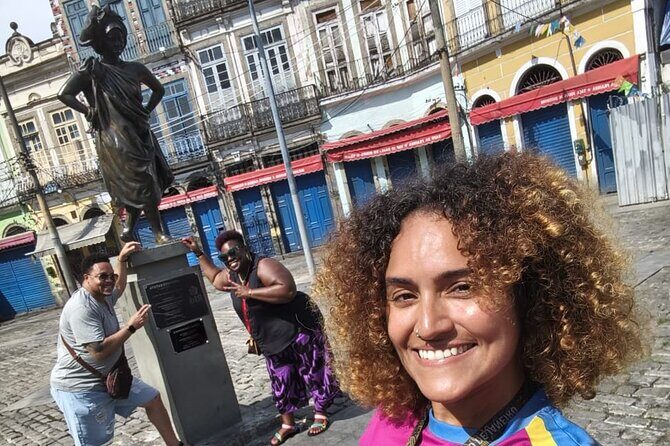
Rio can feel like two cities at once. One side is the postcards—bays, mountains, bright neighborhoods. The other side is the deeper story underneath: where people were brought, where communities formed, and how culture survived and reshaped a whole country.
This tour’s strength is that it doesn’t treat African history as a single stop. Instead, it builds a timeline as you move across Rio de Janeiro’s Port zone and Little Africa, then adds a viewpoint moment from Mirante Dona Marta. Even when the timed stops are short, the guide’s job is to connect the dots and explain why each place mattered.
If you’re the kind of traveler who likes a plan with clear targets (instead of drifting), you’ll probably enjoy the structure. The route is built around landmarks, not just driving viewpoints, so you’re doing real seeing with real meaning.
You can also read our reviews of more private tours in Rio de Janeiro



The practical value: private for up to 4, with comfort baked in
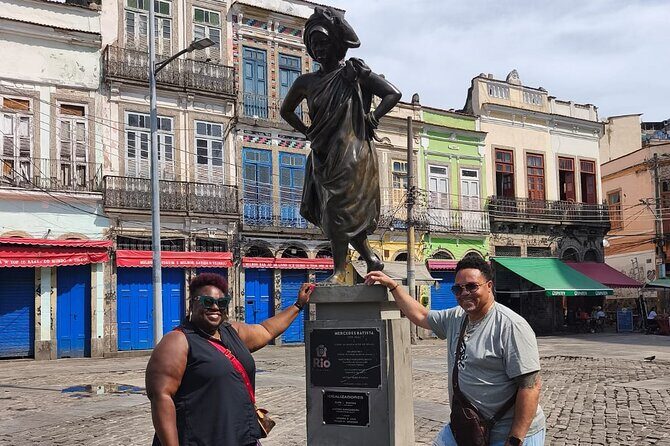
The price is listed as $171.43 per group (up to 4) for about 7 hours. That’s important for value: if you’re a group of 3–4, you’re likely paying far less per person than most “single-seat” tours.
You also get a choice on transportation. The experience includes private transportation as an option, meaning you can pick whether you want that built in or not. Either way, this is a private activity, so it’s only your group, not a mixed crowd.
The comfort detail matters more in Rio than it sounds. Traffic can be slow and unpredictable, and having your own air-conditioned vehicle helps you keep energy for the actual walking and site time.
The African history thread: where the story starts
Cais do Valongo (the port where the story began)
This is one of the tour’s core moments. You’ll see where ships would have disembarked, and the stop is listed as 15 minutes with free admission.
What I like about this stop for first-timers is how it anchors everything else. When you learn about African arrival through the geography of the port zone, later sites make more sense. It’s not just “a fact”—it’s a location with context, and your guide can connect it to the communities that formed after.
A short caution: because the time is tight, you’ll want to come with curiosity and good listening. Ask your guide what they think people usually miss on a first visit.
Porto Maravilha murals (history you can read on walls)
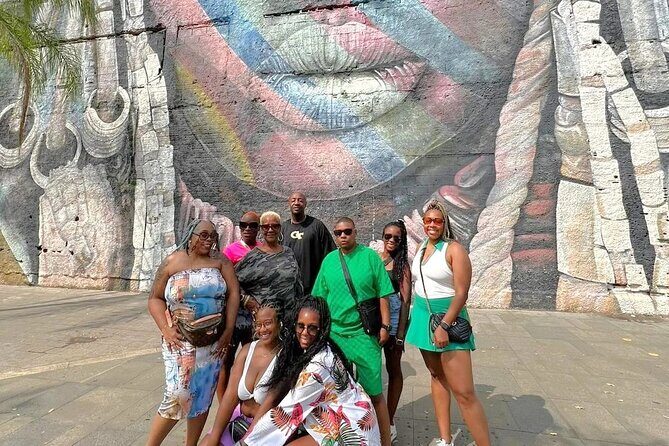
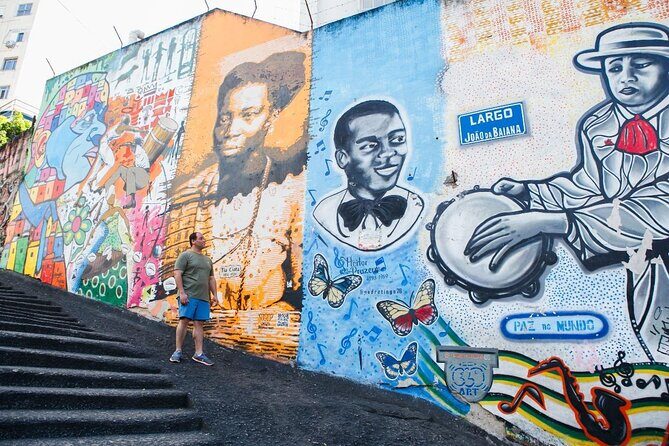
Next is Porto Maravilha, where you’ll explore murals connected to the story of African slavery in Rio. This stop is listed for 1 hour and free admission.
A wall is a different kind of textbook. Murals force you to notice details you’d gloss over if you only visited museums. They can also make the timeline feel less abstract because the artwork lives at street level, in the same space people pass every day.
If you like photos, this is a strong stop. If you hate photos, you’ll still get value from seeing how public art turns memory into something you can’t ignore.
You can also read our reviews of more historical tours in Rio de Janeiro





Pedra do Sal (a small stop with big meaning)
Then comes Pedra do Sal, listed for 15 minutes with free admission. This is a place with historical importance, and it works as a “breather stop” between heavier moments.
Short stops can be frustrating on tours, but in this route it’s a smart tool. After the port and murals, you get a chance to pause, absorb, and reset—so the museum stop lands with more weight.
Instituto de Pesquisa e Memoria Pretos Novos (IPN)
Finally, you’ll visit the Instituto de Pesquisa e Memoria Pretos Novos (IPN) for 30 minutes. Admission is listed as free.
This is where the tone typically shifts from “seeing places” to “understanding what those places meant.” A museum stop helps because it can slow the story down. You can stand in one place and take in details without the pressure of moving to the next stop.
In a day like this, IPN is the part I’d most recommend if you want context you can actually carry home and explain to friends.
The city landmarks that set the scene (and why they matter)
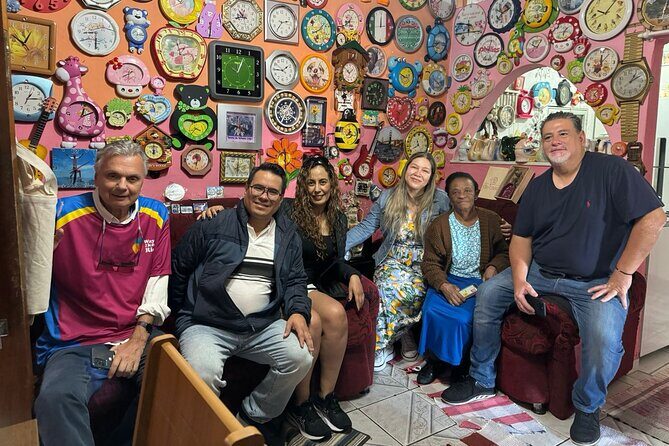
Before the Little Africa focus fully locks in, you’ll pass through a few major landmarks that help frame Rio’s story in the bigger city narrative.
The largest urban park in the world
There’s a stop described as the largest urban park in the world. This kind of stop is useful even if you don’t treat it like a “main attraction,” because it sets your brain into Rio mode. You start to recognize how mountains, green space, and the built city press against each other.
Also, it’s a good chance to get a quick breath and reset before more focused cultural stops.
Monument honoring Rio’s founder
You’ll also see a monument honoring the city’s founder. These kinds of monuments can feel dry if you just glance at them, but on a history-themed route they can be a starting point for discussion: how cities brand themselves, and what gets highlighted versus what gets quietly erased.
Monument for World War II militaries
There’s another monument honoring the dear militaries on the second world war. Again, it’s not “African history,” but it helps you understand how Rio records public memory across time periods.
The payoff here is practical: when you know where you are in Rio’s timeline, the rest of the day reads more clearly.
Mirante Dona Marta and the optional favela visit: choose your comfort level
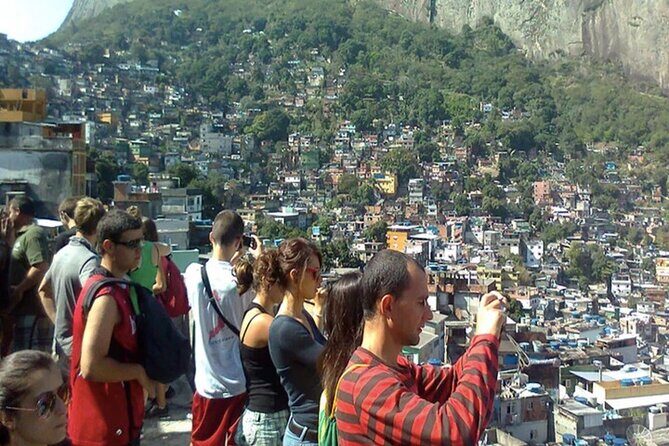
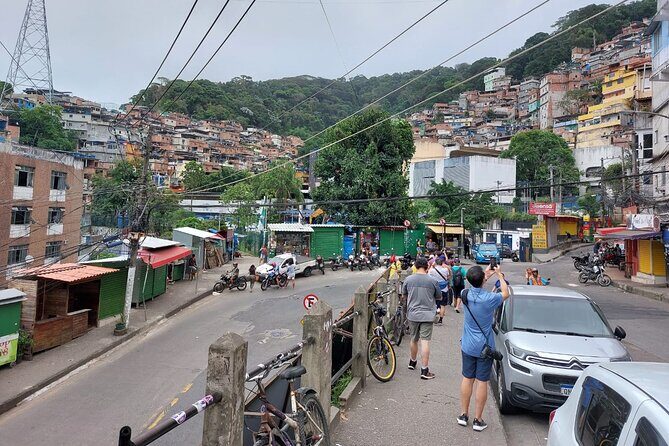
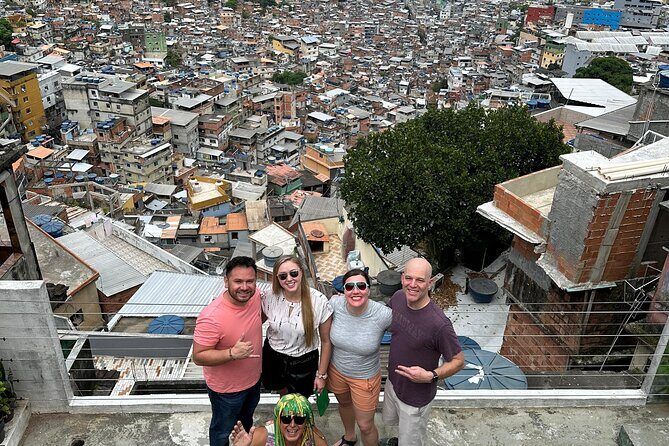
Mirante Dona Marta is listed as 2 hours, with the note that admission ticket isn’t included. This is paired with an optional visit to a beautiful and interesting favela.
Here’s how to think about it so you make a confident choice.
First, a viewpoint is the easy win. Even if you only want the lookout time, it’s a strong way to see how neighborhoods stack up against Rio’s hills and skyline. Views like these help you understand what you’re looking at when you later hear names of places.
Second, favela time is where planning matters. The tour data notes a favela guide cost of R$150.00 per person if you choose to go. If you care about respectful access and learning from someone from the community, budgeting for the favela guide is usually worth it.
Finally, remember the physical side: the tour specifies moderate physical fitness. If you have mobility concerns, ask your guide how much walking is expected in your specific plan.
In the reviews provided with this experience, guide personality gets a lot of credit, and that fits this part of the route. When you’re dealing with a sensitive neighborhood, a guide’s calm, clear explanations make a big difference.
How the guide turns short stops into real understanding
Two themes show up strongly in the guide praise: friendliness and flexibility.
Andre is mentioned as great—knowledgeable and personable—and the day felt like spending time with a genuine friend. Ulysses is also called wonderful, with strong knowledge and enthusiasm, and one review notes adjustments when weather created issues.
That last point is practical. Rio weather can change fast, and a good guide can shift the order or pacing so you still hit the most important points without rushing you.
If you want the best day, come prepared with questions. When you’re standing at Cais do Valongo, for example, ask what connection the guide sees between the port arrivals and the later cultural life you’ll see around Rio.
What’s included, what’s not, and how to budget without surprises
Included:
- Private transportation option (you can choose with or without it)
- Licensed guide from the team
Not included:
- Carnaval experience entrance tickets: R$100.00 per person
- Drinks and dessert
- Lunch
- Favela guide: R$150.00 per person
- Admission ticket not included for the favela viewpoint experience at Mirante Dona Marta
Most of the major African-history sites in the route are listed as free (Cais do Valongo, Porto Maravilha murals, Pedra do Sal, IPN), which helps your budget. The main costs to watch are the favela guide and any Carnaval add-on.
My budgeting tip: decide in advance if you want the optional favela guide. If you do, include it in your plan early so the day feels smooth instead of last-minute.
Who this tour suits best (and who might not love it)
This is a strong fit if:
- You want a private day with a guide who explains the story, not just points at buildings.
- You’re interested in African history in Rio and want it tied to real places like Valongo and IPN.
- You like structured sightseeing where key stops are planned, but you still get the freedom of a private group.
It might be less ideal if:
- You want long museum time or lots of free roaming. Several stops are timed tightly, and the value comes from the guide’s explanations.
- You dislike guided viewpoints or neighborhood visits. Mirante Dona Marta is optional in terms of the favela portion, but it is still a highlight.
Tips to get the most from your 7 hours
A few small moves make a big difference on a route like this:
- Wear comfortable shoes. Even with short stops, you’ll likely be on uneven sidewalks and moving between areas.
- Bring water and something light to snack on. Lunch and drinks aren’t included.
- If you’re thinking about Carnaval tickets or the favela guide, decide ahead of time so you can focus on the sites during the day.
- Ask your guide to connect stops verbally: Valongo → murals → Pedra do Sal → IPN. That thread is the reason the day feels cohesive.
Should you book 2 in 1 Private Favela & Little Africa?
Book it if you want a private Rio day that actually follows the African story through the city instead of treating it as a single “cultural” checkbox. The mix of Little Africa sites (Cais do Valongo, Porto Maravilha, IPN) plus the optional Mirante Dona Marta viewpoint gives you both meaning and perspective.
I’d also say yes if you value guide quality. The feedback here puts a lot of weight on guides like Andre and Ulysses—friendly, personable, and able to adjust when real-world conditions shift.
Skip it if your priority is pure leisure sightseeing or if you’re not comfortable with moderate physical activity and the extra choice points (favela guide cost, optional Carnaval experience). This tour is built for learning and respectful access, so it rewards people who come with curiosity.
FAQ
What is the duration of the tour?
The experience lasts about 7 hours.
How much does this tour cost?
The price is $171.43 per group (up to 4).
Is the tour private?
Yes. It’s a private tour, and only your group participates.
Do I get private transportation?
Private transportation is optional. The traveler can choose the tour with or without transportation.
Where is the tour located?
This tour takes place in Rio de Janeiro, Brazil.
Which stops are included in the route?
You’ll visit Mirante Dona Marta, Cais do Valongo, Porto Maravilha, Pedra do Sal, and the Instituto de Pesquisa e Memoria Pretos Novos (IPN), plus other landmarks along the way.
Are any tickets required for admission?
Cais do Valongo, Porto Maravilha murals, Pedra do Sal, and IPN are listed as free. Mirante Dona Marta notes that the admission ticket is not included.
What additional costs should I budget for?
The favela guide is R$150.00 per person if you choose that option. Carnaval experience tickets are listed as R$100.00 per person. Drinks, dessert, and lunch are not included.
Is there a cancellation option?
Yes. You can cancel up to 24 hours in advance for a full refund.
Is there any physical requirement?
The tour asks for a moderate physical fitness level. Service animals are allowed.