REVIEW · RIO DE JANEIRO
The Best of Rio de Janeiro in a Private Guided Tour
Book on Viator →Operated by Carioca Tropical Tour Operator · Bookable on Viator
Rio in one private day can feel like magic. The best part here is that you get a custom route with hotel pickup, so you’re not stuck with a cookie-cutter checklist. You’ll mix major highlights with smaller cultural stops at a pace that fits your group.
I love the control: your guide talks with you ahead of time and shapes the day around themes like food, sport, history, or culture. I also love the balance of iconic Rio and real street-level life, from lookout points and beaches to monasteries, cathedrals, and art stops.
One thing to keep in mind: entrance tickets are mostly on you. With so many strong options across the city, you’ll want to choose your priorities so the day stays relaxed and not rushed.
In This Review
- Key things to know before you go
- Private Custom Route: how your Rio day gets built around you
- Price and Logistics: what $480 per group really covers
- Tijuca National Park: the rainforest start that cools off your day
- Sugar Loaf Mountain: why this cable-car stop is a sunset classic
- Christ the Redeemer and the skyline strategy
- Botanical Garden and Flamengo Museums: shade, orchids, and architecture
- Beaches across Rio: Sao Conrado, Ipanema, Leblon, and Barra
- Downtown culture stops: CCBB, Cinelandia, and libraries with history
- Churches, monasteries, and Gregorian chants for a calmer Rio moment
- Lapa, Santa Teresa, and Escadaria Selaron: street-level Rio with style
- Carnival and football stops: Maracana and the Sambodromo
- Oscar Niemeyer and Guanabara Bay: Niteroi’s museum from the water
- Futurism and science on the waterfront: Museu do Amanhã and MAR
- Picking the right stops: how to keep the day from feeling like a checklist
- Should you book this private Best of Rio tour?
- FAQ
- What time does the tour start?
- How long is the tour?
- What’s included in the price?
- Are attraction tickets included?
- Is the tour private?
- How many people can be in a group?
- Does the guide help customize the itinerary?
- Are food and drinks included?
- Where does the tour end?
- What is the cancellation policy?
Key things to know before you go

- A pre-trip chat sets the day: your guide contacts you first, then builds the route around your interests
- Big views plus smart backups: Sugar Loaf and Christ are major goals, with alternate viewpoints like Mirante Dona Marta when weather turns
- Beaches and neighborhoods, not just museums: you can shift between Ipanema energy and calmer beach stretches like Leblon
- Cultural stops can be free: several major heritage sites and museums listed are admission-free
- Private attention, private driving: you’re traveling with a dedicated guide and driver, not a crowded group
- Tickets for major attractions are extra: expect to pay for cable cars and the Christ site, while many stops are free
Private Custom Route: how your Rio day gets built around you
This tour is designed for one thing: getting you a Rio overview without wasting time on places you don’t care about. You start at 8:00 am with hotel pickup and a private vehicle, and you end back at your hotel after about 8 hours. The real difference is that your guide doesn’t just run a script. They contact you ahead of time to talk through what you want most.
That pre-trip planning matters because Rio is big, and “Best of Rio” can easily turn into “Best of the road between stops.” Here, you can steer the day toward food joints, sport, history, or culture. You can also decide how many classic icons you want versus how much time you’d like for beaches, neighborhoods, and slower walking.
One practical upside: if you’re coming from a tight schedule, this format helps you build a first-day understanding. You’ll see how neighborhoods connect, where viewpoints sit, and which sights feel like they belong together. Later, when you plan follow-up days on your own, you’ll make smarter choices because you already have the city’s logic in your head.
You can also read our reviews of more guided tours in Rio de Janeiro



Price and Logistics: what $480 per group really covers
The price is listed at $480.00 per group (up to 3), and the booking pattern shows many people reserve this about 56 days in advance. What you’re paying for is the private guide + driver time, the vehicle, and hotel pickup and drop-off.
Entrance fees and tickets are not included. That’s important for budgeting, because the two most famous skyline hits—Sugar Loaf and Christ the Redeemer—usually come with paid admission or cable car costs. Many other stops listed are free, including several cultural centers and historic churches, so your final total depends on what you choose to pay for.
Also, pay attention to group size in your booking details. The tour is private and your group participates, but the included info mentions a private tour model that can cover up to 14 people. If you’re booking for a family, double-check the stated group cap in your confirmation so expectations match reality.
For value, this works best when:
- you want maximum highlights in one day, and
- you’d otherwise pay for taxis plus tickets plus the cost of getting lost, and
- you appreciate having a guide handle timing and navigation.
Tijuca National Park: the rainforest start that cools off your day

You kick off with Parque Nacional da Tijuca, an urban rainforest that’s basically Rio’s green engine. This is the part of Rio that feels like it shouldn’t be so close to the city. You’re in an Atlantic Forest ecosystem with hiking paths, waterfalls, and high viewpoints.
Why this first stop is smart: it shifts your brain from street and traffic mode into nature and viewpoint mode early, when the light and air often feel better. It also sets context for later overlooks. When you’ve seen Tijuca from above, the rest of the city’s geography clicks.
If you’re planning what to wear, think walking shoes and sun protection. Even when you’re not doing a long hike, you’ll likely spend time on uneven ground or stairs. This is also a good place to slow down, take photos, and let the guide explain why this rainforest matters to Rio’s water and climate.
Admission for this stop is listed as free, which is a nice bonus if you’re trying to keep ticket costs down.
Sugar Loaf Mountain: why this cable-car stop is a sunset classic
Sugarloaf Mountain is one of those Rio icons that earns its reputation. The granite peak gives you panoramic cable car rides and wide views over Guanabara Bay. It’s especially famous for sunset photos, but even in daylight it helps you understand the coastline and how neighborhoods wrap around the water.
The big practical consideration is timing and weather. If the morning sky is clear, this can be a visual highlight that anchors the day. If clouds or fog move in, your best move is to have flexibility. Some guides in the operator’s pool have used smart planning like fast-track ticket options for Sugar Loaf on days where queues could eat up your time.
Because the cable car admission is not included, you’ll want to decide how important Sugar Loaf is compared to other paid or time-sensitive stops. If it’s a top priority, consider making it one of your first “paid” decisions so you protect your schedule.
Christ the Redeemer and the skyline strategy
Corcovado and Christ the Redeemer is the New Seven Wonders stop—meaning it’s famous for a reason. From the statue’s viewpoint, you get that classic Rio panorama that looks like it’s been printed on postcards for a century.
Ticket costs for Corcovado are not included, so you’ll be paying extra here if you want the full experience. That said, you can often reduce wasted time if your guide can arrange the right timing and skip longer queues when possible. In feedback from people who did this tour, guides have helped with line management using options like fast-pass or skip-the-line strategies for major sites.
The other reason this stop deserves planning: the view depends on weather. In one example, when fog prevented a clear Christ view, the guide shifted to Mirante Dona Marta first to keep the day feeling rewarding rather than stuck. If you’re flexible and your guide is proactive, you still come away with great photos even when conditions aren’t perfect.
My practical advice: if Christ is a must, build your day so you’re not rushing through other stops. You don’t want your “best view moment” to compete with a dozen other time demands.
You can also read our reviews of more private tours in Rio de Janeiro






Botanical Garden and Flamengo Museums: shade, orchids, and architecture
After the urban rainforest feel, it’s a relief to switch into the quieter tempo of the Botanical Garden. You’re looking at over 6,000 species of tropical and subtropical plants. Orchid gardens and an avenue of imperial palms are part of what makes this stop feel like a slow reset.
For many people, the Botanical Garden is a top contrast to the big panoramic towers. You’re still seeing Rio’s variety, but with less pressure and more time to breathe. If you’re traveling with someone who gets tired in hot weather, this kind of stop can be a lifesaver.
Nearby, you may also visit Museu de Arte Moderna do Rio de Janeiro in Flamengo Park. It’s a modernist museum housed in an architectural landmark. Even if you’re not a museum superfan, the building and the park setting are often part of why people like it.
Entrance fees for these museums are listed as not included, so decide whether you want to spend time inside based on your interests and ticket budget.
Beaches across Rio: Sao Conrado, Ipanema, Leblon, and Barra
Rio’s beaches are not all the same, and that’s why the beach sequence in this tour can be so useful. You can choose from multiple beach areas and pair them with viewpoints and neighborhoods.
Sao Conrado is a scenic beach popular with adventure seekers, with hang gliding landings and surfing. Ipanema is the global name—great for swimming, people-watching, and sunsets from Arpoador Rock. Leblon sits next to Ipanema and tends to feel quieter and more family-friendly, with Two Brothers mountain views.
Then there’s Barra da Tijuca, the longest beach in Rio. It’s a different vibe again, more laid-back in feel and popular for surfing and beach sports, with upscale condo development along the waterfront.
Here’s the practical value: rather than doing one beach and calling it Rio, you’re sampling the coastline. You’ll get a feel for where crowds gather, where the city opens up, and which beach energy matches your mood that day.
My suggestion: if you’re photo-focused, don’t just rush to the sand. Ask your guide where the best viewpoints and short photo walks are, especially near famous sunset areas. If you’re swim-focused, plan for a realistic time window so you’re not rushed back into the vehicle.
Downtown culture stops: CCBB, Cinelandia, and libraries with history
Rio’s downtown area has deep layers, and this tour includes several cultural and historic anchors. One of the central stops is Centro Cultural Banco do Brasil (CCBB Rio de Janeiro), located in a historic neoclassical building. It hosts art exhibitions, theater, and cinema, and the admission here is listed as free.
Another classic downtown move is Cinelandia, a square surrounded by historic theaters, cinemas, and museums. It’s described as Rio’s cultural and intellectual center since the early 20th century. If you like architecture and urban history, this is the kind of stop where photos feel like facts.
You may also visit Biblioteca Nacional, Brazil’s largest library, and one of the largest libraries in the world. It houses rare manuscripts, maps, and historical documents. Even if you don’t go deep into exhibits, the sheer scale and importance make it a meaningful pause.
Other downtown-style stops that can fit your route include:
- Praca Quinze de Novembro, tied to colonial architecture and the Imperial Palace
- Tiradentes Palace, the state legislative assembly known for historical murals
- Palacio Pedro Ernesto, Rio’s municipal chamber building
Some of these have free admission listed, while others may have ticket costs depending on what you choose to do inside. If you’re picking between landmarks, decide if you want exterior architecture time or a longer museum-and-quiet moment.
Churches, monasteries, and Gregorian chants for a calmer Rio moment
Rio is famous for its parties, but it also has sacred spaces that change your pace fast. Mosteiro de Sao Bento is a 17th-century Benedictine monastery with a richly decorated Baroque interior. One detail that makes it special is the daily Gregorian chants, which add a whole other dimension to the visit beyond the visual beauty.
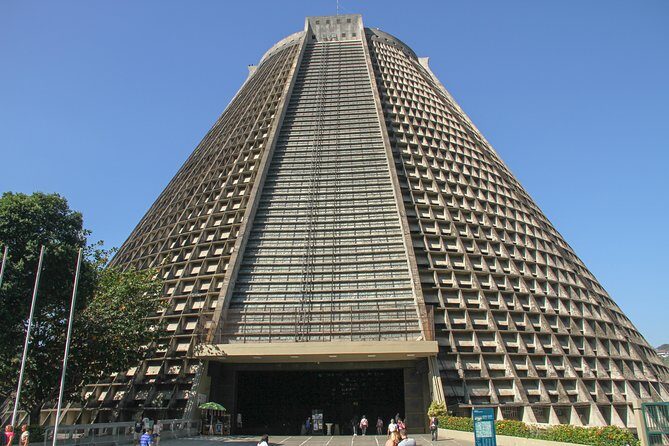
Another major spiritual landmark on the route is the Metropolitan Cathedral of Saint Sebastian. It’s a modernist cathedral resembling a Mayan pyramid. Inside, it has soaring stained-glass panels and a huge capacity listed at room for 20,000 people.
And then there’s the Church of Our Lady of the Candelaria, known for its grand colonial church façade and ornate Baroque interior. If you care about the craftsmanship of older religious architecture, this one tends to be a standout because it’s designed to be seen from the street as well as from inside.
All three are listed with free admission in the tour info. That’s a good sign for budget-minded travelers and a strong reason to include at least one religious stop in your one-day plan. They give you a break from view-chasing and a moment of quiet that contrasts Rio’s nonstop motion.
Lapa, Santa Teresa, and Escadaria Selaron: street-level Rio with style
If you want Rio that feels lived-in, Lapa and Santa Teresa deliver. Arcos da Lapa is an 18th-century aqueduct now functioning as a bridge for the Santa Teresa tram. It’s also known as a nightlife hotspot, so your timing matters if you want it to feel lively versus crowded.
Santa Teresa itself is bohemian, with winding streets, colonial mansions, and art studios. It offers hilltop views and a different texture than the beach neighborhoods.
A must-photo stop on the route is Escadaria Selaron, the colorful mosaic staircase created by artist Jorge Selaron. This is one of those places that looks like street art and history at the same time, and it’s easy to enjoy even if you only have a short window.
If you’re traveling with someone who loves photography, prioritize these stops. They’re visual without needing a long line or ticket-based entry. The best trick is timing: go when light is good and you can walk without feeling rushed.
Carnival and football stops: Maracana and the Sambodromo
This tour doesn’t only cover the tourist landmarks; it also points toward Brazil’s big sports and big music identity.
Maracana is the iconic football stadium that has hosted two FIFA World Cup finals. It’s a symbol of Brazilian football passion, and even outside of match days it’s a meaningful cultural landmark. Entrance is listed as not included, so if you want inside access or any specific areas, plan for paid entry.
The Sambodromo da Marques de Sapucai is the heart of Rio’s Carnival parade. It was designed by Oscar Niemeyer and is dedicated to samba competitions and festivities. Admission is listed as free on the route plan, which makes it a great option if you want cultural flavor without extra ticket cost.
My advice: if Carnival is your reason for visiting Rio, make sure you keep time for the Sambodromo. If you’re more sports-focused, Maracana can be the bigger emotional payoff. You can’t do everything every time in one day, so pick the one that matches your trip theme.
Oscar Niemeyer and Guanabara Bay: Niteroi’s museum from the water
On the art-and-architecture side, Museu de Arte Contemporanea de Niteroi is a key stop. It was designed by Oscar Niemeyer and described as saucer-shaped, overlooking Guanabara Bay. The exhibitions are contemporary and rotating, which makes it a good match for people who want modern art in a dramatic setting.
Entrance fees for this museum are listed as not included. That doesn’t mean it’s not worth it; it just means you should treat it like a real decision. If modern art isn’t your thing, you may prefer using that time for a viewpoint or a beach stretch.
If you do go, the museum’s exterior and location often matter as much as the galleries. You’re not just looking at art; you’re watching the bay and the city’s geography unfold around the building.
Futurism and science on the waterfront: Museu do Amanhã and MAR
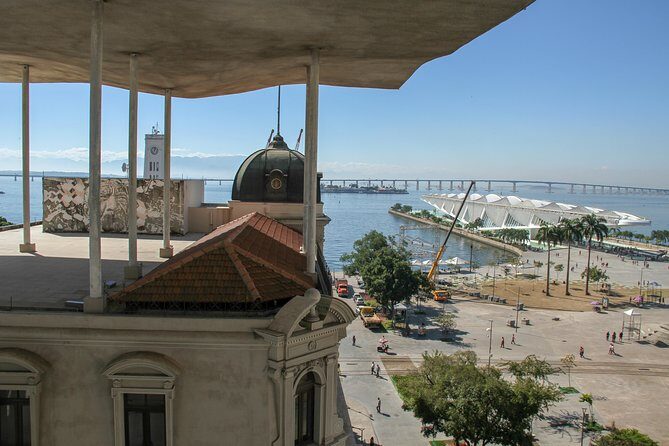
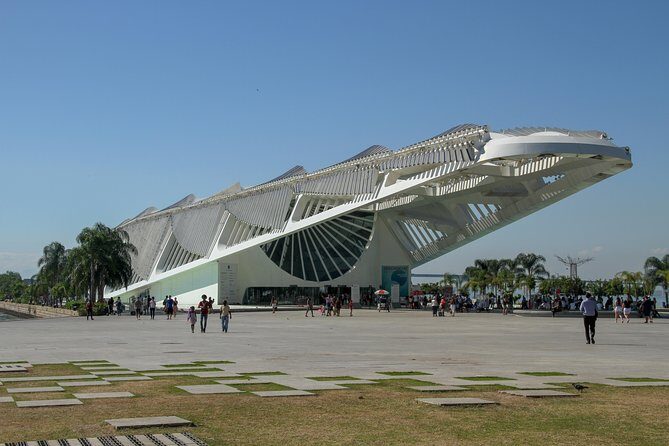
For variety, the route can include Museu do Amanhã, a futuristic science museum focusing on sustainability and innovation. The architecture is by Santiago Calatrava and sits on the waterfront. This stop works well when you want something different from classic Rio icons and older churches.
Entrance fees for Museu do Amanhã are not included, so again, decide based on your interests in science and design.
Another water-adjacent cultural stop is Museu de Arte do Rio (MAR) at Praça Mauá. It blends historic and modern architecture and explores Rio’s art, history, and social evolution. Entrance is not included for MAR.
These are smart “switch” stops. After days full of cable cars and churches, science and architecture can reset your attention and help you understand how Rio imagines its future.
Picking the right stops: how to keep the day from feeling like a checklist
The tour list includes a lot of possible stops, from lookouts like Mirante Dona Marta to civic buildings like Tiradentes Palace and even the Portal de Entrada de Petropolis. In an 8-hour day, you’re not going to hit everything in one perfect sweep. The value is that your guide can tailor the mix.
A good approach is to choose:
- one or two must-see icons (Sugar Loaf, Christ),
- one nature/green stop (Tijuca and/or Botanical Garden),
- one cultural cluster (downtown churches, CCBB, library, monasteries),
- and one neighborhood vibe stop (Lapa/Santa Teresa/Selaron Steps).
This keeps the day coherent and cuts down on the frantic feeling that comes from too many transitions.
And if the weather changes, remember that viewpoint substitutions can save the day. Mirante Dona Marta is specifically described as a scenic lookout with some of the best panoramic views, including Sugar Loaf and Christ. It’s also great for sunrise photos, which matters if fog or clouds hit your first-choice skyline shot.
Should you book this private Best of Rio tour?
Book it if you want a guided day that you can shape, not a rigid tour bus route. The combination of private attention, pre-trip itinerary planning, and a route that can flex between icons, beaches, and cultural stops is a strong match for short stays.
Skip it or rethink it if you have a very tight budget for tickets, since major attractions have extra costs. Also, if your schedule is rigid and you can’t tolerate any start-time adjustments, treat private tours like a system that still needs day-of coordination. You’ll get the best outcome when you stay responsive to your guide’s messages and confirm priorities early.
If you want an efficient, customizable first taste of Rio—with your guide acting like a local route designer—this one makes sense. Just pick your non-negotiables up front, then let the rest of the day support those choices.
FAQ
What time does the tour start?
The start time is listed as 8:00 am.
How long is the tour?
The duration is listed as about 8 hours.
What’s included in the price?
Hotel pickup and drop-off, a certified multilingual guide and driver, private vehicle transport, and a private tour for your group are included.
Are attraction tickets included?
Entrance fees and ticket entrances are not included, though several listed stops are marked as admission free.
Is the tour private?
Yes. It’s a private tour, and only your group participates.
How many people can be in a group?
The price is listed per group up to 3, while the included info also references private tours for up to 14. Confirm your exact group limit in your booking details.
Does the guide help customize the itinerary?
Yes. Your guide contacts you in advance to discuss the itinerary and can tailor the day around themes like food, sport, history, or culture.
Are food and drinks included?
No. Food and drinks are not included.
Where does the tour end?
Your tour concludes with drop-off back at your Rio de Janeiro hotel.
What is the cancellation policy?
Free cancellation is available up to 24 hours in advance for a full refund.
If you want, tell me your must-do sights (for example Sugar Loaf first, then beaches, then churches), your travel dates, and your group size, and I’ll suggest a realistic 8-hour priority order.