REVIEW · RIO DE JANEIRO
Rio Rainforest Ride An Unforgettable Mountain Bike Tour
Book on Viator →Operated by Trio · Bookable on Viator
Mountain biking in Rio starts with a climb. On this small-group ride led by Michael, you pedal from Cosme Velho up toward the Tijuca National Park for jaw-dropping viewpoints and a real break from city noise.
I love how the route mixes story stops with nature. You pause at the Carioca River landmark that helped name Rio’s people, then you catch one of the best overlooks at Mirante Dona Marta.
This ride is not a casual spin. Most of your time is uphill, so make sure you bring strong physical fitness and don’t go in expecting flat streets.
In This Review
- Key Points Before You Go
- Why This Ride Works: Cosme Velho to Tijuca in One Shot
- Meet Michael and Your Small-Group Setup
- Stop in Cosme Velho: Old Rio Stories Before the Climb
- Caixa da Mãe D’água and the Carioca River Connection
- Mirante Dona Marta: The View Break That Feels Earned
- Paineiras Visitors Centre: Christ the Redeemer Context (Plus a Snack)
- Tijuca National Park and the Redentor Road Bike Ride
- How Hard Is It? The Uphill Reality Check
- What You Get for $70.57: Value That Matches the Time
- Practical Tips to Ride Comfortably in Rio
- Who This Tour Is Best For (and Who Should Skip It)
- Should You Book the Rio Rainforest Ride?
- FAQ
- FAQ
- What city is the Rio Rainforest Ride in?
- How long is the tour?
- How much does it cost?
- Is the tour offered in English?
- How many people are in the group?
- Where does the tour start and end?
- What stops are included?
- Do the stops require paid admission?
- What fitness level do I need?
- Is the tour dependent on weather?
- Is there free cancellation?
Key Points Before You Go
- Michael runs a tight, friendly group ride (max 6 people), so you get help when you need it and you’re not stuck waiting around.
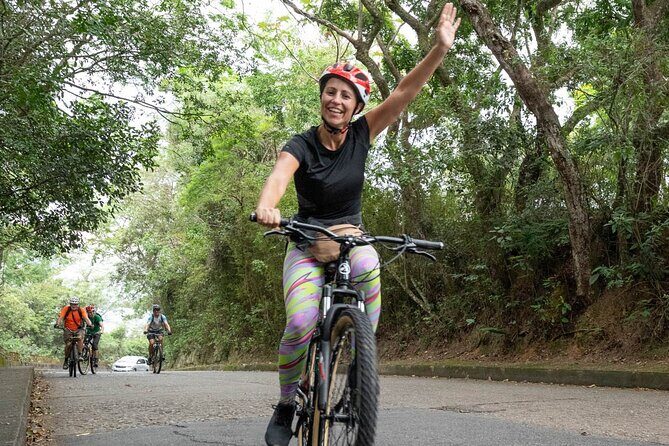
- Car-free cycling on Redentor Road in Tijuca National Park means safer, calmer riding with plenty of scenic stops.
- Mirante Dona Marta is built for photos and breathing room, with a scheduled rest at a top viewpoint.
- Paineiras visitors centre adds context about the Christ the Redeemer area, plus a lookout and an easy snack/drink stop.
- Your stops are mostly free to enter, which makes the ticket price feel more like guided riding than museum paywalls.
Why This Ride Works: Cosme Velho to Tijuca in One Shot
Rio has viewpoints everywhere. This tour is different because you earn them by bike, then you move into the big green area people talk about but often don’t experience on wheels.
You start in Cosme Velho, a neighborhood tied to old Rio life—orange groves, stately country homes, and the literary legacy of Machado de Assis. Then you gradually shift from city textures into the thick, cooler air of Tijuca National Park, where the road is closed to private cars and you can ride with your head up instead of fighting traffic.
If you want Rio beyond the postcard stops, this kind of route makes a lot of sense. You get multiple “how is this in Rio?” moments without needing to plan a full day of separate tickets and transport.
You can also read our reviews of more cycling tours in Rio de Janeiro

Meet Michael and Your Small-Group Setup
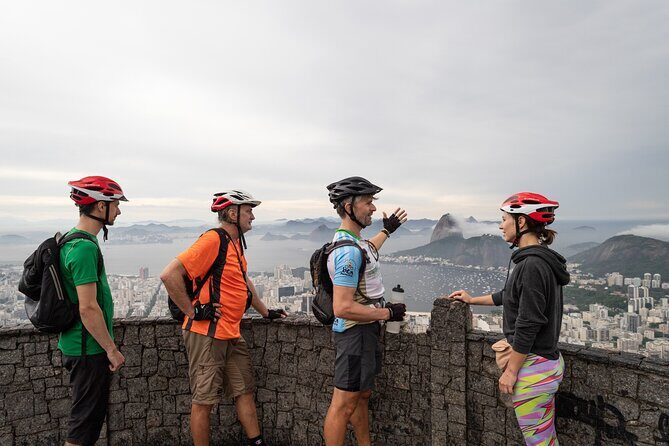
This is an English-language tour with a maximum of 6 travelers, which is a big deal for a ride this physical. When you’re climbing, you don’t want a crowd. You want pacing, regrouping, and a guide who can judge where you’re at.
Michael is the name you’ll hear from the start, and he comes across as kind, helpful, and clear. You’ll also appreciate that the bike gear is in great condition, and that helmets are provided. That combination matters for value—nobody wants to rent a tired bike and then feel punished on the hills.
The tour uses a mobile ticket, and the start point is near public transportation. That helps if you don’t want to burn time figuring out local logistics before you even get moving.
Stop in Cosme Velho: Old Rio Stories Before the Climb
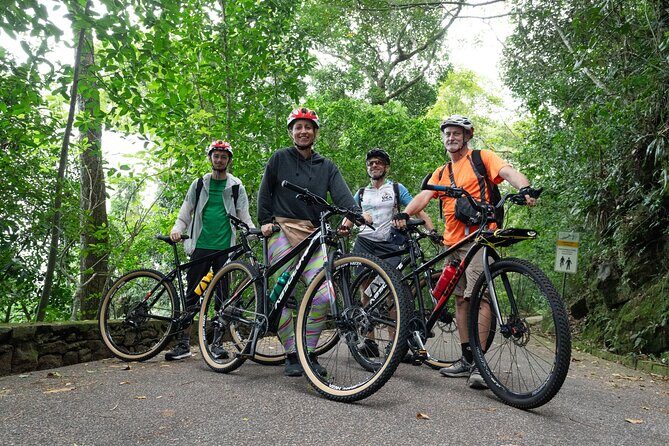
Your ride begins at Ladeira dos Guararapes, 33 in Cosme Velho. This area carries old-meets-new energy. It’s the kind of neighborhood where the city still feels layered: residential streets below, and mountains and outlooks above.
At this first narrative stop, you’ll connect Cosme Velho with the past—orange groves, big historic houses, and Machado de Assis, one of Brazil’s key literary figures. Even if you’re not a literature person, it gives the neighborhood a reason to exist beyond “starting point for a bike tour.”
Practical note: expect the early part to set your legs up. You’re not just riding for views—you’re riding into the rhythm of climbing that follows.
Caixa da Mãe D’água and the Carioca River Connection
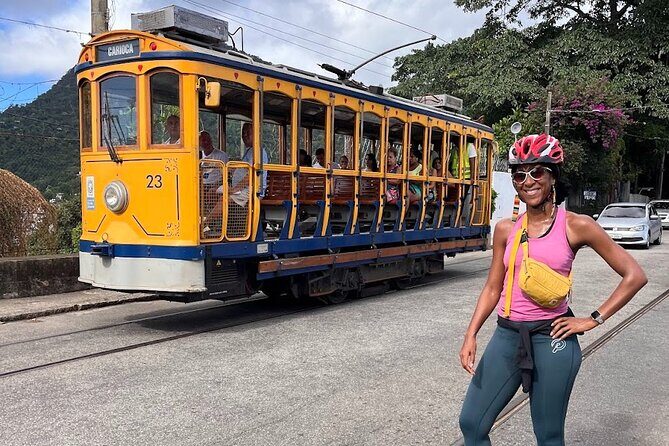
Next comes Caixa da Mãe D’água – Rio Carioca, a historic point tied to the Carioca River, which served as a major early water source for the city. It’s short—about 15 minutes—but it’s a smart use of time because it explains why Rio calls its residents Cariocas.
This stop also works as a warm-up moment. You’re not sprinting; you’re orienting. You get context while your body transitions from “street riding” to “mountain riding.”
What I like about these quick cultural stops is that they don’t derail the ride. You get a human story, a landmark pause, then you’re back in motion.
Mirante Dona Marta: The View Break That Feels Earned
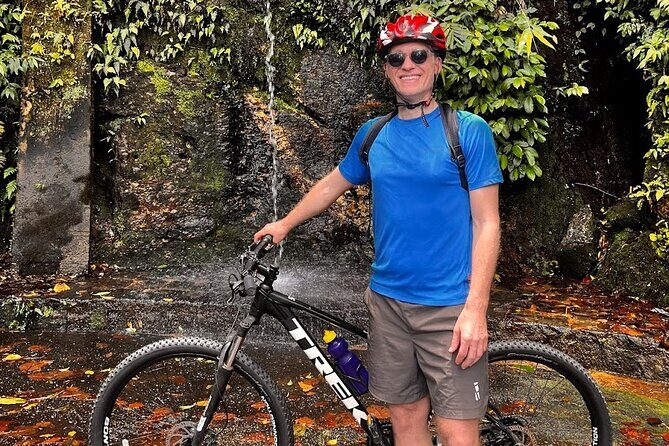
Then you hit Mirante Dona Marta, one of Rio’s best lookouts. This is scheduled for about 20 minutes, and it’s positioned at the top of a steep climb. In other words: you’ll get your reward right when your lungs are bargaining with your brain.
The practical value here is rest with a purpose. Instead of taking a random break, you pause at a major viewpoint where every stop in the next hour makes more sense. You can look back and forward at the same time—city first, rainforest later.
If you’re the kind of rider who gets grumpy mid-climb, this is your reset button. It turns the effort into a clear payoff.




Paineiras Visitors Centre: Christ the Redeemer Context (Plus a Snack)
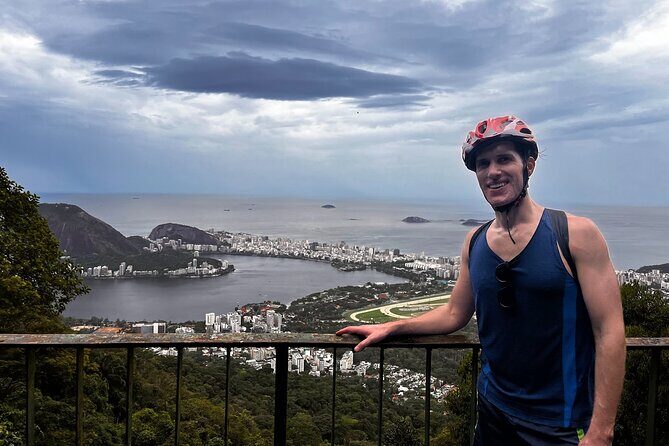
At Centro de Visitantes Paineiras, you get a base-area break related to Christ the Redeemer. It’s about 25 minutes, and you’ll have a lookout, a drink/snack opportunity, and a museum component focused on the history of the area.
One detail I especially appreciate is the museum angle: it covers the development of the Christ the Redeemer area and the funicular railway used to access it. That helps you understand what you’re seeing later in Rio—not just as a famous statue, but as a whole system of access and development.
This stop also makes the ride feel more complete. You’re not only biking through scenery; you’re learning the “why” behind the geography and access routes around the mountain.
Tijuca National Park and the Redentor Road Bike Ride
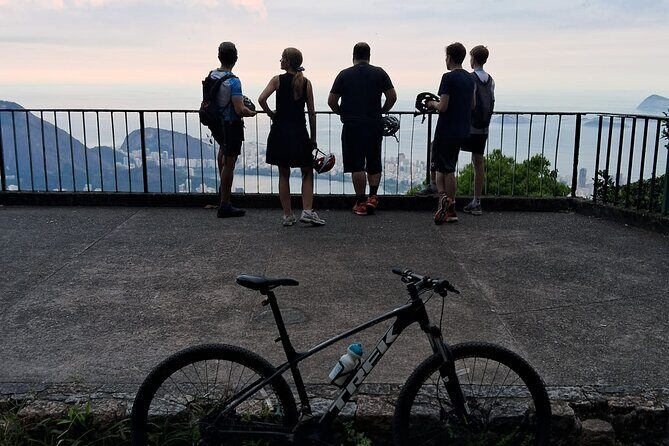
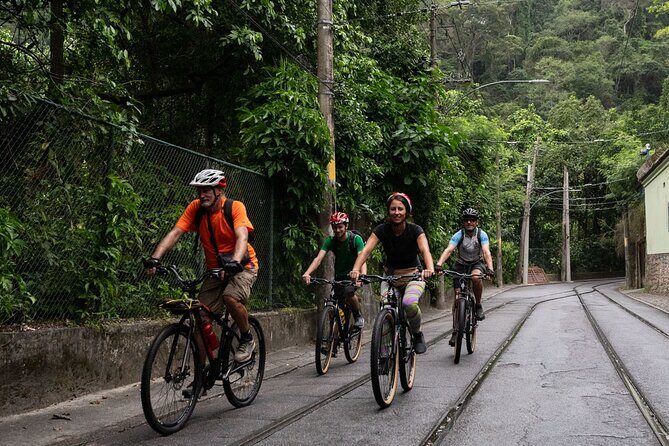
Here’s where the tour really earns its name. You enter Parque Nacional da Tijuca and start cycling on Redentor Road, described as closed to private cars. That matters more than it sounds.
When roads are open to cars, cycling gets stressful fast. Here, the setup gives you a more relaxed rhythm. You can ride with your attention on the scenery and the road line instead of negotiating traffic.
You can expect:
- Spectacular views
- Roadside waterfalls
- A chance to spot forest animals if you’re lucky
The “if you’re lucky” part is important. You’re in a protected natural area, and wildlife sightings aren’t guaranteed. But the chances feel better on an active bike route than they do from a bus window—because you’re moving slowly enough to notice.
This is also the part where you’ll feel the temperature shift. Even on a sunny day, the air under trees tends to feel different. It’s a mental reset from city heat.
How Hard Is It? The Uphill Reality Check
Let’s talk honestly about difficulty. This ride is designed around climbing. One of the clearest messages from experience is that you should only book if you do at least semi-regular exercise.
Time-wise, the biggest chunk involves going uphill. That means:
- Your cardio matters more than your bike-handling skills.
- You’ll want to pace yourself and avoid going “too hard too early.”
- Mentally, you need a plan for the steep sections—expect them, then break your effort into smaller chunks.
You don’t need to be a pro cyclist. But you do need to be comfortable on a bike when your legs are working and the view is a while away.
If you’re coming from flat-city life and you usually drive everywhere, consider this a workout disguised as sightseeing. I’d call it a good challenge, not a beginner cruise.
What You Get for $70.57: Value That Matches the Time
At $70.57 per person for about 3 hours 30 minutes, you’re not just paying for riding. You’re paying for a guided route that combines multiple viewpoint stops with a protected, car-free natural-park section.
The value is helped by a detail you can’t ignore: the stops you spend time at are free for admission in the tour format you’re booking. That means your money mostly goes to the guide time, the bike equipment, and the overall experience design—not to a stack of ticket fees.
You also get peace of mind on gear. The bikes are reported to be in great condition, plus helmets are provided. In a city where rentals can be hit or miss, that consistency matters.
Also consider group size. Paying for a tour that keeps the group to 6 riders gives you more attention and less waiting, which is part of the “you’re getting what you paid for” feeling.
Practical Tips to Ride Comfortably in Rio
A few things will make your day smoother, especially since the climbing portion is real:
- Dress for heat, then expect cooler moments in the trees. Layers help because you’ll sweat on climbs and cool down during viewpoint pauses.
- Arrive with the right mindset: you’re here for effort-to-reward. Stop thinking “Is this too hard?” and start thinking “This is the work that buys the views.”
- Use your rest points strategically. Mirante Dona Marta and Paineiras aren’t random breaks. Drink, breathe, and let your legs recover enough to enjoy the next stretch.
- Plan for weather. The ride requires good weather, and if conditions are poor, you should be ready for a reschedule or refund option offered by the operator.
- Bring basic water-aware habits. There’s a drink/snack opportunity at the Paineiras visitors centre, but you’ll still feel better if you’re conscious about hydration throughout.
And yes—bring closed-toe shoes you trust on uneven road sections. It’s common sense, but it’s still the difference between feeling stable and feeling distracted.
Who This Tour Is Best For (and Who Should Skip It)
This is a great match if you want:
- An active way to see Rio’s outdoors
- Strong viewpoints without relying only on buses or taxis
- A guide-led route that explains places like the Carioca River and the Paineiras area
It’s also a smart choice if you like small-group experiences. With max 6 riders, you’re more likely to get personal pacing help, especially on steep sections.
Who should skip it:
- Anyone in poor physical condition
- People who really dislike outdoor time
- Riders who expect a mostly flat, relaxed city cycle
If you want “effort-free sightseeing,” this isn’t it. If you want a workout with scenery, it fits.
Should You Book the Rio Rainforest Ride?
If you’re an active traveler and you want the feeling of pedaling from historic neighborhoods into a protected mountain rainforest zone, this is a strong booking. I especially like the structure: quick culture context early, a real viewpoint break at Mirante Dona Marta, then a proper Tijuca riding segment on a car-free road.
But be honest with yourself about the hills. This tour is built around climbing. If that sounds like dread, you’ll probably feel miserable waiting for the ride to become enjoyable. If it sounds like a challenge you can handle, you’ll likely leave with the kind of Rio memory that doesn’t fade fast.
FAQ
FAQ
What city is the Rio Rainforest Ride in?
It takes place in Rio de Janeiro, Brazil.
How long is the tour?
The duration is about 3 hours 30 minutes.
How much does it cost?
It’s listed at $70.57 per person.
Is the tour offered in English?
Yes, it’s offered in English.
How many people are in the group?
The tour has a maximum of 6 travelers.
Where does the tour start and end?
It starts at Ladeira dos Guararapes, 33 – Cosme Velho, Rio de Janeiro – RJ, 22241-220, Brazil, and ends back at the meeting point.
What stops are included?
You’ll visit Caixa da Mãe D’água – Rio Carioca, Mirante Dona Marta, Centro de Visitantes Paineiras, and Parque Nacional da Tijuca.
Do the stops require paid admission?
The tour details indicate admission ticket free for each listed stop.
What fitness level do I need?
You should have a strong physical fitness level. The ride includes a lot of uphill climbing, so plan for that.
Is the tour dependent on weather?
Yes. The experience requires good weather. If it’s canceled due to poor weather, you’ll be offered a different date or a full refund.
Is there free cancellation?
Yes. You can cancel up to 24 hours in advance for a full refund. Changes made less than 24 hours before the start time aren’t accepted.