REVIEW · RIO DE JANEIRO
Rio Downtown Tour with Selaron Metropolitan Cathedral and more
Book on Viator →Operated by Carioca Tropical Tour Operator · Bookable on Viator
Rio’s downtown hits hard in three hours. This small-group circuit strings together major landmarks, from the Metropolitan Cathedral to the Selarón Steps, with pickup in Zona Sul.
I like the tight route through the city’s key sights without dragging you from place to place. I also like the small group size (max 19), which makes it easier to ask questions and get real context from your guide.
One possible drawback: the day runs on a schedule, so some stops are quick photo-and-walk breaks rather than long hangs, especially when traffic is slow.
In This Review
- Key takeaways
- A Downtown Sprint With Real Landmarks
- Price and Logistics: What You’re Paying For
- Pickup in Copacabana, Ipanema, or Leblon (and Why That Helps)
- Mosteiro de São Bento: Tiles, Iron Gates, and a Working Abbey
- Metropolitan Cathedral of Saint Sebastian: Mayan-Inspired Form and Stained Glass
- Maracanã Stadium: Quick Exterior Views and Photo Time
- Avenida Presidente Vargas Stops: Palaces, Railways, and Civic Rio
- Lapa Arches Area and the Carioca Aqueduct: Old Tech, Live City Views
- Escadaria Selarón: Why These Steps Became a Global Landmark
- Rua do Lavradio: Antique Streets and Weekend Energy
- Aterro do Flamengo: Waterfront Views, WWII Memory, and Museum Pass-By
- Who This Tour Fits Best (and Who Might Be Happier Elsewhere)
- About the Guides: How the Stories Make the Stops Click
- Should You Book This Rio Downtown Tour?
- FAQ
- How long is the Rio Downtown Tour?
- What does the tour cost?
- Where do you get picked up?
- When does the tour start?
- How big is the group?
- What’s included in the price?
- Are there any admission tickets during the tour?
- Are children allowed?
Key takeaways

- Hotel pickup and drop-off in Zona Sul: Copacabana, Ipanema, or Leblon (selected hotels).
- Small group of up to 19: better interaction than big-bus tours.
- São Bento + Metropolitan Cathedral: one stop with admission included, one with free entry and standout architecture.
- Selarón Steps and Lapa arches area: the most iconic street-level stop, with time to look closely.
- Maracanã and Sambadromo are mainly exterior: you’ll get photos, not stadium time.
- Waterfront finale on Aterro do Flamengo: a road-and-views section that links multiple sights quickly.
A Downtown Sprint With Real Landmarks
This is the kind of tour that helps you understand Rio quickly, not just see it. In about 3 hours, you get a concentrated look at downtown’s monuments, plus the neighborhoods and viewpoints people talk about most.
If you’re doing the big-ticket hits like Christ the Redeemer and Sugarloaf first, this fills in the missing part: the city’s heart, where buildings, religious sites, and public spaces all tell you how Rio grew. You also get a smooth start with hotel pickup from Copacabana, Ipanema, or Leblon and a comfortable air-conditioned ride in a minivan.
And while it’s fast, it’s not random. The route is built around a handful of architectural and cultural “anchors” that are easy to remember later when you’re exploring on your own.
You can also read our reviews of more tours and experiences in Rio de Janeiro.



Price and Logistics: What You’re Paying For
At $74.50 per person, the price is fair for what’s included. You’re getting a professional guide, transport in an air-conditioned minivan, and pickup/drop-off at selected Zona Sul hotels. That bundle matters in Rio, where traffic can turn a “simple plan” into a half-day adventure.
You also get at least one practical ticket inclusion: Mosteiro de São Bento (St. Benedict Monastery) has an admission ticket included. Some other stops are free (like the Metropolitan Cathedral and the Selarón Steps), so you’re not constantly paying small extra fees once you’re out.
One thing to keep in mind: this isn’t designed for deep study at every site. You’re buying time efficiency. If you want to spend an hour inside a museum or sit through a full event, you’ll be better off adding independent time after this tour.
Pickup in Copacabana, Ipanema, or Leblon (and Why That Helps)
The tour starts around 1:30 pm and includes hotel pickup and drop-off (selected hotels only). The meeting point listed is the Hilton Rio de Janeiro Copacabana on Av. Atlântica.
Why I like this setup: it lowers friction. In a city where you may not know how long drives will take, getting picked up where you’re already staying helps you keep the afternoon on track. It also reduces the “where do we meet” stress that can ruin a first-day plan.
Group size is capped at 19 travelers, which is a sweet spot for a sightseeing loop. Small enough that the guide can respond to people’s questions, big enough that it doesn’t feel like a private car tour cost.
Mosteiro de São Bento: Tiles, Iron Gates, and a Working Abbey
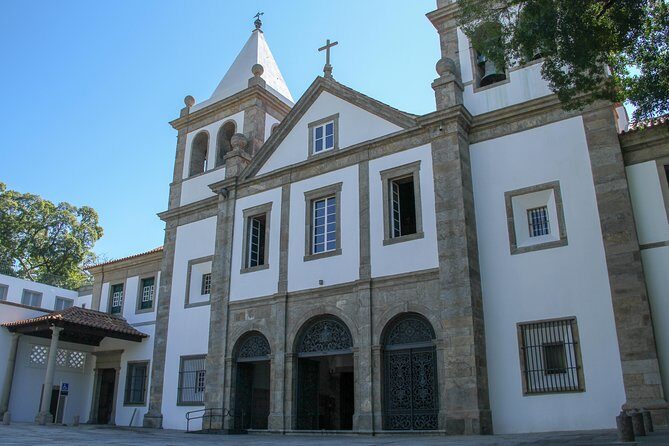
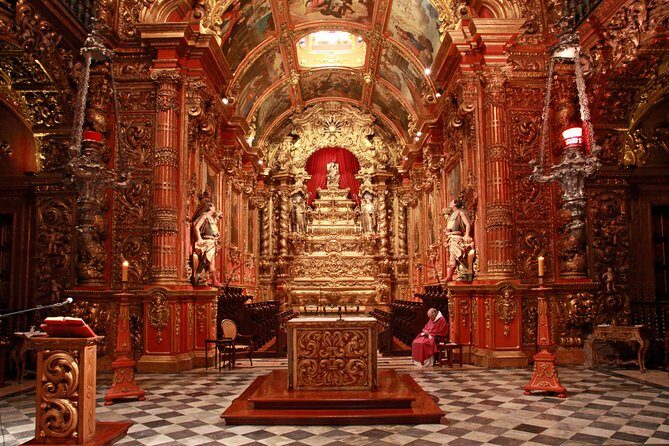
Your first major stop is Mosteiro de São Bento (Mosteiro de São Bento / Abbey of Our Lady of Montserrat). This is a Benedictine abbey in downtown Rio that’s still operational today, not a dressed-up museum set.
You’ll learn it was founded by Benedictine monks who came from Bahia in 1590. The building still includes the abbey’s working life and also the nearby Colégio de São Bento.
What makes the architecture worth slowing down for:
- The façade connects to the original Mannerist project, with a centralized edifice and three archways at the entrance.
- A triangular gable tops the look, with two towers flanking the entry, crowned by pyramidal spires.
- Inside, you pass through a tiled porch and 19th-century iron gates before you get deeper into the complex.
You’ll have about 30 minutes here, and admission ticket is included. That timing is ideal for first impressions: enough to notice the entrance design and the layout, without feeling like you’re rushing past everything.
Metropolitan Cathedral of Saint Sebastian: Mayan-Inspired Form and Stained Glass
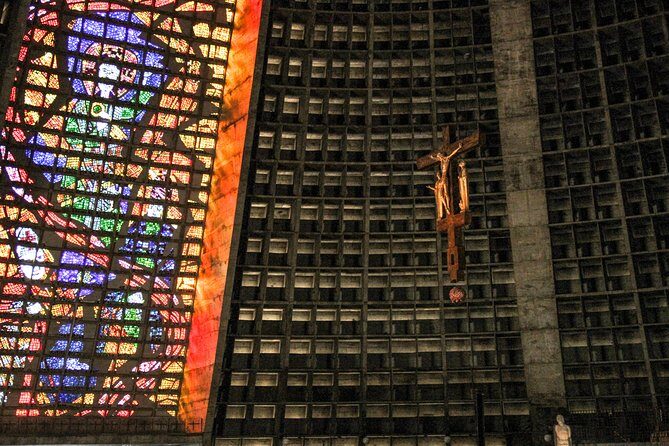
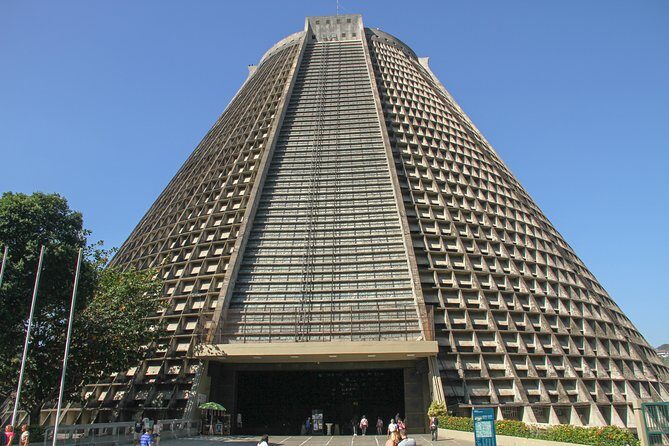
Next up is the Metropolitan Cathedral of Saint Sebastian, a modern icon that looks unlike anything else in Rio’s skyline. It’s inspired by Mayan pyramids of Mexico, built with a conical shape that’s believed to bring you closer to God.
Here’s what to look for once you’re inside:
- Four stained glass windows that run from floor to ceiling.
- Those windows form a cross at the top, wrapping around the space visually.
- The acoustics are often described as “heavenly,” which makes this cathedral feel more powerful than its size would suggest.
You’ll get about 30 minutes, and admission is free. If you’re the kind of person who likes to see the logic behind architecture, this stop is a good payoff. It also breaks up the day from the busy streets and sets you up for the more textured neighborhood scenes later.






Maracanã Stadium: Quick Exterior Views and Photo Time
The tour includes a short stop at Maracanã Stadium. You won’t go inside, but you do get time for photos at a key viewpoint near Bellini’s statue.
Expect about 15 minutes. That’s not enough for a full “stadium day,” but it works well because Maracanã’s size and fame are easier to appreciate from the outside once you know what you’re looking at.
Basic context you’ll likely hear:
- Maracanã was inaugurated in 1950 for the World Cup.
- It’s listed as Brazil’s largest stadium, with capacity for more than 78,000 fans.
- It’s also described as a stage for major musical spectacles, not only sports.
If your dream includes actually touring the stadium facilities, plan that separately. For this tour, Maracanã is more about context and quick photos than full access.
Avenida Presidente Vargas Stops: Palaces, Railways, and Civic Rio
On the drive downtown, you’ll go down Avenida Presidente Vargas, one of those wide corridors that makes it easy to see how administrative Rio sits next to religious and cultural Rio.
You’ll see (from the route and stops):
- Central Railway Station
- Duque de Caxias Palace
- Itamaraty Palace
- Campo de Santana
- Tiradentes Square
- Avenida Chile
This is one of the reasons the tour is good value: you get multiple named civic landmarks without needing to build a complicated self-guided plan. It also gives you reference points for later walks, since you start to recognize the city’s “anchors” instead of just the big tourist spots.
Lapa Arches Area and the Carioca Aqueduct: Old Tech, Live City Views
Lapa is the neighborhood where downtown’s story turns from formal squares into street-level texture. A key highlight here is the Carioca Aqueduct, often called Arcos da Lapa (Lapa Arches).
What makes it interesting isn’t just the arches themselves. The aqueduct has served since the end of the 19th century as a bridge for a popular tram that connects downtown with Santa Teresa, uphill.
So when you see the structure, you’re also seeing an idea that still affects daily movement. It’s old infrastructure still shaping how people experience the city.
The tour’s timing here is short, but it’s designed to give you exactly what most people need on a half-day: recognizable landmarks you can later locate on a map without guessing.
Escadaria Selarón: Why These Steps Became a Global Landmark
If you do only one stop on a “quick Rio” day, make it Escadaria Selarón.
These steps are world-famous because of the artist behind them: Jorge Selarón, Chilean-born. He called it his tribute to the Brazilian people, and it shows. In 1990, he started renovating dilapidated steps by his home, covering them with fragments of blue, green, and yellow tiles—colors tied to Brazil’s flag.
At first, neighbors mocked the color choices. Then the project turned into obsession. Selarón kept working even when funds ran out, selling paintings to keep the steps going. The result is a surface covered in tiles, ceramics, and mirrors, with so much detail that it’s hard to look away.
You’ll have about 30 minutes, and entry is free. I’d treat this as a slow-looking stop, not a “get a photo and go.” Walk up and down the steps and let your eyes travel across the different tile patterns. It’s the kind of place where you notice new details every time you move a few steps.
Rua do Lavradio: Antique Streets and Weekend Energy
In Lapa, you also visit Rua do Lavradio, a street known for antique shops, bars, and restaurants. It draws people continuously, and on the first weekend of each month it hosts a street fair that concentrates both national and foreign tourists and locals.
This stop is mainly about feeling the neighborhood’s rhythm and seeing the street’s character. You’re looking at a small slice of what makes Lapa more than just a stop on a route.
You’ll have about 20 minutes here. If you love browsing and people-watching, this is one of the best places to linger—just keep an eye on your group timing.
Aterro do Flamengo: Waterfront Views, WWII Memory, and Museum Pass-By
To close the tour, you head down Aterro do Flamengo, the large beachfront park along Guanabara Bay. The route is described as using reclaimed land—about 300 acres (1.2 km²)—completed in 1965. The gardens were designed by Brazilian landscape designer Roberto Burle Marx.
This section is valuable because it turns your downtown sightseeing into waterfront context. Rio’s story isn’t only in old buildings and churches. It’s also in how the city faces the water.
On the way, you’ll see or pass:
- Church of the Outeiro da Glória
- Monument to the Fallen in World War II
- Museum of Modern Art
Your tour ends with drop-off back at your hotel. This is a nice way to finish if you’re still getting your bearings for the rest of your stay.
Who This Tour Fits Best (and Who Might Be Happier Elsewhere)
This tour works best if:
- You have a short time window and want a fast, structured overview of downtown Rio.
- You care about architecture and place context, not only photos.
- You want to minimize logistics by using hotel pickup and a pre-built route.
It may not be ideal if:
- You’re hoping to spend lots of time inside places like Maracanã. This plan is exterior and quick.
- You prefer long, slow stops at a single site. Selarón gets about 30 minutes, so it’s time-efficient, not leisurely.
One more note from how the route is paced: traffic can stretch the “time-on-street” feeling. When that happens, you’ll be happy this tour still gives you enough landmark variety to remember the day clearly.
About the Guides: How the Stories Make the Stops Click
A tour like this rises or falls on guide quality, and this operator’s feedback patterns show up in a few repeat names. Monica, Victoria, Arthur, Andre, Sabina, and Vincent Thomas are among the guide names linked to strong performance and clear communication.
What I’d take from that for your expectations: you’re not just getting a list of sights. You’re getting explanations tied to what you’re seeing—why a cathedral looks the way it does, what a landmark meant historically, and how neighborhoods connect.
Small-group size matters here. With fewer people, it’s easier to hear the guide’s story and ask a question when something catches your interest.
Should You Book This Rio Downtown Tour?
Yes, book it if you want a first-hit introduction to downtown Rio that’s efficient, organized, and focused on the landmarks most people use as reference points later.
Skip it or plan alternatives if your top priority is going inside major sites or spending long stretches at one location. This is a “see a lot in a little time” format, and it’s at its best when you treat it like a smart sampler—then return on your own to linger where you felt the strongest pull (often the steps in Lapa).
If you’re traveling in a tight schedule, this is one of those tours that protects your time and still leaves you with recognizable Rio in your head.
FAQ
How long is the Rio Downtown Tour?
It’s approximately 3 hours.
What does the tour cost?
The price is $74.50 per person.
Where do you get picked up?
You’re picked up from hotels in Copacabana, Ipanema, or Leblon (selected hotels).
When does the tour start?
The start time is 1:30 pm.
How big is the group?
The tour has a maximum of 19 travelers.
What’s included in the price?
Included items are a professional guide, hotel pickup and drop-off (selected hotels), and transport by air-conditioned minivan.
Are there any admission tickets during the tour?
Yes. Mosteiro de São Bento has an admission ticket included (about 30 minutes). The Metropolitan Cathedral is listed as free. Escadaria Selarón is also free. Maracanã is not included and the stop is outside.
Are children allowed?
Children up to 5 years old are free if they have ID and are on the lap.