REVIEW · RIO DE JANEIRO
Rio de Janeiro: Paragliding Tandem Flight
Book on GetYourGuide →Operated by Rio Hang Gliding · Bookable on GetYourGuide
Run off a mountain into the Rio sky. This tandem paraglide ride is all about real open-air flight and epic views over Rio de Janeiro, starting from Pedra Bonita and ending on São Conrado Beach. I love that it feels calm once you’re airborne, yet thrilling right at take-off. The one thing to factor in is that wind and cloud cover can delay your launch, and you’ll need to be able to do a short take-off run in proper shoes.
You’ll begin with a short briefing from experienced tandem pilots, then you’ll strap in with the harness and safety gear before heading to the edge of the 525-meter (1,700-foot) cliff. Small group sizes help keep it personal, and the pilots cover the take-off procedure and what your role is in the flight. If you’re in Rio on a tight schedule, build in a bit of flexibility because mother nature is in charge.
A nice bonus: you’ll receive an exclusive video from the flight to share back home. Just know the included footage is from the front camera, while side-camera video costs extra.
In This Review
- Key points to know before you go
- From Hortifrutti to the launch: how the experience starts
- The pilot briefing: what you need to understand before take-off
- The 525-meter Pedra Bonita moment: what take-off really feels like
- Cruising Rio: what you’ll notice in the air
- Landing at São Conrado Beach: smooth, then wow
- Pricing and extras: does $219 feel worth it?
- Who this is best for (and who should skip)
- Practical tips to make your flight day smoother
- Should you book this Rio tandem paraglide?
Key points to know before you go
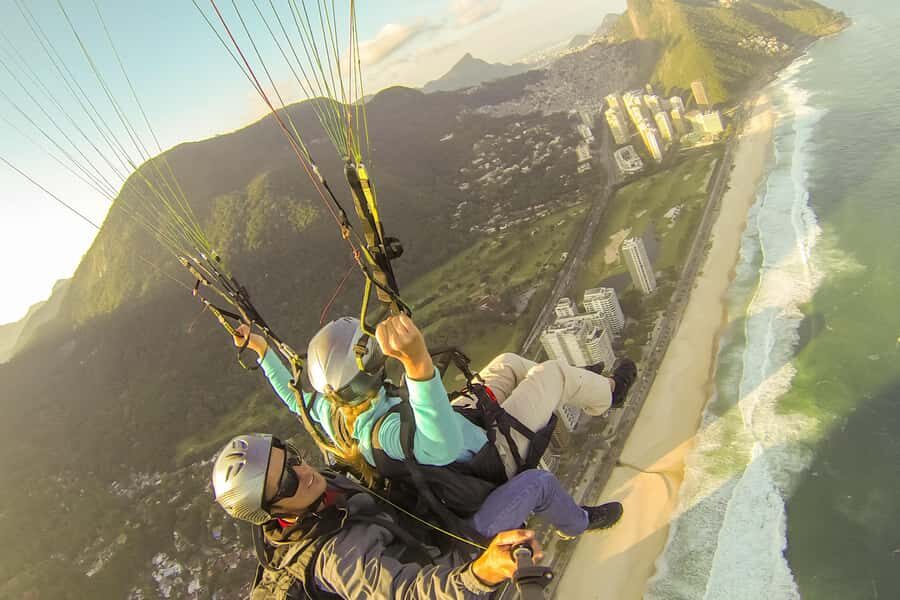
- Pedra Bonita (525 m) take-off for that instant jump-to-air feeling
- Non-motorized, open-air flight that trades engines for quiet sky time
- Panoramic Rio views that make landmarks easy to spot from above
- Bird sounds in the air for a surprisingly natural touch
- Front-camera video included, with side-camera video available for extra
- Weather-dependent timing that can add waiting time at the ramp
From Hortifrutti to the launch: how the experience starts
Your day begins at the meeting point: in front of the Hortifrutti Grocery Store. It’s a simple, easy-to-find landmark, and it matters because you don’t want to be late for a flight activity that depends on wind conditions.
From there, the experience includes transport from the meeting point to the launch site. This is one of those small details that makes a real difference. In Rio, traffic and timing can be unpredictable, so having someone handle the ride keeps the day from turning into a logistics scavenger hunt.
If you choose optional pickup, it’s not a door-to-door free-for-all. You’ll wait outside the building, and the provider contacts you for the handoff at the time chosen when you book. Also pay attention to transfer direction: the included transport is to get you to the launch, while return after the activity is only included if pickup/drop-off was specifically selected.
Language-wise, you’re covered: instructors/pilots can communicate in Portuguese, English, and Spanish. That’s useful because take-off depends on clear understanding. You’ll be listening for instructions on posture, timing, and how to move once you’re strapped in.
You can also read our reviews of more tours and experiences in Rio De Janeiro.


The pilot briefing: what you need to understand before take-off

Before you run—yes, run—a tandem pilot will give you a short briefing. This is where the experience earns its calm reputation. The pilots go over the take-off procedure and what you’ll do during the launch. You’re not learning to fly solo. You’re learning how to move at the right moment so the paraglider can do its job.
This part is especially important if you’re nervous. The best pilots don’t just say “trust me.” They explain what’s happening in plain terms so your brain stops guessing. If you’re the type who wants a clear checklist, you’ll appreciate how the briefing focuses on practical steps.
One more useful thing: you’ll be using a harness and safety equipment that are part of the package. That means you’re not showing up to a launch expecting to improvise. You’ll be fitted, secured, and briefed before you ever get near the edge.
About control: in at least some flights, passengers have been given the chance to control the paraglider during the experience. Don’t expect it to replace the pilot’s work, but it can add a fun, hands-on moment once you’re already in stable air.
The 525-meter Pedra Bonita moment: what take-off really feels like
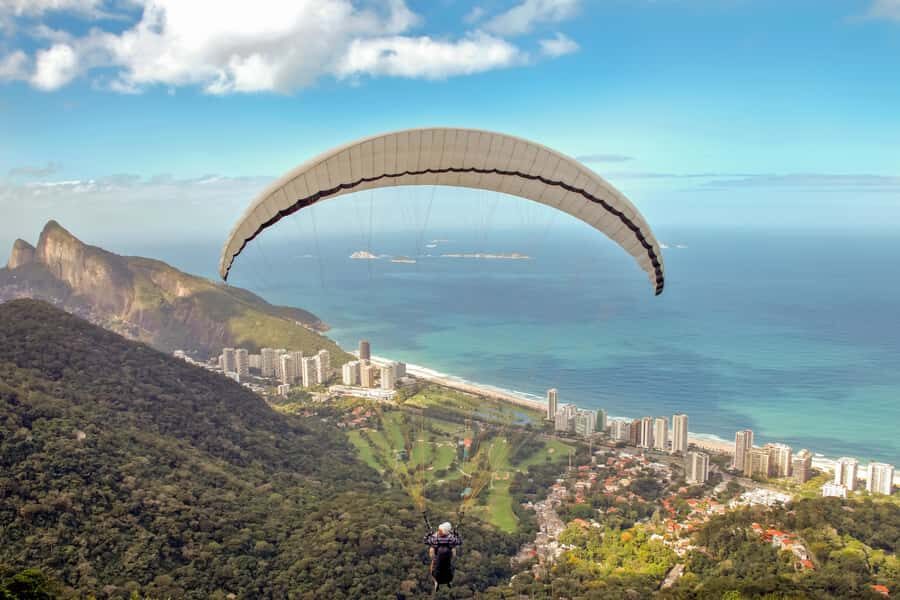
The headline is the take-off from Pedra Bonita, which sits about 525 meters (1,700 feet) up. You’ll actually run straight off the mountain with your pilot. That matters because this isn’t the slow, movie-style “walk to the edge and float” version. You’ll feel a burst of motion—then the sky does the rest.
If you’re worried about your legs, plan around it. Bring comfortable shoes you can sprint in and that won’t slip off. This is one of the most practical safety tips you can follow. Avoid sandals and flip-flops—those are explicitly not allowed. The goal is grip and control in the few seconds that matter.
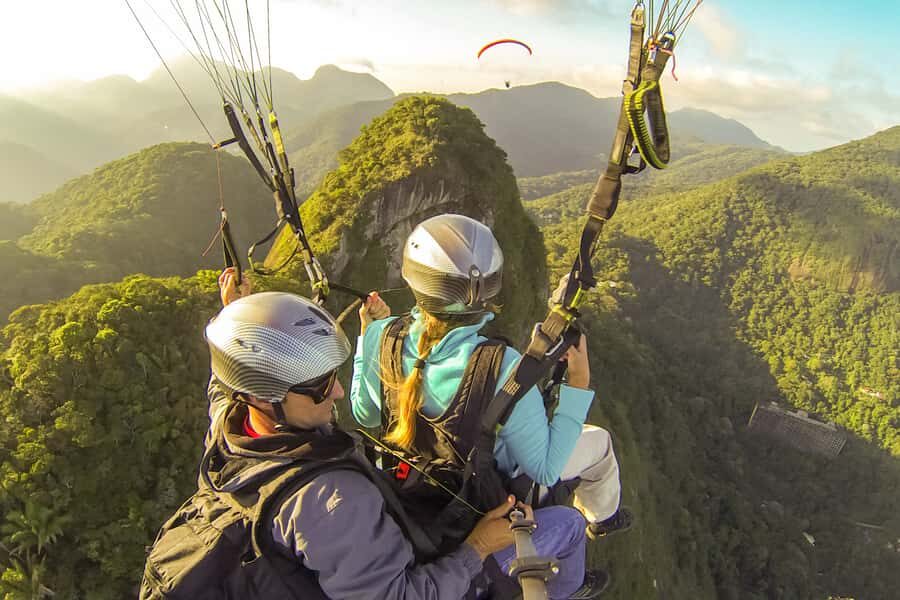
Once you’re off the mountain, the vibe shifts quickly. The experience transitions from adrenaline to calm. You’re flying non-motorized, in open air, with your pilot steering the canopy. The quiet is a big part of why it feels tranquil. You’re not fighting engine noise. You’re hearing open sky and—yes—tropical birds while you cruise.
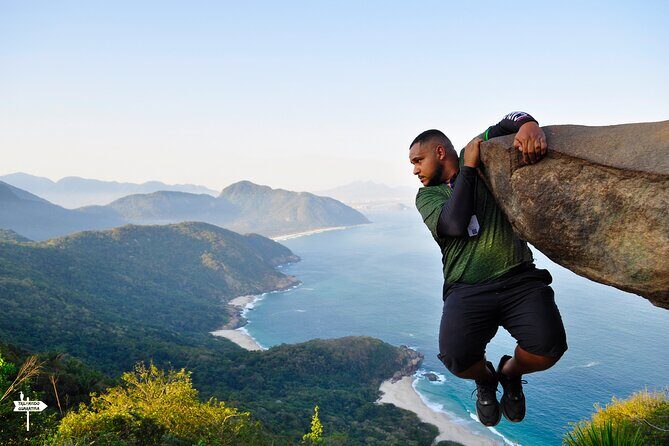
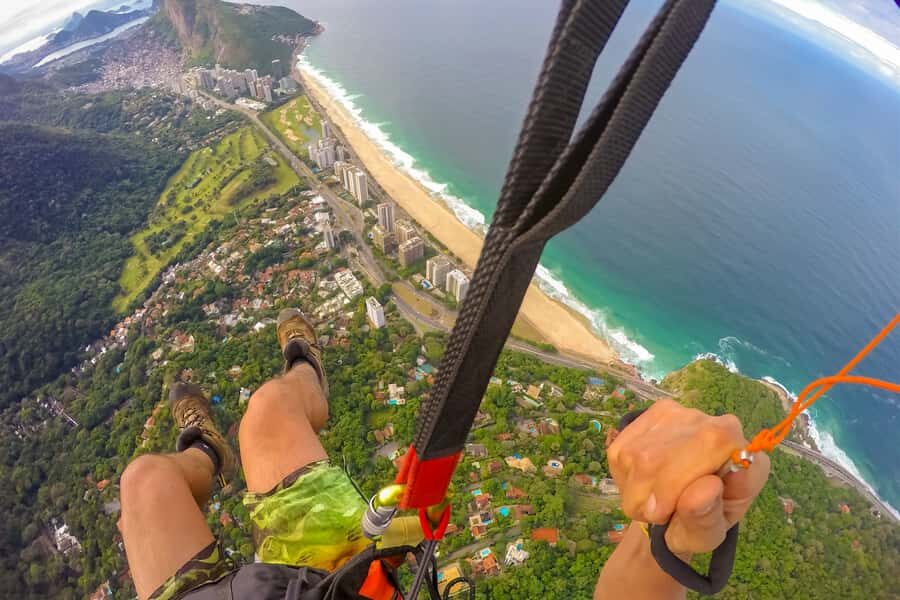
And the views are the point. You get panoramic sightseeing over Rio de Janeiro’s landmarks, with the kind of perspective that roads and viewpoints just can’t replicate. It’s also easier to understand the city from above: coastline, mountains, and neighborhoods connect in a way that’s hard to see from street level.
Timing can affect the feel of the flight. Some days launch at the best light, and other days you wait. The experience is dependent on current meteorological conditions, so if wind isn’t right or clouds block safe conditions, you may be delayed. That’s not a failure mode—it’s how these operations keep it safe.
Cruising Rio: what you’ll notice in the air
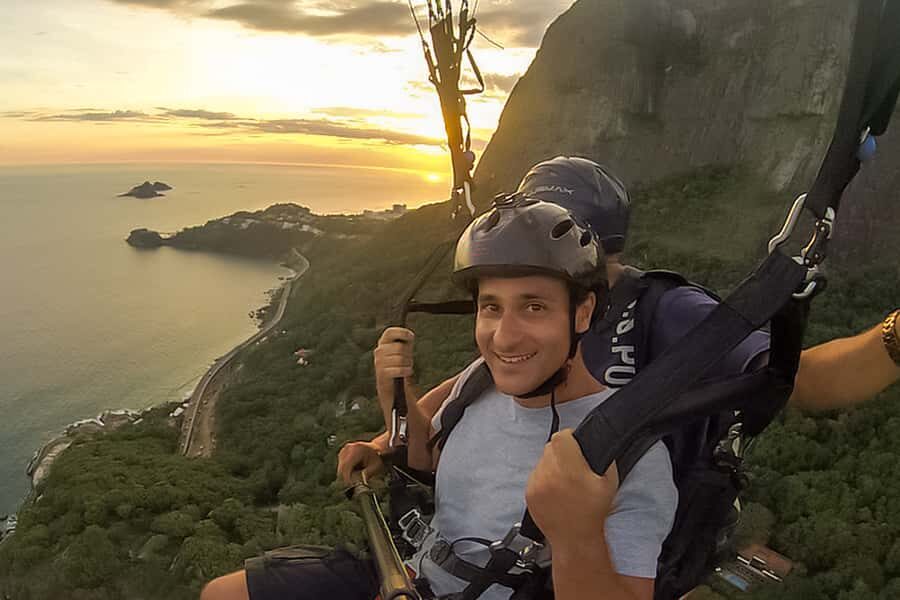
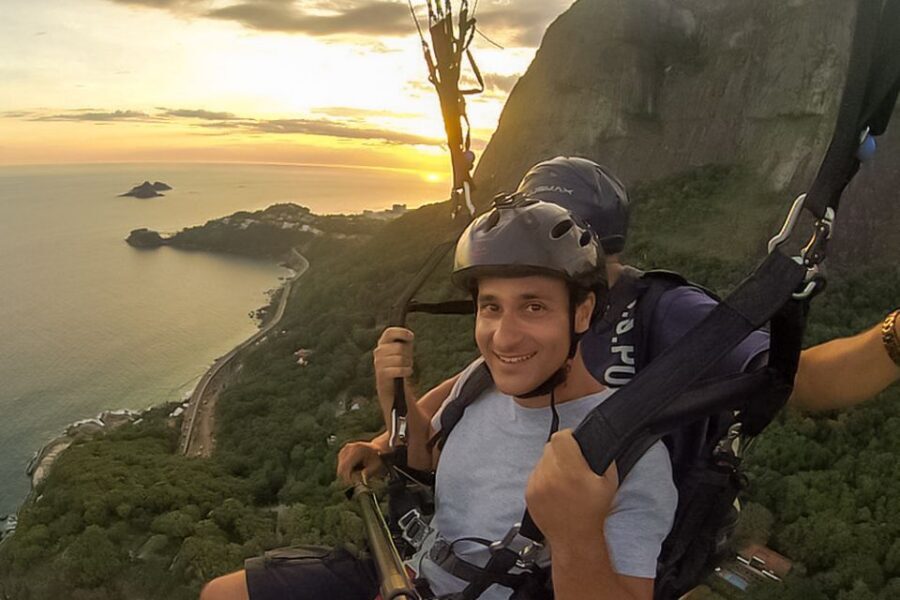
Once you’re airborne, you’ll start noticing details that are easy to miss from the ground. The first is scale. Rio doesn’t read as “big” until you’re floating above it and looking at coastline angles and mountain ridges that suddenly make sense.
The second is sensation. You’re in an open-air harness setup, so you feel airflow and motion directly. The experience is non-motorized, so it doesn’t have the same mechanical rhythm as a helicopter or plane. You’ll likely feel like you’re gently gliding, adjusting to the canopy, with small changes in air pressure and breeze.
The third is the soundscape. Between pilot guidance and the wind, the most surprising part is how natural it feels—especially the bird sounds you can hear while you’re cruising. It’s a small detail, but it makes the flight feel less like a thrill ride and more like a real connection to the environment.
If you get the chance to control the paraglider (only when your pilot indicates it’s appropriate), you’ll get a better understanding of how steering works—less like twisting a steering wheel, more like responding to the canopy’s behavior. Again, the pilot handles the safety side. You’re just adding a layer of interaction.
Landing at São Conrado Beach: smooth, then wow
After time in the air, you’ll land smoothly on São Conrado Beach. That landing location is a big part of why this feels like a complete experience instead of a “jump and disappear” stunt.
The beach landing also changes the emotion at the end. Once you’re down, it’s not just relief—it’s celebration. You’re back in the real world with sand and sea right in front of you, and your Rio viewpoint has shifted from “from a balcony” to “from the sky.”
Some pilots also check in after landing and help you think about how you’ll get home. That kind of care matters because the experience is mostly about the flight, but you still need to leave the launch area and return to your day.
If you chose not to include pickup/return transport, don’t panic. The meeting area is accessible by taxi, and you can plan to head back from the beach area on your own. Still, confirm your plan before you go so you’re not surprised on timing.





Pricing and extras: does $219 feel worth it?
At $219 per person, the value depends on what you compare it to—and what you remember comes and goes with this kind of activity.
Here’s what’s included:
- Tandem paragliding flight with an instructor/pilot
- Harness and safety equipment
- Transport from the meeting point to the launch site
- An exclusive video of your flight (the included footage is from the front camera)
Here’s what’s not included (and can affect your final total):
- Flight insurance and a launch usage fee of 120 Brazilian Reais, paid in cash
- If you use a card, there’s a 10% fee charged by the local hang gliding club
- Return transfers unless you selected pickup/drop-off
On paper, that sounds like “extra paperwork.” In reality, it’s usually straightforward, but you should budget for it so the math doesn’t catch you late. Also, bring cash if you can. Paying in cash avoids the card surcharge.
The video add-on is worth calling out. The included video is from the front camera. If you want the side-camera video, it costs 200 Brazilian Reais extra. That can be a fun choice if you love sharing the whole angle of the flight.
Is it worth it? For most people, yes—because this is one of the few ways to see Rio that feels genuinely different, not just “a better photo spot.” You’re paying for time in the sky plus safety plus the gear plus the filming. The cost makes more sense when you treat it like a once-in-a-trip, bucket-list kind of activity rather than a casual add-on.
Who this is best for (and who should skip)
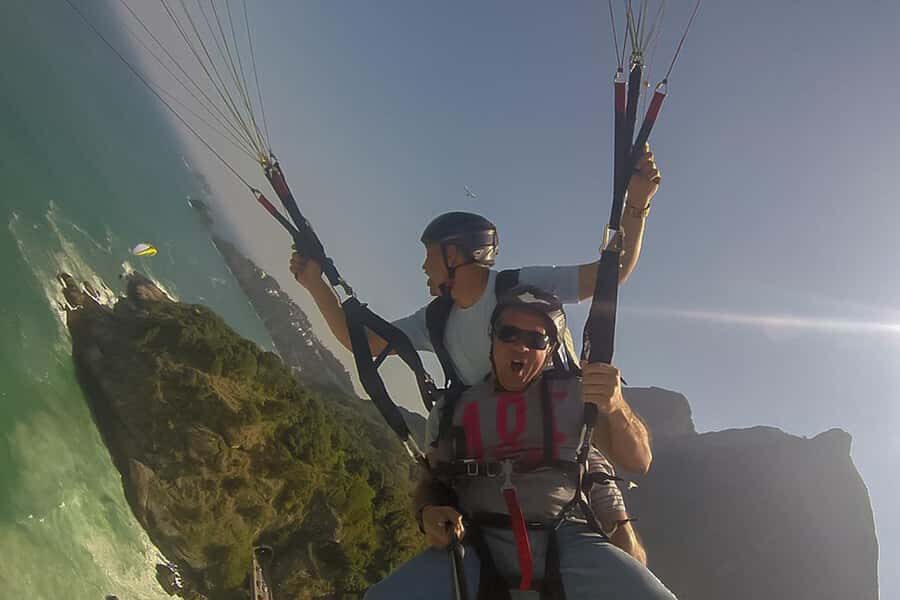
This flight is built for people who can physically handle a take-off run and enjoy heights—even if you’re nervous at first.
You should consider booking if:
- You can follow instructions quickly (the briefing matters)
- You want a calm, nature-heavy sky experience, not a motorized sightseeing ride
- You’re happy with a weather-dependent schedule and can wait if wind changes
- You like the idea of a front-camera flight video to share later
Important limits from the activity info:
- Minimum age is 14
- Unaccompanied minors aren’t allowed; anyone under 18 needs a legal guardian and picture IDs of both
- Not suitable for people with mobility impairments, wheelchair users, or anyone over 264 lbs / 120 kg
- Seniors can fly as long as they can follow the take-off procedure
If you’re unsure about your ability to run a short sprint in secure shoes, this is the part you should take seriously. The safety system is there for flight. Your job is to do your part at take-off.
Practical tips to make your flight day smoother
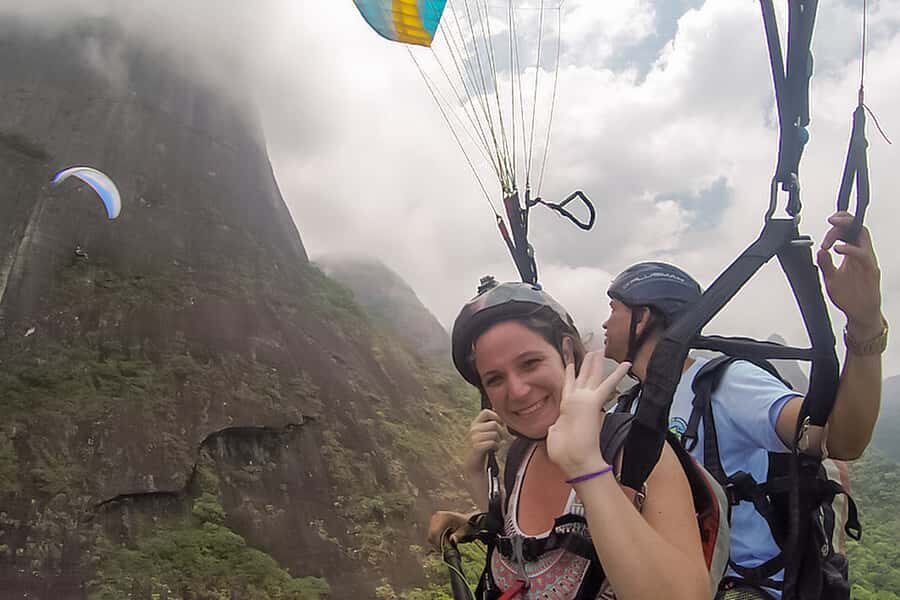
A little preparation makes the whole experience easier and more enjoyable.
Wear the right shoes. Comfortable shoes with grip are not optional. The take-off sprint happens before you get airborne, and slippers or loose footwear can become a distraction fast.
Skip sandals. Beach sandals and flip-flops are explicitly not allowed. I’d rather you show up slightly overdressed than watch you worry about your footwear during briefing.
Bring an ID. You’ll need a passport or ID card.
Have a cool-weather layer ready. On cooler winter days, bring a sweatshirt along. It’s a sky flight—air can feel cooler once you’re up.
Plan for possible waiting. Weather determines if you launch. If conditions aren’t right, you might wait at the ramp. If you can be patient, your odds of getting a good flight go up, and the end result feels even sweeter.
Decide on your video budget. The front-camera video is included. If you know you’ll want more angles, set aside extra for the side-camera option.
Should you book this Rio tandem paraglide?
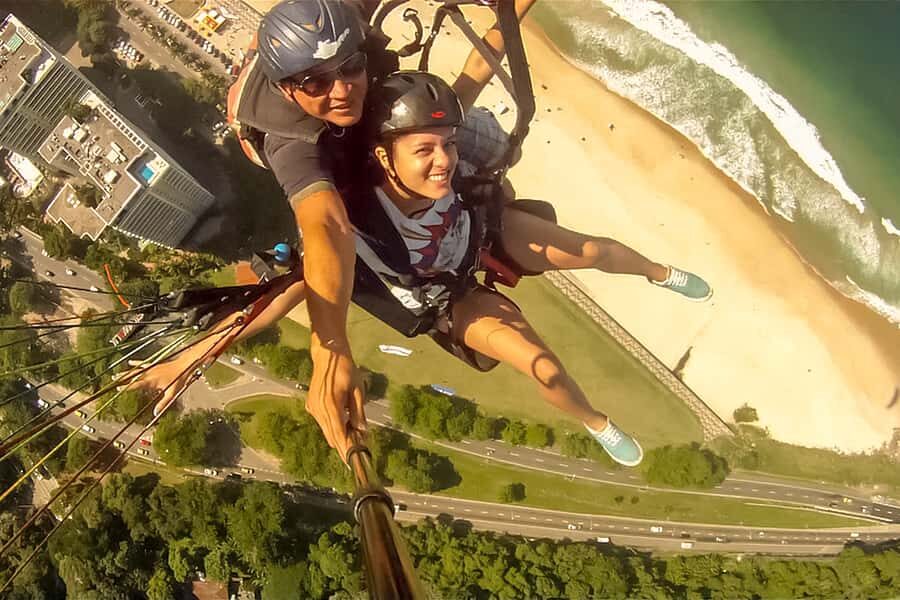
Book it if you want one of Rio’s most memorable “from the sky” experiences, and you’re okay trading a bit of schedule certainty for the thrill and the views. The combination of a real mountain take-off, open-air flight, smooth beach landing, and a video you can share adds up to strong value for a once-per-trip activity.
Pass for now if you’re not comfortable with the physical demands of a take-off sprint, you have mobility limitations that make running difficult, or you need a guaranteed exact launch time. And if you’re the type who hates waiting, accept that wind and clouds can change the day.
If you’re flexible and prepared, this is the kind of Rio adventure you’ll still talk about long after the photos stop being new.