REVIEW · RIO DE JANEIRO
Rio Afro Experience – A full day in the African Diaspora
Book on Viator →Operated by Agência Etnias Turismo e Cultura · Bookable on Viator
One day, Africa meets Rio. This full-day route connects Rio’s big landmark with the places tied to the African Diaspora, so the day feels like a clear story instead of random stops. I love how the guide turns each location into plain-language context with human moments and a lighter tone, and I also love that key admissions and a set lunch are built into the price.
The main thing to watch is timing. It runs about 8 hours with several short-and-moving stops, so bring comfortable shoes and expect a packed itinerary with less time to linger than on a slower sightseeing day.
In This Review
- Key takeaways
- Why this tour feels like more than sightseeing
- The morning at Corcovado: Christ the Redeemer with a purpose
- Santa Teresa: art workshops, Parque das Ruínas, and a slower neighborhood beat
- Escadaria Selarón: the staircase that talks back
- MUHCAB: the Afro-Brazilian history and culture museum stop
- Pretos Novos: IPN cemetery and the New Black memorial
- Cais do Valongo: the UNESCO arrival trace in Rio’s port area
- Pedra do Sal: Quilombos Remains Community and the Salt Stone area
- Lunch at an Afro-Brazilian restaurant: included, fixed menu
- Price and value: does $360.35 make sense?
- Logistics that affect how you’ll enjoy the day
- Who should book this tour, and who should skip
- Should you book Rio Afro Experience?
- FAQ
- How long is the Rio Afro Experience tour?
- What does the tour include for admission tickets?
- Is pickup offered, and how many people are in a group?
- What language is the tour offered in?
- Is lunch included, and what does that mean for you?
- What’s the cancellation window?
Key takeaways
- A full-day “story route” through hilltop, art district, and historic port sites tied to Black history in Brazil
- Included tickets where they matter most, including Christ the Redeemer and the IPN (Pretos Novos) memorial
- Little Africa focus with MUHCAB (Afro-Brazilian history and culture museum) plus Valongo and Pedra do Sal
- Small group size (up to 20), which helps you actually hear the guide
- Lunch is included at an Afro-Brazilian restaurant with a fixed menu
- English-speaking experience with pickup offered and mobile tickets
Why this tour feels like more than sightseeing
Rio can be loud, fast, and beautiful—sometimes you walk away with great photos and not much meaning. This is built differently. The route braids together Rio’s most famous viewpoint, the surrounding neighborhoods, and the physical traces linked to the arrival and forced enslavement of Africans in America.
I like that the day keeps pulling you back to the “why” behind what you’re seeing. You’re not only looking at monuments; you’re learning how the past shows up in streets, buildings, and community spaces today. And if you get a guide with a style like Val Vargas or Bruna (names you may hear from past groups), you’ll likely get history explained in a way that sticks, with humor to keep the pace from feeling heavy.
You can also read our reviews of more tours and experiences in Rio de Janeiro



The morning at Corcovado: Christ the Redeemer with a purpose

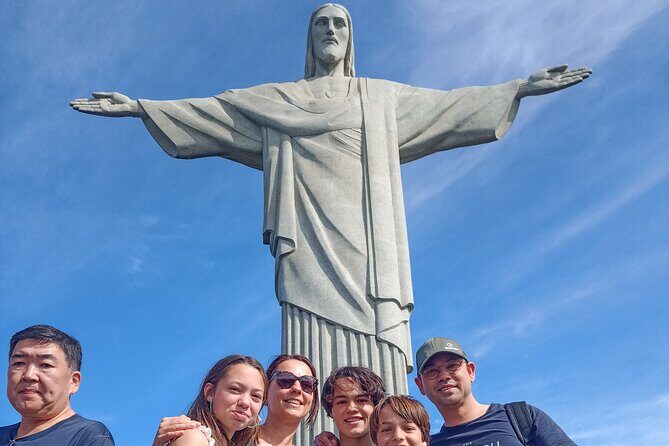
You start at 9:00 am, with the day’s first anchor being Corcovado and Christ the Redeemer. Admission is included, and you’ll have around 2 hours to take in the views and the monument itself.
Here’s what makes this stop work on this tour: it’s not only about the scenery from above Rio. It sets a contrast. You’re up high, looking out at the city, then later you’ll travel down toward the port areas and memorial sites. That shift helps you feel the scale—how a single city holds layers of migration, survival, and memory.
What to consider: you’ll be outside for a chunk of time. Bring a light layer and plan for changeable weather. This experience also requires good weather, so if clouds or rain move in, you may need to reschedule.
Santa Teresa: art workshops, Parque das Ruínas, and a slower neighborhood beat
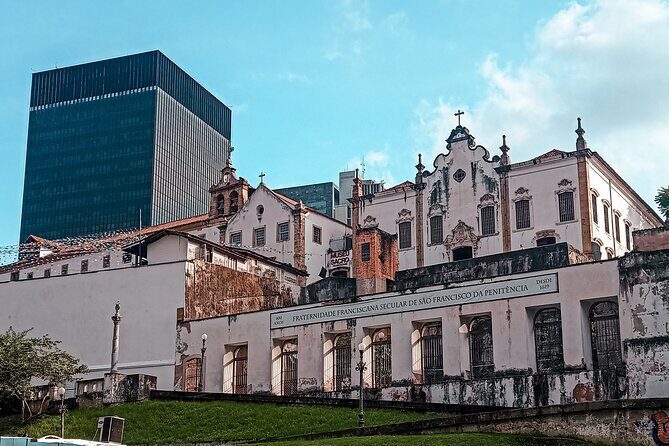
Next you head to Santa Teresa, a historic district known for its arts scene and hilly streets. You get about 1 hour, and the plan includes passing Parque das Ruínas and stopping near art workshops.
This is a smart midpoint. After the viewpoint, you’re moving into a more human scale neighborhood: street life, creativity, and older Rio architecture. It’s also a chance to reset your brain before the heavier sites later in the day. Even if you only catch glimpses while moving through, Santa Teresa helps keep the tour from feeling like a straight line of formal memorials.
Time note: the stop is short. If you’re hoping for lots of browsing, this isn’t the day for slow shopping. Use the time for orientation and a quick look around, then save deeper exploring for another visit.
Escadaria Selarón: the staircase that talks back

Then comes Escadaria Selarón, the famous staircase covered in thousands of tiles. You’ll spend about 30 minutes here.
This is one of those places where photos don’t fully explain what’s happening. You’re looking at an artwork made from collected tile pieces—an ongoing, public expression tied to the artist Jorge Selarón, a Chilean who settled in Rio and created the staircase that people now associate with the city’s identity.
What I’d do with your time: walk the staircase deliberately, not just for a quick snapshot. Look closely at the tile variety and the way the work frames the street. Even without a “museum label,” the staircase communicates a personal story in a public way.
MUHCAB: the Afro-Brazilian history and culture museum stop
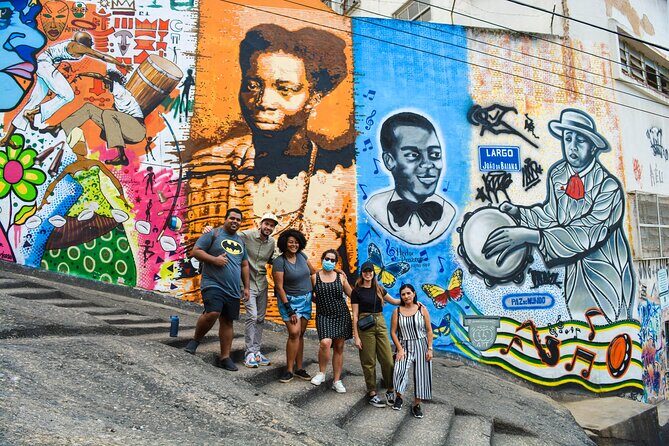
After the colorful chaos of Selarón, you shift into museum time at MUHCAB (Museu da História e da Cultura Afro-Brasileira). You’ll have about 40 minutes, and the focus is the museum’s setting in the region of Little Africa.
This is where the day’s theme gets sturdier. It’s not only about monuments outside; you’re spending time in a space designed to explain Afro-Brazilian history and culture in a structured way. For me, that museum stop is the best “bridge” between what you emotionally feel at memorial sites and what you can actually understand afterward.
Consideration: museums ask for attention. If you’re the type who likes frequent breaks, plan to pace yourself and take quick notes on what you want to remember later—especially before the next cemetery and pier sites.






Pretos Novos: IPN cemetery and the New Black memorial

One of the most important stops on the itinerary is Instituto de Pesquisa e Memoria Pretos Novos (IPN), centered on the Cemetery and Memorial of the New Black in the Gamboa region. You’ll get about 30 minutes here, and admission is included.
This place deals with painful history. The site is connected to research, preservation, and the safeguarding of material and intangible heritage related to African matrix culture. In other words, it’s not just a spot to look at plaques—it’s a place tied to study and memory.
How to make the most of this stop: go in ready to be quiet. Give yourself permission to absorb it at a slower mental pace than you’d use for a viewpoint. A good guide helps a lot here, because you’ll get clear context for what you’re seeing and why it matters.
Cais do Valongo: the UNESCO arrival trace in Rio’s port area

Next is Cais do Valongo, a historic pier in Rio’s port area. You’ll have about 25 minutes, and this one is free.
This is a UNESCO-listed site (since 2017), and it’s described as the only material trace tied to the arrival of enslaved Africans in America. That detail changes how you look at the place. You’re not “touring a pier.” You’re standing near ground that represents an arrival point in history.
The useful thing about the short time here is focus. You’ll get the key points without dragging the emotional weight too long. The tradeoff is you can’t linger for a second wind. If you’re the type who gets overwhelmed by intensity, go slowly, take one or two deep breaths, and listen closely to the guide’s explanation.
Pedra do Sal: Quilombos Remains Community and the Salt Stone area
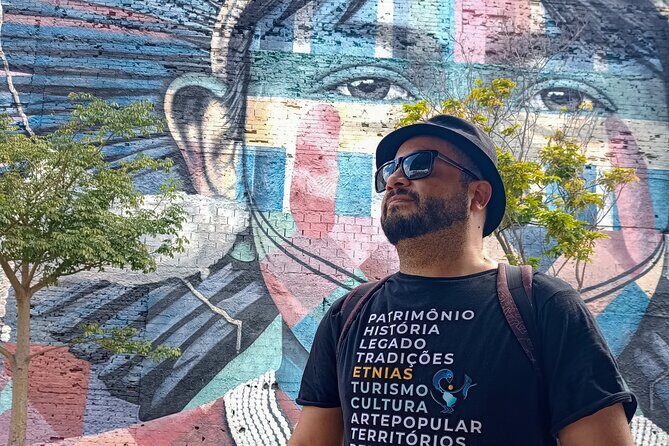
The final historic stop on this route is Pedra do Sal, near Largo da Prainha, and linked to the Quilombos Remains Community of the Salt Stone. You’ll spend about 30 minutes, and it’s also free.
This part of the day adds another layer: it’s not only about enslavement and memorialization. It’s also tied to community identity and cultural and religious significance in the neighborhood.
If you’re trying to understand Afro-Brazilian life beyond the past-tense, this stop helps. It points toward how history lives on through places where communities gather, practice belief, and keep traditions moving forward.
Lunch at an Afro-Brazilian restaurant: included, fixed menu
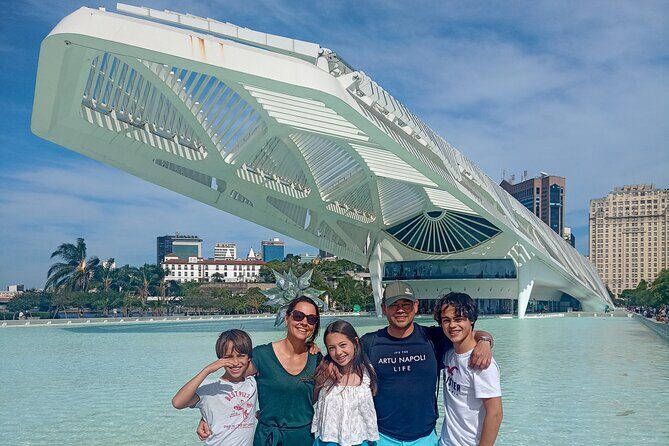
Lunch is included, and it’s at an Afro-Brazilian restaurant with a fixed menu predetermined by Etnias Turismo. That’s great for convenience—you don’t have to think about where to eat or negotiate a line—but it also means you should be flexible.
Practical expectation: you might not find your exact favorite dish, because the menu is set. If you have strong dietary restrictions, this is the one part of the tour where you’ll want to double-check what’s possible ahead of time (the tour data only says the lunch is included with a fixed menu).
Also note what isn’t included: alcoholic beverages, soda/pop, and coffee and/or tea aren’t part of the meal plan. If you rely on caffeine after sightseeing, plan to buy it separately.
Price and value: does $360.35 make sense?
At $360.35 per person, this isn’t a budget add-on. But value comes from what’s included and how the day is structured.
You’re paying for:
- an air-conditioned vehicle
- a tour guide (and the guiding is central to how the story lands)
- Christ the Redeemer tickets (included)
- IPN tickets (included)
- lunch (included, fixed menu)
Add in the fact that the group is capped at 20 travelers, plus pickup offered and mobile tickets. For a day that combines one of Rio’s top attractions with multiple admission-connected history stops, that inclusion list matters more than it sounds.
One caution: because the lunch and some entries are fixed/included, you’re trading choice for simplicity. If you hate rigid plans, you may feel constrained. If you like a guided day where most decisions are already handled, this price starts to feel fair.
Logistics that affect how you’ll enjoy the day
This experience runs about 8 hours, starting at 9:00 am. It also requires good weather, and it’s offered in English.
The “maximum of 20 travelers” piece is more than a number. It affects what you hear and how easily your guide can manage the group during stops. If you’ve ever been stuck in a huge crowd and lost the explanation, this smaller group size makes a difference.
Also, because it’s near public transportation, you’re not locked into the ride the whole time. But you should still plan to spend most of the day with the group schedule, not wandering off.
Who should book this tour, and who should skip
This tour is a strong match if you want:
- a guided, coherent story tying together major sights and sites tied to African Diaspora history
- a day that includes both landmark views and focused memorial education
- someone to handle ticket basics and route flow, so you can spend your energy listening and looking
It might be less ideal if you prefer:
- slow, open-ended exploring (this is a structured day with short stops)
- lots of free time for shopping or café hopping (lunch is included and the menu is fixed)
If you’re traveling with kids, it can work—one family described bringing a young son and older mother and leaving very satisfied. Just keep in mind that museum and memorial sites ask for patience.
Should you book Rio Afro Experience?
I’d book it if you’re in Rio for a limited number of days and you want your sightseeing to have meaning. The combination of Christ the Redeemer plus Little Africa stops like MUHCAB, Pretos Novos (IPN), Cais do Valongo, and Pedra do Sal gives you a rare full-day perspective: Rio above and Rio at ground level, Rio as view and Rio as memory.
I’d hesitate if you need a flexible day with lots of downtime, or if you get worn out by emotionally heavy sites. This route isn’t “light.” It’s respectful and informative, but the subject matter is real.
If you’re looking for value, the included tickets and lunch help justify the price—especially when you consider how much guided context you need to make these places land.
FAQ
How long is the Rio Afro Experience tour?
It’s scheduled for about 8 hours.
What does the tour include for admission tickets?
Tickets included are for Christ the Redeemer and Instituto de Pesquisa e Memoria Pretos Novos (IPN).
Is pickup offered, and how many people are in a group?
Pickup is offered, and the tour has a maximum of 20 travelers.
What language is the tour offered in?
The tour is offered in English.
Is lunch included, and what does that mean for you?
Lunch is included at an Afro-Brazilian restaurant with a fixed menu. Alcoholic beverages, soda/pop, and coffee/tea are not included.
What’s the cancellation window?
You can cancel for a full refund up to 24 hours before the start time. If it’s canceled due to poor weather, you’ll be offered a different date or a full refund.