REVIEW · RIO DE JANEIRO
Birdwatching tour to Tijuca National Park with Pica-pau Tours
Book on Viator →Operated by Pica-Pau Tours · Bookable on Viator
Birdwatching in Rio gets real fast. You leave the city heat behind and spend half a day in Tijuca National Park looking for colorful native birds on an easy-paced route. It’s built around short rides, short walks, and a guide who knows how to find birds by both sight and sound.
I really like that the tour is set up for maximum bird time. You’re not stuck in one place all morning; you’re moving between key areas like Alto da Boa Vista and viewpoints deeper in the park, with breaks in between for scanning and listening.
One thing to consider: this experience depends on good weather. If conditions turn bad, plans can shift, including rain-related rescheduling in at least one case described with the tour team.
In This Review
- Key points at a glance
- Half-day Tijuca birdwatching: early start, smart pacing, real attention
- The route through Tijuca: what each stop is good for
- Stop 1: Floresta da Tijuca
- Stop 2: Cascatinha Taunay
- Stop 3: Vista Chinesa
- Stop 4: Alto da Boa Vista
- How the guides find birds: calls, recordings, and English names
- Coffee break plus the trail rhythm: how the tour stays enjoyable
- Price and value: private up to 4, plus included coffee
- What you should pack and how to prepare (without overthinking it)
- Who should book this Tijuca birdwatching tour?
- Should you book Pica-pau Tours for Tijuca birdwatching?
- FAQ
- FAQ
- Where is the meeting point for the tour?
- How long is the birdwatching tour?
- What time does this tour operate?
- Is this a private tour or shared with other groups?
- What is the price and group size?
- What birds are you hoping to see?
- Is coffee included?
- Do guides provide bird guidance in English?
- How do guides help you find birds that are hard to spot?
- What happens if the weather is bad?
- Is free cancellation available?
Key points at a glance
- Private tour for up to 4 with focused guiding and flexible bird stops
- English-speaking birding with help translating names into what you can recognize quickly
- Call playback is part of the method, using recordings and apps/speakers to coax birds closer
- Coffee break included, timed between short walks so you don’t feel rushed
- Multiple Tijuca zones visited in one morning, so you’re not betting everything on one habitat
Half-day Tijuca birdwatching: early start, smart pacing, real attention

This is a 6 hours 30 minutes birdwatching tour in Rio de Janeiro, designed for people who want a memorable bird day without committing to a full day in the park. The schedule is compact, starting in the morning and ending around 1 pm (with the activity ending back at the meeting point). For many visitors, that’s perfect because you still keep your afternoon free for beaches, neighborhoods, and classic Rio viewpoints.
The rhythm matters here. You’ll leave from the South Zone and head to Alto da Boa Vista, then spend the rest of the tour cycling through stops. The format is simple: short car rides, then short walks on easily accessible trails. That means you’re constantly resetting your position, scanning fresh areas, and staying ready for birds to pop up at the edge of paths.
Because it’s private (only your group), you’re less likely to feel like you’re “competing” with other people for the guide’s time. If you like learning while you watch, this tour fits that style well. Guides are using tools—like bird calls and field names in English—so you’re not just collecting pretty sightings, you’re connecting them to what you’re actually looking at.
You can also read our reviews of more tours and experiences in Rio de Janeiro.

The route through Tijuca: what each stop is good for
The itinerary rotates through four named areas in Tijuca National Park. The names alone hint at what you’re there for: forest birding, waterfall-zone birdlife, and higher lookout areas where different species can show up.
Stop 1: Floresta da Tijuca
Floresta da Tijuca is the forest start of the morning. This is where birding usually feels most “alive” because forest edges and canopy zones often bring the most movement. Expect your guide to lead with listening as much as looking. If a bird is not visible right away, you’ll still have something to do—track the sound, scan the direction, and move only when it makes sense.
A drawback of forest birding is obvious: visibility can be tricky. Leaves and branches can hide the bird even when the call is clear. The upside is that forest tours reward patience, and guides here use that patience with purpose.
Stop 2: Cascatinha Taunay
At Cascatinha Taunay, the tone shifts toward a wetter, more active zone near water. Water areas can bring birds that prefer humid microhabitats and it can also change how sound carries. Your guide’s job in this section is to translate that sound and movement into “where to look next” instead of letting you wander.
If you’re the type who likes photos, this is often where you’ll feel the day “opens up” visually. Still, remember: this is a birding tour first, not a sightseeing marathon. You’ll move because birds might move.
Stop 3: Vista Chinesa
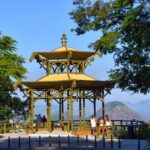
Vista Chinesa is a viewpoint-style stop. When you reach a higher or more open vantage, you often get a different mix of species and behavior than you do deep in forest. You’ll typically spend time scanning rather than walking for long distances, and the guide will likely keep pulling you back to what to watch for—speed, direction of flight, and whether a bird is feeding or just passing through.
This is a nice shift in the day because it breaks up the “continuous canopy scanning.” If you’re feeling your legs or your attention flagging, viewpoints can help reset both.



Stop 4: Alto da Boa Vista
You start at Alto da Boa Vista and you’ll also see it positioned as a key anchor for the early search. By the time you reach the later part of the tour, Alto da Boa Vista helps round out the morning with another habitat angle. Bird species can vary by elevation and how open the edges are, so having this stop early-and/or centrally is a smart move.
You’ll generally finish the tour after the downward movement toward the hotel area, with expected arrival around 1 pm. In other words: this is built to wrap up cleanly, not to run forever just because the birds are hot that day.
How the guides find birds: calls, recordings, and English names
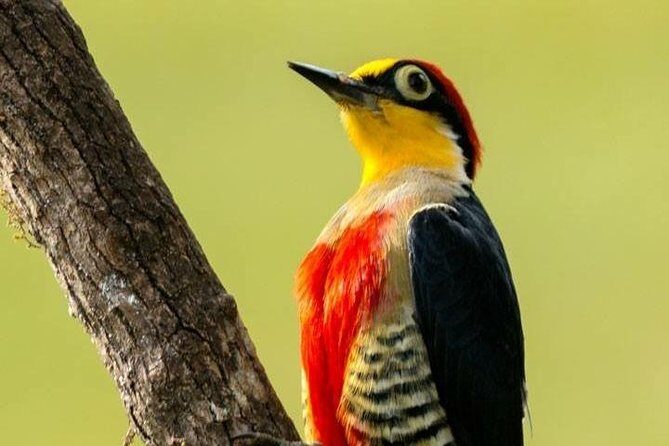
The real differentiator is how the guide works the birds. You’re not relying on luck alone. The tour style includes call playback and active listening, which makes a huge difference in places where the birds are there but hard to spot.
In the field, two methods stand out from the tour experience:
- Guides using call recordings to draw birds in and confirm what you’re hearing
- Using an app and speaker approach when conditions call for it
You’ll also get bird names in English, which matters more than people think. Field guides are not easy to find everywhere, so having your guide map local birds to an English name helps you keep learning during the day—not just afterward.
Binocular support is another practical win. One guide (Ricardo) made sure guests could borrow binoculars, which instantly lowers the barrier for first-time birders. Still, a smart tip: if you own binoculars, bring them. Even with borrowing available, your own setup means quicker focus and less juggling.
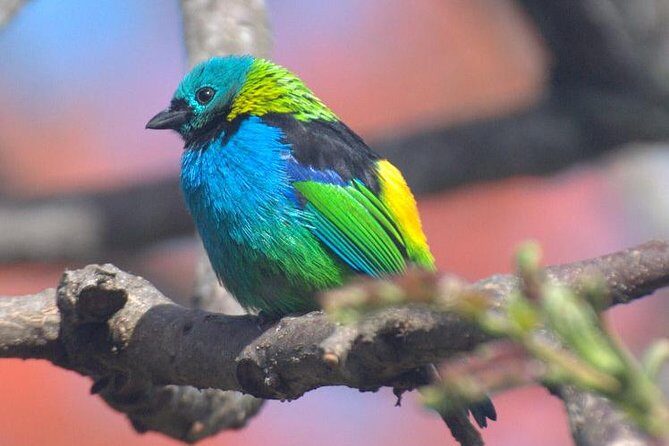
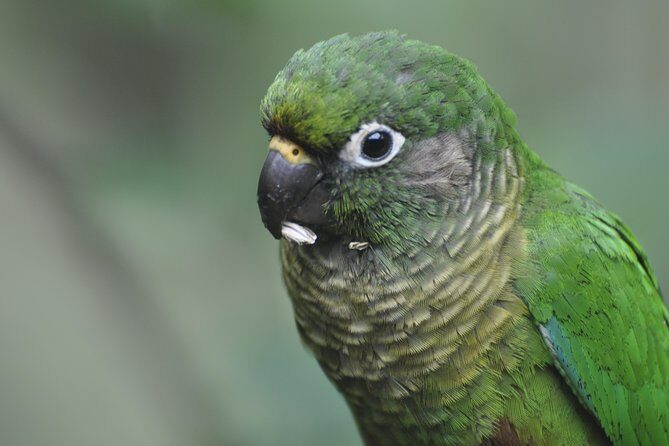
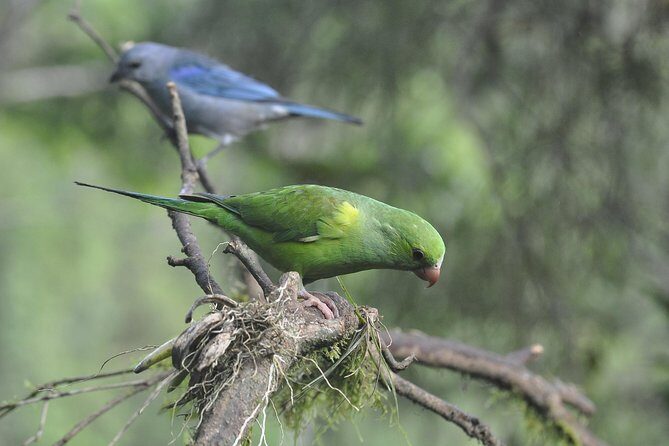
And yes, the guide approach includes matching what you see and what you hear. That’s why you might hear the day framed around specific targets like Green-headed Tanager, Red-necked Tanager, and parakeets such as Plain and Maroon-bellied. Even if you don’t catch every target, you’ll likely come away with a solid list of species and a better sense of how Tijuca’s birdlife sounds and moves.
Coffee break plus the trail rhythm: how the tour stays enjoyable
Between short walks, there’s a stop for Brazilian coffee, and it’s included. That’s not just a nice perk. It’s also a timing tool: it prevents the morning from feeling like an endless grind of scanning and walking. Birding can be mentally tiring because your brain is constantly switching between looking, listening, and anticipating.
The schedule also helps you avoid the trap of “we only walk at the end.” Here, you’re doing a mix all morning—walk, ride, pause, listen, repeat. For most people, that keeps energy up and helps the guide react to bird activity without you feeling stuck in one spot too long.
One small consideration: because the tour ends around midday, plan your rest of the day with that in mind. You’ll want time for a shower and lunch after the park, because birding mornings in Rio can be active even when the trails are described as easily accessible.
Price and value: private up to 4, plus included coffee
The price is $236.57 per group (up to 4 people). For a private nature-and-birding experience, that can be good value—especially if you split costs with friends or family.
Here’s the simple math:
- If 2 people book, you’re paying about $118 per person
- If 4 people book, you’re paying about $59 per person
That’s where the private format helps most. Two people can still make it worth it, but a full group of four usually turns it into a bargain compared with private guiding in many major cities.
Also, the tour includes Brazilian coffee, and the overall plan focuses on bird time instead of long sightseeing detours. That’s the kind of “included” value that actually matters when you’re paying for a guide’s expertise.
English guidance is part of the value too. Bird tours can quickly turn frustrating if you can’t connect what you see to names. Here, you’re set up to leave with better identification.
What you should pack and how to prepare (without overthinking it)
I’d prepare for a morning that mixes short walking with frequent stopping. Bring a hat and wear comfortable shoes—short trails still add up when you’re stopping constantly. If you have them, bring binoculars so you’re ready the moment you spot movement.
If you don’t have binoculars, that’s not necessarily a dealbreaker, because at least one guide on this tour has made binoculars available for borrowing. Still, your own gear makes everything faster, especially when birds are quick.
Most important: keep your day flexible in case weather requires changes. The experience is described as requiring good weather, and the tour can be offered a different date or a full refund if it’s canceled due to poor conditions. In one described situation, the guide contacted the night before to postpone because rain was expected. That’s exactly the kind of practical communication you want from an operator—better than showing up and guessing.
Who should book this Tijuca birdwatching tour?
Book this tour if you want a guided bird experience that’s built for learning, not just photos. It fits first-timers well because the guide’s method (calls + scanning + English names) helps you understand what’s happening. It also fits experienced birders because the route covers multiple Tijuca zones and the guide is actively trying to match target species.
You’ll probably enjoy it most if you like:
- Listening for birds as much as spotting them
- Short, focused chunks of walking
- A guide who explains what you’re looking at in plain language
One caution: if you dislike early mornings or you want a relaxed, slow sightseeing day, this may feel busy. It’s designed for bird action. The good part is that the tour still ends around 1 pm, so it doesn’t steal your whole day.
Should you book Pica-pau Tours for Tijuca birdwatching?
If your priority is native birds in Tijuca National Park, I think this is a strong choice. The setup is practical: private group up to four, morning timing, multiple stops, and a guide using call recordings and playback tools to increase your odds. Add included coffee and the English naming support, and you get a tour that’s not just scenic—it’s functional.
The only real reason to skip is simple: if you’re coming to Rio for a laid-back afternoon and you don’t want weather-dependent outdoor plans. If you can be flexible with your schedule and you’re excited to listen for birds, this is the kind of half-day that can become a highlight of your trip.
FAQ
FAQ
Where is the meeting point for the tour?
The start point is a police station at Av. Atlântica, 4206, Copacabana, Rio de Janeiro, RJ 22070-002, Brazil. The activity ends back at the meeting point.
How long is the birdwatching tour?
The duration is approximately 6 hours 30 minutes.
What time does this tour operate?
The stated opening hours are Monday through Sunday, 6:30 AM to 1:00 PM.
Is this a private tour or shared with other groups?
It’s a private tour/activity. Only your group will participate.
What is the price and group size?
The price is $236.57 per group, up to 4 people.
What birds are you hoping to see?
The tour searches for species such as Green-headed Tanager, Red-necked Tanager, Plain Parakeet, and Maroon-bellied Parakeet, among others.
Is coffee included?
Yes. There is a stop for Brazilian coffee between trails, and it is included in the tour.
Do guides provide bird guidance in English?
Yes. The tour is described as a bird tour in English, and guides help with English bird names.
How do guides help you find birds that are hard to spot?
Guides use call recordings, and in some cases an app and speaker to attract birds so you can locate them by sound as well as sight.
What happens if the weather is bad?
The experience requires good weather. If it’s canceled due to poor weather, you’ll be offered a different date or a full refund.
Is free cancellation available?
Yes. You can cancel for a full refund up to 24 hours in advance of the experience’s start time.