REVIEW · RIO DE JANEIRO
Petrópolis Teresópolis Trekking Expedition
Book on Viator →Operated by Nattrip - Tourism, Ecotourism and Adventure in Rio de Janeiro · Bookable on Viator
A three-day trek with real mountain bite. This private Serra dos Órgãos crossing is all about serious views, hands-on guidance, and getting you safely through technical terrain. You also get a smooth start with hotel or terminal pickup and a guided pace that keeps the group moving (including on the steep parts).
Two things I like a lot: first, the operation is built around safety and know-how, with rope and other support for technical sections plus satellite monitoring via SpotGen3. Second, the day structure gives you a natural rhythm: a brutal first climb, a standout second day full of rock and ladders, then a gentler third day with waterfalls.
The main drawback: this is not a walk in the park. Expect a big altitude gain on day 1 and real climbing moves on day 2 (including a ladder section and the Cavalinho passage), plus you’ll need to meet the pack list—especially sleeping gear like a sleeping bag and pad.
In This Review
- Key things to know before you go
- Where this trek really shines: Serra dos Órgãos with real guidance
- Day 1: the steep grind up to Castelos do Açu and the Morro do Açu finale
- Day 2: Morro do Marco, the steel rebar ladder, and the Cavalinho move
- Day 3: 12 km to the Teresópolis park dam, plus waterfalls when conditions allow
- What’s included (and what you still must bring)
- How tough is it, really?
- Price and value: $670 for three days of guidance and safety
- Who should book Petrópolis to Teresópolis (and who should not)
- Should you book this trek?
- FAQ
- FAQ
- What time does the trek start?
- Where does the trekking expedition start and end?
- How long is the Petrópolis to Teresópolis crossing?
- What fitness level do I need?
- Is camping equipment included?
- What meals are included?
- Can I cancel for a refund?
Key things to know before you go
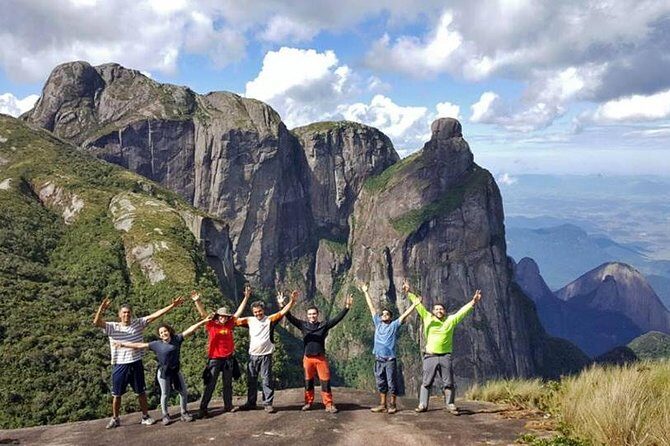
- Private tour with pickup so you’re not sorting transport before you even lace your boots
- Technical trekking support including ropes/harness-style safety gear for steep or exposed sections
- Satellite tracking (SpotGen3) and first-aid support built into the plan
- Big altitude days with a major ascent on day 1 and sustained high-elevation hiking on day 2
- Stargazing and wildlife potential as part of the mountain nights and early starts
- Bring your own sleeping bag and pad even though campsite setup is supported
Where this trek really shines: Serra dos Órgãos with real guidance
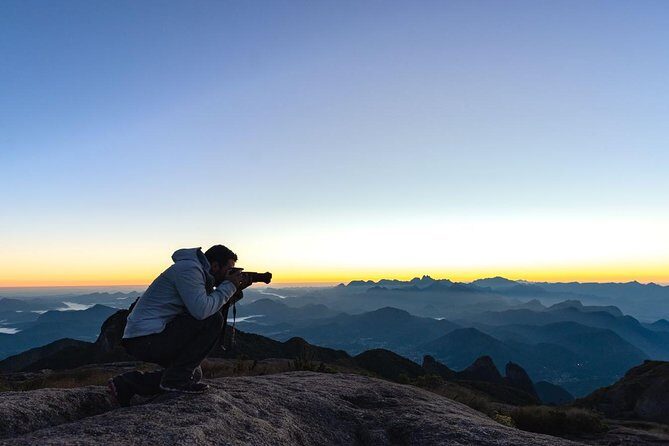
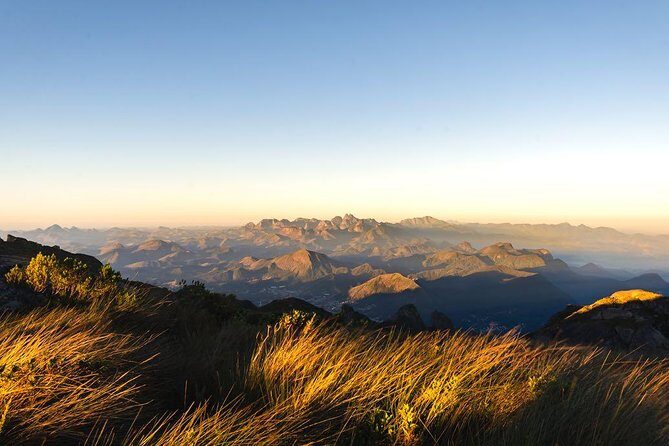
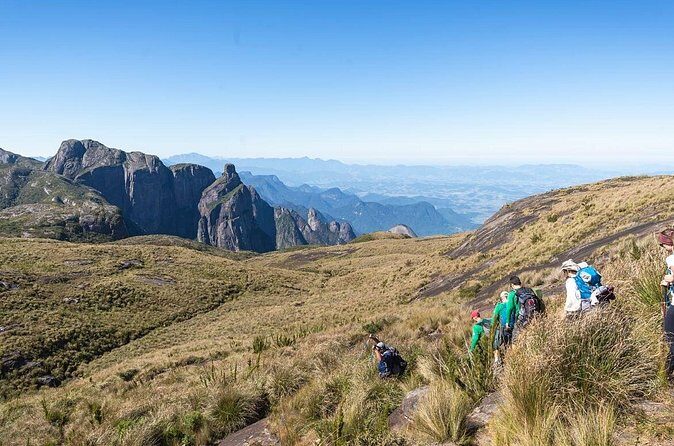
This crossing between Petrópolis and Teresópolis is a classic mountain challenge in Brazil’s Serra dos Órgãos National Park. The best part isn’t just the jagged peaks and viewpoints. It’s the way the whole trek is run so you can focus on walking and taking in the views, instead of guessing the trail.
The tour is private, so you’re not getting shoved into a mixed-speed herd. It’s also guided throughout, and the plan assumes you’ll be on the move for about 20 miles over three days. That matters because this kind of route rewards momentum. Stop every five minutes and you’ll freeze. Keep a steady pace and suddenly you’re the one who’s breathing fine while the scenery changes every hour.
Guides also shape your “confidence level.” On day 2, there are sections where footing and route choices aren’t obvious. Your guide is there for navigation, pacing, and safety—not just storytelling. That’s why the best reviews consistently name specific guides (like Alex Muriqui) as the difference between feeling nervous and feeling in control.
Finally, there’s a practical safety net behind the scenes: remote monitoring via SpotGen3, plus first-aid support and collective safety gear carried for technical paths. It’s a trekking tour, not a stunt show.
You can also read our reviews of more hiking tours in Rio de Janeiro
Day 1: the steep grind up to Castelos do Açu and the Morro do Açu finale
Day 1 is the hardest day physically, and it starts with a simple transfer from Rodoviária de Petrópolis (or pickup from your lodging). Then you head straight into Serra dos Órgãos terrain.
The big moment is the ascent: roughly 7 km uphill to the Castelos do Açu mountain shelter, with about 1,100 meters of elevation gain. That’s not a gentle warm-up. It’s a full “wake up your legs” climb through dense forest, building steadily toward viewpoint stops along the way.
Along the way, you pass through a couple of key lookouts and waypoints:
- Pedra do Queijo viewpoint, reached during the main push uphill
- Ajax viewpoint, which has natural water supply
- Isabeloca mountain, widely treated as the toughest climb on this first ascent
Isabeloca also has a story behind its name (a connection to an alleged passage by Princess Isabel). Stories like that aren’t the reason to hike it, but they make the long climb feel less like slog and more like going somewhere specific.
After Isabeloca, the trail crosses Chapadão do Açu—a counterfort area—before you reach the Açu castles, where the day’s effort pays off.
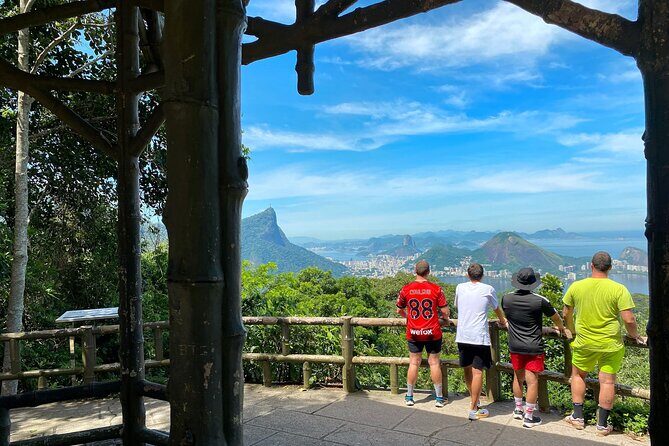
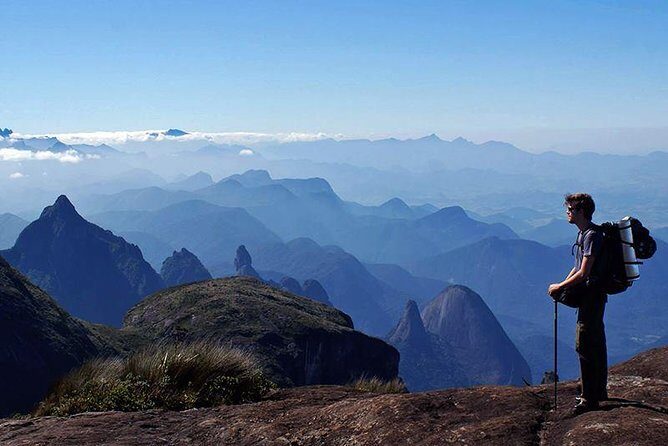
The day ends at Morro do Açu, with one last view described like a golden key: you can see across Rio de Janeiro and Guanabara Bay, plus the broader mountain range of Serra dos Órgãos. It’s the kind of view that makes you forget exactly how steep the last hour felt. If you’re the type who likes photos, this is where you’ll want your headlamp charged and your camera ready for quick sunset-to-night transitions.
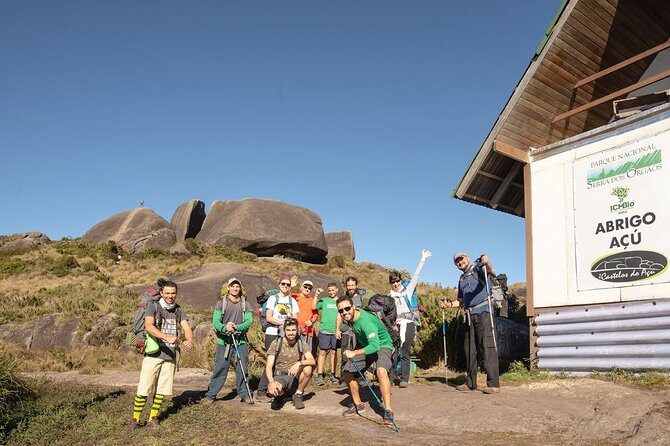
You overnight camp at Açú Castles Peak. Camping nights here are part of the experience—because the mountain sky does its thing once the sun drops.
Day 2: Morro do Marco, the steel rebar ladder, and the Cavalinho move
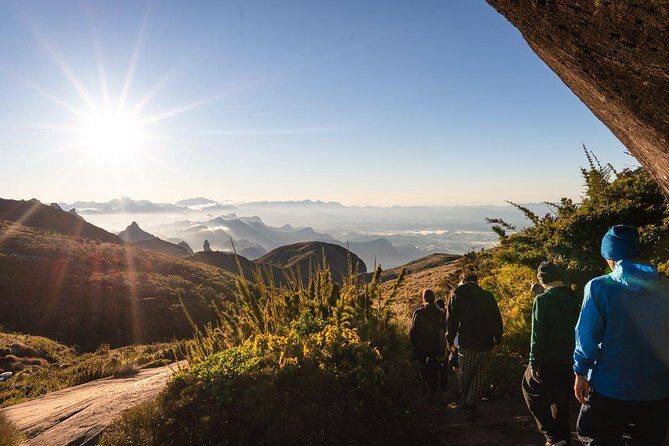
Day 2 is often described as the most beautiful day of the crossing, and it’s also the most technically tricky. The hike runs at an average altitude of around 2,000 meters, so you’ll feel the altitude in your breathing even when the gradient isn’t always brutally steep.
You start by crossing a valley, then climb toward Morro do Marco. Then comes a stretch of rock summits where navigation can get complicated. This is where having an expert guide matters most. You’re not just following blazes; you’re following decisions.
One of the most dramatic sections is the Elevator: a ladder made of steel rebar stuck to steep stone. Think “real ladder, real exposure,” not a convenient set of stairs. You’ll reach the summit of Morro do Dinossauro and get your first major views of Pedra do Garrafão and Pedra do Sino.
After that, you descend toward Vale das Antas, then continue up again to Morro da Baleia. This is where you start seeing the rock wall of Pedra do Sino and the route channel where Cavalinho happens.
Cavalinho gets its name because the movement you make to pass it resembles mounting a horse—so it’s not only about strength, it’s about technique. The guide’s job is to keep you safe and keep the group moving through without panic.
When the trail finally reveals Pedra do Sino, you reach a bifurcation that gives access to its summit and to Shelter #4. This is also where day 2 transitions from “wow” to “we made it.”
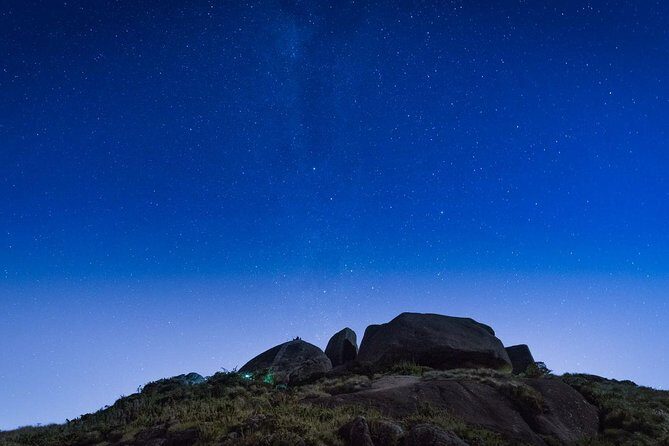
Then you overnight at Pedra do Sino Peak. That setting is remote and high. You’ll feel the weather, hear the night sounds, and get the kind of starry-sky view that makes the early mornings worth it.
A few of the strongest reviews highlight guides who make this kind of technical day feel safe and manageable—often naming guides like Gustavo, Gigi, and Guilherme as especially attentive. That’s consistent with what day 2 demands.
Day 3: 12 km to the Teresópolis park dam, plus waterfalls when conditions allow
Day 3 is the least physical day—good news if your calves are already filing a complaint. You hike about 12 km downhill toward the Teresópolis park dam, finishing at the final crossing point.
As you descend, you stop for two waterfalls. The highlight is Véu de Noiva, a 16-meter waterfall. Here’s a key detail: at certain times of the year, it can be totally dry. That doesn’t mean the day is a letdown. It means you’re hiking the canyon and rock features, and the water is a bonus when nature provides it.
After the waterfalls, you finish in Teresópolis city, where you’ll see the God’s Finger rock formation. This ending matters because it gives your brain a clean reset after two days of steep terrain: you’re back on recognizable ground, with a chance to refuel and enjoy the town vibe.
The tour ends with drop-off at Teresópolis Terminal or your lodging in the Teresópolis center area.
What’s included (and what you still must bring)
This trek is priced like a guided, gear-supported expedition, not like a self-guided hike. You get:
- Specialist guides for long-distance trekking
- Guided crossing over three days
- Food advising before you leave for snacks during the trek
- Remote monitoring of the expedition via SpotGen3
- Safety equipment for technical paths (including rope and baldriers-style gear)
- First-aid support (including a first-aid kit)
- Collective equipment porters if needed
- Meals: 2 breakfasts and 2 dinners
A couple of things are not included. Camping equipment is listed as not included, and drinks are not included. You’ll also need to bring key personal trekking and sleep items from the mandatory list:
- ID or passport
- Trekking backpack (and it should fit the trip needs; you’re told not to bring large luggage or rolling backpacks)
- Sleeping bag
- Sleeping pad
- Walking stick (one or two)
- Headlight and batteries
- Water bottle
- Hiking boots/shoes
- Dry-fit/polyamide shirts, plus an anorak/fleece
- Plastic bags for trash and toilet paper
- Phone, and snacks for the day
This is a big deal: you’re responsible for your own sleep system, light, and core clothing layers. The guide team covers the route, the safety setup, and the group meal plan.
One more practical note: the tour strongly discourages a bunch of items—like glass containers, alcohol, oversized electronics, perfumes/aerosols, and even umbrellas—because the goal is low hassle and minimal pack bulk. Follow it. You’ll thank yourself halfway up day 1.


How tough is it, really?
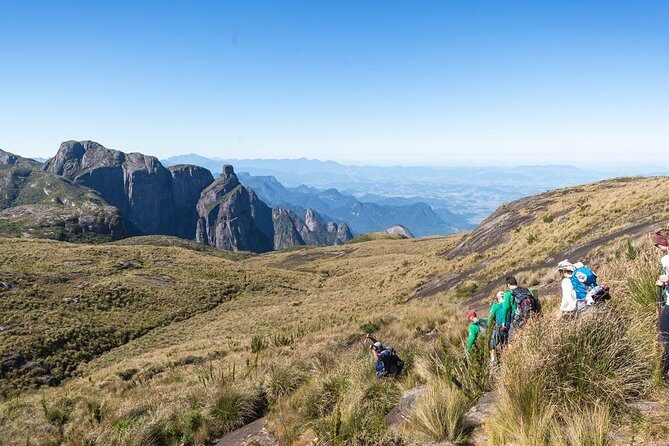
If you’re even slightly unsure, treat this as an advanced-level trek. The trip itself flat-out says it’s for people with strong physical fitness.
Here’s what the terrain is telling you:
- Day 1: a major ascent (about 1,100 meters up over roughly 7 km) plus repeated viewpoint climbs
- Day 2: technical terrain with navigation challenges, a steel rebar ladder, and the Cavalinho move that requires technique
- Day 3: downhill hiking with waterfall stops, but still about 12 km of walking
Minimum age is 15, and it’s not recommended for anyone with heart complaints or serious medical conditions. If you’re managing anything like that, you’ll want to talk to a clinician before committing.
Also, you should expect early starts. The tour begins at 6:30 am. In mountain country, that timing isn’t just for convenience. It helps you beat heat and build in time for safe transitions.
Price and value: $670 for three days of guidance and safety
At $670 per person for about three days, this isn’t a budget activity. But when you break it down, you’re paying for a lot of heavy lifting—literally and figuratively:
- You’re hiring specialist long-distance guides
- You’re getting route guidance for technical sections
- You get safety equipment for rope/technical paths
- You get meals (breakfasts and dinners)
- You get remote monitoring via satellite tracking
- You get collective first-aid support
- You get equipment and help for parts of the camping setup
There’s also a “hidden cost” that this reduces for you: stress. When you’re on a ladder section or a tricky passage like Cavalinho, you don’t want to be thinking about gear failure or route confusion. You want a calm person who knows the trail and knows how to manage the group.
That’s why the strongest reviews repeatedly focus on guide quality and organization. People mentioned names like Joana for administration support and Alex Muriqui (among others) for pacing, great meals, and a safety-first mindset. That kind of service is what keeps a challenging trek from turning into a suffering contest.
Who should book Petrópolis to Teresópolis (and who should not)
This trek is a great match if:
- You can handle long hiking days and steep climbs
- You’re comfortable with heights and technical steps
- You like guides who teach along the way, not just point the direction
- You want a real mountain experience inside a national park setting
You should probably reconsider if:
- You’re not in strong physical shape
- You’re uncomfortable with ladder-like climbing and exposed footing
- You have a medical condition like heart trouble (the trip explicitly discourages it)
If you’re an experienced hiker who wants something more demanding than a standard day hike, this is the kind of challenge that rewards you with big viewpoints, starry skies, and a sense of accomplishment that lasts past the last waterfall.
Should you book this trek?
My take: book it if you’re ready for technical mountain hiking and you want guided, safety-focused three-day adventure in Serra dos Órgãos. The value works because you’re not just buying walking time—you’re buying expert help, safety systems, and a plan that handles food, pacing, and monitoring.
Skip it if your goal is an easy scenic stroll. Day 1 gives you serious ascent, and day 2 asks for real technique. If you’re okay with that reality and you pack correctly (especially your sleeping gear and headlight), you’ll likely come away feeling like you did something truly memorable.
FAQ
FAQ
What time does the trek start?
The start time is 6:30 am, beginning at Rodoviária de Petrópolis – Centro (or pickup from nearby lodging).
Where does the trekking expedition start and end?
It starts at Rodoviária de Petrópolis – Centro in Petrópolis and ends at Rodoviária de Teresópolis (with drop-off also possible in the Teresópolis center area or lodging).
How long is the Petrópolis to Teresópolis crossing?
The trek runs for 3 days (approximately).
What fitness level do I need?
You should have strong physical fitness because the route involves a lot of uphill hiking and also technical sections. The minimum age is 15.
Is camping equipment included?
Camping equipment is not included. You are required to bring your sleeping bag and sleeping pad, along with items listed in the mandatory pack list.
What meals are included?
You get 2 breakfasts and 2 dinners. You’ll also receive food advising for snacks during the trek, and drinks are not included.
Can I cancel for a refund?
You can cancel up to 6 days in advance for a full refund. Cancel 2–6 days before for a 50% refund, and cancellations less than 2 days before the start time are not refunded.