REVIEW · RIO DE JANEIRO
Path DA Resistance: Discover the Black Culture of Rio
Book on Viator →Operated by Footsteps of Rio · Bookable on Viator
Rio’s Black history walks right through the city. This 2–3 hour route brings Little Africa into focus, with stops that connect culture, resistance, and what’s still being uncovered, including Cais do Valongo. I especially like the way the guide ties each location to one clear story of African-Brazilian life, and I like that the main sights don’t hit your wallet with paid entry. One thing to consider: it runs best in good weather, and you’ll be walking and standing for short stretches at each stop.
You’re on a private tour just for your group, in English, with a mobile ticket. The pace is built for context, not rushing, so you get time for photos at the iconic spots while still learning what they mean.
The walk starts at Museu de Arte do Rio (MAR) near Praça Mauá and ends by Kobra’s Etnias mural by the waterfront. Along the way, you pass photo points like the Escada da Bandeira do Brasil and the Mosaico Hilário Jovino, then land at places where memory is more than a slogan.
In This Review
- Key highlights
- Museu de Arte do Rio (MAR) and Little Africa starts to make sense
- Escada da Bandeira do Brasil: a photo stop with a purpose
- Mosaico Hilário Jovino and the story behind Carnival
- Largo São Francisco da Prainha: cultural expression and resistance in a square
- Pedra do Sal: samba’s meeting point and Afro-Brazilian monument
- Cais do Valongo: the slavery-era landing preserved in ruins
- Kobra’s Etnias mural: widening the lens beyond Rio
- What $62.34 buys you in two to three hours
- How the route works: from Praça Mauá to the Orla
- Guide-led pacing: what Lucas Reves-style storytelling adds
- Who this tour fits best
- Should you book Path DA Resistance: Discover the Black Culture of Rio?
- FAQ
- How long is the tour?
- Is the tour offered in English?
- Is this a private tour?
- Where does the tour start and end?
- Are tickets provided for the stops?
- Is food and drink included?
- What’s the cost per person?
- Does it run in any weather?
- What is the cancellation window for a full refund?
Key highlights
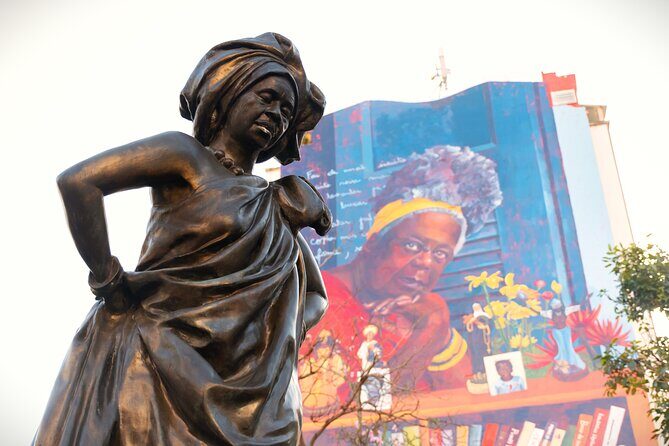
- Little Africa framed at Museu de Arte do Rio (MAR) with free entry and local context
- Escada da Bandeira do Brasil for skyline views and photo-ready steps tied to identity
- Mosaico Hilário Jovino that links Carnival’s creation to Small Africa connections
- Largo São Francisco da Prainha as a stage for cultural expression and resistance
- Pedra do Sal as a samba meeting point and a monument to Afro-Brazilian culture
- Cais do Valongo where the landing of enslaved people is preserved as an archaeological site
Museu de Arte do Rio (MAR) and Little Africa starts to make sense
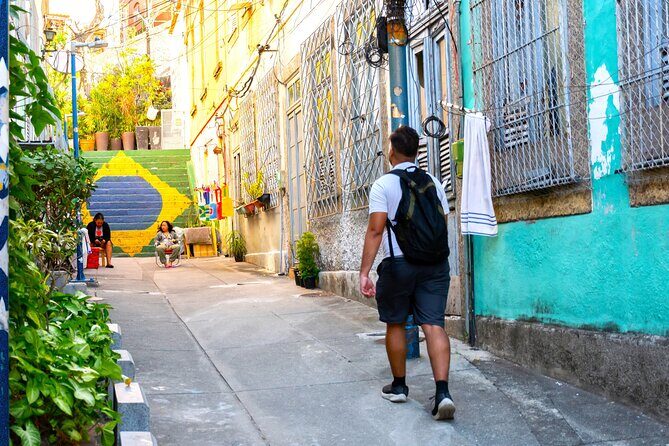
You begin at Museu de Arte do Rio (MAR), where the group meets at Praça Mauá, right in the Saúde area. From the start, this tour doesn’t treat “history” like a separate chapter. It frames what people call Little Africa—the idea that specific Rio neighborhoods became centers of Black life, work, music, and community—so later stops don’t feel random.
This first moment is short, about 20 minutes, but it works like a key turning in a lock. You get context first, then the street-level sites hit harder. Admission is free, so you’re not forced to choose between learning and paying for entry. You’ll likely spend time listening, getting your bearings, and learning how the rest of the walk connects.
If you’re the type who likes to know why before you photograph, this opening is a smart move.
You can also read our reviews of more tours and experiences in Rio de Janeiro.



Escada da Bandeira do Brasil: a photo stop with a purpose
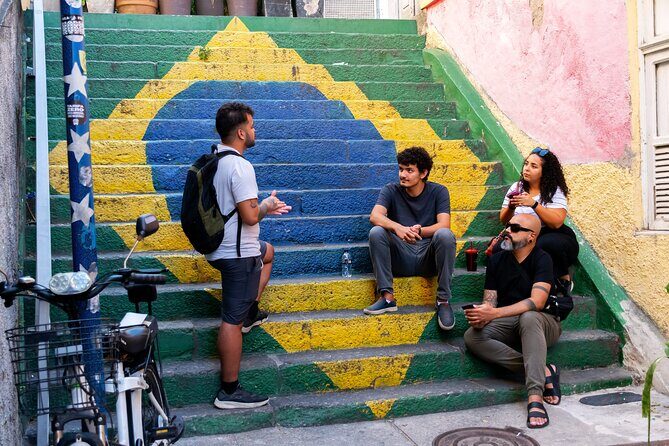
Next you head to the Escada da Bandeira do Brasil, the iconic Brazilian staircase. You get around 15 minutes here, and yes, you’ll take pictures—this is the kind of spot where the angle makes the city feel dramatic.
But the point isn’t just the view. The guide uses this location as a way to talk about visibility: who gets to be seen, what gets remembered, and how public space can hold cultural identity. In practical terms, this is also a good breather. You move from one learning point to a quick photo session before you go back to the deeper, more solemn places.
Tip: have your camera ready and don’t spend the first half of the stop figuring out framing. The time is short by design.
Mosaico Hilário Jovino and the story behind Carnival
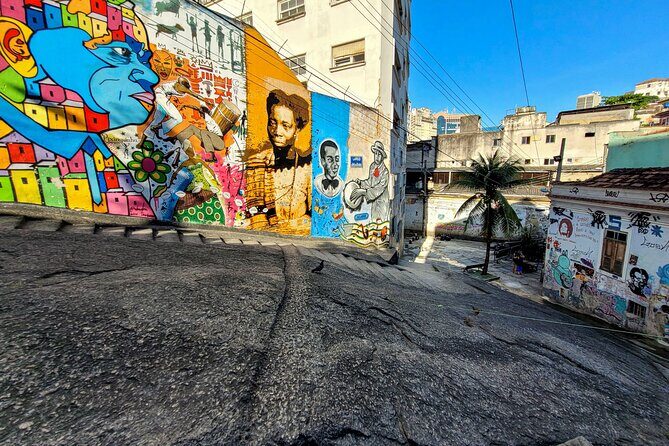
The route continues to Mosaico Hilário Jovino, a mosaic site where you get a “photo parade” moment—about 15 minutes—while the guide explains how Carnival’s creation connects back to Small Africa. This is one of those places where images do double duty: it looks like street art, but it’s also an educational map.
What I like here is the way the tour treats culture as something built by real communities, not as entertainment that just appeared one day. You’ll get the relationship between celebration and survival: music, movement, and collective memory as ongoing work.
Short stops can feel rushed on some tours. Here, the timing makes sense because the mosaic is built for quick interpretation. You can look, listen, and then re-look with new context.
Largo São Francisco da Prainha: cultural expression and resistance in a square
At Largo São Francisco da Prainha, you spend about 25 minutes, which is longer than several other stops. That extra time matters, because this square is tied to cultural expression and resistance by the Black community in Rio.
Squares are practical meeting points in city life, but they’re also where public culture grows. This is the kind of place where you can feel the tour’s focus shift from art and architecture into lived community space. Instead of treating the past like a museum piece, the guide shows how identity persists in everyday geography.
Real-world tip: if you’re taking photos, this is where you’ll want a little patience. Public squares can have lots happening around you, and the meaning of the place comes from what people do in it.
Pedra do Sal: samba’s meeting point and Afro-Brazilian monument
Then it’s Pedra do Sal, a stop with two big roles. First, it’s a meeting point for musicians of samba. Second, today it stands as a monument to Afro-Brazilian culture.
You’ll have about 20 minutes here, and this one feels like a bridge. Earlier stops help you understand origins. This stop brings it into the realm of sound and community—where culture isn’t only remembered, it’s performed and kept alive.
What makes this valuable for you as a visitor is that it changes your mental image of “Black history” from only painful chapters to also include creativity, leadership, and cultural engineering. Samba isn’t just a genre; it’s a social network in motion.
If you love music, bring your questions. The guide’s explanations can turn a photo into a much bigger story.





Cais do Valongo: the slavery-era landing preserved in ruins
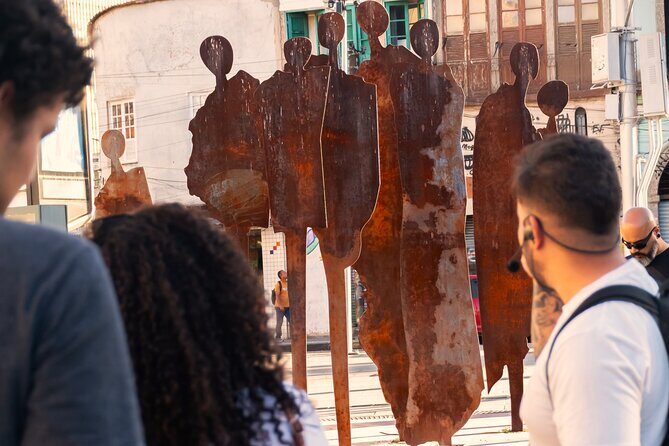
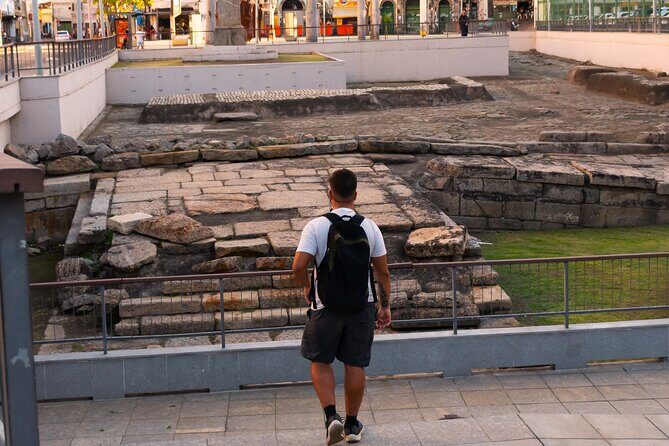
Next comes the emotional center of the tour: Cais do Valongo. You spend around 20 minutes here, and the focus is the archaeological ruin connected to the period of slavery—specifically the landing of 1 million enslaved people.
This is not a stop for quick sightseeing. It’s a place where you slow down without anyone telling you to. The guide helps you understand what an archaeological site can communicate even when it’s broken and incomplete: footprints of systems, the physical trace of arrival, and the weight that communities carried after that landing.
If you’re traveling with someone who prefers light, this is where you’ll want to manage expectations. The tour’s strength is that it holds both sides: the creative survival of Afro-Brazilian culture and the brutal reality that made those cultures necessary.
Practical note: stand comfortably, and don’t be afraid to ask questions. A good guide will help you hold the complexity without turning it into a blur.
Kobra’s Etnias mural: widening the lens beyond Rio
You end at Kobra’s “Etnias” mural, with about 15 minutes dedicated to the artwork and its message. The mural depicts Indigenous peoples from all continents, which gives the tour a wider global perspective after the heavy local focus of Valongo.
For me, the best part of ending here is balance. After you learn about African-Brazilian history of resistance and community, you close on a visual reminder that identity and belonging matter everywhere, and that art can connect histories across geography.
Also, it’s a great ending point logistically. The final location is close to public transportation, so you’re not stuck planning a long trek out of the area after the tour.
If you like street art, this finale is satisfying because it doesn’t feel random. It’s part of the story: who gets to be visible, and how images can carry dignity.
What $62.34 buys you in two to three hours
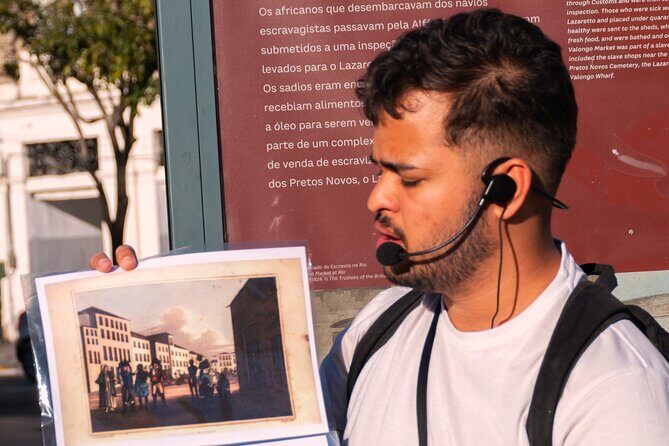
At $62.34 per person for a 2 to 3 hour private walking tour, the value comes from two things: the specialized guidance and the fact that you’re visiting major “Little Africa” landmarks without paying for admission at each stop.
The tour includes a specialized guide to Afro-Brazilian culture and history, and it takes you to the main places connected to this story. That’s important, because walking Rio on your own is not the same as walking Rio with context in your ear. Even if you’ve read a guidebook, a route like this works better when someone connects the dots while you’re there.
Food and drink are not included, so plan on grabbing something before or after. The itinerary is short enough that a snack stop can fit, but don’t assume the tour will cover it.
If you want a cultural walking experience that’s both instructive and grounded in real locations, this price looks fair for what you get.
How the route works: from Praça Mauá to the Orla
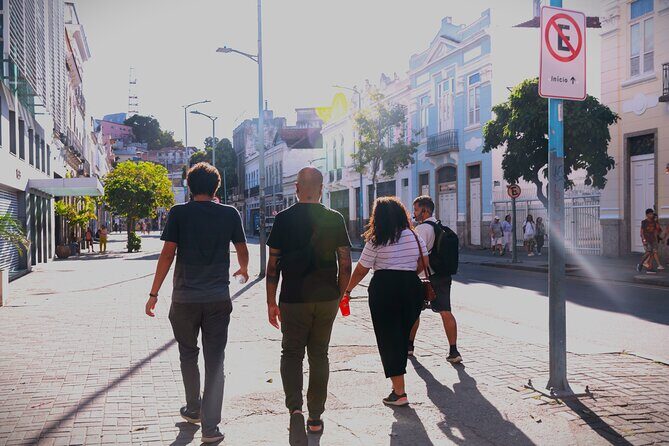
The tour starts at Rio Museum of Art (Museu de Arte do Rio – MAR), Praça Mauá, 5 – Saúde, Rio de Janeiro – RJ. You’ll end by Kobra’s “Etnias” mural, at Orla Pref. Luiz Paulo Conde – Centro, close to public transportation.
Because it’s a private tour, you won’t deal with a large mixed crowd moving at different speeds. That helps a lot for a route like this, where the guide needs time to explain meanings at specific points.
Two practical tips:
- Wear comfortable shoes. The total time is only a few hours, but it’s still a walk plus standing.
- Bring water, especially if the weather is warm. The tour requires good weather, but Rio heat can sneak up on you.
You’ll receive confirmation at booking time, and you’ll use a mobile ticket, which keeps things simple on the day.
Guide-led pacing: what Lucas Reves-style storytelling adds
The guide role is the main reason this tour earns strong marks. One highlight from the guide’s background and approach is how he connects locations to lived community work—explaining not only what happened, but what Black communities keep doing today. In particular, the guide emphasizes that Black history is still being uncovered and created by the community.
That kind of framing changes your experience in real time. You stop treating murals and ruins as static objects, and you start seeing them as current conversations between the past and the present.
For you, the best move is simple: ask questions as you go. When the tour is private, you’re not limited to what fits into a group schedule. You can ask follow-ups about samba, Carnival, or what the sites mean beyond their appearance.
Who this tour fits best
This is a good match if you want:
- Afro-Brazilian culture explained through real locations, not just general facts
- A route that covers street art, public squares, samba landmarks, and slavery-era ruins
- A guide-led pace that gives time for context and photos
You might want a different plan if you prefer long museum time with minimal walking. This experience is designed for walking a focused corridor and making meaning at each stop.
Also, if your trip timing is flexible, plan for good weather, since the tour depends on it.
Should you book Path DA Resistance: Discover the Black Culture of Rio?
I think this is an excellent booking choice if you care about understanding Rio beyond postcard scenes. The route hits the essentials: Little Africa context up front, culture and creativity through places like Pedra do Sal, and the moral weight of Cais do Valongo. The ending at Kobra’s Etnias mural gives a thoughtful tonal shift without losing the thread.
If you’re on a first visit and only have a few hours for a guided cultural walk, this gives you strong value for the time. It’s not a “checklist tour.” It’s a guided story through the city’s memory and art.
Book it when the weather looks workable, wear comfortable shoes, and come ready to ask questions. That’s when the tour really clicks.
FAQ
How long is the tour?
The tour lasts about 2 to 3 hours.
Is the tour offered in English?
Yes, the tour is offered in English.
Is this a private tour?
Yes. Only your group participates.
Where does the tour start and end?
It starts at Museu de Arte do Rio (MAR) at Praça Mauá, 5 – Saúde, and ends at Kobra’s “Etnias” mural near Orla Pref. Luiz Paulo Conde – Centro.
Are tickets provided for the stops?
You’ll have a mobile ticket, and admission tickets for the listed stops are free.
Is food and drink included?
No, food and drink are not included.
What’s the cost per person?
The price is $62.34 per person.
Does it run in any weather?
The experience requires good weather. If it’s canceled due to poor weather, you’ll be offered a different date or a full refund.
What is the cancellation window for a full refund?
You can cancel up to 24 hours in advance for a full refund.