
REVIEW · RIO DE JANEIRO
Museum of Tomorrow – | Round Trip Transfer + 2 Tickets
Book on Viator →Operated by AS BRASIL · Bookable on Viator
A future museum, reached without the hassle. Museum of Tomorrow sits by the bay and mixes big science ideas with the story of Rio’s post-industrial revival.
I love the hotel pickup that gets you to the Port Zone without fiddling with transit. I also like that you’re free to explore at your own pace, which matters in a museum this visual and thought-provoking.
One drawback to plan around: the museum can get busy, and getting through the main exhibition may take longer than you want.
In This Review
- Key highlights to know before you go
- What You’re Really Paying For: Ticket + Transport That Saves Time
- Your One Stop: Getting to Museu do Amanhã and Making It Count
- Inside the Museum: Future Ideas, Science Thinking, and Design That Feels Purpose-Built
- Bay Views and the Port Zone Setting: Why the Location Matters
- The Queue and Flow Reality: What to Expect When It Gets Busy
- Shared Transfer With Max 15: Comfort, Convenience, and Small-Group Limits
- Who This Fits Best (And Who Might Prefer Doing It Alone)
- Should You Book It? A Practical Decision Guide
- FAQ
- How long does the Museum of Tomorrow visit take?
- What’s included in the price?
- What time is pickup and where does it start?
- What are the museum’s opening hours?
- Do I have a guided tour inside the museum?
- Are children allowed?
- Is there free cancellation?
Key highlights to know before you go
- Small group, shared transport: capped at a maximum of 15 travelers for a more manageable ride.
- 10 AM pickup from specific areas: only from Rio’s South Zone or the Port of Frios area as listed by the operator.
- Mobile ticket: you’ll have a ticket format that’s easy to show at entry.
- About 2 hours inside: there’s admission included, and you explore independently rather than sitting through a guided script.
- Modern design + sustainability themes: the museum focuses on design, sustainability, and how the future connects to how we live today.
What You’re Really Paying For: Ticket + Transport That Saves Time
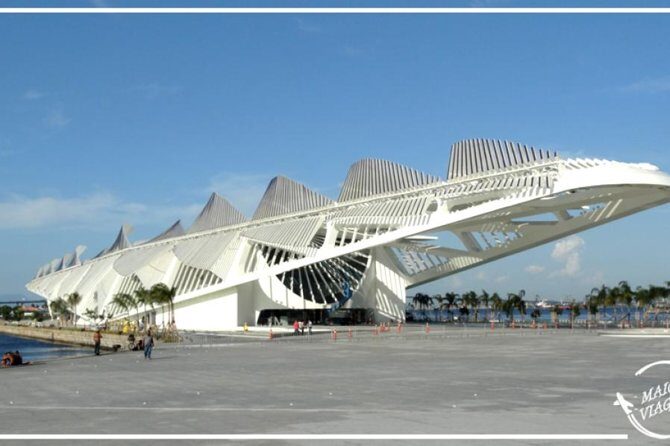
At $250 per person, this is not a budget museum outing. But you are paying for two practical things: entrance to Museu do Amanhã and round-trip shared transfer with hotel pickup and drop-off. That combination matters in Rio, where getting to the Port Zone can be a hassle if you’re juggling taxis, routes, and timing.
The “tour” part isn’t a long guided program. Instead, it’s a simple, point-to-point setup: you’re picked up, taken to the museum, you go in, then you’re brought back. The value is less about storytelling from a guide and more about getting there smoothly and spending your time where you actually want it—in the building and the exhibitions.
Also, the museum experience is built for self-direction. The info you’re given is basically permission to roam. If you like reading signs, watching video areas, and taking breaks whenever you want, this format suits you. If you prefer being guided step-by-step, you might feel like something is missing—though you can still take your time and follow what interests you most.
With a 4.3 average score based on a small number of ratings, the general message is consistent: the museum itself earns praise, while the operational flow can be hit-or-miss on certain days. In other words, the “product” is strong. The “queue reality” is the part to respect.
You can also read our reviews of more tours and experiences in Rio de Janeiro



Your One Stop: Getting to Museu do Amanhã and Making It Count
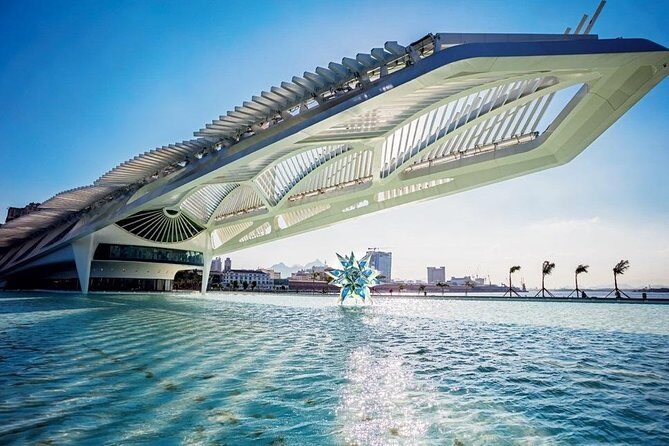
The itinerary is simple: Stop 1: Museu do Amanhã. There aren’t multiple museums or long driver hours. That’s good. You’re not using your day up to arrive somewhere and then spend the rest of the time waiting.
Here’s how the visit typically plays out:
- Pickup starts at 10:00 AM (from the areas the provider lists).
- You’re transported directly to the museum.
- Admission is included, and you get a visit window that’s described as around 2 hours for the museum time.
What I like about this kind of schedule is how it reduces decision fatigue. Instead of trying to figure out your own transport timing, you start moving at a set hour and you get dropped where you need to be.
What you should watch, though, is how museums work once you’re inside. Even if you have a good transfer, the pacing depends on what’s happening in the galleries. One set of comments highlighted that the main exhibition can generate a long line. That means your “2 hours” can feel shorter if you spend most of it waiting rather than exploring.
Inside the Museum: Future Ideas, Science Thinking, and Design That Feels Purpose-Built
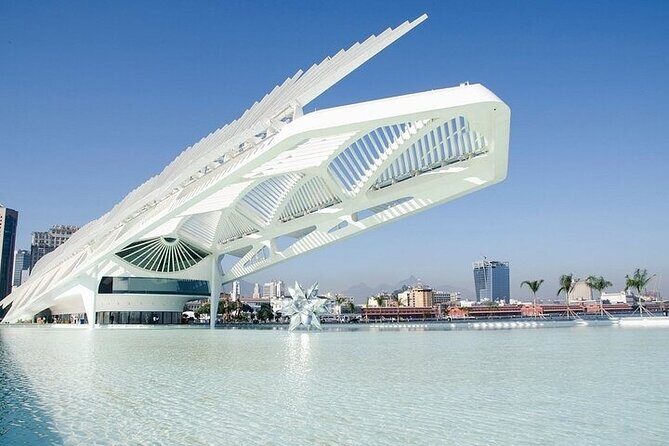
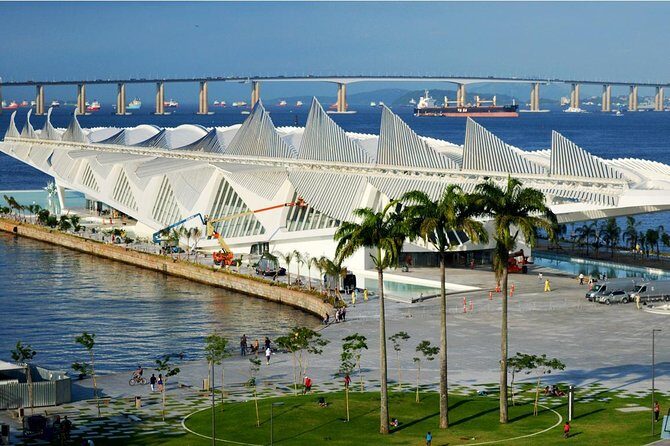
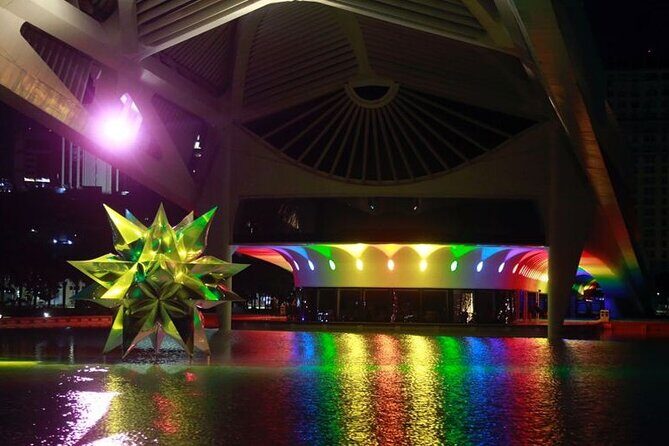
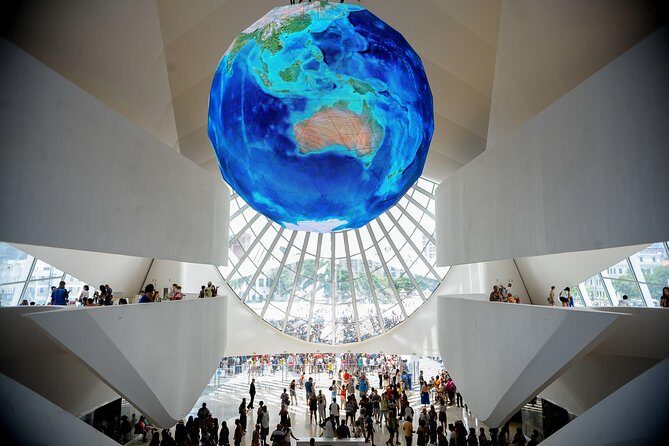
The Museum of Tomorrow is known for being modern and visually bold, and that’s not just a vibe—it shapes how you experience the content. Even before you reach the exhibitions, you’re in a building designed to make you look at the future as a physical space, not just an abstract concept.
The museum’s themes are clear from the way it’s described: design and sustainability with a focus on what comes next. You’re not just looking at science facts; you’re being nudged to connect your daily habits to bigger systems. That tone fits well with the museum’s location by the water and its message about revitalization in post-industrial Rio.
A couple of practical notes help you enjoy it more:
- Go in expecting to read. The material is not just for quick photo moments.
- Plan for standing time. Even when you’re moving at your own pace, some sections can require waiting, especially if a popular area is running at capacity.
- If you’re someone who likes to compare sections (theme to theme), you’ll probably take longer than the average “grab-and-go” visitor.
The strongest praise centers on how interesting and important the information feels. One comment summed up the overall feeling as a visit that reminds you to care for the planet. Another described the museum as showing where we were headed as a world—and how we harmed it. Even if you don’t agree with every angle, the museum does its job: it gets you thinking beyond the building.
Bay Views and the Port Zone Setting: Why the Location Matters
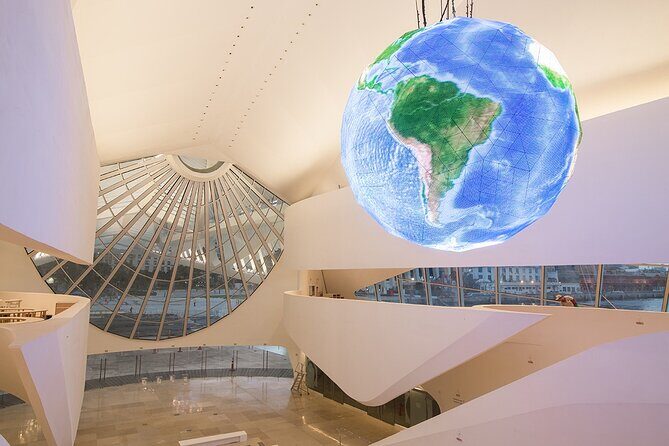
This is one of those experiences where the setting isn’t a side note—it’s part of the impact. The museum is associated with views of the bay, and you can feel that when you’re there. The building’s modern style pairs well with the coastal atmosphere, which makes the “future” theme feel less like a lecture and more like a real place you’re standing in.
You’re also in Rio’s Port Zone area, which is one reason transportation is included. You’re not trying to squeeze this stop between two other random activities. You’re going specifically to this location, and the pickup/droop system reflects that.
One small warning: the museum’s exterior and setting can make it easy to plan a fun day, but the interior can still be where the time gets consumed. If your visit window is tight, you may need to decide early whether you want to prioritize the main exhibition or a broader walk-through.
The Queue and Flow Reality: What to Expect When It Gets Busy
Here’s the honest travel lesson: getting to the museum smoothly is one thing. What happens after you enter is another.
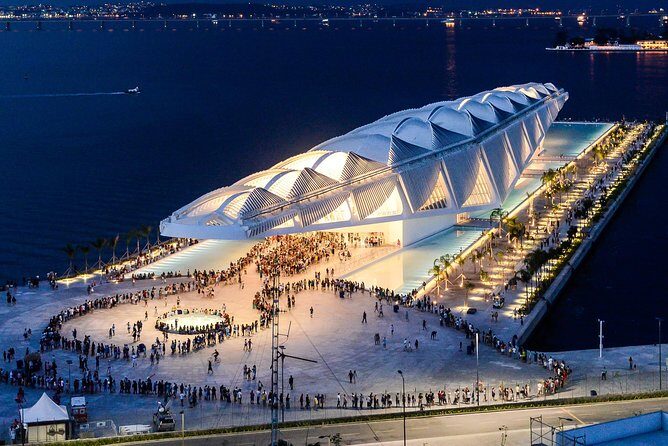
On a busy day, you may encounter long waits for the main exhibition. One comment described a queue that could take close to three hours for the main area, to the point that people left or shifted plans. That’s not something you can control. What you can do is adjust your strategy.
My suggestion:
- If you care most about the main exhibition, arrive ready for possible waiting and keep your expectations realistic.
- If you’re more interested in the overall experience and message, you can still get a lot out of the rest of the museum even when one section is crowded.
Also pay attention to how exits and pathways are managed when the museum is full. One report said some exit routes were blocked and staff directed people toward the elevator only. That’s the kind of operational detail that can change how easy it feels to move around, especially if you’re trying to time the whole visit like a checklist.
In short: go in excited, but don’t build your schedule around a guaranteed flow that never slows down.
You can also read our reviews of more museum experiences in Rio de Janeiro






Shared Transfer With Max 15: Comfort, Convenience, and Small-Group Limits
This experience uses round-trip shared transfer with hotel pickup and drop-off, and the group is limited to a maximum of 15. That small cap matters more than you might think. With fewer people, you typically get less stop-and-start during the ride and a smoother handoff when it’s time to move.
The transfer is also where you get the biggest “tour value” for the money. It’s not the museum ticket fee. It’s the fact that you’re not figuring out your own transport to the Port Zone, and you’re not trying to coordinate return timing after you’ve done your own exploring.
Language support is also part of the comfort. There’s mention of an operational service available 24/7 ready in Portuguese, English, and Spanish. While you might not be speaking with anyone for long, it’s reassuring if you have questions about entry, timing, or how things are handled on-site.
One more detail that can help your planning: the experience emphasizes independent exploration. That means the transport and admission get you in. The rest is up to you.
Who This Fits Best (And Who Might Prefer Doing It Alone)
This tour is a good match if you:
- Want easy pickup and return without hunting down transport in Rio.
- Like museums where you can wander and read at your own pace.
- Are drawn to themes like sustainability, design, and how the future relates to everyday choices.
- Prefer a small-group transfer instead of something large and chaotic.
It’s less ideal if you:
- Need a tightly guided, timed program. This is mostly access and convenience, not a structured tour narrative.
- Have zero patience for lines. The museum’s main exhibition can get slow on peak days, and that’s an internal factor even with perfect logistics.
One extra reality check from comments: one person noted that seniors over 60 didn’t pay, and another suggested that you might not need a tour to reach the museum because you can get there from central Rio. Those are useful hints if you’re trying to save money or you’re already comfortable navigating Rio on your own.
Still, if your main goal is minimizing friction and maximizing museum time, the pickup + ticket combo is exactly what you’re buying.
Should You Book It? A Practical Decision Guide
Book it if you want:
- Hotel pickup + round-trip transport to the Port Zone
- A mobile ticket and a simple plan
- Time to experience the museum independently, without coordinating your own logistics
Skip or reconsider if:
- You’re extremely time-sensitive and can’t afford a possible wait for a major exhibition area
- You prefer to control every detail yourself and you’re comfortable arranging your own transport
If you do book, go in with the right mindset: you’re paying for convenience first, then buying access to a museum that uses design and science to ask uncomfortable, useful questions about the future. That mix is why this experience earns its strong praise—just don’t ignore the queue factor once you’re inside.
FAQ
How long does the Museum of Tomorrow visit take?
The overall experience is listed as about 2 to 5 hours, with about 2 hours of museum time included.
What’s included in the price?
You get hotel pickup and drop-off, a round-trip shared transfer, and an admission ticket to Museu do Amanhã.
What time is pickup and where does it start?
Pickup starts at 10:00 AM and is only offered from Rio’s South Zone or the Port of Frios area as listed.
What are the museum’s opening hours?
The museum is open Tuesday through Sunday, from 10:00 AM to 6:00 PM.
Do I have a guided tour inside the museum?
No full guided program is described. You can explore the museum independently at your own pace after transport and admission.
Are children allowed?
Children must be accompanied by an adult.
Is there free cancellation?
Yes. You can cancel up to 24 hours in advance for a full refund.