REVIEW · RIO DE JANEIRO
Live an experience in the Rocinha Favela.
Book on Viator →Operated by Travel Mode Turismo · Bookable on Viator
Rio changes when you step into Rocinha. This is a small-group tour (max 10) that mixes a mototaxi or van ride to a high point for unforgettable city views with clear context on daily life and community services from local guides. You also get an on-the-ground walk that goes past more than just the outside look at the favela da Rocinha, with stops tied to culture and social projects.
What I really like is how you learn and move at the same time: you hear stories about the favela’s building history, architecture, and cultural elements while you’re seeing the place from street level. And then the tour slows down for human-scale culture—especially the chance to observe a capoeira project in the community.
A fair consideration: this is not a checklist of famous buildings. You’ll spend time on foot through alleys and social areas, so if you dislike close-quarters neighborhoods or want only traditional tourist sights, this may feel intense even with strong guidance and an emphasis on safety.
In This Review
- Quick hits
- Entering Rocinha from São Conrado: how the tour starts
- The mototaxi/van climb: big Rio views with real context
- The first move down: laje views, capoeira, and community projects
- Walking through alleys and social spaces: what you’re really seeing
- The gastronomic perspective: beaches of Rio and a link to Vidigal
- Price and value: is $60 worth it?
- Who this tour fits best (and who might skip it)
- Practicalities that matter on the day
- Should you book Rocinha with this kind of guide?
- FAQ
- FAQ
- How long is the Rocinha Favela experience?
- What does the tour cost?
- Where do we meet for the tour?
- Is the group size limited?
- Do I get admission tickets included?
- How does the tour reach the high viewpoint?
- Is there a capoeira component?
- Is the tour accessible for most people?
- What’s the cancellation policy?
- Does the tour end where it starts?
Quick hits
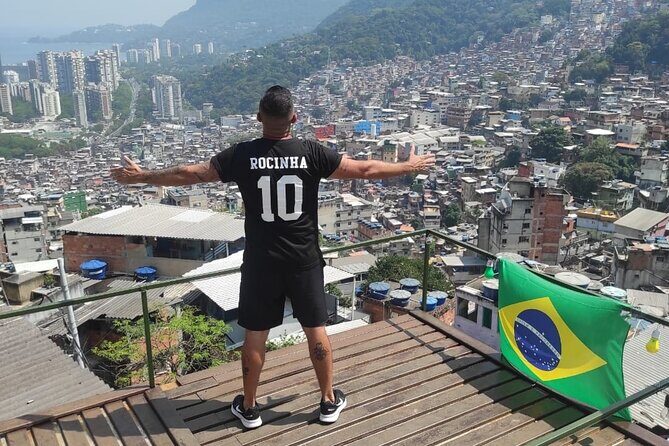
- Mototaxi or van to a high point for dramatic Rio views early on
- Local guide context on daily life, history, public services, and culture
- Laje stop where you can observe community projects and capoeira
- Walking route through alleys and social spaces, not just a drive-by
- Gastronomic perspective connecting Rio beach areas with Vidigal
Entering Rocinha from São Conrado: how the tour starts
The action begins at Metrô São Conrado / Rocinha (Saída A), at R. Gen. Olímpio Mourão Filho, 320 in São Conrado. From the first moments, the setup is simple: you gather, you meet your guide team, and you get moving. It’s also a good sign that the meeting spot is near public transportation, because it makes the whole day easier to fit into your Rio plan.
This tour runs about 2 to 3 hours. That time window matters. You’re not signing up for a half-day commitment, but you’re also not doing the quick “drive past and leave” style that teaches you very little. The pace works well if you want an authentic experience without turning your schedule upside down.
The group size is capped at 10 travelers, which usually translates into more listening time and less feeling like you’re packed into a moving lecture hall. In places like Rocinha, that small size matters. It’s easier for you to ask questions, and it’s easier for the guide to keep the group together.
You can also read our reviews of more tours and experiences in Rio de Janeiro.

The mototaxi/van climb: big Rio views with real context
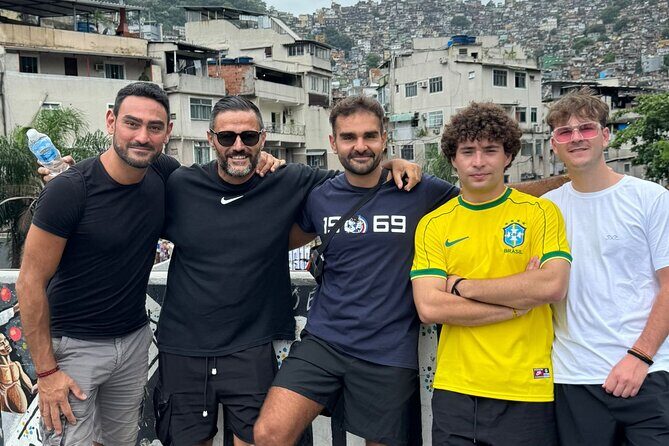
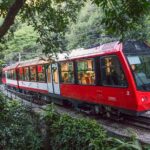
Right after you arrive at Favela da Rocinha, you climb toward the highest point using a mototaxi or van. This is one of those “you feel it in your body” parts of the tour. You’re not just looking at Rio from a viewpoint—you’re seeing how the city’s geography folds into the neighborhood, and how far the views really reach.
Once you’re up there, the guide gives you context. The goal isn’t a vague “this is a favela” explanation. You’ll hear reports that help you understand daily life in the community, plus information about the favela’s history of building, architecture, public services, and cultural elements. In other words, you’re not watching a scenery show. You’re getting a map for how to interpret what you’re seeing.
I like this approach because it makes the view more meaningful. From up high, it’s easy to treat the neighborhood like a postcard. The guide pushes you to look past the postcard version, so you can connect the physical layout to the human stories and the services that shape everyday life.
The first move down: laje views, capoeira, and community projects
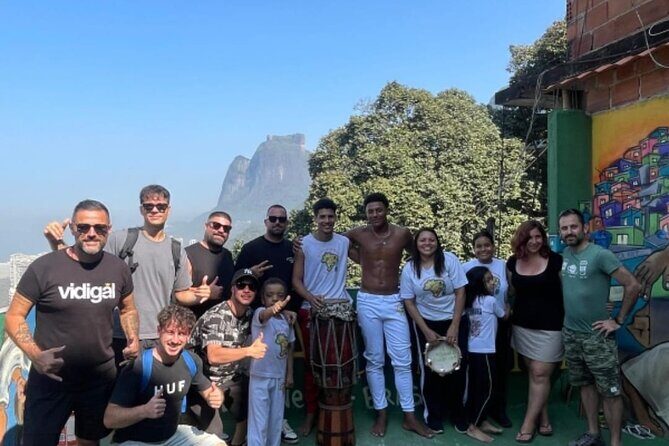
After the climb, you head back down. This is where the tour becomes more than a viewpoint. You pass through a laje—a place where you can observe activity and projects—and you get a moment that ties culture to place: the chance to observe a capoeira project.
Capoeira is more than a performance. When you see it in a community setting, it becomes something else: a tool for learning, connection, and youth engagement. Even without turning this into a museum-style explanation, the stop helps you understand that culture lives inside daily routines, not only on stages for tourists.
You also get to look around as you descend, which makes the community feel less like a single image and more like a living system. You’ll start noticing how spaces are used, how groups gather, and how the neighborhood’s structure shapes movement.
One subtle benefit: you’re building a timeline. The tour starts with height and big perspective, then it shifts to human-scale culture and activities. By the time you walk further, you’ll be better at spotting what’s significant, instead of just staring.
Walking through alleys and social spaces: what you’re really seeing
From there, the route continues on foot through more social projects, alleys, and smaller passageways. This portion is important, and it also comes with the biggest “this is different” feeling.
Yes, you’re seeing the Rocinha neighborhood up close. But the deeper value is that you’re learning how the guide frames it: not as a spectacle, and not as a problem to stare at. You get to understand the community through the lens of projects, local organization, and everyday rules for how life runs.
This is also where safety and comfort depend heavily on the guide’s leadership. The tour is built around an experienced local guide approach, and the overall experience is designed for most travelers to participate, with an emphasis on staying together and following directions. In other words: you don’t need bravado; you need attention.
A personal tip for how to get the most out of this walk: slow your brain down. Don’t try to “capture” everything. Instead, focus on one explanation at a time, and then look for what that explanation looks like in front of you. It turns a walk into understanding.
The gastronomic perspective: beaches of Rio and a link to Vidigal
One part of the itinerary is a gastronomic perspective that references Copacabana, Ipanema, Leblon, and the Vidigal favela. The wording here suggests the tour isn’t just geography and culture—it’s also about how food and taste connect different parts of Rio.
What you can reasonably expect is a guided way of thinking about the city through culinary themes—how different neighborhoods relate to the bigger Rio identity, and how communities like Vidigal fit into that story. The “gastronomic perspective” angle is a smart way to broaden your understanding. You leave with more than impressions of Rocinha’s streets. You connect what you saw to Rio’s broader lifestyle.
Because the details of any specific tastings aren’t spelled out in what you provided, I’d treat this as a guided perspective rather than a guaranteed food tour with set servings. Still, it’s a genuinely useful twist for travelers who don’t just want photos—they want connections.




Price and value: is $60 worth it?
At $60 per person for 2 to 3 hours, this tour sits in a mid-range bracket for Rio experiences that aim to be “inside the story.” The value here isn’t the ride by itself or the view by itself. It’s the combination.
You’re paying for:
- A small group size (up to 10)
- A guided route that includes views, culture, and project-focused stops
- A local framing of daily life, history, architecture, and public services
- A structured experience that returns you to the same meeting point
If you’ve only done the typical viewpoints in Rio, the $60 starts to make sense fast. It’s not trying to compete with the price of a generic city bus tour. It’s closer to paying for a translator of meaning—someone who helps you look correctly at what you’re seeing.
If your priority is only the most famous photo spots, you might question the value. But if your goal is to understand Rio as more than scenery, this is good money.
Who this tour fits best (and who might skip it)
This experience is a strong match if you:
- Want authentic neighborhoods and cultural learning, not just sightseeing
- Appreciate a guide who explains context while you walk
- Prefer small groups and guided movement over big crowds
- Are curious about community projects like the capoeira stop
It may not be ideal if you:
- Want a passive experience with minimal walking
- Strongly prefer only the polished tourist circuit
- Get overwhelmed easily by close-up, real-world neighborhoods
The good news is that the tour is framed to work for most travelers, and it’s guided with safety in mind. The “right fit” question is less about danger and more about how you handle closeness and attention.
Practicalities that matter on the day
The tour ends back at the meeting point, so you’re not stuck trying to coordinate your own transport at the end. That’s handy in Rio, where planning matters.
You’ll also be riding to the high point by mototaxi or van, so expect a real ride segment rather than a purely comfortable transfer. And because you’ll be walking through alleys and social areas, you’ll get more out of this tour if you’re ready for a neighborhood pace.
If you travel with a service animal, service animals are allowed. Also, the meeting area is near public transportation, which helps if you’re bouncing between neighborhoods.
Should you book Rocinha with this kind of guide?
I’d book it if you want to understand Rocinha as a community, not just a curiosity. The combination of height-and-views, explanation of daily life, and cultural moments like capoeira makes it more than a photo stop. The small group size (max 10) keeps the experience human-scale, and the emphasis on safety with professional guidance makes it feel manageable.
I’d think twice if your perfect Rio day is all about major landmarks with low interaction. This isn’t that kind of tour. It’s a learning-focused, neighborhood walk with city views.
If you’re looking for an experience that changes how you see Rio, this one is worth your time.
FAQ
FAQ
How long is the Rocinha Favela experience?
It lasts about 2 to 3 hours.
What does the tour cost?
The price is $60.00 per person.
Where do we meet for the tour?
Meet at Metrô São Conrado / Rocinha (Saída A), R. Gen. Olímpio Mourão Filho, 320 – São Conrado, Rio de Janeiro – RJ, 22610-020, Brazil.
Is the group size limited?
Yes. The tour has a maximum of 10 travelers.
Do I get admission tickets included?
Yes. Admission Ticket Included is listed as part of the tour.
How does the tour reach the high viewpoint?
You climb to the highest point using a mototaxi or van.
Is there a capoeira component?
Yes. You’ll pass through a laje and have the opportunity to observe a capoeira project.
Is the tour accessible for most people?
The information says Most travelers can participate and that the service animals policy allows service animals.
What’s the cancellation policy?
Free cancellation is available up to 24 hours in advance for a full refund.
Does the tour end where it starts?
Yes. The activity ends back at the meeting point.