REVIEW · RIO DE JANEIRO
Jewish Tour in Rio de Janeiro
Book on Viator →Operated by Guided Tour In Rio · Bookable on Viator
Jewish Rio doesn’t waste your morning. This small-group tour threads synagogue life, Jewish community institutions, and Holocaust memory through classic Rio neighborhoods, with hotel pickup/drop-off so you don’t burn time hunting taxis.
I especially like the way the guide connects places you might miss on your own, from Beit Lubavitch to the Great Temple of Israel, and how the group format keeps the pace human.
One thing to consider: the tour is short, and like many cultural stops, a museum or specific site access can vary day to day, so you’ll want a bit of flexibility.
In This Review
- Quick highlights I’d plan around
- Why This 3-Hour Jewish Rio Tour Works (Even If You’re Short on Time)
- Price and What You’re Really Paying For
- Meet-Up and Timing: The Easy Start at Hilton Copacabana
- Leblon and the Beit Lubavitch Area: Jewish Learning Near the Beach
- Ipanema and the CIB Jewish Community Center: Where Community Feels Built In
- Botafogo Beach: Anne Frank Schools and the ARI Synagogue
- Botafogo Bay and Itzhak Rabin Park: A View With Political Meaning
- Museu Judaico do Rio: Museum Memory, Research, and What You Might Want to Expect
- Grande Templo Israelita do Rio: A Monument With a Complicated Story
- Guides, Comfort, and the Small-Group Advantage
- A Few Real-World Considerations Before You Book
- Who Should Book This Tour
- FAQ
- How long is the Jewish Tour in Rio de Janeiro?
- What does the tour cost?
- What time does the tour start?
- Where is the meeting point?
- Is hotel pickup included?
- Is port pickup available?
- What is included in the price?
- Are entrance fees included?
- Is the group size small?
- Can children join?
- Is there free cancellation?
- Should You Book This Jewish Tour in Rio de Janeiro?
Quick highlights I’d plan around
- Small group (max 14) means real conversation, not just a headset tour
- Convenient pickup/drop-off from selected hotels and even the port
- Multiple denominations and community centers, not just one synagogue
- Holocaust remembrance in public spaces, paired with everyday Jewish institutions
- Photo-friendly viewpoints, including Itzhak Rabin Park over Botafogo Bay
- Guides with community ties (you may meet people like Ephraim and Gisela, plus others including Leonardo)
Why This 3-Hour Jewish Rio Tour Works (Even If You’re Short on Time)
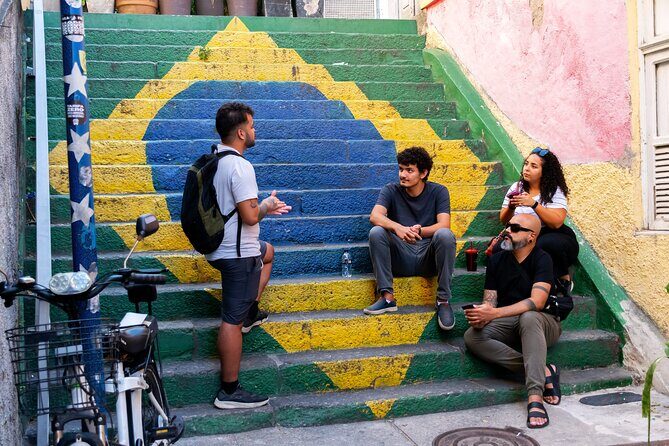
Rio can be a lot. Busy streets, changing neighborhoods, and distances that add up fast. This tour is built for people who want meaning without turning the day into a logistics project.
You’re out for about 3 hours, and the experience is compact on purpose. In that window, you get a practical orientation to Jewish Rio: where communities built institutions, how different streams of Judaism took root, and how memory work shows up in parks, museums, and education.
You’ll also get something rare: the tour doesn’t treat Jewish sites as isolated boxes. Instead, it shows how Jewish organizations sit inside wider Rio life—schools, cultural centers, beach-adjacent community buildings, and major monuments.
You can also read our reviews of more tours and experiences in Rio de Janeiro.



Price and What You’re Really Paying For
At $95 per person, this is not a bargain sightseeing bus. But it isn’t priced like a luxury private driver either.
For the money, you’re getting:
- a professional guide
- transport by car/van
- hotel pickup and drop-off (selected hotels) plus port pickup/drop-off
- a small-group format (maximum 14 travelers)
That matters because in Rio, time is money. Instead of spending your morning figuring out where to stand, which entrance to use, or whether the taxi driver understands the address, you start the day already moving.
Food and entrance fees are not included, so plan a small extra buffer if you want to go inside more than the time allows. Also note: some stops have admission ticket not included, meaning you might pay on site.
Meet-Up and Timing: The Easy Start at Hilton Copacabana
The tour starts at 9:00 am from Hilton Rio de Janeiro Copacabana (Av. Atlântica, 1020, Copacabana). It ends back at the same meeting point.
This is helpful if you’re staying around Copacabana, because your morning begins with a recognizable landmark instead of a vague street corner. And since pickup/drop-off covers selected hotels, you might not even need to show up at Hilton depending on where you’re booked.
Bring good walking shoes for the stops where you’ll spend time outdoors or near viewpoints. Even though it’s only about three hours, Rio’s sun and humidity can turn short walks into longer ones.
Leblon and the Beit Lubavitch Area: Jewish Learning Near the Beach
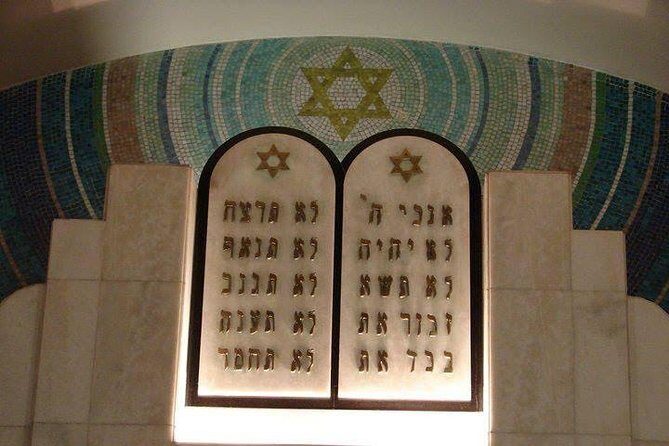
The first stretch is Leblon, one of Rio’s most upscale neighborhoods. The setting matters here. Jewish institutions in Rio weren’t all pushed into hidden back streets; some found prominent, livable space in well-established areas.
In this zone you’ll see Beit Lubavitch Synagogue and the Midrash Cultural Center. The pairing is the point: religious life plus learning. A synagogue isn’t only a place for services—it’s where community identity is taught and reinforced.
If you care about Jewish continuity, this stop is a great early anchor. It also changes your mental map of Rio. You start the day thinking of beaches and neighborhoods, and you end up noticing how community life sits right alongside the city’s “view life.”
From there, the route continues by the water toward the Ipanema/Arpoador area. This is where you get a real sense of why Rio communities shaped their institutions where they did—beaches are central to daily life, not decorative scenery.
Ipanema and the CIB Jewish Community Center: Where Community Feels Built In
You’ll spend time around Ipanema beach—bounded by Arpoador on one end and Leblon on the other. This stretch is known for being one of Rio’s main activity hubs, and it’s also one of the most expensive places to live.
The big reason I like this section of the tour: you’re not just visiting religious buildings. You’re getting a look at the CIB (Jewish Community Center) as part of the neighborhood rhythm.
In practical terms, community centers do the everyday work. They host classes, events, gatherings, and services that make religious life possible across generations. When you see a center like this in a major Rio neighborhood, it’s easier to understand how communities stayed connected without shutting themselves out from the city.






Botafogo Beach: Anne Frank Schools and the ARI Synagogue
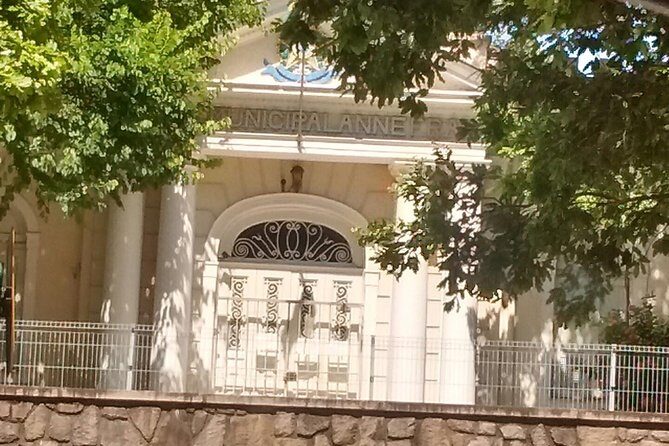
Next comes Botafogo Beach, and this stop is partly about viewpoint energy. Botafogo gives you those postcard angles Rio is famous for—especially when your guide points out what to look for while you’re moving.
A standout here is a municipal school named after Anne Frank. It’s part of a network referenced as the CONIB, where public schools are selected and honored to promote values connected to Anne Frank.
This is useful context for anyone trying to understand Holocaust memory outside of museums. It’s not only commemorative. It’s educational, public-facing, and embedded in civic life.
You’ll also visit the A.R.I. Synagogue in this area. ARI is identified as the Israel’s Religious Association of Progressive Judaism in Rio, affiliated with the World Union for Progressive Judaism (WUPJ).
One concrete detail that helps you picture what ARI is: it connects to the Rabbi Henry Lemle Community Center, opened in 1997. That center includes classrooms, a library, an auditorium, administrative offices, and a synagogue called Henrique Peres that can host up to 150 people, plus a reference and research center on the Holocaust Zinner Family.
If you’re the kind of traveler who likes to know the “how” behind institutions, this stop tells you a lot in a small space. A community doesn’t grow only through theology. It grows through buildings that support education, conversation, and memory work.
Botafogo Bay and Itzhak Rabin Park: A View With Political Meaning
After Botafogo, you’ll head toward Botafogo Bay and Itzhak Rabin Park. It’s named for Itzhak Rabin, linked to events in Israel’s history, and it’s inaugurated with participation from Rabin’s wife, Leah.
The park sits on top of Morro de Pasmado, which makes it a good viewpoint stop. From here you can look out over Botafogo Bay and Urca Bay.
The visit is short, but the symbolism is clear. There’s a bust of Itzhak Rabin in the park, and the setup represents the relationship between the Brazilian state and the state of Israel.
This is a great stop for two reasons:
1) it gives you a breath of air and a skyline angle
2) it shows how Jewish history in Rio isn’t only community-based—it also appears through public memorials tied to international events
One practical note: access can vary. I’ve seen mention that the park might be temporarily limited on certain days, so consider this a “try for the viewpoint” stop, not a guaranteed photo mission every time.
Museu Judaico do Rio: Museum Memory, Research, and What You Might Want to Expect

Then you’ll reach the Jewish Museum of Rio de Janeiro (Museu Judaico do Rio de Janeiro). It was founded in 1977 after a donation of a menorah, and it operates as a cultural center with exhibits tied to Jewish community history and Jewish traditions.
This museum is described as doing more than display. It includes:
- regular exhibits on Jewish history and traditions
- a study center focused on migration and the Holocaust
- a video archive with over a thousand films
- a library
- academic research tied to migration
- activities that also reach outside the museum through partner organizations
Admission is not included, so factor that into your day if you want to spend time inside.
Now, here’s the balanced take. The museum can feel smaller in physical scope than you might expect for a city the size of Rio. If you love large museum layouts with lots of rooms, you may find the space limited. But for me, the value is in the focus: you’re getting targeted materials that connect memory, migration, and community life, and the museum’s research angle is a real differentiator.
Aim to slow down here. Even in a short tour, the museum section is where you’ll get the background that makes the synagogues and community centers click into place.
Grande Templo Israelita do Rio: A Monument With a Complicated Story
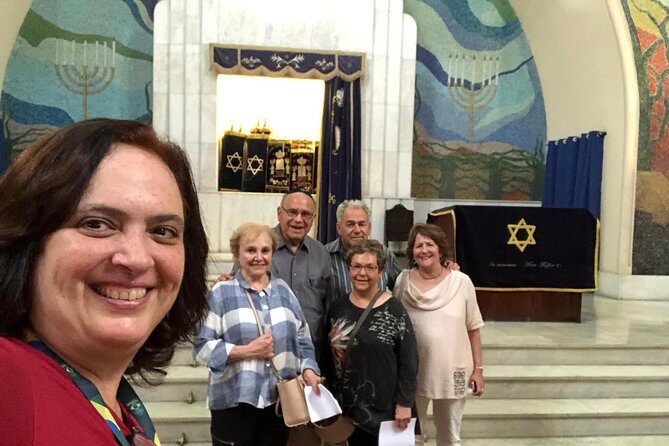
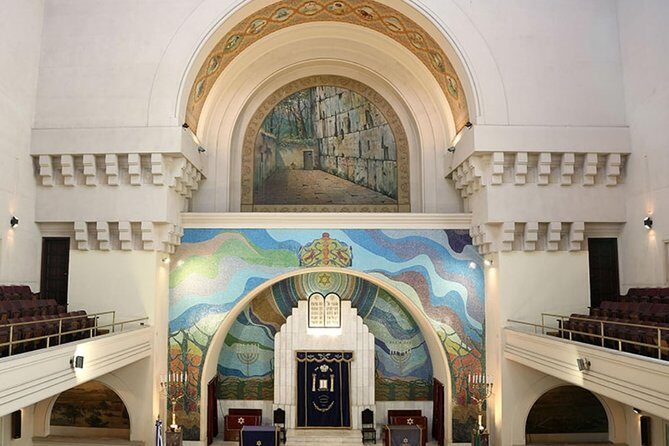
Finally, you’ll visit the Grande Templo Israelita do Rio de Janeiro. It’s identified as Ashkenazi and described as the Jewish community’s largest monument and part of Rio’s Jewish history.
The building story is full of dates and details that matter:
- design elaborated in 1919 by architect Vodred
- opened in 1932
- mosaics created in 1976 by artist Humberto Cozzo
- it collapsed in 1987
- today it’s generally open only during High Holidays, special events, and tourist visits
So what does that mean for you? You might see it mainly in a “visit/tour access” mode rather than a full-time open sanctuary experience. Don’t plan on a long inside visit unless your specific day’s access allows it.
Still, this stop is important. Monuments tell you what a community wanted to be seen as—visible, permanent, and part of the city’s architecture. Even with limited access, it gives context for how communities established presence over time.
Also, since entrance is not included here, check whether you’ll have time and budget to go inside if the day’s access permits.
Guides, Comfort, and the Small-Group Advantage
A big part of why this tour earns such strong ratings is the people running it.
You’ll likely travel with a guide connected to the Rio Jewish community, with names showing up in past experiences such as Ephraim and Gisela. Other guides have also been reported, including Leonardo (and also variations of that name), Katya (Kathie), and Edwardo. What you should expect is a guide who can answer questions and explain why each site exists, not just what it is.
The other practical win: the van. One experience notes an exceptionally comfortable vehicle and an air-conditioned ride. You’re spending three hours outdoors in a city where heat can be real, so comfort isn’t a luxury here.
The small-group size (max 14) also helps. It keeps the day flexible enough for questions and it avoids the feeling of being one number in a crowd.
A Few Real-World Considerations Before You Book
This is a great tour if you want Jewish Rio in a focused morning. But go in with the right expectations.
- Some stops may have limited access on specific days (for example, a museum exhibit or viewpoint area may be unavailable).
- A short tour means you’ll cover many places but not linger forever at each one.
- Entrance fees at specific sites can add up, since they’re not included.
- If you’re expecting a huge, multi-room museum experience every stop, you might find the time tight and some locations more limited in scope.
And one more thing: this isn’t only about sightseeing. It’s also about community education—synagogues, school values, progressive Judaism institutions, and Holocaust remembrance. If that’s your interest, the pacing will feel satisfying rather than rushed.
Who Should Book This Tour
Book it if:
- you want Jewish history and present-day Jewish life in Rio, without stitching together sites on your own
- you value a guide who can connect institutions to people and context
- you’d rather spend a morning learning than solving transport problems
- you like visiting a mix of communities, not just one style of synagogue
You might reconsider if:
- you want a long museum crawl and tons of free time inside buildings
- you’re very price-sensitive and need everything included
- you need guaranteed interior access at every site, every time
FAQ
How long is the Jewish Tour in Rio de Janeiro?
It’s about 3 hours.
What does the tour cost?
The price is $95.00 per person.
What time does the tour start?
It starts at 9:00 am.
Where is the meeting point?
The tour starts at Hilton Rio de Janeiro Copacabana, Av. Atlântica, 1020, Copacabana, Rio de Janeiro.
Is hotel pickup included?
Hotel pickup and drop-off are included for selected hotels.
Is port pickup available?
Yes. Port pickup and drop-off are included.
What is included in the price?
Included are a professional guide, pickup/drop-off, and transport by car/van.
Are entrance fees included?
No. Food and drinks are not included, and entrance fees are not included.
Is the group size small?
Yes. The tour has a maximum of 14 travelers.
Can children join?
Children must be accompanied by an adult.
Is there free cancellation?
Yes. You can cancel for a full refund up to 24 hours in advance.
Should You Book This Jewish Tour in Rio de Janeiro?
If your goal is a focused morning that links synagogues, community institutions, education, and Holocaust memory in Rio, I’d book it. The small-group size, hotel/port pickup, and the way the guide connects meaning to each stop make the $95 feel more practical than it first sounds.
Just plan with flexibility: a short tour can’t guarantee every building will be open at every moment, and some stops are access-dependent. If you’re okay with that—and you want Jewish Rio explained in plain language—you’ll likely leave with a far clearer sense of where the community has been, and how it lives now.