REVIEW · RIO DE JANEIRO
Favela tour Santa Marta with local guide
Book on Viator →Operated by FAVELA TOUR SANTA MARTA - TURISMO COMUNITÁRIO E SOCIAL · Bookable on Viator
One hill. One community. Lots to learn. This Santa Marta favela tour feels like an insider walk led by locals like Gilson, mixing views, real neighborhood stops, and hands-on community visits. I like that it is not a giant bus-and-barricade photo sprint, and you get plenty of chances to ask questions as you go. One thing to consider: the route involves stairs and the tour is not recommended for limited mobility.
What really makes it click is the combination of the funicular up the hill, then the slow walk back down—plus the stops that show how the community organizes life beyond the headlines. I also love the personal touches, like visiting the guide’s house and the legendary watch collection with more than 350 timepieces. Still, be ready for an active walking experience, including uneven surfaces and sights that may be uncomfortable if you come expecting a polished city tour.
In This Review
- Key highlights you can actually plan around
- A Community-Led Santa Marta Walk, Not a Bus Tour
- Botafogo Meeting Point: What to Expect Before You Even Start Walking
- The Inclined Plane to Santa Marta: Views, the Capela, and the Real Pace
- Michael Jackson Statue and the Surrounding Stops You’ll Actually Remember
- The Guide’s House, +Que Turismo Social Project, and the Watch Collection
- Price and Logistics: Is $29.40 Good Value?
- Safety, Ethics, and How to Handle the Stares and the Real World
- Who Should Book This Santa Marta Tour (And Who Might Want to Skip It)
- Should You Book This Favela Tour Santa Marta?
- FAQ
- FAQ
- How long is the Favela Tour Santa Marta?
- How much does the tour cost?
- What’s included in the price?
- Where does the tour start and end?
- How many people are in the group?
- Is private transportation included?
- Is the tour suitable for limited mobility?
- What major stops will I see during the tour?
Key highlights you can actually plan around
- Local-led, question-friendly pace with short explanations instead of a scripted lecture
- Inclined plane funicular ride and serious hilltop views over Rio
- Michael Jackson statue stop plus community spaces like a crèche for about 80 children
- Cultural corridor with photos that show how Santa Marta has changed over time
- +Que Turismo Social Project and watch collection visit connected to ongoing community support
- Small group cap of 10 for a more personal feel
A Community-Led Santa Marta Walk, Not a Bus Tour
If Rio is on your list, you’ll probably see the postcard version: Sugarloaf, Christ the Redeemer, and the same angles everywhere. This tour is different because it pulls you into daily life in Santa Marta, one of Rio’s well-known hillside communities.
The biggest win is the human scale. This is run for a small group (max 10), and the guide approach tends to be flexible. You’ll move stop to stop, learn the context behind what you’re seeing, then ask follow-ups. That matters because favelas can get reduced to stereotypes fast. Here, the guide’s perspective stays grounded in lived experience.
Local guides you may meet include Gilson, Ronny, and Maria Helena’s watch collection visit is often part of the story. The point is not to turn the neighborhood into a show. It’s to help you understand how a community works, what challenges look like from the ground, and what residents are building.
Possible downside: you’re still in a real neighborhood. You might see visible signs of safety or security in passing, and you should treat the whole experience like a respectful walk, not a spectacle.
You can also read our reviews of more guided tours in Rio de Janeiro



Botafogo Meeting Point: What to Expect Before You Even Start Walking
The tour meets at R. São Clemente, 320 in Botafogo (RJ 21931-617). It’s close to public transportation, which is handy because the tour price does not include private transport. In practice, this means you should budget extra time to reach the meeting point cleanly, especially if you’re navigating a busy area.
Because the group size is small, arriving a few minutes early helps you avoid the usual travel chaos. One watch-out from past experiences: sometimes it can be a little confusing finding the right person when multiple groups meet around the same area.
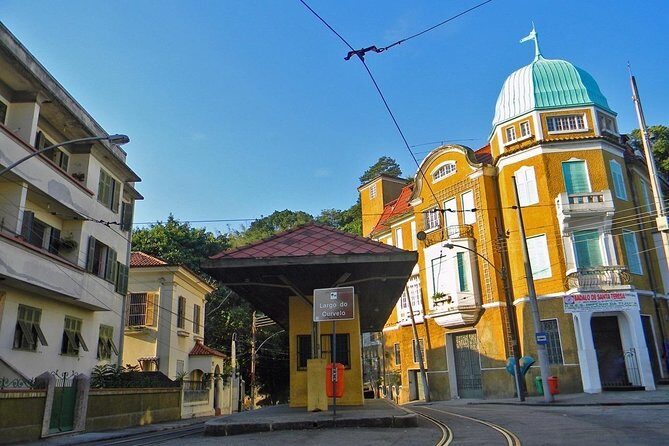
Once you link up with your guide, the first minutes set the tone. You’ll start at a tourist information stand nearby, then transition toward the funicular and hill climb.
The Inclined Plane to Santa Marta: Views, the Capela, and the Real Pace
The heart of the experience is the hill. You head toward the Plano Inclinado da Comunidade Santa Marta (the inclined plane funicular). You’ll walk to the start, get aboard, then reach the top for panoramic views.
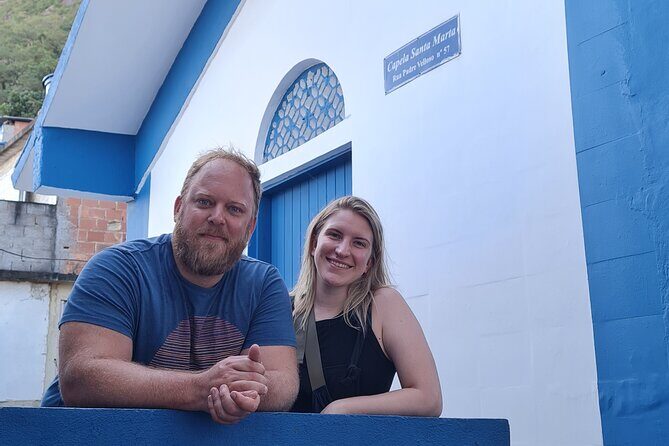
From the top, you’ll get eyes-on perspective of Rio. You’ll also see the church area, including the Capela Santa Marta, and that’s one of the quiet clues that tells you this is not a theme park. Places of worship and community landmarks sit in the same space as daily routes, schools, shops, and the practical “up-and-down” rhythm of life on a slope.
Then comes the descent—on foot. Most of the tour time after the view points involves walking down stairs. That is where the physical reality shows up. Expect uneven steps and areas where you’ll want to watch where you place your feet. Some visitors have noted cat and dog droppings on the route, so pack the mindset of shoes-first travel, not photo-first travel.
A fair note: the funicular section can be under renovation. In one explanation from the operators, they describe periods when the incline plane is not operating as usual, with the hill route adjusted accordingly. Translation for you: if the funicular isn’t running, you may walk more than you expect.
Michael Jackson Statue and the Surrounding Stops You’ll Actually Remember

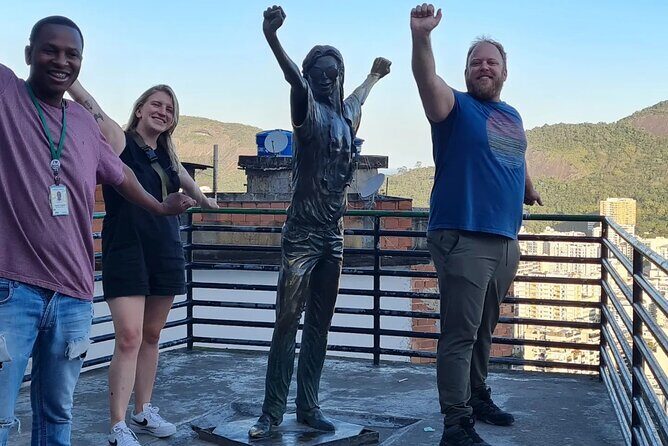
The Michael Jackson statue stop is famous for a reason: it’s a recognizable landmark that helps orient you, then it becomes a springboard for understanding local creativity, commerce, and everyday movement.
After you reach the statue area, you’ll spend time around artisan souvenir shops. This is not about bargaining theatrics. It’s about seeing how residents earn income in a place that outsiders often treat like a backdrop. You’ll also get another wave of photo opportunities—views from here help you connect the hillside to the broader city.
What adds depth is what happens next. You’ll visit the Mundo Infantil crèche, a community crèche that supports around 80 children from the neighborhood. This isn’t a generic “look inside a classroom” moment. It’s a visible example of how tourism can connect (directly and indirectly) to childcare, learning, and stability for families in the area.
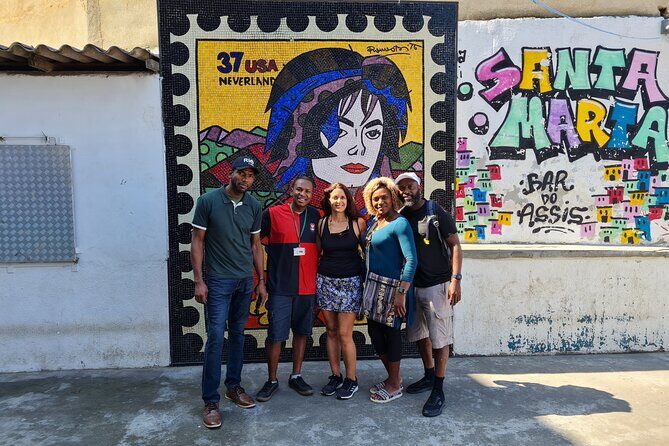
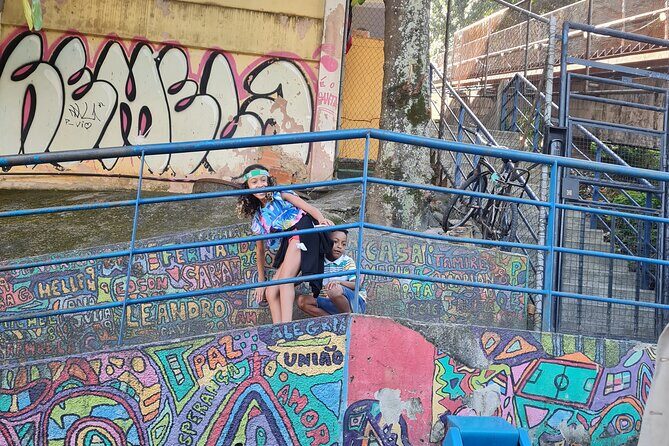
From there you move through a cultural corridor—photos that show the community’s development over time. It’s one of the most grounded parts of the tour because it shifts the story from today’s headlines to a longer arc of change.
The Guide’s House, +Que Turismo Social Project, and the Watch Collection
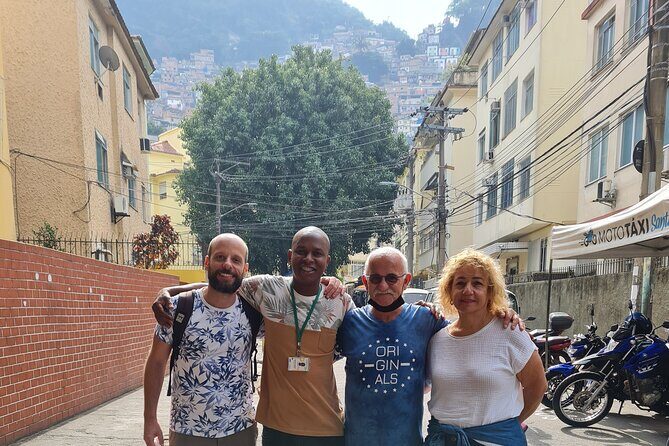
This tour earns its value most clearly when you cross the line from viewing to visiting. You include a stop at the guide’s house and a visit tied to the +Que Turismo Social Project. In plain terms, this is where your money helps support local efforts rather than just paying for your own photos.
Then comes the House of Watches visit, connected to a resident with a collection of more than 350 watches from around the world. It sounds odd until you see what it represents: a personal space full of stories, gifts, and connections that happen because people visit and the community decides how to share.
Guides such as Gilson (and others involved in the tour) often frame this part as part of broader support for children and young people. Reviews describe the visit as welcoming and personal—like being treated as a temporary family friend rather than a ticket number.
This is also where the ethics question gets real. If you come in skeptical, this stop is the difference between a “look at them” mindset and a “learn how they live” mindset. You’re not just consuming the idea of Santa Marta—you’re meeting the people who sustain it and hearing what projects matter to them.






Price and Logistics: Is $29.40 Good Value?
At $29.40 per person, this is a budget-friendly way to experience Santa Marta, especially because the tour includes key elements that would cost you extra separately: entrance related to the cable car/funicular, plus community visits at the guide’s house and the watch collection area.
The value is not only in what’s included—it’s in how tightly the experience is focused. With a duration of about 2 hours and a small-group cap (max 10), you’re not paying for hours of waiting or long, expensive transport transfers you didn’t ask for.
The one logistical cost to keep in mind: private transportation is not included. That means you’ll be responsible for getting to and from the Botafogo meeting point on your own. If you’re already in the Botafogo area (or near public transit), that’s a straightforward trade-off. If you’re far away, your transit time and cost becomes part of the true price.
Booking tends to happen fairly in advance (about 9 days on average), so if you have tight plans, you’ll want to reserve early to get the time window you want.
Safety, Ethics, and How to Handle the Stares and the Real World

Favela tours can trigger a lot of questions, and it’s smart to ask them before you go. The approach that works best here is guided participation: you follow your guide’s cues, you keep your body language respectful, and you treat every stop like it belongs to the residents—not to you.
Safety is not just about luck. Past experiences reflect that guides make a big effort to help visitors feel secure. One response from the operator emphasizes breaking the barrier of fear between visitors and residents. That doesn’t mean you ignore reality. It means you let the guide lead, and you don’t act like you’re the star of someone else’s home.
Also, be prepared for the possibility of seeing visible signs of security at times. One experience mentioned seeing weapons present by residents during the tour. You can’t control that, so the practical move is simple: stay calm, stay respectful, and keep close to your guide’s guidance.
Finally, about litter, cleanliness, and care: one explanation from the operators describes ongoing campaigns around garbage disposal, including collecting coconuts on the hill and using plastic bottles and bags as part of organization efforts. In other words, residents aren’t pretending problems don’t exist—they’re actively working on them, and the tour framework ties into that work.
Who Should Book This Santa Marta Tour (And Who Might Want to Skip It)
This tour suits you if:
- You want an authentic, local-led experience rather than a big bus route
- You’re comfortable walking downhill on stairs for part of the visit
- You care about community support through tourism-linked projects
- You like asking questions and getting straight answers from someone who lives there
You might want to choose something else if:
- You have limited mobility. The tour is explicitly not recommended for that
- You don’t handle uneven stairs well, since the descent is part of the experience
- You’re looking for fully accessible, stop-on-a-taxi convenience
One funny-but-true travel note: keep an eye on your step during the stair descent. A shoe choice you’d trust on a hiking trail beats fragile sandals here.
Should You Book This Favela Tour Santa Marta?
Yes—if your goal is to understand Santa Marta as a living community, not just to check a box on Rio. The best reason to book is the structure: funicular-to-views, then real neighborhood stops, then community visits connected to projects like +Que Turismo Social Project and the watch collection.
I’d book it especially if you’re the type of traveler who wants to ask questions, meet locals at eye level, and leave with more context than a set of quick photos. The only real “no” is if stairs and limited mobility would make the experience stressful. If you can handle the walk, you’ll likely find this one of the more meaningful, human-scale experiences in Rio for the money.
FAQ
FAQ
How long is the Favela Tour Santa Marta?
It runs for about 2 hours, including walking between stops.
How much does the tour cost?
The price is $29.40 per person.
What’s included in the price?
The tour includes entrance related to the favela cable car, visits connected to the guide’s house and the +Que Turismo Social Project, and a visit to the House of Watches.
Where does the tour start and end?
It starts at R. São Clemente, 320 – Botafogo, Rio de Janeiro, and ends back at the meeting point.
How many people are in the group?
The tour has a maximum of 10 travelers.
Is private transportation included?
No. Private transportation is not included.
Is the tour suitable for limited mobility?
No. It is not recommended for people with limited mobility.
What major stops will I see during the tour?
You’ll visit the inclined plane area for hilltop views, the Michael Jackson statue area, a community crèche (Mundo Infantil), and a cultural corridor with photographs, and then the end point at Praça Corumbá. You’ll also include visits to the guide’s house, +Que Turismo Social Project, and the watch collection.