REVIEW · RIO DE JANEIRO
Favela Tour in Rio de Janeiro
Book on Viator →Operated by Favela Tour · Bookable on Viator
Some Rio tours point at favelas. This one talks to them. You get rare context on how Rocinha and Vila Canoas work day to day, with real explanations about housing, public services, and local culture including carnival. I also like that you’re not just staring from a distance, you stop for photos and real street-level details, then you visit community projects with practical results.
My other favorite part is the school stop, where kids learn skills beyond the basics through programs like MORANGUINHOS and SACI SABE TUDO. The main drawback to plan around is physical effort: expect lots of stairs and uneven walking, so comfortable shoes matter.
In This Review
- Key Highlights Worth Your Time
- Entering Rocinha and Vila Canoas the Right Way
- Price and Value for a 3-Hour Small-Group Tour
- Hotel Pickup, Route Timing, and Why You Should Arrive Ready
- Rocinha Stop: Architecture, Public Services, and Carnival Context
- Handcraft Center to a Terrace View: Where Photos Make Sense
- Walking the Commercial and Central Areas Without Getting Lost
- MORANGUINHOS and SACI SABE TUDO: Real Projects, Not Just Photos
- The South Zone Beach Drive: Why It’s Included
- Safety, Guide Quality, and the People Factor
- Weather Changes and Vila Canoas: How to Handle Route Variability
- Who Should Book This Tour, and Who Might Not
- Quick Prep List So You Don’t Have a Bad Day on Stairs
- Should You Book This Favela Tour in Rio?
- FAQ
- How long is the favela tour?
- Where does the tour take place?
- What neighborhoods are included?
- Is hotel pickup and drop-off included?
- Is the group size small?
- What stops are included in Rocinha?
- Is admission required for the school stop?
- Does the tour include a drive through other parts of Rio?
- What happens if the weather is poor?
- Is it suitable for most people?
Key Highlights Worth Your Time
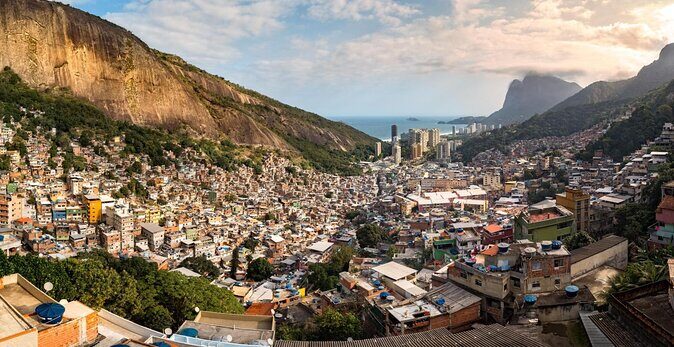
- Rocinha street-level context with guidance on how daily life and services work
- Handcraft center visit that connects local creativity to how people earn and share
- Breathtaking viewpoints over Rocinha and Rio, plus photo tips from your guide
- Community school visits to MORANGUINHOS and SACI SABE TUDO projects
- Small group size (up to 11) for a smoother, calmer experience
- Weather-based Vila Canoas route changes, so the tour adapts to conditions
Entering Rocinha and Vila Canoas the Right Way
A favela tour can go one of two ways: either you get surface-level photos, or you get context that helps you understand what you’re seeing. This experience aims for context. You’ll hear how Rocinha’s neighborhoods are shaped by geography, how infrastructure is handled, and what life looks like when you’re working with limited space and resources. It’s the kind of tour where you start to notice details you would otherwise miss—like how public spaces are used, how commerce shows up on the walkways, and how residents describe their city.
Two neighborhoods are the core of the experience. Rocinha is the big name, and you’ll spend time there on a guided route that includes cultural points, viewpoints, and central areas. Vila Canoas comes in depending on weather, so the tour doesn’t pretend every day is identical. That matters in Rio, where conditions can change quickly and steep streets make everything more physical.
One more thing you’ll feel right away: the tour is designed to be human-scale. With a maximum group size of 11, it’s easier to keep close with the guide, ask questions, and adjust on the fly. That small-group approach also tends to improve the overall tone—less chaos, fewer people spilling off in every direction.
You can also read our reviews of more tours and experiences in Rio de Janeiro.



Price and Value for a 3-Hour Small-Group Tour
At about $33 per person for roughly 3 hours, this is priced more like a focused half-mission than a “big day” outing. What makes it feel like good value isn’t only the cost—it’s what’s included and what you’re actually doing.
You get hassle-free hotel pickup and drop-off, which is a real deal in Rio. Without that, you’d spend energy figuring out logistics and timing, and favela routes are not the place you want to improvise transportation plans. You’re also not just getting a generic bus ride. You walk parts of the route, stop for viewpoints, and visit community projects. That mix usually takes more planning time on your own than people expect.
With up to 11 travelers, you’re also not paying “premium” prices for a crowded group. Reviews reflect that guides and drivers take care with safety and pacing, which matters when the tour includes stairs and steep streets.
Hotel Pickup, Route Timing, and Why You Should Arrive Ready
Hotel pickup and drop-off are included, and that reduces stress—especially if you’re staying in the South Zone and don’t want to fight Rio traffic. Still, do yourself a favor and treat pickup like it’s a real appointment. Be ready at the pickup point a bit early, and keep your phone accessible in case the guide asks for quick confirmation or you need to coordinate in real time.
The experience is weather-dependent, and Vila Canoas may change based on conditions. In practical terms, you should avoid scheduling the rest of your day too tightly right after the tour. If the route shifts, the pace and return timing can adjust.
Also, the tour has a maximum of 11 people, so it’s not a massive “meet everyone in the lobby” setup. That’s good for you. It means your guide can actually manage the group, stop for photos without a stampede, and keep you from getting lost on steep side streets.
Rocinha Stop: Architecture, Public Services, and Carnival Context
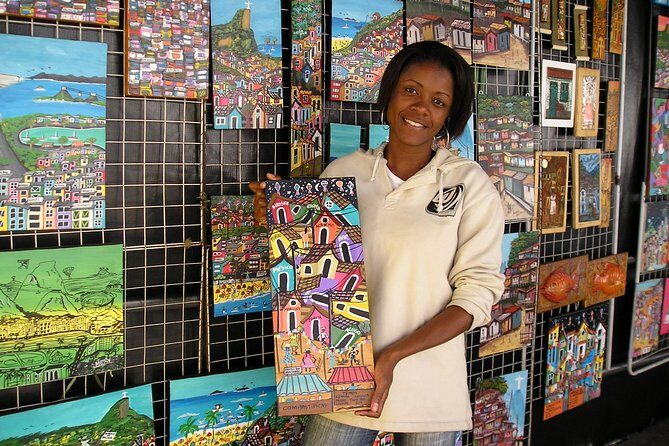
The tour’s first major block starts when you arrive in Rocinha and settle into an explanation of how the neighborhood works. You’ll hear about architecture and the way buildings relate to the slopes. You’ll also get background on public services and local cultural life—yes, including carnival—so what you see in front of you becomes less of a blur.
This part is valuable because it corrects the biggest issue with many first-time favela tours: people arrive with a view of favelas as one fixed thing. In reality, Rocinha is made of many parts—different streets, different levels of services, different community spaces, and different ways residents manage daily life.
After that intro, you’ll visit a handcraft center. I like this stop because it connects the “story” portion to something tangible. You can see local work, understand that culture is not only performance or murals, and get a more grounded sense of everyday creativity.
If you’re the type who likes to ask questions, this is a good moment to do it. The guide’s tone here can set the whole trip’s mood. Guides on this tour are often praised for clear English (and in some cases Spanish), plus thoughtful answers instead of rehearsed facts.
Handcraft Center to a Terrace View: Where Photos Make Sense
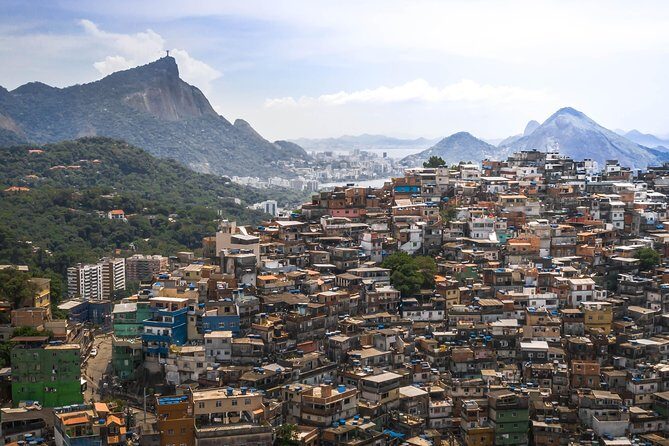
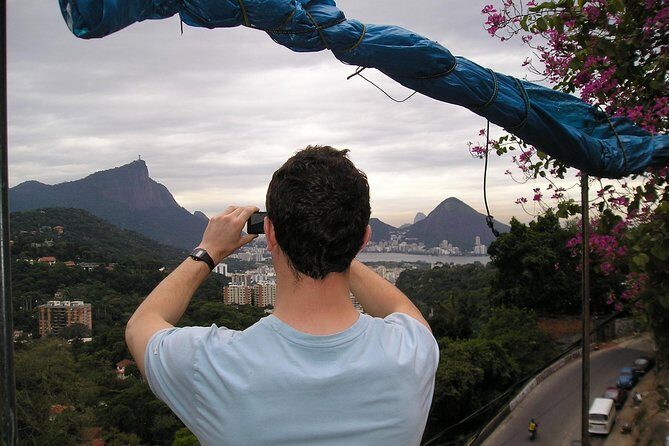
Next comes one of the tour’s signature experiences: a local terrace with a view over Rocinha and Rio. This is where the tour turns from “learning” to “seeing.” From up high, you can connect the geography to what you’ve been hearing about—how steep terrain shapes the layout, why certain public routes feel the way they do, and why the neighborhood’s visibility from the city matters.
Bring your phone, and also listen to your guide’s photo guidance. Reviews specifically mention that guides help take photos and will sometimes highlight spots where photos are appropriate or where you should be careful. That’s more than convenience. It helps you avoid wandering in places you shouldn’t and keeps the group moving safely.
You’ll also get discussion about security and local infrastructure. I recommend treating this as context, not a promise that everything is the same everywhere. The overall message across the tour experience is that the guides manage safety carefully and keep a close watch on the group’s whereabouts.
Then you move onto the road trip element inside Rocinha’s area. You’ll drive down the Estrada da Gávea, which is described as a former F1 race track. That detail adds a fun, unexpected layer. It’s a reminder that Rio’s geography is the common thread across “touristy” and “local” spaces—you just see it from different angles.





Walking the Commercial and Central Areas Without Getting Lost
After the drive, you walk through Rocinha’s commercial and central areas. This is where the neighborhood stops being a viewpoint and starts being a place you can navigate at street level, even for a short time.
Walking helps you understand the rhythm of commerce and community. Shops and services show up in places that might surprise you, and you’ll see how residents use public space for social life, practical errands, and cultural expression. It’s also where you get a clearer sense of scale: how many steps, how quickly the route rises, and how important it is to have sensible shoes.
A note from practical experience with any walking tour in steep areas: pace yourself. Don’t try to “win” the stairs. If you need to slow down for breath, that’s normal. The tour works best when you stay with the group and keep your energy for the later school visit.
MORANGUINHOS and SACI SABE TUDO: Real Projects, Not Just Photos
The school stop is the emotional and educational highlight for many people on this tour. You’ll visit the MORANGUINHOS community schools (also referred to as SACI SABE TUDO). These programs are financed by Favela Tour, and the tour description stresses that they have absolutely no financial support from the Brazilian government.
What that means for you as a visitor is simple: you’re not paying for a “look at the poor” moment. You’re paying attention to a working model for how education can happen when government funding isn’t there. You’ll see that the school’s work includes regular classes and also initial computer skills, English classes, music, capoeira, and ballet instruction. That mix matters because it points to a future-oriented approach, not only basic schooling.
Reviews also mention moments that feel unusually personal—like opportunities to walk through parts of school buildings and see that the staff and guides know the space well. Some guides are described as having relationships with locals and being able to connect greetings while you’re moving through the area. That’s a big part of why this stop lands well: it’s not “tourist staging,” it’s real community infrastructure.
And yes, there’s an admission ticket note that says admission ticket is free for this stop. Translation for you: you’re not paying extra to access the school portion, which keeps the experience aligned with the tour’s stated value.
The South Zone Beach Drive: Why It’s Included
On the way toward and back from the favela, the road trip trajectory includes most South Zone beaches in Rio. This part is easy to misunderstand if you expect a “only favela” experience. But the road trip adds context in a clever way: it gives you a sense of Rio’s contrast—how the city’s most famous coastal areas connect to the neighborhoods where many residents live.
You may not spend long stops at beach viewpoints, but you’ll still get a broader sense of location. Rio’s neighborhoods are tightly packed and connected by roads that climb and curve. Seeing the route in motion helps you understand how people move between home, work, and city life.
It’s also a good way to break up the day’s intensity. After stairs and walking, the drive gives everyone a chance to reset, grab water, and refocus before the return.
Safety, Guide Quality, and the People Factor
If you’re deciding whether to do a favela tour, safety is always the first question. The best signal here is not fear or hype—it’s how the tour operates.
Reviews repeatedly praise that guides and drivers care for the group’s safety and handle transitions well. Many guides are described as taking photos for everyone, translating clearly, and managing the group with calm confidence. Names that come up include Meilin, Marcelo, Matheus, Barbara, Simon, and Francesco, with descriptions of strong English (and in at least one case, English and Spanish) and a habit of answering questions thoughtfully.
One more practical safety piece: this tour involves walking and stairs. If you treat safety as only about “risk,” you might miss the real day-to-day safety issue: slips and fatigue. Wear shoes with traction, bring a light layer if the weather shifts, and keep your phone secured so you’re not juggling gear on steep steps.
Also keep your expectations realistic. If you want an extended, slow-paced walk with every street turned into a classroom, this may feel short. It’s designed as a structured 3-hour route with stops. Some people are delighted by that balance; others want more time in the exact neighborhood streets they’re most curious about.
Weather Changes and Vila Canoas: How to Handle Route Variability
The tour description notes that you’ll visit Vila Canoas according to weather condition. That matters because steep terrain and visibility can affect what’s practical and safe for a walking route.
Here’s how I’d handle this if you’re the type who hates uncertainty: check Rio weather before you leave your hotel, and don’t plan a “must do” photo mission for the exact same hour right after your tour. If Vila Canoas is included, it’s a bonus neighborhood layer. If it isn’t, you still get a full Rocinha experience with its viewpoints, walking, and school visits.
The weather requirement is real, and poor conditions can lead to a different date offered or a full refund. So if your travel dates are flexible, this is easier. If they’re not, pick a day with more stable weather when possible.
Who Should Book This Tour, and Who Might Not
This is a strong choice if you’ve already done the top Rio highlights and you want a more grounded look at how Rio actually functions on the ground. It’s also a great fit if you like meeting local guides and getting practical explanations about daily life.
It’s especially good for first-time Rio visitors who want their misconceptions corrected by direct, on-the-street context. Reviews repeatedly highlight that the tour helps people understand what’s true versus what’s exaggerated, and that you leave with a more human perspective.
Who should think twice:
- If you have limited mobility or you struggle with stairs and steep walking, this may be too demanding.
- If you hate structured tours and prefer long unbroken free time, the route pacing may feel tight.
- If you want a “deep research” experience with long stops in each neighborhood segment, you might want to pair it with another day dedicated to different Rio neighborhoods.
The tour can feel humbling in a good way. It’s also not designed for people who only want entertainment. Come for context and the chance to see how community projects operate.
Quick Prep List So You Don’t Have a Bad Day on Stairs
You’ll thank yourself for bringing the basics:
- Comfortable shoes with grip
- A light layer in case it cools or warms suddenly
- Your phone charged for photos, since viewpoints are a big part of the experience
- Water in your day bag if you tend to get thirsty during walking
If you want sharper photos, listen to your guide’s advice about where to stand and where not to. Some guides actively help take group photos, and that can be a nice way to get clear shots without awkward angles on steep stairs.
Should You Book This Favela Tour in Rio?
If you’re choosing between “see a favela from afar” and “understand how a favela works,” I think this is the better bet. The price is reasonable for a small-group format, and the inclusion of hotel pickup and drop-off removes a lot of friction. Most importantly, the visit to MORANGUINHOS and SACI SABE TUDO gives the tour a real impact angle: education and skills training supported through the tour’s own financing, with no Brazilian government support.
My final nudge is simple: respect the walking. Wear the right shoes, go at your own pace, and let the guide lead. If you do that, you’re likely to come away with a clearer, more accurate view of Rocinha and what daily life can look like there.
FAQ
How long is the favela tour?
The tour runs for approximately 3 hours.
Where does the tour take place?
It takes place in Rio de Janeiro, focusing on Rocinha and (depending on weather) Vila Canoas.
What neighborhoods are included?
Rocinha is part of the experience, and Vila Canoas is visited according to weather conditions.
Is hotel pickup and drop-off included?
Yes, hassle-free hotel pickup and drop-off are included.
Is the group size small?
Yes. The tour has a maximum of 11 travelers.
What stops are included in Rocinha?
You’ll have an introduction to Rocinha, visit a handcraft center, go to a terrace viewpoint, walk through central/commercial areas, and visit community school projects called MORANGUINHOS and SACI SABE TUDO.
Is admission required for the school stop?
The community schools stop is listed as free for admission ticket.
Does the tour include a drive through other parts of Rio?
Yes. The route towards and back from the favela includes most South Zone beaches in Rio.
What happens if the weather is poor?
The experience requires good weather. If it’s canceled due to poor weather, you’ll be offered a different date or a full refund.
Is it suitable for most people?
Most travelers can participate, but expect lots of stairs and walking.