REVIEW · RIO DE JANEIRO
Explore the Women Behind the Monuments
Book on Viator →Operated by Rio de Janeiro: Women’s History Walking Tour · Bookable on Viator
Rio’s monuments have hidden voices. This Women Behind the Monuments walking tour in Centro connects six famous spots to specific women’s stories, from literature and politics to opera-house art and everyday civic life. You’ll walk a compact route through Rio de Janeiro’s historic core while the guide, Jessica, ties each stop to the people that shaped it.
What I like most is how the tour stays external: you get the point of each building and monument without long lines or waiting around inside. I also like Jessica’s storytelling rhythm—clear explanations, lots of energy, and real room for questions so the walk feels relaxed rather than scripted.
One thing to consider: the route is mostly outdoors, so if the weather turns (and Rio can), you’ll want a rain plan and comfortable walking shoes.
In This Review
- Quick highlights
- Turning Rio’s Centro into women’s history, one block at a time
- Academia Brasileira de Letras: where your first woman’s story begins
- Monumento a Floriano Peixoto: three women behind one presidential symbol
- Palácio Pedro Ernesto and the City Council: a tragic chapter you don’t skim
- Theatro Municipal: French eclectic elegance plus three artistic women
- Largo da Carioca: the first water fountain story and a women’s group narrative
- Praça Quinze de Novembro: colonial, imperial, republican, and the final trio
- Why Jessica’s delivery makes this tour more than a list of stops
- Timing and logistics you can plan around (2 to 2.5 hours, max 20 people)
- What you’re paying $29.57 for, and why it can feel like good value
- Who this Women in Rio walking tour is for
- Should you book this tour, or choose something else?
- FAQ
- How long is the Women Behind the Monuments walking tour?
- Where does the tour start and end?
- What time does the tour begin?
- How much does it cost per person?
- Are the visits inside the buildings included?
- Do I need to pay entry fees at the stops?
- How big is the group?
- Is free cancellation available?
- Is the tour near public transportation, and are service animals allowed?
Quick highlights

- Six Centro stops: literature, presidential monument, city hall, opera house, fountain area, and Praça Quinze de Novembro
- External visits only: less time waiting, more time moving and learning
- Jessica’s animated, question-friendly approach: the walk feels personal while staying professional
- Women across roles and backgrounds: from artists and fighters to darker, harder stories that get handled thoughtfully
- Free site access listed for each stop: you’re guided through the viewpoints tied to each location
Turning Rio’s Centro into women’s history, one block at a time
This is the kind of tour that changes how you look at the city. Instead of treating Rio’s landmarks like photo backdrops, you use them like chapters. You start at Avenida Rio Branco, then work your way through iconic Centro spaces where women’s stories connect to Brazilian culture, public life, and the arts.
The core idea is simple and smart: buildings and monuments don’t just mark dates. They reflect who got credit, whose work survived, and whose pain was documented. As you walk, you’ll notice how the guide links architecture and symbolism to people—so the city starts to feel less like random sightseeing and more like a guided narrative you can follow.
And yes, the energy matters. The best part is that the walk doesn’t feel academic or heavy. It feels like a focused history lesson delivered with warmth and momentum, which makes it easier to remember what you’re seeing.
You can also read our reviews of more tours and experiences in Rio de Janeiro.



Academia Brasileira de Letras: where your first woman’s story begins
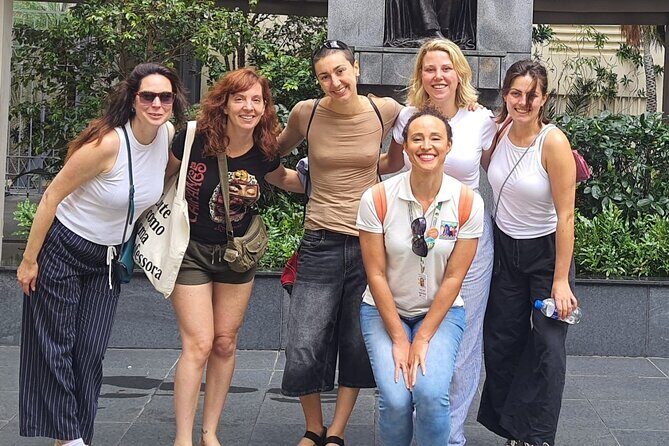
Your first stop is the Academia Brasileira de Letras, the Brazilian Academy of Letters’ headquarters. Even before you get into the story, the setting sets the tone: you’re in a place tied to language, books, and cultural authority, which is a powerful starting point for a tour centered on women.
From here, the tour introduces the first woman connected to the academy’s world—your anchor figure for the day. What makes this stop valuable is that it frames the theme early: women weren’t just active in “public life” in the obvious ways. They also shaped culture through words, ideas, and the institutions that help ideas last.
Since this is an external visit, you’re not bogged down with inside-only viewing. You get a viewpoint, you hear the story, and then you move on. That pacing keeps the morning from turning into a chain of waiting.
Practical tip: take a moment to look around the façade and surrounding context before the explanation starts. It makes the story stick better.
Monumento a Floriano Peixoto: three women behind one presidential symbol
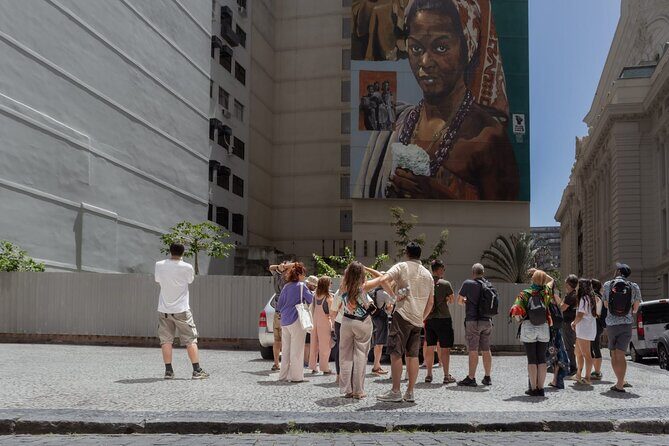
Next up is the Monumento a Floriano Peixoto. This is a presidential monument, so it could easily become a standard history stop. But the tour turns it into something more layered by presenting the stories of three different women connected to the monument’s wider meaning.
This stop is where the tour shows its range. You’re not just learning names; you’re learning how public monuments can carry multiple kinds of history at once. The guide uses the structure, the symbolism, and the site’s place in the city to connect you to people whose lives intersected with politics, reputation, and the social rules of their era.
It’s also a useful reality check. Even when you see grand public displays, the impact on women often shows up indirectly—through work, struggle, recognition, and the limits placed on their public visibility. The tour’s approach makes that pattern feel clear instead of vague.
If you’re the type who likes to compare eras, pay attention here: the monument is one fixed point, but the stories add motion and contrast.
Palácio Pedro Ernesto and the City Council: a tragic chapter you don’t skim
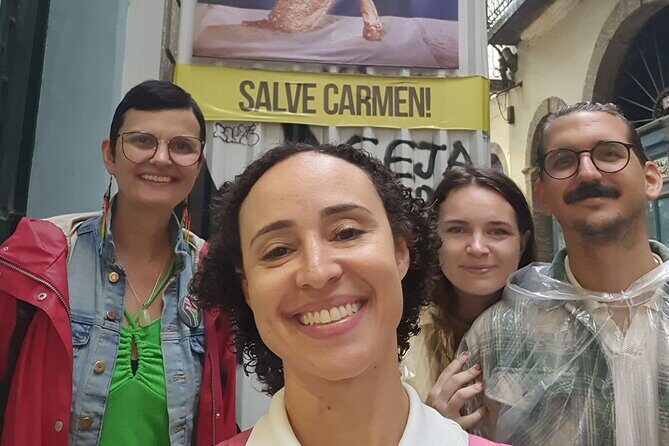
At Palácio Pedro Ernesto, home of the City Council / Câmara Municipal do Rio de Janeiro, the tone shifts. This stop shares a tragic story of a woman, tied to a place associated with civic power and governance.
That pairing can hit harder than you expect, and that’s part of the point. When a tour deals with tragedy, the best version doesn’t sensationalize it. Instead, it uses the site as a reminder that public institutions have consequences for real lives—especially when social structures were unfair.
Because this tour is external, you’re not forced through long interior viewing. You can focus on the story and the building’s presence in the street context. That works well here because civic buildings often feel cold and formal from the outside. The guided narrative gives that formality a human edge.
I also like that the tour doesn’t only highlight inspiring stories. The harder moments broaden the picture of women’s history in Rio, including the costs of being visible in a patriarchal system.
Theatro Municipal: French eclectic elegance plus three artistic women
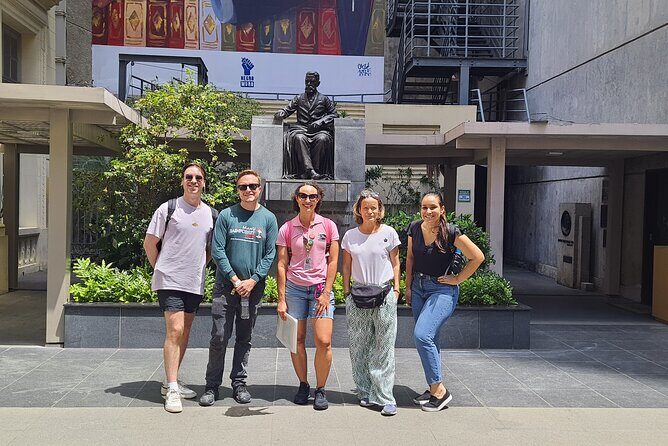
Now you get to the Theatro Municipal do Rio de Janeiro, often described as a standout example of French eclectic style. It’s the kind of building you can spot from a distance, and it makes sense as a stop for art stories.
This is where the tour connects the opera house to three artistic women. The effect is practical: you’re not just admiring the façade. You’re learning how major cultural stages connect to people who created, performed, and pushed art forward—even when recognition was uneven or contested.
Art spaces also reveal an important truth. In many places, the public face of culture can hide complex power dynamics behind the scenes. By pairing architecture with women’s creative contributions, the tour helps you understand why the arts matter historically, not just aesthetically.
One tip: pause before the guide begins the main story. Take in the building’s style and mood first. Then the names and narratives will feel like they belong to the place, not like a separate lecture.






Largo da Carioca: the first water fountain story and a women’s group narrative
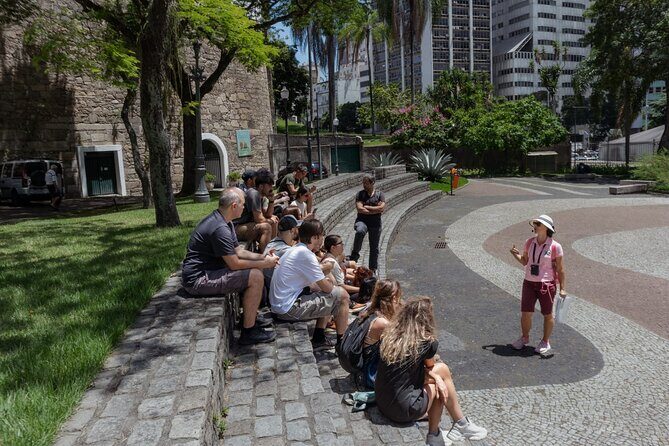
Largo da Carioca is a different kind of landmark. This area is associated with the first water fountain in Rio, and that “daily life” detail makes it a smart change of pace after more formal institutions like academies and theaters.
Here, the tour shares the story of a group of women connected to that setting. Even if you don’t think of fountains as history, water access and city infrastructure shape who can live comfortably and who has to work harder. A women-focused narrative at a civic utility site helps you see the city’s past through the lens of routine, survival, and community.
This stop also tends to bring the tour back to an emotional middle ground: not all women’s stories are tragedies or grand achievements. Some are about collective roles—support systems, work patterns, and the kind of history that’s easy to overlook unless someone points it out.
If you like walking tours that balance big landmarks with lived-in street context, this is one of the best sections.
Praça Quinze de Novembro: colonial, imperial, republican, and the final trio
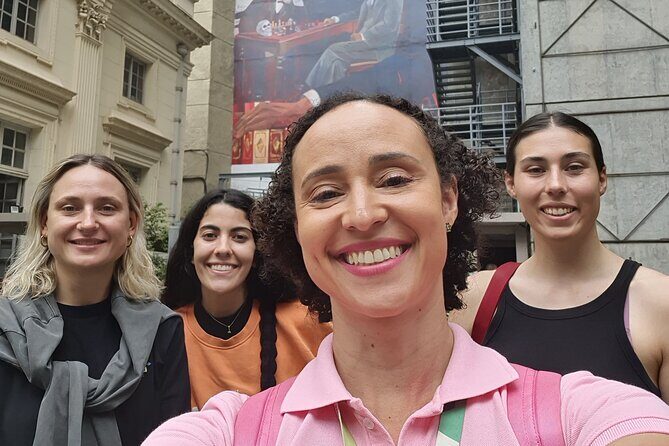
Your last stop is Praça Quinze de Novembro, in Centro. This square is presented as representing three historic periods of Brazil: colonial, imperial, and republican. That makes it a strong finale because it gives the day a bigger timeline payoff.
The tour ties this broad sweep to the last three women in the route. The structure works well: you started with literature, moved through politics and civic life, then art and public spaces, and now you land in a place that signals long-term change.
This final stop also helps you mentally file what you learned. You’re not just leaving with six stories—you’re leaving with an idea of how women’s roles shifted as Brazil moved through different governing eras and cultural priorities.
If you want the most out of the finale, stand in a spot where you can take in the square as a whole while the guide connects the women to each era.
Why Jessica’s delivery makes this tour more than a list of stops
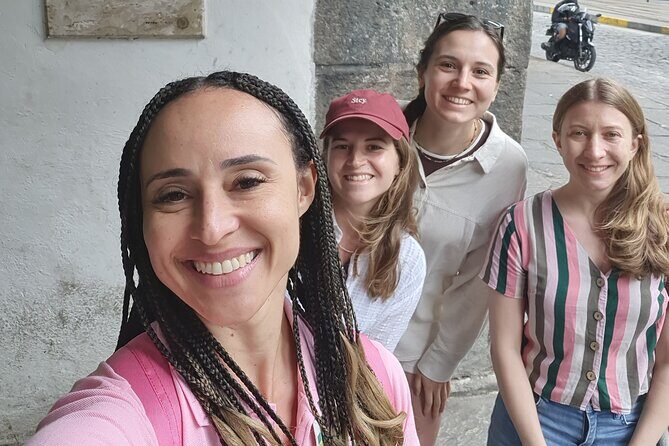
You can visit landmarks on your own and read plaques. What you can’t easily replicate is the way a good guide builds connections between places and people while keeping you moving.
Jessica’s style comes through as energetic, engaging, and tailored. The walk doesn’t feel like a one-size-fits-all script, which matters because women’s history is often complex. You’ll get clear explanations, and you’ll have space to ask follow-ups.
The tour also handles variety in women’s stories in a meaningful way. Some stories are about artists and creators. Others include darker, struggle-heavy chapters—handled carefully rather than glossed over. The range is part of the value: you see a fuller picture of who got impacted and who fought for recognition.
One last thing I appreciate is tone. The stories feel mindful rather than preachy. You get reflection without losing the fun of a walking tour through central Rio.
Timing and logistics you can plan around (2 to 2.5 hours, max 20 people)
The walk runs about 2 hours to 2 hours 30 minutes, starting at 10:00 am. With a maximum group size of 20 travelers, you’re not stuck in a giant herd, which usually means you can actually hear the guide and ask questions when something sparks curiosity.
All stops are listed as external visits, so you’re not relying on indoor entry or timed access. That’s a big deal for comfort and flow. It also makes the pace easier to manage if you’re on vacation and don’t want to fight crowds or lines.
The route begins at Av. Rio Branco in Centro and ends at Praça Quinze de Novembro, also in Centro. That end point is convenient because it leaves you right where you can keep exploring afterward—cafés, buses, and more walking options are typically close.
What about mobility? The tour notes say most travelers can participate, and service animals are allowed. Still, it’s a walking tour, so bring shoes that handle uneven sidewalks and possible rain.
What you’re paying $29.57 for, and why it can feel like good value
At $29.57 per person, this tour is priced like a value walking experience. But the real question is whether it’s more than just six stops.
It earns its cost in a few ways:
- You’re paying for a guide to connect stories to locations you might otherwise overlook.
- Each stop is listed with free admission and is handled as an external visit, so you’re not adding site fees on top.
- The format lasts long enough to build narrative momentum, but not so long that you’re exhausted by the end.
If you’re visiting Rio for the first time, Centro landmarks can look familiar from postcards yet still feel confusing in context. This tour gives you the context in a way that stays easy to follow.
If you already know a lot of Brazilian history, you might still enjoy the different angles. The women-centered approach gives you a fresh way to see familiar buildings.
Who this Women in Rio walking tour is for
This tour is a strong fit if you:
- like walking tours that tell stories instead of just pointing out sites
- want women’s history focused on Rio de Janeiro’s cultural and civic landmarks
- enjoy architecture and public spaces, but want the human layer too
- prefer smaller groups and a guide who can answer questions
It’s also a good match if you’re the type who remembers best through narrative. This tour builds a clear sequence—so you’re less likely to forget what you saw on day one.
If you dislike walking tours in bad weather, you’ll still be fine if you come prepared. But keep in mind that the day’s pace depends on outdoor time.
Should you book this tour, or choose something else?
Book this one if you want a practical, Rio-in-Centro morning that changes how you read monuments. Jessica’s approach makes the history feel lively, and the range of women’s stories gives the tour more depth than a simple theme walk.
Skip it only if you’re looking for an interior-heavy itinerary or a tour that sticks to one mood—because the stories move through different emotional tones, including tragic material. It’s not about avoiding the hard parts. It’s about putting them in context with care.
If you’re open to being challenged and entertained at the same time, this is an easy yes for a first pass through Rio’s central landmarks.
FAQ
How long is the Women Behind the Monuments walking tour?
It runs about 2 hours to 2 hours 30 minutes.
Where does the tour start and end?
It starts at Women in Rio Walking Tour, Av. Rio Branco – Centro, Rio de Janeiro – RJ 20040-090, Brazil, and ends at Praça Quinze de Novembro – Centro, Rio de Janeiro – RJ 20010, Brazil.
What time does the tour begin?
The start time is 10:00 am.
How much does it cost per person?
The price is $29.57 per person.
Are the visits inside the buildings included?
No. The tour includes external visits only, and internal visits are not included.
Do I need to pay entry fees at the stops?
The information provided lists admission ticket cost as free for the stops.
How big is the group?
The tour has a maximum of 20 travelers.
Is free cancellation available?
Yes. You can cancel up to 24 hours in advance for a full refund.
Is the tour near public transportation, and are service animals allowed?
Yes. It notes that the tour is near public transportation and service animals are allowed.