
REVIEW · RIO DE JANEIRO
Corcovado, Sugarloaf Mountain, and Selarón Steps 6-Hour Tour
Book on GetYourGuide →Operated by Gray Line Brazil · Bookable on GetYourGuide
Rio in one tight loop can be a lifesaver. This Corcovado–Selarón–Sugar Loaf tour strings together the big sights with smart routing. I like the rainforest drive up to Christ the Redeemer, and I also like that the guide brings the context so the views feel earned, not random.
One thing to plan for: with three major stops in 6 hours, time can feel a bit tight at the Selarón Steps, and you may still hit lines at Christ and Sugar Loaf depending on the day.
In This Review
- Key things you’ll notice on this tour
- Why this 6-hour Rio loop works for many visitors
- Tijuca Rainforest drive to Corcovado: where the tour starts getting good
- Christ the Redeemer: the statue, the views, and the photo reality
- Santa Teresa neighborhood walk: charming streets plus a fast culture hit
- Jorge Selarón’s ceramic steps: what you’ll love and what might feel short
- Urca neighborhood and Sugar Loaf: the two-stage cable car moment
- How the 6 hours feel: pacing, queues, and getting the most out
- Price and value: what $146 buys you in the real world
- Guides you might meet and why their role changes the whole day
- Who should book this tour, and who might want a different plan
- Quick tips to make the day smoother
- Should you book this Corcovado, Selarón Steps, and Sugar Loaf Tour?
Key things you’ll notice on this tour

- Tijuca Rainforest drive right to Corcovado, so you start seeing Rio in “real” nature mode
- Christ the Redeemer at the 38-meter statue with guided viewpoints and photo time
- Santa Teresa + Selarón Steps in one smooth neighborhood stop, not a separate mission
- Jorge Selarón’s ceramic steps by a Chilean artist, with time to take photos
- Sugar Loaf cable car in two stages, including Urca Hill views over Guanabara Bay
- Hotel pickup included from São Conrado, Leblon, Ipanema, and Copacabana areas
Why this 6-hour Rio loop works for many visitors

Rio has a way of eating time. Between traffic, lines, and transit distances, trying to do Corcovado, Selarón Steps, and Sugar Loaf on your own can turn into a stress test. This tour keeps it simple: pickup, guided order, tickets handled, and you get back to the city without guessing.
The tradeoff is that it’s a fast-paced highlights format. If you want long hangs at one place, you might feel rushed. If you want maximum “I checked that box” power with a guide to interpret what you’re seeing, this format fits well.
You can also read our reviews of more tours and experiences in Rio De Janeiro.



Tijuca Rainforest drive to Corcovado: where the tour starts getting good

The tour’s first move is the drive through the Tijuca Rainforest toward Corcovado. Even before you reach the statue, this section matters because it changes the feel from city chaos to something cooler, greener, and more atmospheric.
You’ll also appreciate the practical side: the rainforest approach is part of why Corcovado feels dramatic. From the road, the city often looks compressed, then gradually opens up as the elevation climbs. It’s a built-in “setup” for the big payoff at the top.
One more benefit: you’re not coordinating multiple legs of transit. With round-trip transfers from many hotels in the São Conrado, Leblon, Ipanema, and Copacabana zones, you spend your time on the sights instead of figuring out how to reach them.
Christ the Redeemer: the statue, the views, and the photo reality

At Corcovado Mountain, the centerpiece is Christ the Redeemer, the 38-meter (128-foot) tall statue. This isn’t just a skyline photo stop. From up there, Rio stretches outward in layers, with neighborhoods and bay views that make the city’s geography click.
What I like about having a guide here is the way it turns the viewpoint into something you can read. A good guide will connect what you’re seeing to what it means—how the city sits around the bay, how the coastline bends, and why this spot became a symbol.
The tour includes entrance ticket to Christ the Redeemer, which helps you skip the hassle. Still, plan for the possibility of queue time. Some days move faster than others, and one reason this tour is popular is that people want the same peak experience at the same time.
Practical tip: wear something comfortable for standing around and taking photos. You’ll likely be looking up, back, and around a lot—so having good walking shoes helps more than you’d think.
Santa Teresa neighborhood walk: charming streets plus a fast culture hit

After Corcovado, you head downhill into the Santa Teresa neighborhood for a guided stroll. Santa Teresa is the kind of place where you notice the details—stairs, architecture, and a bohemian vibe that feels different from the bayfront districts.
This stop is valuable because it adds a human-scale Rio moment. Corcovado and Sugar Loaf are both “from above” experiences. Santa Teresa brings you back down to street level, where the city feels lived-in rather than staged.
You’re not staying here all day, so treat it like a curated tasting rather than a full meal. That’s why the guide matters: you’ll get the context for what you’re seeing without having to research it mid-walk.
Jorge Selarón’s ceramic steps: what you’ll love and what might feel short
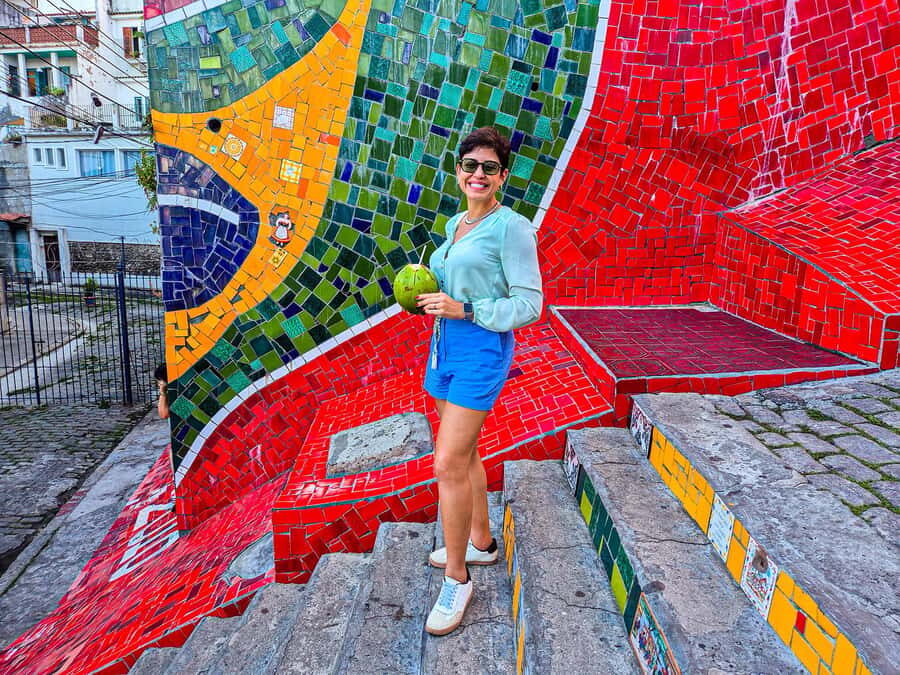
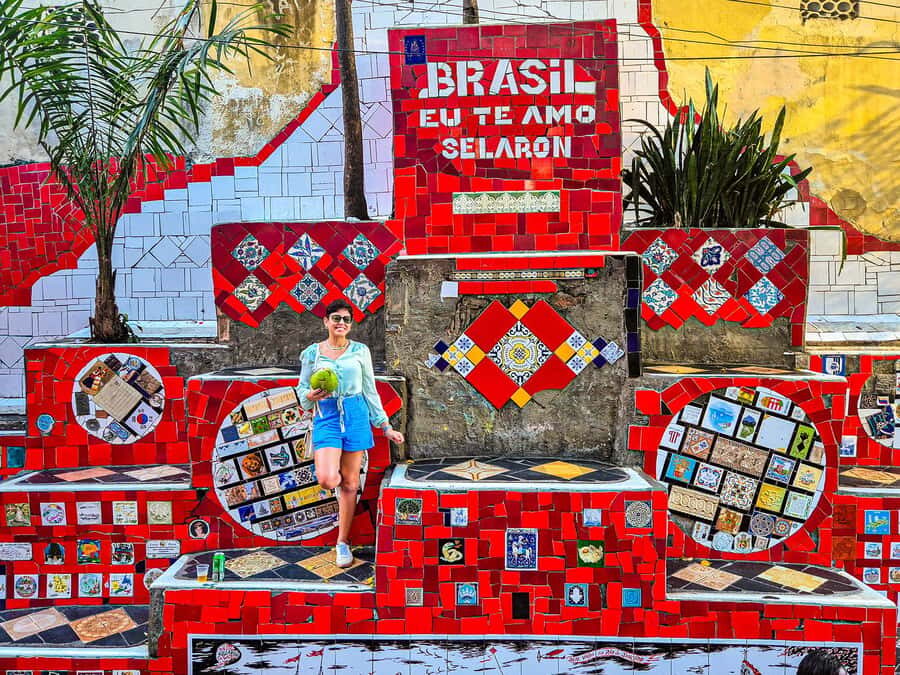
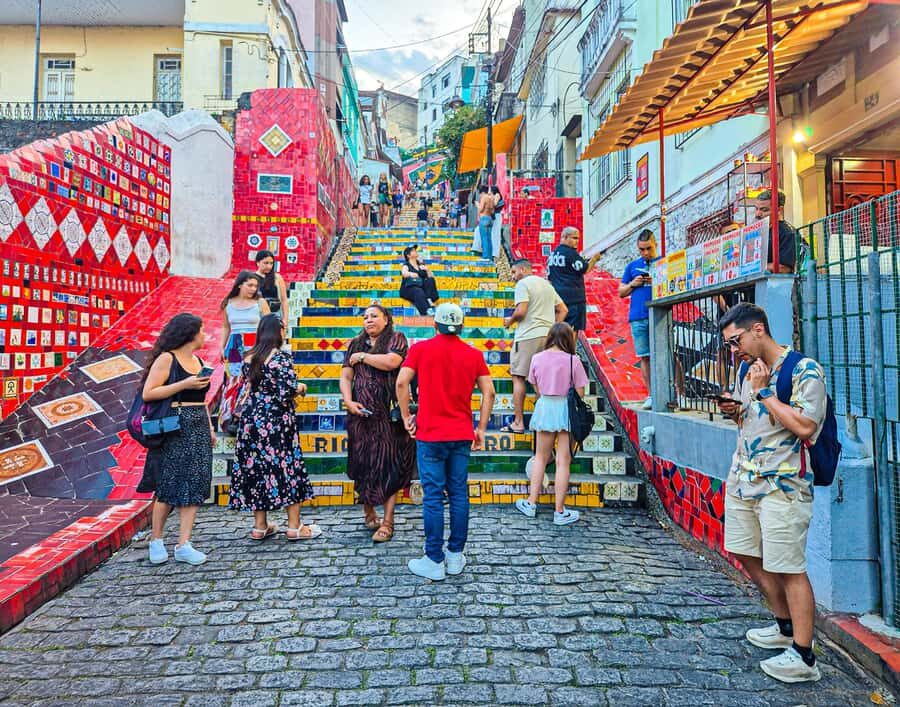
The signature artistic stop is the Selarón Steps, created by Chilean artist Jorge Selarón. The steps are famous because they’re made of ceramic tiles, and the result is color, texture, and personality you can’t replicate with a normal photo at street level.
If you like art that feels personal and a little odd in the best way, you’ll enjoy this stop. The setting also makes it easy to take photos in different ways—close-ups on the tiles, wider shots showing the stairway, and angles that turn the street into a backdrop.
Time at the steps can be limited. One recurring theme is that the stay can be short—enough for pictures, but not enough for a long, slow wandering. If you’re the kind of person who wants to really sit with a place, consider arriving with that expectation so you don’t feel like you got shortchanged.






Urca neighborhood and Sugar Loaf: the two-stage cable car moment
Next you move to Urca, a charming area that sets you up for the cable car ride. This part is more than transit; it’s an essential “scene change” that makes Sugar Loaf feel like a destination rather than another stop.
Then comes the main event: the Sugar Loaf Mountain cable car, running in two stages. First, you go to Urca Hill, and the viewpoint opens over Guanabara Bay. From there, you can also see the Rio-Niterói Bridge and Corcovado Mountain—which is a neat reversal, like seeing the last stop from the new one.
The second stage takes you to the summit for broader views of Copacabana, Santa Cruz Fortress, and the beaches of Niterói. This is where the tour earns its “highlights” label. The panorama is the point, and the two-stage structure helps you feel like you’re gradually leveling up instead of rushing straight to the top.
Practical photo tip: bring or keep your phone charged. You’ll be switching between wide panoramic shots and tighter framing quickly, because the coastline details can pull you in.
How the 6 hours feel: pacing, queues, and getting the most out

A tour like this is a balancing act. You’re packing in three headline attractions, so the schedule is designed to keep you moving. That’s great if you hate planning, but it can feel rushed if you wanted extended time at just one place.
Here’s what you should mentally prepare for:
- Queues can still happen at Christ and Sugar Loaf, especially during peak times. Even with tickets handled, line length depends on the day.
- Time at Selarón Steps is limited, so go with a “get the photos and enjoy it” mindset rather than “slow soak.”
- Your guide and driver coordination matter a lot. When the timing clicks, the day feels smooth; when it doesn’t, you can end up compressing stops.
The good news is that the tour includes specialized guides and round-trip transfers within a defined neighborhood range. That reduces uncertainty, and it’s often what makes a highlights tour actually work in real life.
If you’re sensitive to rushing, pick an earlier start when possible and keep your expectations flexible. You’ll still get the big sights, but your enjoyment will come from how you handle the pace.
Price and value: what $146 buys you in the real world
At $146 per person for about 6 hours, the key value is what’s included. You get hotel pickup and drop-off from many hotels in São Conrado, Leblon, Ipanema, and Copacabana zones. You also get a specialized guide, plus key tickets: entrance to Christ the Redeemer and the Sugar Loaf cable car ticket.
That adds up fast if you were trying to piece it together on your own. Even if you don’t love buying tours, paying for transport + tickets + interpretation can be money well spent in a city where time costs you.
The main cost you should expect on top is simple: food and drinks are not included. So if you want a full meal, plan on grabbing it before or after the tour. Keeping some snacks or water on hand can also help you avoid feeling drained by the time you reach the last viewpoint.
Guides you might meet and why their role changes the whole day

One of the biggest drivers of satisfaction in a tour like this is the guide. In this case, you can get a guide who’s communicative, clear, and comfortable handling multiple languages, including Spanish, English, Portuguese, German, French, and Italian.
You might encounter guides such as Yan, who’s noted for having lots of history context and even helping with photography. Others like Sandra, Luciana, Erika, Camila, and Leo show up in real-world examples too, and the common thread is clear communication and a calm, friendly approach.
Why does that matter? Because Rio’s big sights can feel like checkboxes if nobody explains what you’re looking at. A strong guide turns the statue and viewpoints into a story—how the city’s bay, coastline, and neighborhoods connect.
If you care about understanding what you’re seeing, this is the part you’ll feel the most.
Who should book this tour, and who might want a different plan
This tour is a good fit if:
- you have limited time and want Corcovado + Sugar Loaf + Selarón Steps in one day
- you’d rather ride with a driver than wrestle with transit planning
- you want a guide to add meaning to iconic viewpoints
- you value hotel pickup to reduce friction
It’s less ideal if:
- you want long, slow time at just one site
- you plan to spend hours on photos at the steps specifically
- you hate any chance of queueing, because peak days can still bring waits
Also, if you’re visiting as a couple or small group and want control, you can choose a private group available option. That can help you match pacing to your style.
Quick tips to make the day smoother
A few small choices make this kind of tour feel easier:
- Plan for walking and standing at viewpoints. Choose comfortable shoes.
- Bring layers. Morning can feel cooler near higher elevations.
- Have your camera ready for quick switches: the views at Urca Hill are a different shot from the summit.
- If you care about Selarón Steps most, treat the time there as a photo-and-feel stop, not a slow wander.
And yes, bring patience for lines. Even a well-run day is affected by crowds at two of the biggest Rio attractions.
Should you book this Corcovado, Selarón Steps, and Sugar Loaf Tour?
If you’re doing Rio for the first time and want a clean, high-impact day without thinking too hard, I’d book it. The combination is smart: nature drive to Corcovado, an artistic neighborhood moment in Santa Teresa, then a cable car payoff that delivers big panorama views of Guanabara Bay, Copacabana, and more.
The only reason not to book is if you want lots of time at a single stop or you’re extremely queue-averse. In that case, you’d probably enjoy a slower day built around fewer attractions.
If your goal is to see the essentials, understand them with a guide, and keep logistics simple, this 6-hour tour looks like a strong match.