REVIEW · RIO DE JANEIRO
Climbing Baptism + Sugarloaf Mountain summit
Book on Viator →Operated by Avoir Experience · Bookable on Viator
Rio’s mountains are the kind of playground you remember. This day pairs a beginner-safe rock climbing baptism on Morro da Babilônia with a hike to the Sugarloaf summit, plus the cable car ride down. I love how the climbing setup is explained step-by-step with certified gear, and I love that you also get the famous Pão de Açúcar views without needing advanced skills. The main drawback to weigh is weather and timing: if conditions are bad, the whole plan can get rescheduled or refunded.
You’ll spend about 5.5 hours moving between training, climbing, and viewpoints, with a small group (up to 5). The experience is designed for people with moderate physical fitness, so you’ll hike, but you’re not signing up for a marathon. Just keep in mind that one recent review complained about a guide not showing up and frustrating communication afterward—so I strongly suggest you confirm your pickup details and meeting point instructions clearly before you rely on pickup.
If your goal is a high-reward day in Rio that mixes confidence-building climbing with world-famous scenery, this is a smart pick. If you hate any uncertainty at all, you’ll want a flexible attitude about weather and day-of details.
In This Review
- Key highlights you’ll feel right away
- How this combo day works (climb, hike, summit, cable car)
- Morro da Babilônia climbing baptism: what beginner training really means
- The hike toward Pão de Açúcar: steep legs, big payoff
- The 15-meter rope climbing stretch: your second chance to learn
- Summit time: Cristo Redentor, Copacabana, Tijuca, and Niterói
- Cable car descent to Morro da Urca and the return trail
- Price and value: what you really get for $125
- Who this climbing day suits best (and who should rethink it)
- What to pack and how to prepare for Rio conditions
- Review reality check: watch the small “gotchas”
- Should you book this climb-and-summit tour?
- FAQ
- How long is the climbing baptism + Sugarloaf summit experience?
- Where does the tour start and end?
- Is pickup offered?
- What climbing equipment is included?
- Do I need prior climbing experience?
- What ages can participate?
- Is the cable car ride included?
- What should I bring with me?
- What happens if the weather is bad?
Key highlights you’ll feel right away
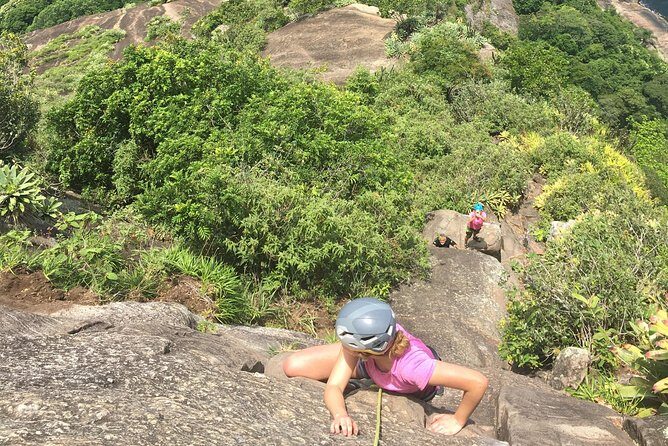
- A real beginner climbing baptism on Morro da Babilônia, with a climb around 40 meters (with all safety gear and instruction)
- 15-meter rope climbing stretch on the way to Pão de Açúcar, ideal for first-timers
- UIAA-certified safety equipment including harness, helmet, and a personal auto insurance system with a safety brake
- Cable car descent ticket included from the summit area to the first stop (Morro da Urca)
- Small group size (max 5), which helps with pacing and hands-on coaching
How this combo day works (climb, hike, summit, cable car)
This tour is built like a confidence ladder. First you learn climbing basics at Morro da Babilônia, then you hike uphill to Pão de Açúcar while you’re still in that learning mindset. Finally, you earn the summit views and ride down by cable car.
For you, the value is in the structure. You don’t just get taken to scenery—you get taught how the climbing system works, then you apply that understanding on a rope section. That makes the whole day feel purposeful, not like separate activities that don’t connect.
The big consideration is your energy management. You’ll be moving for about 5 hours 30 minutes, and the plan includes steep hiking on the east face for much of the route. If you’re prone to tiring quickly on climbs, pace yourself early.
You can also read our reviews of more tours and experiences in Rio de Janeiro.



Morro da Babilônia climbing baptism: what beginner training really means
Your day starts with rock climbing training on Morro da Babilônia. The guide explains how climbing dynamics work and what you’ll feel during the climb—then you’re ready to climb around 40 meters. This is the part most first-timers care about: will it feel scary, confusing, or unsafe?
The setup here is meant to reduce those worries. You’re provided with climbing shoes, harness, and helmet, plus a personal auto insurance system with a safety brake. On top of that, you get collective climbing equipment like a dynamic rope, quickdraws, and an anchoring system. The tour also states that all safety equipment is certified by UIAA, which matters because certified gear is what keeps the training from turning into guesswork.
Here’s what you should pay attention to during the baptism: listen closely to how the guide describes movement and safety checks. Even if the climb is “for beginners,” your comfort improves fast when you understand how the system responds if you slip or pause. You’ll likely feel the difference right away when you realize you’re not free-soloing your way up.
This is also where the “fear-overcoming” angle becomes practical. You’re not asked to be fearless—you’re asked to learn, follow instructions, and climb with secure protection. That’s the difference between a fun first climb and a stressful one.
The hike toward Pão de Açúcar: steep legs, big payoff
After the baptism, you hike toward the summit of Sugarloaf Mountain. Most of the hike goes up the steep east face of the mountain, so expect sustained uphill effort rather than gentle strolling. Even if you’re climbing-capable, this section will still test your legs a bit.
What makes the hike worth it is that it’s also part training. You’re still in the same mindset as the earlier climbing segment, and the route includes a beginner-friendly rope stretch. So you’re not only earning views—you’re getting a second chance to participate, not just watch.
A practical tip: treat the hike as your warm-up for the summit moment. Don’t burn everything early. If you’re conserving energy for the later rope section and viewpoints, you’ll enjoy the top more and feel less rushed.
The 15-meter rope climbing stretch: your second chance to learn
On the way, there’s a 15-meter rope climbing stretch that’s described as ideal for beginners. This matters because it’s not a one-off “try it once” situation. You get to continue building confidence, and the rope section gives you another step in understanding how climbing works in motion.
From a reader perspective, this is a key value point. When an activity includes both a training climb and a later rope section, you don’t just “complete” the experience—you actually progress. And since the day is guided with certified instruction, you’re less likely to feel like you’re doing something beyond your skill level.
Keep your expectations realistic: a rope section still takes focus. You’ll want to keep breathing steady, follow hand/foot cues, and stay aware of how your harness and rope positioning affect your movement. Think of it like learning a skill with feedback, not like a thrill ride.
Summit time: Cristo Redentor, Copacabana, Tijuca, and Niterói
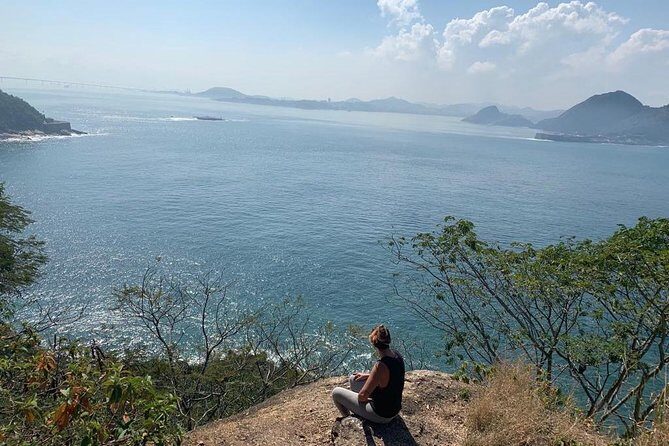
At the summit, you get the kind of Rio panorama that feels almost unfair—like the city is showing off on purpose. You can enjoy major sights including Cristo Redentor, Copacabana Beach, Tijuca Forest and its mountains, and the city of Niterói, plus more.
This is where the climbing + hike combo pays off emotionally. If you’ve ever reached a viewpoint after too much waiting, you know how that can drain the magic. Here, you earn the top with effort, so the skyline moment lands harder.
One note: the summit is the reward, but it’s not a reason to ignore your body. Take short breaks, drink water, and don’t let sightseeing turn into neglecting basic comfort (sunscreen is a must). With a day like this, the views are best when you’re still feeling good enough to enjoy them fully.





Cable car descent to Morro da Urca and the return trail
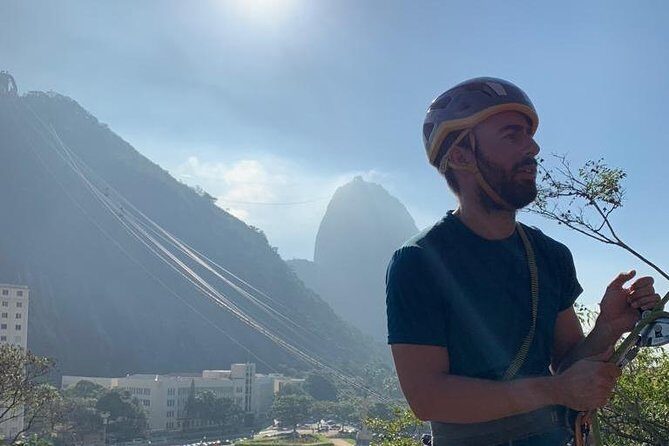
To get off, the tour includes the famous cable car ride (ticket included) to the first stop at Morro da Urca. From there, you do an easy 10-minute trail back to Praia Vermelha. That mix is smart because it prevents the day from ending with a long hike down after all the uphill effort.
This is also where the logistics simplify your day. You’re not stuck planning how to return, and you’re not forced to guess bus schedules while you’re tired. The cable car gives you a smooth transition from summit mode back to shore mode.
Once you hit the easy trail, keep it relaxed. Use that walk to reset, cool down, and get ready for your next plans in Rio—especially since this tour ends back at the meeting point.
Price and value: what you really get for $125
At $125 per person, this isn’t a bargain-basement activity. It’s also not overpriced for what it includes—because you’re paying for instruction, gear, and access, not just a view and a pass.
Here’s what’s packaged into the price based on the tour details:
- Individual climbing equipment: shoes, harness, helmet, and a personal safety system with safety brake
- Collective climbing equipment: dynamic rope, quickdraws, anchoring system
- A certified rock climbing instructor (trilingual)
- Access to Morro da Babilônia
- Cable car descent ticket
- Trail access and the Urca Hill Trail
When you total that up, the price starts to look more reasonable. You’re also getting a small group cap (max 5), which usually means more attention from your guide and less time waiting around.
My only caution is the difference between a perfect day and a frustrating day hinges on communication. Pickup is offered, and one review mentioned pickup trouble and lack of guide arrival. That doesn’t automatically mean this will happen to you, but it’s enough of a red flag that you should confirm your pickup arrangement and meeting instructions so your day stays on track.
Who this climbing day suits best (and who should rethink it)
This tour is recommended for people with moderate physical fitness. You’ll be hiking uphill and doing steep terrain, but the climbing segments are set up to be beginner-friendly with certified safety systems.
This is a great fit if:
- You want a guided first experience in climbing, not just a scenic hike
- You like structured coaching (training climb first, rope stretch later)
- You want the Sugarloaf summit experience without handling the complexity yourself
It might be a tough fit if:
- You have a strong aversion to heights or controlled risk, even with safety systems
- You struggle with sustained uphill hiking on steep terrain
- You need guaranteed pickup certainty and don’t want to manage meeting-point timing
Also, it has a minimum age of 10, and minors must be accompanied by an adult. So plan your family logistics accordingly.
What to pack and how to prepare for Rio conditions
The tour emphasizes that it requires good climatic conditions. That means you should expect the day to be weather-dependent, and you’ll want to dress like you might get sun, humidity, or quick changes.
Bring:
- Comfortable shoes with good grip
- A light snack and water
- Sunscreen and insect repellent
For comfort, also bring layers you can adjust. Even when the weather looks fine, mountain areas can shift as the day moves on.
And a practical mindset: treat this like a small training day plus a hike day. Eat beforehand if you can, sip water regularly, and don’t wait until you feel drained to start refueling.
Review reality check: watch the small “gotchas”
The overall rating for this experience is 3.8 across 13 reviews, so it’s not universally adored. One written review was extremely negative, describing a situation where the guide did not show up despite choosing a more expensive package that supposedly included pickup, and the reviewer reported long delays reaching the agent with no apology.
I can’t predict what will happen on your date. But I can tell you how to protect yourself:
- Confirm your meeting point details in writing before you go
- If you’re relying on pickup, verify that pickup is actually arranged for your exact location and time
- Have a backup plan for reaching the meeting point yourself, just in case
A good tour day is about preparedness as much as it is about the activity.
Should you book this climb-and-summit tour?
Book it if you want a well-instructed beginner climbing experience plus the Sugarloaf summit, without having to assemble the logistics. The included safety gear, the training-focused climbing baptism, and the cable car descent ticket make it a coherent day plan rather than a “collect a few attractions” scam.
Think twice if you’re extremely sensitive to schedule friction or if you need guaranteed pickup with zero uncertainty. In that case, I’d still consider booking—just confirm everything carefully and be ready to make it work from the meeting point if communication goes sideways.
If you like your travel days active, small-group, and skills-based, this is the kind of Rio experience that can turn into a story you tell for years.
FAQ
How long is the climbing baptism + Sugarloaf summit experience?
It runs about 5 hours 30 minutes (approx.).
Where does the tour start and end?
It starts at Praça General Tibúrcio (Urca, Rio de Janeiro) and ends back at the meeting point.
Is pickup offered?
Pickup is offered, and the activity description indicates it is available.
What climbing equipment is included?
You get individual gear including climbing shoes, a harness, a helmet, and a personal auto insurance system with a safety brake. You also get collective climbing gear such as a dynamic rope, quickdraws, and an anchoring system.
Do I need prior climbing experience?
No. The tour is described as not requiring previous experience.
What ages can participate?
The minimum age is 10 years old, and minors must be accompanied by an adult.
Is the cable car ride included?
Yes. The ticket for descent of the Sugar Loaf cable car is included, taking you to the first stop (Morro da Urca).
What should I bring with me?
Bring comfortable shoes with good grip, a light snack, water, sunscreen, and insect repellent.
What happens if the weather is bad?
This experience requires good climatic conditions. If canceled due to poor weather, you’ll be offered a different date or a full refund.