
REVIEW · RIO DE JANEIRO
Bossa Nova Walking Tour
Book on Viator →Operated by Rio Bossa Experience · Bookable on Viator
Rio gives you bossa nova on the streets. This 3-hour walk pairs live guitar with short, story-driven stops tied to the songs you hear on radios and in cafés. You’ll move through Ipanema and Copacabana while the guide links the dots between neighborhoods, artists, and the sound that spread worldwide.
The two things I like most are the small group size (max 8) and the fact that you get guitar music in sync with each location, not just a lecture. One consideration: this tour is weather-dependent, and it doesn’t include transport or food/water, so you’ll want to plan around a few hours on your feet.
In This Review
- Key highlights you won’t want to miss
- Bossa Nova on foot: hearing the songs in Ipanema and Copacabana
- Starting at Praca Nossa Senhora da Paz: music history with a guitar-led welcome
- Praça General Osório and the Hippie Fair link: how scenes shape songs
- Copacabana Beach: where the movement gets a wider stage
- Statues that teach: Dorival Caymmi, Bahia roots, and Tom Jobim
- Parque Garota de Ipanema: the song becomes a place
- Casa de Cultura Laura Alvim: closing the loop with culture context
- What makes the guide-musician pairing work
- Value check: is $48.03 a good deal?
- Practical tips for a smooth 3-hour walk
- Should you book the Bossa Nova Walking Tour?
- FAQ
- How long is the Bossa Nova Walking Tour?
- What does the tour cost?
- Where do I meet, and where does the tour end?
- What’s included in the price?
- What isn’t included?
- How many people are in the group?
- Is it okay to go if the weather is bad?
- Should You Book?
Key highlights you won’t want to miss

- Live guitar at every stop, so the music is part of the walking—not a separate activity
- Max 8 people, which keeps the mood personal and makes Q&A feel natural
- Landmarks tied to big names like Tom Jobim and Dorival Caymmi
- Ipanema culture stops, including a moment connected to the Girlf from Ipanema
- Free admission tickets at each stop, so you’re paying for the experience, not entry fees
Bossa Nova on foot: hearing the songs in Ipanema and Copacabana
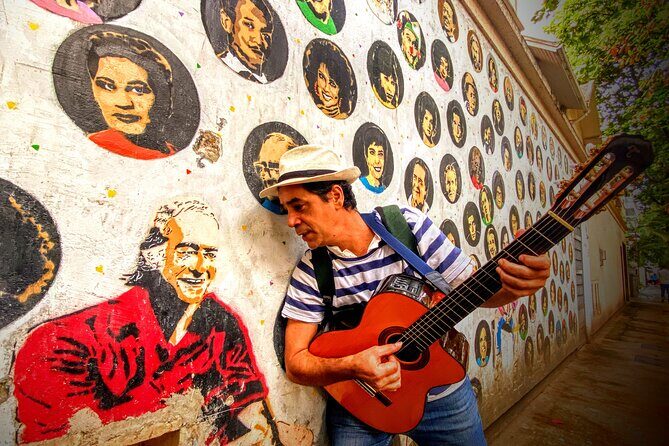
Ipanema and Copacabana aren’t just pretty beaches on a map. They’re part of how bossa nova became what it is: a modern, city-shaped sound that grew from real streets, real hangouts, and real rhythms people heard every day.
This tour is designed for that kind of listening. You’re not racing from one museum to another. Instead, you’re walking a tight route over about 3 hours, with the guide and a guitarist working as one unit. The guide explains the connection between each spot and the music, then the guitarist plays along with classics so you can connect lyrics and stories to the places you’re standing near.
And yes, the vibe stays accessible. The stops are public and the pacing is made for most people. Still, wear shoes you trust—this is a neighborhood walk, and you’ll be moving more than you might expect from a “music tour.”
You can also read our reviews of more walking tours in Rio de Janeiro



Starting at Praca Nossa Senhora da Paz: music history with a guitar-led welcome
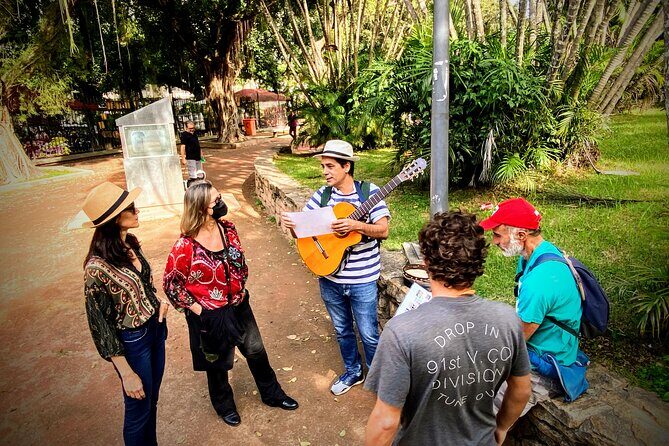
You kick off at Praca Nossa Senhora da Paz in Ipanema. The early minutes matter here because the guide sets the music frame before you start spotting references around town.
Expect a welcome talk plus a quick primer on how Brazilian music evolved into what we now label as bossa nova. The guitarist joins in from the start, using live performance to make the history audible instead of purely academic. It’s a nice way to get your ears tuned, especially if you only know a handful of bossa nova tracks.
The potential drawback is also baked into the format: this isn’t a full-on deep music class. The tour stays short on purpose, and that means the explanations are clear and fast, not exhaustive. If you want a textbook-style breakdown, you may crave extra time—but if you want context you can carry while walking, it hits the mark.
Praça General Osório and the Hippie Fair link: how scenes shape songs
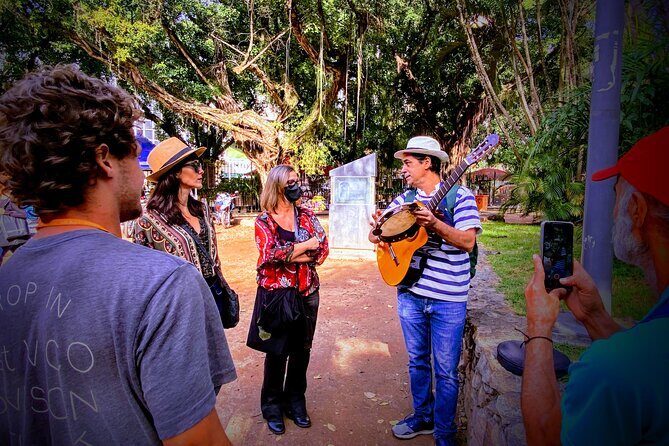
Next comes Praca General Osório, where the conversation turns to the Hippie Fair and how that kind of public culture connects to the bossa nova moment. This stop works well because it’s less about a single song and more about atmosphere: where people gathered, what they wore, what they listened to, and how everyday social life turned into artistic momentum.
You’ll get a short explanation of that cultural link, followed by more live guitar performance. The point isn’t just to know facts—it’s to understand how bossa nova lived in the same world as public events and street energy.
One practical note: since this area is a public square, the sound environment can vary. That’s not the tour’s fault. It’s just a real-world city square. The guitarist still plays, but the music experience can feel a little different depending on the moment outside.
Copacabana Beach: where the movement gets a wider stage
Then you head toward Copacabana Beach, and the guide zooms out to explain how Copacabana mattered for the bossa nova movement. This is a smart stop because Copacabana is both iconic and layered. Even if you’ve seen photos a thousand times, hearing how the beach connects to the music makes the whole place feel more legible.
You’ll get another focused explanation, and again, the guitarist supports the storytelling with performance. This stop is especially good if you want to understand why bossa nova didn’t stay a niche sound. Copacabana’s visibility helped turn the music into something broader and more widely shared.
Drawback to keep in mind: beaches can bring wind and changing light. If you’re sensitive to that, bring a light layer even in warmer months. The tour itself is built for a comfortable walking pace, but Mother Nature can still set the tone.
Statues that teach: Dorival Caymmi, Bahia roots, and Tom Jobim
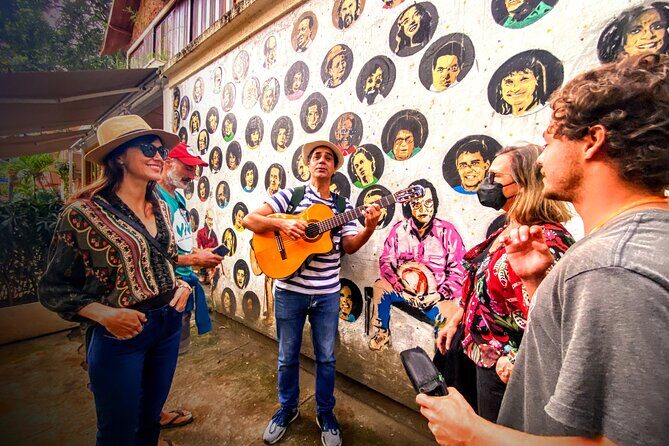
Two of the most memorable stops come through statues—because they turn famous names into street-level wayfinding.
First, you’ll learn at the Estatua de Dorival Caymmi, with an explanation about how music from Bahia connects to bossa nova. Caymmi matters because Brazilian musical roots don’t appear out of nowhere. They flow through coastlines, regional styles, and artists who bring their local sounds into the wider national conversation.
Then comes Estatua de Tom Jobim, where the story narrows to one of bossa nova’s best-known composers. You’ll get context on Antonio Carlos Jobim and hear more live guitar performance that ties his place in the sound to where you are standing.
This section is one reason the tour works even if you aren’t a hardcore music geek. Most people can follow a narrative. And tying the narrative to public art means you’ll remember the names after the walk ends.
Also, pay attention to how the guide uses the guitarist. In reviews, the music isn’t treated like a background track. It’s used as part of the explanation, with the guide and musician connecting artists and eras on the spot. It’s part history lesson, part live mini-concert, part street-level orientation.






Parque Garota de Ipanema: the song becomes a place
At Parque Garota de Ipanema, the tour zeroes in on who the Girlf from Ipanema refers to and why the story matters in the bossa nova world. This stop helps the music land emotionally, because the idea behind the song is not only about sound. It’s about a moment, a gaze, and the way one neighborhood becomes part of global pop culture.
The guitarist performs again here, reinforcing the idea that the song isn’t just a recording—it’s attached to a physical setting you can picture later. Even if you think you already know the song, hearing the place-name connection in real time makes it feel new.
If you’re the type who enjoys photo stops, this is one of those moments. But it’s not just for pictures. The explanation is short enough that you won’t feel stuck waiting, and it adds meaning to what you see.
Casa de Cultura Laura Alvim: closing the loop with culture context
Finally, the tour ends at Casa de Cultura Laura Alvim, where you’ll learn who Laura Alvim is and why she matters to Brazilian culture and music. This stop gives you a useful closing lens. Instead of leaving you only with composer names and beach scenery, it points toward the broader cultural infrastructure—how people preserve, promote, and frame artistic identity.
After that, your walk concludes near Restaurante e Bar Garota de Ipanema (you’ll end at the spot on R. Vinícius de Moraes and Prudente de Morais). It’s a convenient finish because you can transition straight into a meal or a cold drink without needing extra planning.
What makes the guide-musician pairing work
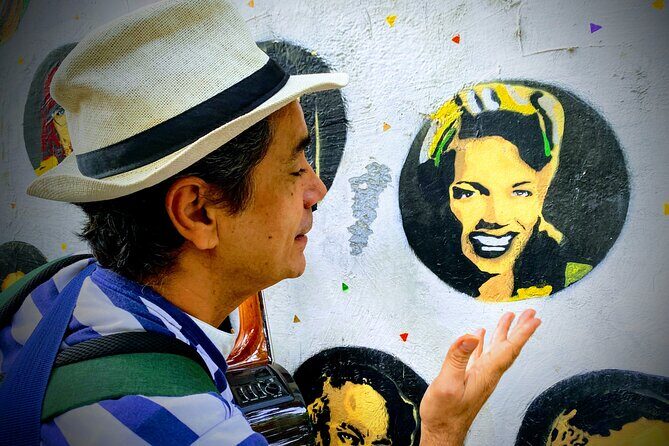
This tour doesn’t treat music as a separate show. The guide and guitarist move as a unit, and that’s where the experience earns its praise.
In multiple accounts, the interaction feels more like a guided sing-along than a standard lecture. Reviews also mention that the guitarist performs classics right alongside the explanations, sometimes using an instrument described as made in Grenada, Spain—the kind of detail that tells you they care about the performance, not just the talking.
Also, with a maximum of 8 people, the pacing stays human. You’re more likely to ask questions, react to what’s playing, and actually connect the dots between story and sound. If you’ve ever been stuck in a large group where the guide’s voice disappears, this is the opposite setup.
Value check: is $48.03 a good deal?
At $48.03 per person for about 3 hours, this tour sits in a reasonable mid-range spot—especially because it includes two core things most paid walking tours rely on only partially: a guide and live guitar performance.
Here’s what you get for that money, based on the tour format:
- A structured route through key Ipanema/Copacabana locations
- A guided explanation at each stop
- Live guitar at every stop
- Free admission tickets for the locations included
What you don’t get:
- Transport
- Food, drinks, or water
So the value depends on your style. If you’d otherwise pay for a guided neighborhood walk and separately hunt for live music, this bundle makes sense. If you’re already planning heavy beach hopping, you might feel the price more keenly—because you’re paying specifically for the musical storytelling layer.
If you want to maximize value, plan to arrive on time, stay hydrated yourself, and treat the tour as your “anchored” activity for half a day.
Practical tips for a smooth 3-hour walk
A few real-world things will help you get more out of the experience.
- Bring water: the tour does not include water.
- Expect walking in uneven outdoor spots: public squares and sidewalks can vary.
- Wear sun-smart clothing: even if it’s not mentioned in the tour description, you’re outdoors for about three hours.
- Take weather seriously: the tour requires good weather. If poor conditions force a cancellation, you’ll be offered a different date or a full refund.
- Know the start and end points: start at Nossa Senhora da Paz / Ipanema (22411-001), and finish near Restaurante e Bar Garota de Ipanema, at the corner of R. Vinícius de Moraes and Prudente de Morais.
Also, since the tour is near public transportation and allows service animals, it tends to fit easily into a day plan. And because the group is capped at 8 people, it’s worth booking ahead if you see a slot you like.
One more practical timing note: the tour is commonly booked about 23 days in advance on average, so don’t wait until the last minute if your schedule is tight.
Should you book the Bossa Nova Walking Tour?
Book it if you want bossa nova to feel like a living city story instead of background music. This is a great choice if you:
- like the idea of hearing classics as you learn the context
- enjoy small-group walking with real human interaction
- want a simple route through Ipanema and Copacabana with meaning built in
Skip it or think twice if you:
- don’t want an outdoors walk (it’s still mostly walking)
- need transport and snacks included (those are not part of the package)
- expect a long, textbook-level music theory session (the format is compact by design)
If your goal is to leave Rio with a set of place-to-song connections you’ll remember, this tour is built for exactly that.
FAQ
How long is the Bossa Nova Walking Tour?
It lasts about 3 hours.
What does the tour cost?
The price is $48.03 per person.
Where do I meet, and where does the tour end?
You start at Nossa Senhora da Paz / Ipanema (22411-001). The tour ends at Restaurante e Bar Garota de Ipanema on R. Vinícius de Moraes, 49, near the corner of R. Vinícius de Moraes and Prudente de Morais.
What’s included in the price?
You get a tour guide and live musician guitar performance. Admission tickets for the listed stops are free.
What isn’t included?
Transport and food/drinks/water are not included.
How many people are in the group?
The tour has a maximum of 8 travelers per group.
Is it okay to go if the weather is bad?
The tour requires good weather. If it’s canceled due to poor weather, you’ll be offered a different date or a full refund.
Should You Book?
If you’re in Rio and want bossa nova to make sense in the places where it grew up, this is a strong pick. You’ll trade a standard lecture for walking + live guitar, with stops linked to names you’ll hear again and again—Tom Jobim, Dorival Caymmi, and the world around Ipanema. For most people, that combination is exactly the right kind of “music tour” value.