
REVIEW · RIO DE JANEIRO
Ancient Rio and Santa Teresa Tour with Hotel pick-up and drop-off
Book on Viator →Operated by Rio Carioca Tour Ltda · Bookable on Viator
Rio has a quieter side above the street. This small-group Santa Teresa and Ancient downtown Rio tour mixes bohemian hill views with major historic architecture, all timed for a single afternoon and handled by an air-conditioned vehicle. You’ll spend real moments in places like Santa Teresa’s grand early-1900s mansions and the neighborhood’s historic tram presence dating to 1897.
I also love how the day connects the dots across Rio’s growth: you get the sense of why Centro and nearby landmarks mattered, from Praça XV’s civic setting to the exterior grandeur of the Theatro Municipal, Biblioteca Nacional, and more. One possible drawback to plan around: it’s a photo-focused day with limited time at each stop, and you’re walking on older streets—some areas can feel uneven—and the tour does not include museum or theater entry.
In This Review
- Key Highlights You’ll Actually Feel
- What This 4-Hour Ancient Rio and Santa Teresa Tour Really Covers
- Santa Teresa: Mansions, the 1897 Tram Presence, and Painter Streets
- Parque das Ruínas and Laurinda Santos Lobo’s Artistic Legacy
- Arcos da Lapa: From Water Transport to Everyday Rio Transport
- Praça XV de Novembro: Civic Power, Imperial Buildings, and a Ferry Hub
- Arco do Teles and Cinelândia: Tiny Alleys, Bars, and Big-Square Photos
- Museu Nacional de Belas Artes, Theatro Municipal, and Biblioteca Nacional From the Outside
- How the Guides Shape the Day: Pacing, Energy, and Local Pride
- Price and Logistics: Why $55 Can Be a Good Deal
- Who Should Book This Tour (and Who Should Think Twice)
- Should You Book Ancient Rio and Santa Teresa?
- FAQ
- How long is the Ancient Rio and Santa Teresa tour?
- What’s included in the price?
- Is lunch included?
- Do you enter museums or the theater?
- Are there admission tickets included for all stops?
- Do you ride the old tram in Santa Teresa?
- How big is the group?
- What if the weather is bad?
- What should I wear for this tour?
- If needed, do I have to show ID?
Key Highlights You’ll Actually Feel
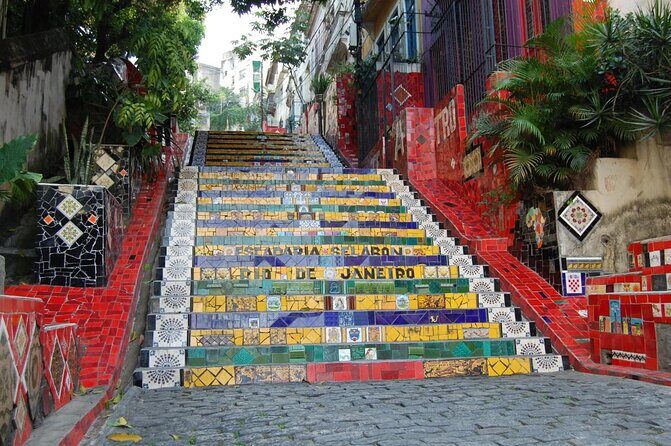
- Santa Teresa’s old-world streets plus the 1897 tram presence and impressive mansion facades
- Downtown historic “outside visits” that still teach you what to notice, without museum ticket lines
- Arcos da Lapa: a former water aqueduct repurposed as a local transportation route
- Laurinda Santos Lobo’s Parque das Ruínas and why it became a cultural center
- Guides with big energy and clear storytelling, with several names showing up often for strong guiding (Renato, Wagner, Roger, Dario, Monica, Wanessa)
What This 4-Hour Ancient Rio and Santa Teresa Tour Really Covers
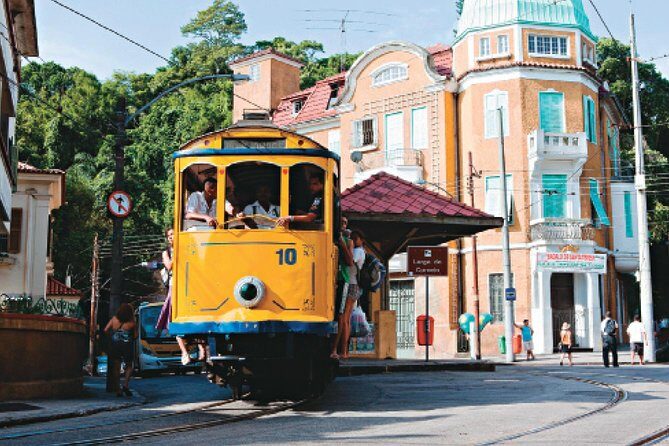
This is a 4-hour sightseeing loop built around two Rio worlds. First comes Santa Teresa, the hillside neighborhood tied to artists and old grand houses. Then you move into the historic downtown area for civic squares, arches, and major “look-but-don’t-enter” architecture.
For the price (about $55 per person), the value is mostly in logistics plus concentration. You’re getting hotel pick-up and drop-off, an air-conditioned vehicle, and a guided plan that strings together the most meaningful sights in a short window. It’s not a day to sit in cafés all afternoon or do deep museum visits—think “get your bearings fast” and learn what you’re seeing while you’re seeing it.
Group size also matters. The tour uses a minivan setup with a maximum of 19 people per vehicle, which is part of why people often describe it as feeling more personal than big-bus tours. Still, the schedule is tight, so you’re not going to linger forever at every corner.
You can also read our reviews of more tours and experiences in Rio de Janeiro.



Santa Teresa: Mansions, the 1897 Tram Presence, and Painter Streets
Santa Teresa is where the tour starts to feel like Rio has texture. You’ll walk through a bohemian neighborhood known for artists, and you’ll spend about one hour here. The standout is the mix of mansion facades from the early 1900s and street views that make the neighborhood feel like a step away from the main grid.
A specific detail worth keeping in mind: Santa Teresa still has a tram connection with origins in 1897. Some days you’ll be able to spot the tram mosaic work and the neighborhood’s street atmosphere, but this tour is focused on viewing rather than turning it into a long tram ride. If you’re dreaming of a longer tram ride experience, plan for that separately.
Practical tip: Santa Teresa involves walking on older streets and uneven surfaces. One review called out that it may not work well if you have a walking problem. You can still do the tour with good shoes and a steady pace, but if mobility is an issue, bring that up early and be ready to take it slow.
Parque das Ruínas and Laurinda Santos Lobo’s Artistic Legacy
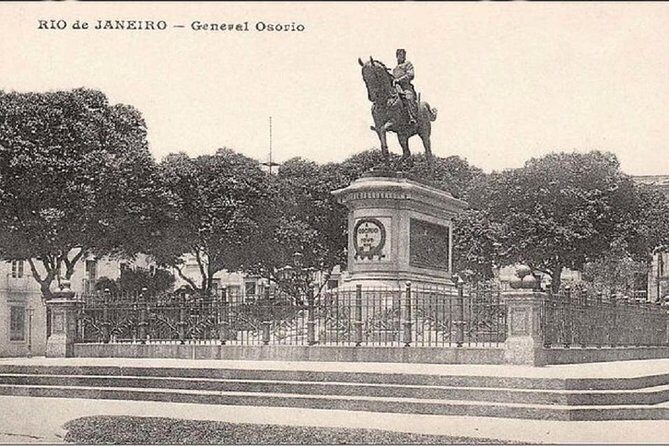
After Santa Teresa, you get a quick stop at Centro Cultural Municipal Parque das Ruínas, with a short visit time (about 20 minutes). This isn’t just a pretty landmark. It connects to a real person: Laurinda Santos Lobo, described here as a preeminent female art supporter whose legacy now lives through the site as a cultural center.
That context is the point. This stop helps you understand why Santa Teresa isn’t only about Instagram corners—it also became part of how Rio supported art and artists. The time is brief, so come with a “quick look + learn what it means” mindset.
If you’re the type who likes to read the room (and the signage), this can be a satisfying stop because it gives you a story anchor before you move into the more civic downtown sights.
Arcos da Lapa: From Water Transport to Everyday Rio Transport
Then you hit Arcos da Lapa, staying around 30 minutes. These arches are famous for their original purpose: they used to be part of the infrastructure that transported water. The modern twist is what makes it feel alive—today, the arches also serve as a popular transportation route tied to Santa Teresa.
Even if you’re not a “history person,” this is one of those sights where the lesson lands quickly: Rio reuses what it can. A piece of engineering from the city’s earlier years becomes part of daily movement.
A heads-up: the tour notes that admission for this specific stop is not included, so you’re mainly there for the views and the explanation rather than a ticketed museum-style visit.
Praça XV de Novembro: Civic Power, Imperial Buildings, and a Ferry Hub
Praça XV de Novembro is a very “Rio” stop because it shows multiple eras at once. You’ll get about 30 minutes here, and the square sits in the historic center surrounded by major buildings, including Palácio Tiradentes, the Legislative Assembly of Rio de Janeiro, and Paço Imperial.
One more very practical detail: the Praça XV Station functions as a ferry terminal with destinations including Niterói. That means you’re not just looking at stone and façades—you’re in a working transport node where people are moving.
If you like to understand how cities actually function, this stop helps. Squares like this weren’t only for ceremonies; they were built around power, government, and transport.






Arco do Teles and Cinelândia: Tiny Alleys, Bars, and Big-Square Photos
Next comes Arco do Teles (about 20 minutes). This area sits in what was once the downtown market, and the vibe shifts to small streets and alleys where you’ll find bars and small restaurants. The short time here makes it a “walk-and-look” experience rather than a long meal stop, but it’s still valuable because it adds street-level color between the bigger monuments.
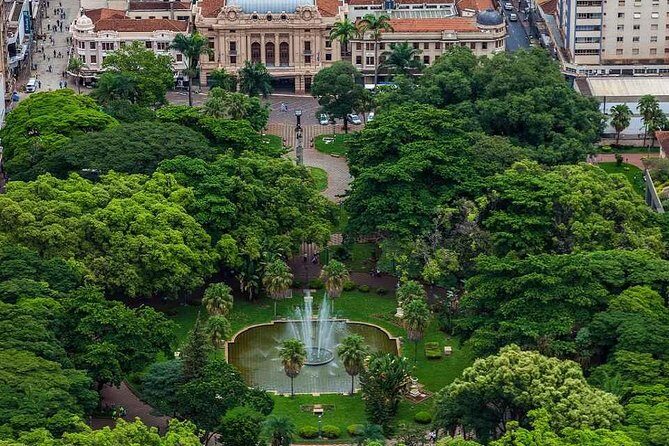
Then you move to Cinelândia for around 30 minutes. It’s a major square in downtown Rio, surrounded by historic buildings, and it’s a great place for photos because the architecture frames you. You also tend to get that classic downtown feeling here—less hillside charm, more civic grandeur.
Both of these stops are free to enjoy (as listed), and they work well for getting quick atmosphere without adding ticket hassles.
Museu Nacional de Belas Artes, Theatro Municipal, and Biblioteca Nacional From the Outside
One of the smartest things this tour does is spend time on big public architecture while skipping the inside ticket timing. You’ll have short exterior viewing windows at:
- Museu Nacional de Belas Artes (about 10 minutes): the building was designed in 1908 by architect Adolfo Morales de los Rios to host the National School of Fine Arts. It connects to the urban modernization under mayor Pereira Passos when Rio was the Federal Capital.
- Theatro Municipal do Rio de Janeiro (about 10 minutes): inaugurated in 1909, and noted here as one of the most important theaters in Brazil and Latin America. You’ll also hear the story that since the 1930s it has maintained artistic independence and that it’s the only Brazilian institution described here as having its own choir, symphony orchestra, and ballet company.
- Biblioteca Nacional (about 10 minutes): founded in 1810 by D. João VI, King of Portugal. The listing highlights that it holds an archive of almost 9 million items and includes rare materials like rare books, manuscripts, original letters written by Princess Isabel, early newspapers, and two copies of the Mainz Psalter Bible, printed in 1492.
You do not enter these buildings on this tour, so don’t expect it to replace a museum day. But if your travel time is limited, exterior study is a real win. It gives you the “wow” factor without eating up your whole day with lines, ticket schedules, and late openings.
A small practical note: because the visits are short, you’ll get the most out of this day if you bring a “focus” mindset—choose a façade, learn one or two key facts, and take your photos quickly.
How the Guides Shape the Day: Pacing, Energy, and Local Pride
This tour’s success often comes down to the guide. When guiding is strong, the whole day clicks—Santa Teresa streets turn into stories, and downtown architecture becomes more than a backdrop.
Several guide names are repeatedly associated with excellent experiences: Renato, Wagner, Roger, Dario, Monica, Wanessa, and Romeu, plus Jack Daniel showing up in one strongly positive account. The common thread in those better experiences is clear, energetic narration and a sense of local pride.
You should also know the other side, because it affects your expectations. A few people reported the day felt rushed or that they didn’t get much time to stop and linger at key spots. One account also mentioned a case where a tram ride wasn’t provided as expected, and another noted that some information felt off. None of that means the tour is always like that—just keep your own priorities in mind.
My advice: before you set your heart on a particular experience (like a tram ride, a coffee stop, or longer photo time), confirm what’s actually included and how much time you’ll get at the stops. This tour is designed as a structured loop, not a free-roam wander day.
Price and Logistics: Why $55 Can Be a Good Deal
At around $55 per person for about 4 hours, you’re paying for a plan that stitches together multiple neighborhoods with hotel pick-up/drop-off and an air-conditioned vehicle. That’s not a small deal in Rio, where travel time can eat your schedule.
You’re also getting free access for several stops as listed—Santa Teresa, Parque das Ruínas, Praça XV, Arco do Teles, and Cinelândia—while the major interior sights like museums and the theater are treated as exterior viewing stops.
What you’re not getting is equally important:
- Lunch isn’t included
- Museum entrances aren’t included
- Some stops explicitly note admissions not included
So the value is best if you’re happy to enjoy the architecture and the storytelling without needing to pay for multiple indoor tickets. If you want to enter everything, you’d likely want to pair this with a separate plan later in your trip.
Who Should Book This Tour (and Who Should Think Twice)
This works best for:
- First-time Rio visitors who want to understand the city beyond the usual viewpoint circuit
- People who like architecture + neighborhood context
- Short-stay travelers who want a half-day to get oriented in both Santa Teresa and the historic center
It may not be ideal if:
- You have mobility limitations, since Santa Teresa includes walking on older, uneven surfaces
- You strongly prefer inside visits to major sites (this tour focuses on exterior viewing)
- You’re going during periods when shops or smaller businesses close early (one positive account noted New Year’s Day closures)
Also, the experience requires good weather. If weather turns, the tour can be adjusted or canceled, with a change of date or refund offered.
Should You Book Ancient Rio and Santa Teresa?
If you want a smart half-day that shows you how Rio’s neighborhoods connect, this is a solid booking. The tour’s biggest strength is how it pairs Santa Teresa’s hillside character with downtown’s monumental architecture, and it does it with smooth transport and a manageable time frame. For $55, you’re buying convenience plus a guided framework for what you’re seeing.
I’d book it if you can handle short walks and you’re okay with not entering the museums/theater/library. Skip it—or plan differently—if you need low-walking routes or if your dream is an extended tram ride and deep indoor time.
FAQ
How long is the Ancient Rio and Santa Teresa tour?
It runs about 4 hours, with shorter timed stops at Santa Teresa and several downtown landmarks.
What’s included in the price?
The tour includes hotel pickup and drop-off, an air-conditioned vehicle, and free admission at several stops as listed.
Is lunch included?
No. Lunch is not included.
Do you enter museums or the theater?
No. The plan described for the Museu Nacional de Belas Artes, Theatro Municipal do Rio de Janeiro, and Biblioteca Nacional is to view the architecture from outside rather than enter.
Are there admission tickets included for all stops?
Not all. Santa Teresa, Parque das Ruínas, Praça XV, Arco do Teles, and Cinelândia are listed as admission ticket free. Other stops note admission not included.
Do you ride the old tram in Santa Teresa?
The tour includes seeing Santa Teresa’s tram presence, including the tram dating to 1897, but the tram ride itself is not listed as included.
How big is the group?
The tour uses a minivan setup with a maximum of 19 travelers per vehicle.
What if the weather is bad?
The experience requires good weather. If canceled due to poor weather, you’ll be offered a different date or a full refund.
What should I wear for this tour?
Comfortable clothing and walking shoes are recommended, since you’ll be walking through neighborhoods with older streets. If you have walking problems, plan carefully.
If needed, do I have to show ID?
If requested, you must present a copy of your ID.